








Top HIPAA-Compliant AI Agent Assist Platforms in 2026


Top HIPAA-compliant AI agent assist platforms give healthcare contact centers live, real-time prompts on every call while meeting the compliance posture their legal and privacy teams require. The stakes are high: healthcare data breaches cost organizations $9.77M on average in 2024, and OCR enforcement actions have climbed every year since 2022.
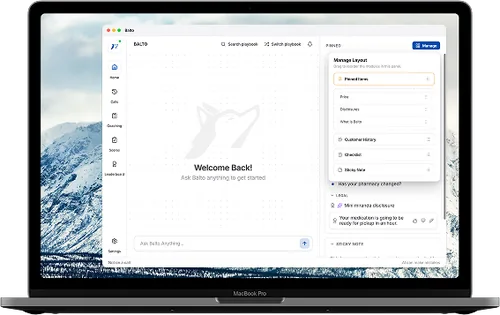
At the top of the list is Balto , the AI Workforce for the contact center, which publicly attests to SOC 2 Type II, HIPAA, PCI DSS, and GDPR compliance and brings healthcare-specific features (TPMO disclaimer lock, Scope of Appointment, 100% call scanning) that generic agent assist platforms don't match. Here are the top 10 HIPAA-compliant AI agent assist platforms for 2026, ranked on compliance stack, PHI handling, real-time agent guidance, 100% QA coverage, and healthcare depth:
- 1. Balto. Full compliance stack (SOC 2 Type II, HIPAA, PCI DSS, GDPR) plus real-time disclaimer lock and 100% automated QA built for healthcare.
- 2. Cresta. Full-suite AI with publicly attested HIPAA and SOC 2 Type II via its trust center; sales-forward customer base.
- 3. Observe.AI. Conversation intelligence and Auto QA with HIPAA posture; stronger post-call than real-time.
- 4. Level AI. HIPAA + ISO 27001 + SOC 2 + PCI + GDPR with automatic PHI redaction before model processing.
- 5. NICE Enlighten AI (CXone). Enterprise CCaaS with HITRUST, SOC 2, FedRAMP, PCI, and GDPR posture.
- 6. Genesys Cloud with Agent Assist. Omnichannel CCaaS with HIPAA-aligned protections and configurable ePHI session controls.
- 7. Five9 with Agent Assist. CCaaS with a published customer BAA covering Services.
- 8. Talkdesk Healthcare Experience Cloud. Healthcare-specific CCaaS with HL7 FHIR connector for Epic and Cerner integration.
- 9. Amazon Connect with Contact Lens. HIPAA-eligible AWS service with BAA via AWS; configuration-heavy.
- 10. CallMiner. Analytics-first platform with HIPAA, TCPA, PCI, and FDCPA compliance monitoring.
Below, each platform is scored on the five criteria above with pros and cons grounded in each vendor's public documentation.
Key Statistics on HIPAA Compliance and AI Agent Assist in Healthcare Contact Centers
Before comparing platforms, it helps to see what's at stake and what AI agent assist actually changes in a healthcare contact center.
How to Evaluate a HIPAA-Compliant AI Agent Assist Platform
Choosing a HIPAA-compliant AI agent assist platform is a legal, operational, and clinical decision at the same time. Five criteria separate the serious contenders from the generic ones.

Use these five criteria to score every vendor you shortlist. The weighting is yours (compliance is table stakes for most healthcare teams), but every one of the ten platforms below should be able to answer each question with public documentation or a vendor letter.
- 1. Compliance stack. Does the vendor publicly attest to SOC 2 Type II, HIPAA, PCI DSS, and ideally GDPR? Will they sign a BAA covering every service that touches PHI, including AI features and third-party transcription? Ask for the trust center URL and the current audit report.
- 2. PHI handling. Does the platform automatically redact PHI from recordings and transcripts? Is customer data isolated from any foundation-model training? Is encryption at rest (AES-256) and in transit (TLS 1.2 or newer) the default, with no manual configuration required?
- 3. Real-time agent guidance. Does the system prompt frontline agents during live calls, or only review conversations after the fact? Can it lock verbatim disclosure language (TPMO scripts, Scope of Appointment prompts, HIPAA notices) so a reworded version never airs?
- 4. 100% call scoring and audit trail. Does the platform score every call automatically against your compliance scorecards, flag disclosure misses the same day, and export audit logs for OCR requests?
- 5. Healthcare depth. Does the vendor have named healthcare customers (plans, TPAs, RCM shops, hospital contact centers)? Do they publish healthcare-specific features (TPMO, Scope of Appointment, prior auth workflows)? Can they integrate with your CCaaS without replacing it?
For deeper context on how real-time agent assist works in regulated settings, see the top AI agent assist platforms for insurance call centers listicle.
How the Top 10 HIPAA-Compliant AI Agent Assist Platforms Compare
The table below summarizes each platform against the five criteria above. Rankings reflect fit for a HIPAA-regulated contact center that needs both the compliance posture and the real-time agent assist layer to use it.
| Tool | Compliance Stack | Real-Time Agent Guidance | Healthcare Depth | Best For |
|---|---|---|---|---|
| Balto | SOC 2 Type II, HIPAA, PCI DSS, GDPR | Yes, with TPMO lock + SoA | 6 named customers; TPMO/SoA built-in | Healthcare teams needing full stack + real-time |
| Cresta | SOC 2 Type II + HIPAA (trust center) | Yes, real-time coaching | Lighter healthcare footprint | Enterprise sales + service orgs |
| Observe.AI | HIPAA (vendor claims) | Partial, post-call bias | QA-focused in healthcare | Teams prioritizing post-call QA |
| Level AI | HIPAA, ISO 27001, SOC 2, PCI, GDPR + PHI redaction | Yes, with HIPAA-safe prompts | Published healthcare page | Teams needing PHI redaction |
| NICE Enlighten (CXone) | HITRUST, SOC 2, FedRAMP, PCI, GDPR | Yes, Enlighten copilot | Via CXone healthcare templates | NICE CXone customers |
| Genesys Cloud | HIPAA-aligned protections | Yes, Agent Assist | Via Genesys healthcare solution | Genesys CCaaS customers |
| Five9 | Customer BAA for Services | Yes, Agent Assist | Available for healthcare | Five9 CCaaS customers |
| Talkdesk Healthcare Cloud | HIPAA-compliant PHI handling + HL7 FHIR | Yes, medical-grade STT | EHR integration (Epic, Cerner) | Teams needing EHR integration |
| Amazon Connect + Contact Lens | HIPAA-eligible AWS, BAA via AWS | Yes, Contact Lens real-time | Config-heavy, AWS-native | AWS-native teams with engineers |
| CallMiner | HIPAA + TCPA + PCI + FDCPA monitoring | Partial, real-time analytics | Healthcare named vertical | Analytics-first operations |
The 10 Top HIPAA-Compliant AI Agent Assist Platforms in 2026
Each platform below is scored on the five criteria above with pros and cons grounded in the vendor's public documentation. Where a platform does not publicly state a BAA or a specific SOC 2 Type II report, we flag it so your legal team can request the right documentation.
1. Balto: The #1 HIPAA-Compliant AI Agent Assist Platform for Healthcare Contact Centers

Balto is a unified AI agent assist, QA automation, and insights platform built for contact centers in regulated industries. It attests publicly to SOC 2 Type II, HIPAA, PCI DSS, and GDPR, and brings healthcare-specific features that generic agent assist platforms don't match: a verbatim TPMO disclaimer lock, a Scope of Appointment step, provider lookup during live calls, and 100% automatic call scoring against the exact disclosure language your plan or provider requires. Customers include Rx Outreach, INTEGRIS Health, Aria Care Partners, Passport Health, Redirect Health, and One Mnet Health.
Best for: Healthcare contact centers that need a publicly attested compliance stack, a real-time disclosure lock, and 100% call scoring on day one.
Key features:
- SOC 2 Type II, HIPAA, PCI DSS, and GDPR compliance (publicly attested on the home page)
- Real-time agent assist with dynamic prompts, voice-activated AI Answers, and verbatim TPMO disclaimer lock
- Scope of Appointment step enforced on every Medicare Advantage sales call
- 100% automatic call scoring against custom QA scorecards with same-day disclosure-miss alerts
- AI Notes auto-written to CRM or enrollment system; bank-grade 256-bit encryption; TLS 1.2 in transit
Pricing: Custom (contact the vendor for a quote based on seat count and modules)
For the broader healthcare context, see the healthcare landing page and the best contact center AI software for healthcare listicle.
2. Cresta: Full-Suite AI for Enterprise Sales and Service

Cresta is a full-suite AI contact center platform with real-time agent coaching, agent assist, and conversation intelligence. Cresta publicly lists HIPAA, SOC 2 Type II, GDPR, and TISAX on its trust center, and the healthcare page emphasizes HIPAA-compliant data handling. Historically Cresta leans toward sales-driven contact centers; healthcare is a growing but not primary vertical in its customer base.
Best for: Enterprise contact centers that need full-suite AI across sales and service workflows with HIPAA-compliant data handling.
Key features:
- Real-time agent coaching with live prompts and conversational nudges
- Conversation intelligence across voice and digital channels
- Auto-generated playbooks tied to measurable outcomes
- Trust center at trust.cresta.com with SOC 2 Type II, HIPAA, GDPR, and TISAX reports
Pricing: Custom (contact Cresta)
3. Observe.AI: Conversation Intelligence with Auto QA for Post-Call Review

Observe.AI is a conversation intelligence and Auto QA platform. It markets HIPAA compliance for healthcare contact centers and is widely used for post-call quality scoring and compliance monitoring. Real-time agent assist is available, but Observe.AI's heritage is post-call analytics and coaching rather than live-call guidance.
Best for: Healthcare teams that prioritize post-call QA and conversation intelligence over real-time disclosure prompts.
Key features:
- Auto QA across 100% of calls with configurable scorecards
- Conversation intelligence and agent coaching workflows
- Real-time agent assist for live calls (newer capability)
- HIPAA-compliant conversation handling (per vendor marketing)
Pricing: Custom (contact Observe.AI)
4. Level AI: HIPAA-Compliant Conversation Intelligence with PHI Redaction

Level AI is a conversation intelligence platform with real-time agent assist, Auto QA, and virtual agents. Its healthcare page explicitly lists HIPAA, SOC 2, ISO 27001, PCI, and GDPR, and the platform automatically redacts PHI and PII before data reaches the language model. Level AI publishes healthcare-specific use cases for eligibility verification, prior authorization, scheduling, and prescription refills.
Best for: Healthcare teams that need PHI redaction at the model layer and a cross-compliance posture (HIPAA, ISO 27001, SOC 2, PCI, GDPR).
Key features:
- Automatic PHI and PII redaction before model processing
- HIPAA, ISO 27001, SOC 2, PCI, and GDPR compliance posture per healthcare page
- Real-time agent assist with HIPAA-safe disclosure prompts
- Pre-built virtual agents for eligibility verification, prior auth, scheduling, Rx refills
Pricing: Custom (contact Level AI)
5. NICE Enlighten AI (CXone): Enterprise CCaaS with HITRUST Posture

NICE CXone is an enterprise CCaaS platform with Enlighten AI layered on top for real-time agent assist, auto-summarization, and quality management. NICE's compliance posture includes HITRUST, SOC 2, FedRAMP, PCI DSS, and GDPR per third-party reviews; HIPAA is referenced in CXone datasheets. NICE's healthcare depth comes through CXone's broader customer base rather than through healthcare-specific product features.
Best for: Enterprise contact centers already on NICE CXone that want AI without a second vendor relationship.
Key features:
- Enlighten AI copilot for frontline agents with real-time prompts and auto-summaries
- Auto QA with scorecards across 100% of interactions
- CXone CCaaS (ACD, IVR, routing, WFM) with AI bolted into the same platform
- HITRUST, SOC 2, FedRAMP, PCI DSS, and GDPR compliance posture per CXone documentation
Pricing: Custom (per-seat CCaaS pricing plus Enlighten add-ons)
See the best real-time agent assist platforms with strongest CCaaS integrations listicle for a deeper look at CCaaS-plus-AI combinations.
6. Genesys Cloud with Agent Assist: Omnichannel CCaaS with HIPAA-Aligned Protections

Genesys Cloud is an omnichannel CCaaS with Agent Assist, Predictive Engagement, and auto-summarization. Genesys's healthcare page positions Genesys Cloud with "HIPAA-aligned protections for PHI," which is a weaker claim than full HIPAA certification. The help center documents inactivity timeouts for ePHI (default 15 minutes, configurable down to 5). Genesys's healthcare depth comes from a broad customer base that includes payers and hospital contact centers.
Best for: Healthcare contact centers already on Genesys Cloud or evaluating a CCaaS plus AI bundle from one vendor.
Key features:
- Agent Assist with real-time knowledge surfacing and answer suggestions
- Predictive Engagement across voice, chat, email, and SMS
- Auto-generated post-call summaries
- Configurable session timeouts and access controls for ePHI
Pricing: Custom (per-seat CCaaS pricing)
7. Five9 with Agent Assist: CCaaS Platform with Customer BAA

Five9 is a cloud contact center platform with Agent Assist for live, in-call prompts, Auto QA, and AI summaries. Five9 publishes a customer BAA that applies when the customer handles PHI through the Services. Agent Assist is one of the newer AI features; whether it falls under "Services" in the BAA language is worth confirming at contract.
Best for: Healthcare contact centers that want a CCaaS-native AI bundle with a published customer BAA.
Key features:
- Agent Assist with real-time next-best-action and knowledge suggestions
- Auto QA across 100% of calls with custom scorecards
- AI summaries at call wrap
- Published customer BAA on five9.com/legal
Pricing: Digital plan starts at $119 per month; higher tiers include AI features
8. Talkdesk Healthcare Experience Cloud: Healthcare-Specific CCaaS with EHR Integration

Talkdesk Healthcare Experience Cloud is a healthcare-specific CCaaS with medical-grade speech-to-text, real-time agent assist, and HL7 FHIR–based EHR integration. Talkdesk's healthcare page claims 99.999% uptime and HIPAA-compliant PHI handling. The product includes a universal EHR connector that bridges into Epic, Cerner, and other systems: the only tool in this set with that explicit EHR integration story.
Best for: Healthcare contact centers that need deep EHR integration (Epic, Cerner) alongside real-time agent assist.
Key features:
- HL7 FHIR–based universal EHR connector for Epic, Cerner, and other systems
- Medical-grade speech-to-text with real-time transcription
- Agent assist with configurable suggestions, contextual patient data, and conversation transcription
- HIPAA-compliant PHI handling (per vendor marketing)
Pricing: Custom (contact Talkdesk)
9. Amazon Connect with Contact Lens: HIPAA-Eligible AWS Service for CCaaS

Amazon Connect is a cloud contact center service on AWS with Contact Lens for real-time and post-call conversation analytics. Amazon Connect has been HIPAA-eligible since 2017; Contact Lens is a HIPAA-eligible AWS service. Using it for PHI requires a signed BAA with AWS plus proper configuration (recording storage, encryption, access profiles, retention). AI add-ons like Amazon Lex and Amazon Q in Connect sometimes need separate scope confirmation.
Best for: AWS-native teams with engineering resources to configure HIPAA-eligible services and manage the BAA chain across subprocessors.
Key features:
- Contact Lens real-time and post-call conversation analytics
- Amazon Connect ACD with programmable call flows
- Amazon Q in Connect for generative agent assist (eligibility varies)
- HIPAA-eligible AWS service with BAA via AWS
Pricing: Pay-as-you-go on AWS (per-minute call rates plus Contact Lens charges)
10. CallMiner: Analytics-First Platform with HIPAA Compliance Monitoring

CallMiner is an interaction analytics platform with HIPAA, TCPA, PCI, and FDCPA compliance monitoring, auto-redaction, and a newer real-time agent assist layer. CallMiner's heritage is post-call analytics across millions of conversations; healthcare is one of its named verticals. The real-time agent guidance capability is newer than its analytics core, which is reflected in third-party reviews.
Best for: Analytics-first contact center operations that want HIPAA-compliance monitoring across every call.
Key features:
- Automated interaction analytics across 100% of calls
- HIPAA, TCPA, PCI, and FDCPA compliance monitoring
- Secure redaction features for PHI, PCI, and PII
- Real-time agent assist with compliance and escalation triggers
Pricing: Custom (contact CallMiner)
Which HIPAA-Compliant AI Agent Assist Platform Fits Your Healthcare Contact Center?
The right platform depends on how your contact center is structured, which compliance frameworks matter most to your legal team, and whether you need healthcare-specific features out of the box. This six-question diagnostic walks you through contact center size, primary healthcare use case, existing CCaaS, compliance depth needed, and biggest operational pain point. It then matches you to one of three categories: compliance-first full-stack, healthcare-vertical bundle, or CCaaS-native AI.
Choosing the Right HIPAA-Compliant AI Agent Assist Platform
A HIPAA-compliant AI agent assist platform earns its place by combining three things: a publicly attested compliance stack (SOC 2 Type II, HIPAA, PCI DSS, GDPR), real-time agent assist that locks the exact disclosure language your plan or provider requires, and 100% automated call scoring so audit trails are built on day one, not retrofitted during an OCR request.
Balto is the only platform in this set that pairs all four public certifications with built-in TPMO disclaimer lock, Scope of Appointment, and provider lookup, and backs it with 600M+ calls guided in real time across 300+ customers over 9 years. For healthcare contact centers that need to move fast without a six-month compliance review, it's the shortest path from signed contract to a compliance posture leadership can defend to legal, to CMS, and to the board.
FAQs
A HIPAA-compliant AI agent assist platform meets the technical, administrative, and physical safeguards HIPAA requires for handling protected health information (PHI).
Technically, it encrypts data in transit (TLS 1.2 or newer) and at rest (AES-256), restricts access through role-based controls, logs every PHI touchpoint for audit, and redacts PHI from recordings and transcripts.
Contractually, the vendor should sign a Business Associate Agreement (BAA) that covers every service touching PHI, including AI features and third-party transcription. Signing a BAA for the base product but excluding the AI layer is a common gap worth confirming at contract.
Yes. Balto publicly attests to HIPAA compliance on its home page FAQ alongside SOC 2 Type II, PCI DSS, and GDPR certifications.
The platform encrypts client data in transit with TLS 1.2 and at rest with bank-grade 256-bit encryption, automatically flags customer information like credit cards and phone numbers so they're not saved to disk, and runs on AWS infrastructure.
For healthcare contact centers evaluating the platform for PHI workflows, the healthcare page covers Medicare TPMO disclaimer locking, Scope of Appointment, and 100% call scoring. Request a current BAA from the vendor as part of your legal review.
A Business Associate Agreement (BAA) is a HIPAA-required contract between a covered entity (your organization) and any vendor that creates, receives, maintains, or transmits PHI on your behalf.
If your AI agent assist platform touches recordings, transcripts, or any customer data that includes PHI, you need a BAA before go-live.
The BAA has to explicitly cover the AI features you're using, not just the base platform. Many vendors sign BAAs for the core product but exclude generative AI or third-party transcription from the covered scope; that gap is where compliance surprises happen during an OCR request.
SOC 2 Type I audits whether a vendor's security controls are designed correctly at a single point in time.
SOC 2 Type II audits whether those controls operated effectively over a sustained period, typically six to twelve months. It is the stronger attestation of the two.
For healthcare contact centers, SOC 2 Type II is what procurement and legal teams generally require, because it proves the controls work in practice, not just on paper. Balto publicly attests to SOC 2 Type II specifically on its home page FAQ; several peers claim only "SOC 2," which is worth clarifying with their documentation.
Yes, if the platform redacts PHI at the model layer, encrypts data in transit and at rest, operates under a BAA, and isolates customer data from any foundation model training.
The most important question to ask is whether PHI touches the vendor's language models and, if so, what the data isolation guarantee is.
Vendors like Level AI publish PHI redaction at the model boundary; others redact post-call. Both can be compliant, but the difference matters for your legal review and your incident response plan.
Modern AI QA platforms transcribe every call automatically, run the transcript against your custom scorecard (HIPAA disclosures, Scope of Appointment language, TPMO disclaimer verbatim), and flag exceptions in a review queue.
Manual QA typically covers 1 to 3% of calls because an analyst can only review so many conversations per day.
100% coverage means every missed disclosure, every reworded script, and every compliance deviation is flagged the same day, not sampled months later. For healthcare teams facing CMS or OCR scrutiny, that gap closes exposure before it reaches a regulator.
HIPAA is table stakes. Beyond it, prioritize five things: a publicly attested compliance stack (SOC 2 Type II, PCI DSS, GDPR), real-time disclosure locking, 100% automated QA scoring, named healthcare customers with public case studies, and integration depth with your existing CCaaS or EHR.
Also ask whether the platform supports your specific regulatory workflows: TPMO for Medicare plans, Scope of Appointment for AEP sales, Interaction Privacy Notices for member services.
These are where generic agent assist falls short and where healthcare-specific platforms earn their price.
Most AI agent assist platforms integrate with CCaaS platforms (NICE, Genesys, Five9, Talkdesk) rather than directly with EHR systems.
The deepest EHR integration in this set belongs to Talkdesk Healthcare Experience Cloud, which uses an HL7 FHIR–based universal connector to bridge into Epic, Cerner, and other EHRs.
For most other platforms, EHR data arrives via the CCaaS layer or a CRM middle layer. Confirm the integration path with each vendor before contract if EHR data in-call is a hard requirement for your clinical workflow.
Real-time agent assist (sometimes called real-time agent guidance) prevents HIPAA violations by locking the exact disclosure language, prompting the frontline agent to say the right thing, and flagging risky phrasing before the call ends.
Post-call QA catches violations after they happen. Both have a place in a compliance program: real-time stops the breach, post-call documents it and feeds coaching.
If your goal is to reduce actual OCR exposure, the real-time layer is where the impact sits. Platforms like Balto, Cresta, Level AI, and NICE Enlighten combine both; CallMiner and Observe.AI lean more toward post-call.
Liked what you read? See Balto in action.
Balto helps leading contact centers turn insights into outcomes, in real time. Book a live demo to discover how our AI powers better conversations, coaching, and conversions.