








AI Software to Improve Right-Party Contact Rates in Collections (2026)


The AI software that moves right-party contact rates in collections splits into three honest layers: autonomous voice AI that dials and verifies the right party (Skit.ai, Togo from Balto, AI Rudder), AI-driven predictive dialing and list intelligence (Convoso, Five9, LiveVox, NICE CXone), and the post-RPC conversation layer that converts the contact into a payment (Balto's agent assist, Prodigal, Observe.AI). Balto , the AI Workforce for the contact center, spans all three layers in one closed-loop platform. Below, ten tools collections leaders are evaluating in 2026, organized by the layer they solve.
Layer 1 : Autonomous Voice AI
1. Skit.ai. Autonomous voice AI for RPC verification; Transfinancial case study reports a 133% RPC lift across 400,000+ calls.
2. Balto (Togo). Autonomous voice AI inside a closed-loop platform; dials, verifies, and hands off to real-time agent assist.
3. AI Rudder. Voice AI with carrier-signal routing and multi-language support for diverse portfolios.
Layer 2 : AI-Driven Predictive Dialing
1. Convoso. Predictive dialer specialist with high-accuracy answering-machine detection and time-of-day optimization.
2. Five9. Enterprise CCaaS with AI-layered predictive dialing and 30-50% RPC lift reported with its AI add-ons.
3. LiveVox. Compliance-first dialer built around TCPA and Reg F guardrails, now part of NICE.
4. NICE CXone. Full-stack enterprise CCaaS with predictive dialing, interaction analytics, and WEM in one stack.
Layer 3 : Post-RPC Conversation AI
1. Balto. Real-time agent assist with TCPA and FDCPA guardrails, 100% automated QA, and closed-loop coaching on every achieved RPC.
2. Prodigal. Collections-native conversation intelligence with promise-to-pay capture and supervisor coaching.
3. Observe.AI. Post-call QA and conversation intelligence that lifts RPC conversion indirectly through better coaching.
Also worth considering:
Finvi (Pairity AI). AR-focused predictive right-party scoring for healthcare collections and utilities.
For the broader category view, see our guide to the best AI software for collections contact centers .
How These 10 AI Tools Compare
Before the ranked breakdown, a quick side-by-side on what each platform is actually built to do, so you can jump straight to the layer that fits your bottleneck.
| Tool | Layer | Best For | Primary RPC Mechanism |
|---|---|---|---|
| Skit.ai | Voice AI | Autonomous RPC verification at scale | Voice AI dial-and-verify |
| Balto (Togo) | Voice AI | Voice AI inside a closed-loop platform | Autonomous dial + handoff to agent assist |
| AI Rudder | Voice AI | Multi-language outbound | Carrier-signal routing |
| Convoso | Predictive Dialing | Mid-market dial-engine efficiency | Predictive dialing plus AMD |
| Five9 | Predictive Dialing | Enterprise CCaaS at scale | AI-layered predictive dialer |
| LiveVox | Predictive Dialing | Highly-regulated portfolios | HCI dialing plus compliance guardrails |
| NICE CXone | Predictive Dialing | Single-vendor consolidation | Predictive dialing plus analytics |
| Balto | Conversation AI | Closed-loop agent assist, QA, and coaching | Real-time guardrails on the live RPC |
| Prodigal | Conversation AI | Collections-native coaching | Conversation intelligence for collections |
| Observe.AI | Conversation AI | Post-call QA automation | Post-call conversation intelligence |
| Finvi | AR Analytics | Healthcare and utilities AR | Predictive right-party scoring |
Layer 1: Autonomous Voice AI : The Dial-and-Verify Layer
Voice AI tools in this layer handle the first-touch outbound dial autonomously. They detect voicemail versus human, verify the right party with debtor-specific identifiers, and only pull in a human agent once the right party is confirmed. This layer moves raw RPC fastest because dialing extends beyond human agent hours and voicemail time is removed from the work queue.
1. Skit.ai: Best for autonomous RPC verification at scale

Skit.ai is purpose-built voice AI for collections. Its platform handles outbound dialing autonomously, detects voicemail versus human in real time, and verifies the right party using debtor-specific identifiers like SSN last-four, date of birth, or zip. Once the right party is confirmed and authenticated, the voice AI moves the conversation to payment options or warm-transfers to a human agent.
Best for: Collections contact centers whose primary bottleneck is dial scale and right-party verification on high outbound volumes.
Key features:
- Voice-first autonomous outbound dialing
- Real-time voicemail versus human detection
- Identity verification via SSN, DOB, or zip
- TCPA and FDCPA-safe scripting with required disclosures
Pricing: Custom pricing, typically per-call or per-successful-RPC for enterprise contracts.
2. Balto (Togo): Best for voice AI inside a closed-loop platform

Togo is Balto's autonomous voice AI agent. Unlike standalone voice AI vendors, Togo is wired into the broader Balto platform: once the right party is verified, the call can hand off to a human agent who is already running real-time agent assist, with the full QA and coaching loop closing automatically after the conversation. For orgs that want both voice AI and the conversation layer that follows it, this is the closed-loop pick.
Best for: Collections orgs that want autonomous dialing AND the agent assist, QA, and coaching layers in one platform.
Key features:
- Autonomous outbound dial, voicemail detection, and right-party verification
- 24/7 dialing coverage into high-RPC windows humans miss
- Seamless handoff to Balto's real-time agent assist on escalation
- Insights model best-time-to-call per debtor segment and feed the dialer
Pricing: Per-seat per-month with custom enterprise pricing.
3. AI Rudder: Best for multi-language outbound collections

AI Rudder is a voice AI platform with strong carrier-signal awareness and multi-language support. It originated in the APAC market and is now expanding into US collections. The pitch is outbound efficiency with routing optimization that reads signals from the carrier layer to time dials better.
Best for: Multi-geo or multi-language collections operations that need voice AI with carrier-signal routing.
Key features:
- Voice AI outbound with carrier-signal detection
- Multi-language support useful for immigrant debtor populations
- List-level routing optimization across time zones
- Dynamic disposition handling and callback scheduling
Pricing: Per-minute or per-successful-RPC depending on contract.
Layer 2: AI-Driven Predictive Dialing : The Dial-Engine Layer
Predictive dialers in this layer are not voice AI. They are the mechanical system that places calls, now with AI layered on top for list intelligence, answering-machine detection, time-of-day modeling, and caller-ID reputation. A good AI predictive dialer lifts RPC by dialing fewer dead numbers and more right-time contacts. Teams running specialist voice AI (Layer 1) usually still sit on a predictive dialer underneath.
1. Convoso: Best for mid-market dial-engine efficiency

Convoso is a predictive dialer with heavy investment in AI-driven list optimization. Answering-machine detection and time-of-day modeling are its signature features for RPC improvement. The platform is common in mid-market collections ops that want a modern dial engine without ripping out their existing agent stack.
Best for: Mid-market collections teams whose RPC bottleneck is dial-engine efficiency rather than the conversation that follows.
Key features:
- Predictive, progressive, and preview dialing modes
- Answering machine detection with high accuracy
- Time-of-day optimization per record
- Caller-ID reputation management and number rotation
Pricing: Per-seat per-month with custom enterprise pricing for larger deployments.
2. Five9: Best for enterprise CCaaS collections units

Five9 is an enterprise CCaaS with a mature predictive dialer that has had AI capabilities layered on over time. The dial engine is the foundation; the AI sits on top as list intelligence, routing, and interaction analytics. It is common in enterprise collections units that standardized on Five9 as their CCaaS years ago.
Best for: Enterprise collections units already running Five9 as their contact center platform.
Key features:
- Predictive dialing with AI-driven list intelligence
- Interaction analytics for post-call insight
- Deep integrations with financial-services tech stacks
- Workforce management and reporting at enterprise scale
Pricing: Enterprise seat plus usage pricing.
3. LiveVox: Best for highly-regulated portfolios

LiveVox is a compliance-first contact center and dialer platform. Its Human Call Initiator (HCI) model is designed around TCPA litigation risk, and Reg F guardrails are built into the outbound workflow. LiveVox was acquired by NICE in late 2023 and now ships under the broader NICE outbound engagement umbrella, though the compliance-first product DNA is still intact.
Best for: Highly-regulated collections programs (consumer credit, healthcare collections) where compliance posture drives vendor selection.
Key features:
- TCPA and Reg F compliance guardrails built into the dialer
- Human Call Initiator (HCI) dialing model for consent-sensitive portfolios
- Risk management and audit-trail tooling
- Compliance-safe outbound workflows
Pricing: Enterprise plus per-seat; now negotiated into NICE enterprise contracts.
4. NICE CXone: Best for single-vendor consolidation

NICE CXone is a full-stack enterprise CCaaS with AI dialing, interaction analytics, and workforce management. RPC improvement is a feature within the stack rather than the product's identity. For enterprise collections at CCaaS-replacement scale, it is usually a single-vendor consolidation play, especially now that LiveVox sits inside the same portfolio.
Best for: Enterprise collections at CCaaS-replacement scale looking for consolidated single-vendor stack.
Key features:
- Predictive dialing and proactive outreach
- Interaction analytics and QA automation
- Workforce engagement management (WEM)
- Integrated AI across the suite
Pricing: Enterprise plus per-seat.
Layer 3: Post-RPC Conversation AI : The Conversion + Compliance Layer
Reaching the right party is step one. Converting that contact into a promise-to-pay while staying compliant with TCPA, FDCPA, and Reg F is where the economics actually land. Tools in this layer run on the live or recorded conversation: real-time agent assist, post-call QA automation, and coaching workflows that compound over time.
1. Balto: Best for closed-loop agent assist, QA, and coaching

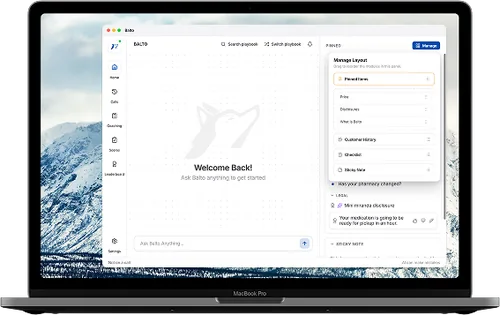
Balto is the AI Workforce for the contact center. On the live RPC it runs real-time agent assist with TCPA and FDCPA guardrails, prompts compliant next-best-actions, and coaches the agent in the moment the conversation is happening. After the call, automated QA scores 100% of the achieved RPCs, flags coaching moments, and bundles them for async supervisor review. Each RPC makes the next one more likely to convert because the coaching system compounds across the agent population.
Best for: Collections orgs whose RPCs land but conversion and compliance on the live call are where the number leaks.
Key features:
- Real-time agent assist with TCPA and FDCPA compliance guardrails
- 100% automated QA coverage on every achieved RPC
- Closed-loop coaching bundled from scored calls
- Full integration with Togo (Layer 1 autonomous voice AI) for the closed loop
Pricing: Per-seat per-month with custom enterprise pricing.
2. Prodigal: Best for collections-native coaching

Prodigal is collections-native conversation intelligence. It is not a dialer: it layers on top of an existing dial stack to score calls, coach agents, and surface patterns across collections conversations. Supervisor coaching dashboards and promise-to-pay capture are its strongest features.
Best for: Collections orgs that already have a dialer and agent assist, and need the post-RPC coaching and QA layer tuned to collections specifically.
Key features:
- Collections-specific call scoring and automated QA
- Supervisor coaching dashboards with call-highlight routing
- Agent compliance monitoring across FDCPA and Reg F
- Promise-to-pay capture and flagging for CRM sync
Pricing: Per-seat per-month with custom enterprise pricing.
3. Observe.AI: Best for post-call QA automation

Observe.AI is a post-call QA and conversation intelligence platform. The product is not RPC-primary: its value sits on the scored-call and coaching side, not the dial side. The RPC lift from Observe.AI is indirect, flowing from better coaching to better agent behavior to better conversion once the right party is on the line.
Best for: Collections orgs whose primary gap is post-call QA coverage and coaching consistency rather than real-time guidance.
Key features:
- Post-call automated QA across 100% of calls
- Conversation intelligence with sentiment and intent tracking
- Agent coaching workflows with assigned review queues
- Compliance exception flagging across the call set
Pricing: Per-seat per-month.
Also Worth Considering: AR-Focused Predictive Scoring
Finvi (Pairity AI): Best for healthcare and utilities AR

Finvi is an accounts-receivable and collections platform with Pairity AI layered in for predictive right-party scoring. The platform's center of gravity is AR workflow integration, which makes it a natural fit in healthcare collections and utilities where RPC is just one part of a broader AR cycle.
Best for: Healthcare collections, utilities, and AR-heavy portfolios where RPC is one node in a larger receivables workflow.
Key features:
- Predictive right-party scoring per account
- AR workflow integration with billing systems
- Payment portal and self-service options
- Reporting and analytics on AR cycles
Pricing: Enterprise plus per-account.
How Balto Improves Right-Party Contact Rates

Balto appears in two layers of the ranking (Togo in Layer 1, agent assist in Layer 3) because the platform is wired to close the full RPC loop: dial, verify, convert, score, coach. Here is how each mechanism contributes, and where to pair the platform with a specialist dialer when the bottleneck is pure dial scale.
Togo: Autonomous Voice AI for First-Touch Dial-and-Verify
Togo handles the outbound dial autonomously. It detects voicemail versus human in real time, verifies the right party using debtor-specific identifiers like SSN last-four, DOB, or zip, and only escalates to a human agent once the right party is confirmed. Because Togo runs 24/7, dialing extends into high-RPC call windows that human-only teams routinely miss, like early evenings and weekends, which is where a lot of right-party contact actually sits for working-age debtors.
Agentic Insights: Best-Time-to-Call Modeling
Agentic Insights analyzes which call-time windows correlate with the highest RPC per debtor segment, and feeds that back to the dial engine. This replaces the generic "10am to 2pm" heuristic with per-segment timing that reflects the actual behavior of your portfolio. Over weeks, the model compounds: each dial outcome refines the next window.
Real-Time Agent Assist: TCPA and FDCPA Guardrails on the Live RPC
Once the right party is on the line, real-time agent assist enforces required disclosures, flags prohibited phrases, and prompts compliant scripts for Reg F frequency language. An RPC that triggers a compliance exception is worse than no RPC, because it exposes the business to litigation and regulator attention. Agent assist closes that gap in the moment the agent is talking, not four hours later in a QA review.
Closed-Loop Coaching: Learning from Every RPC
Automated QA scores 100% of the achieved RPCs, flags coaching moments, and bundles them for async supervisor review. Each RPC makes the next one more likely to convert, because the coaching system compounds across the agent population. Supervisors spend time coaching the outliers instead of reviewing a random 2% sample.
When to Pair With a Specialist Dialer
Honest guidance: if the bottleneck is purely dial scale and the team already has unlimited lists, enough agents, and a mature caller-ID reputation, pair the agent assist layer with a specialist voice-AI dialer like Skit.ai. If the bottleneck spans dialing AND the conversation that follows, the closed-loop system is the strongest single-platform answer because the loop is already wired.
Which AI Tool Fits Your Collections Program?
Answer five quick questions to get a shortlist matched to your bottleneck. The quiz routes you to one of three outcomes based on where your current RPC program breaks down.
Choosing the Right AI Software for RPC
The honest shortcut: RPC is a three-layer problem, not a one-vendor problem. Voice AI (Skit.ai, Togo, AI Rudder) moves the number on dial scale. Predictive dialing (Convoso, Five9, LiveVox, NICE CXone) moves it on dial-engine efficiency. Post-RPC conversation AI (Balto's agent assist, Prodigal, Observe.AI) moves it on conversion once the right party is on the line.
Most collections programs have one layer as the dominant bottleneck. Start there, prove the lift in a 60 to 90-day pilot against a clean baseline, and layer the second tool when the first bottleneck clears. The teams that try to buy all three at once usually stall in procurement before any of them ship.
Balto is the one platform in this list that spans all three in a single closed loop (Togo in Layer 1 plus agent assist and QA in Layer 3), which is the fastest path for collections ops that want to move RPC, PTP, and compliance exceptions on the same timeline.
FAQs
The main options in 2026 are Skit.ai, Convoso, Prodigal, Balto, AI Rudder, Five9, LiveVox, Observe.AI, NICE CXone, and Finvi. They split across three honest layers: autonomous voice AI for dial-and-verify (Skit.ai, Togo, AI Rudder), predictive dialing with AI (Convoso, Five9, LiveVox, NICE), and post-RPC conversation AI (Balto's agent assist, Prodigal, Observe.AI).
The only platform in this list spanning all three layers in a single closed loop is Balto, which makes it the shortcut for teams whose bottleneck crosses dialing and conversation.
AI improves RPC through three mechanisms. First, voice AI replaces the first-touch human dial, so dials happen 24/7 and the AI verifies identity before a human is pulled in. Second, predictive models analyze best-time-to-call per debtor segment and feed timing back to the dial engine. Third, caller-ID reputation tooling keeps outbound numbers off carrier spam lists.
The combination moves raw RPC from the 3-8% industry baseline to the 15-35% range seen in mature AI-powered deployments.
Traditional outbound RPC rates for collections sit at 3-8%, varying heavily by portfolio age and type. Early-stage first-party collections generally run higher, and third-party charge-off portfolios run lower.
With AI-powered dialing and verification, mature deployments report RPC in the 15-35% range, though these figures come from vendor case studies and should be validated against your own baseline before you commit. Run a 60 to 90-day pilot on a defined segment before extrapolating.
Contact rate is any human picking up the phone. Right-party contact rate is the specific debtor the account is tied to. RPC is always less than or equal to contact rate, because wrong-party contacts (a spouse, a neighbor, an old number's new owner) count toward contact rate but not RPC.
RPC is the operational metric that matters, because only right-party contacts can convert into a promise-to-pay.
Yes, in four ways. Togo is Balto's autonomous voice AI agent that dials, detects voicemail versus human, and verifies the right party before a human agent is pulled in. Agentic Insights models best-time-to-call per debtor segment and feeds timing back to the dialer. Real-time agent assist handles the TCPA and FDCPA-safe conversation once the right party is on the line. Automated QA scores 100% of the achieved RPCs for closed-loop coaching.
Honest caveat: for collections orgs whose bottleneck is purely dial scale, the platform is best paired with a specialist voice-AI dialer like Skit.ai.
Yes, when deployed with consent-aware dialing, Reg F frequency caps, required disclosures at the start of the call, and identity verification before discussing debt details. The specific implementation matters: vendors vary on how well they handle required disclosures and prohibited-time windows out of the box.
Compliance-first platforms like LiveVox have Reg F guardrails built in. Generic voice AI platforms repurposed for collections may not. Verify the specific compliance posture before selecting a vendor.
It depends on which layer your bottleneck sits in. Voice-AI layer: Skit.ai has the strongest attributable case study. Dial-engine layer: Convoso leads the mid-market, Five9 and NICE CXone lead at enterprise, and LiveVox leads in compliance-heavy portfolios. Conversation layer: Balto's agent assist leads for real-time guidance and closed-loop coaching, Prodigal for collections-native QA.
Most mature programs end up running one tool per layer, with the second layer filling the gap the first leaves.
The first signal shows up in 2 to 4 weeks as the AI tunes answering-machine detection and list timing. Measurable RPC lift typically appears in 60 to 90 days as the list-optimization model matures against your portfolio. Full impact tends to land at 4 to 6 months, when the model has learned the portfolio's call-time patterns and caller-ID reputation has stabilized.
Teams that evaluate at day 30 usually see partial signal; teams that evaluate at day 90 see the real number.
No, AI is layered on top. Predictive dialing is still the dial engine (the thing that physically places calls). AI improves what the dialer dials, when it dials, and with what caller ID.
Voice AI replaces the AGENT on the first touch of the call, not the dialer itself. Many mature programs run a predictive dialer (for raw dial throughput) and voice AI (for autonomous first-touch handling) in combination.
Voice AI dialing is usually priced per-minute ($0.08 to $0.20/minute is a typical US range) or per-successful-RPC. Agent assist platforms are typically per-seat per-month, in the $100 to $300 range depending on tier. Enterprise CCaaS add-ons are negotiated into the CCaaS contract.
For a 90-day pilot that validates the lift against a baseline, most programs budget $20K to $50K before expanding to full deployment.
Liked what you read? See Balto in action.
Balto helps leading contact centers turn insights into outcomes, in real time. Book a live demo to discover how our AI powers better conversations, coaching, and conversions.