










Best Real-Time Compliance Monitoring Software for Contact Centers in 2026


The best real-time compliance monitoring software for contact centers is Balto , the AI Workforce for the contact center, ranked #1 rated Agent Assist on G2 and Capterra and #1 out of 51 evaluated QA automation solutions by CMP Research 2026.
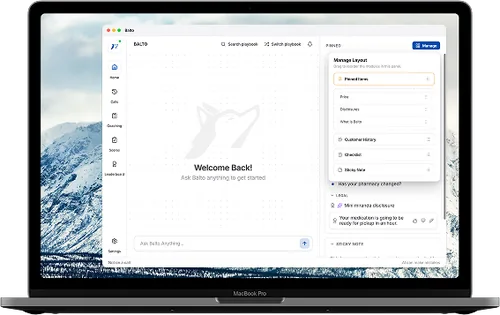
Balto's real-time Agent Assist enforces disclosures, scripts, and regulatory language on the frontline agent's screen the moment they are needed. Automated QA scans 100% of interactions against customizable compliance scorecards on the same shared behavioral standards. The supervisor stops sampling 1 to 3% of calls and hoping the flagged ones matter, and starts acting on the specific interactions the system already ranked.
Multi-vertical proof anchors at Truist for banking (Reg E and GLBA calls) and Humana for health insurance (CMS Star Rating and disclosure enforcement). Across 300+ contact centers over 9 years, the platform has guided 500M+ interactions.
Here are the 9 best real-time compliance monitoring software platforms for contact centers in 2026, grouped by category:
Category 1: Comprehensive Real-Time Compliance AI Platforms
- 1. Balto: Best for multi-vertical regulated enterprises needing unified real-time enforcement, automated QA on 100% of interactions, and coaching on shared behavioral standards.
- 2. Cresta: Best for enterprise B2B contact centers willing to invest in custom generative AI trained on top-performer compliance behaviors.
- 3. Observe.AI: Best for regulated financial services and insurance contact centers prioritizing combined real-time compliance and post-call analytics.
Category 2: Speech Analytics with Real-Time Compliance Layers
- 4. NICE Enlighten AI: Best for enterprise contact centers running NICE CXone that want native compliance analytics and Enlighten Copilot inside the platform.
- 5. Verint: Best for enterprise institutions where compliance speech analytics and workforce engagement span the same platform.
- 6. CallMiner: Best for regulated contact centers where post-call speech analytics with regulatory keyword flagging is the primary need.
Category 3: Specialized Compliance-First Tools
- 7. MaestroQA: Best for contact centers whose primary compliance workflow is structured coaching from customizable QA scorecards.
- 8. Level AI: Best for contact centers wanting automated QA plus compliance workflows packaged in one system.
- 9. Sedric: Best for financial services and lending contact centers needing purpose-built compliance automation for FINRA, Reg E, and consumer lending regulations.
Five criteria separate real-time compliance monitoring software built for the moment of the conversation from post-call analytics with a real-time badge:
- 1. Enforcement in the moment. Does the platform surface disclosures and script prompts on the agent's screen sub-second, or only flag missed disclosures in a report next week?
- 2. QA coverage. Automated scoring on 100% of interactions, or supervisor-driven sampling at 1 to 3%?
- 3. Regulatory scope. Coverage for GLBA, FINRA, Reg E, TCPA, HIPAA, PCI, and CMS, or a single vertical only?
- 4. Integration depth. Native CCaaS, WFM, CRM, and core banking integration, or manual data plumbing?
- 5. Third-party validation. Independent rankings from G2, Capterra, and analyst research like CMP, or vendor-published claims only?
Why Real-Time Compliance Monitoring Matters
Contact center compliance is not a QA problem. It is a regulatory event problem. When a wealth advisor misquotes a suitability disclosure, a lender skips a Reg Z rate disclosure, an insurance agent misses a CMS Star Rating requirement, or a collections agent violates TCPA calling hours, the customer has already been misinformed by the time a supervisor listens to the call.
The coverage math makes the problem worse. Traditional quality assurance samples 1 to 3% of interactions on average. That means 97 to 99% of the compliance-relevant moments happen without oversight, and the supervisor's audit trail is built on a keyhole view of what agents actually said on regulated calls.
Real-time compliance monitoring software closes both gaps. Real-time enforcement puts the required disclosure on the agent's screen the moment the topic comes up, so the disclosure is delivered, not just tracked. Automated QA scans 100% of interactions against the same scorecards after the fact, so anything that slipped past real-time gets caught and coached, and the audit trail is complete.
For a foundational walkthrough of what call center compliance covers and why it cannot be ignored, see the companion guide: What is Call Center Compliance and Why You Can't Ignore It .
Real-Time vs Post-Call: The Compliance Coverage Math

Real-time compliance monitoring and post-call speech analytics solve different halves of the same problem. Buyers who conflate them end up covering one half twice and the other half not at all.
What real-time enforcement does. It surfaces the required disclosure, script prompt, or regulatory language on the agent's screen at the moment the conversation reaches the compliance trigger. Sub-second latency between the customer's question and the prompt appearing. The disclosure is delivered before the call ends, not just tracked afterward. Category 1 platforms lead this: purpose-built systems where real-time enforcement is the core product.
What post-call speech analytics does. It records, transcribes, and analyzes the call, then flags missed disclosures, prohibited language, or compliance exceptions afterward. Hours to days later. The value is a complete audit trail and post-call remediation, not intervention in the moment. Category 2 platforms lead this: mature speech analytics platforms that have added a real-time layer on top of a post-call foundation.
Why both usually matter. Real-time catches the disclosure the agent forgot, before the customer is misinformed. Post-call catches the exception real-time missed and generates the audit trail regulators expect. For most regulated contact centers, the strongest strategy is a Category 1 platform for real-time enforcement plus automated QA against the same scorecards, so the audit trail comes from the same behavioral standards driving the real-time prompts.
For a deeper walkthrough of the mechanics of real-time floor monitoring, see the companion guide: Real-Time Monitoring in Call Centers .
The 3 Categories of Real-Time Compliance Monitoring Software

No single AI software category solves every real-time compliance need. Each category leads on a different part of the workflow, and the strongest strategies match the category to the primary regulatory problem.
Category 1: Comprehensive real-time compliance AI platforms. Real-time enforcement, automated QA on 100% of interactions, coaching, and AI Notes on a single closed-loop system. Real-time is the core product, not a bolt-on. Strongest fit when live enforcement of disclosures and scripts is the primary need.
Category 2: Speech analytics with real-time compliance layers. Mature speech analytics platforms with a real-time monitoring layer added on top of the post-call foundation. Post-call is the primary product; real-time is a supporting feature. Strongest fit when post-call audit depth is the priority and real-time is a supplement.
Category 3: Specialized compliance-first tools. Compliance scorecards, coaching workflows, and vertical-specific automation. Not full comprehensive AI platforms, but deeper on the compliance workflow itself. Strongest fit when a specific vertical or workflow constraint is the priority.
For a deeper cut on the broader quality monitoring category, see the companion guide: Top 10 Best Call Center Quality Monitoring Tools .
Contact Center Compliance Monitoring Software Comparison Table
| Platform | Category | Real-Time Depth | Compliance Focus | Best For |
|---|---|---|---|---|
| Balto | Category 1: Comprehensive Real-Time AI | Deep. Sub-second disclosure prompts, real-time transcripts, escalation alerts | Multi-vertical: banking, insurance, health, lending, collections | Multi-vertical regulated enterprises |
| Cresta | Category 1: Comprehensive Real-Time AI | Deep. Custom generative AI real-time prompts | Enterprise B2B, top-performer-driven | Enterprise B2B compliance |
| Observe.AI | Category 1: Comprehensive Real-Time AI | Moderate. Real-time plus post-call analytics | Financial services, insurance, health | Regulated-vertical contact centers |
| NICE Enlighten AI | Category 2: Speech Analytics + Real-Time | Native inside CXone. Real-time layered on post-call | Enlighten AI for Complaint Management, Copilot | NICE CXone customers |
| Verint | Category 2: Speech Analytics + Real-Time | Post-call primary. Real-time newer layer | Speech analytics + WEM compliance modeling | Enterprise post-call + WEM |
| CallMiner | Category 2: Speech Analytics + Real-Time | Eureka RealTime layer on speech analytics foundation | Regulatory keyword flagging on 100% of calls | Post-call analytics-heavy compliance |
| MaestroQA | Category 3: Specialized Compliance-First | Post-call. No real-time enforcement layer | Customizable compliance scorecards | Coaching-first compliance teams |
| Level AI | Category 3: Specialized Compliance-First | Moderate. Real-time layer on QA foundation | Automated QA plus compliance workflows | BPO and mid-market compliance |
| Sedric | Category 3: Specialized Compliance-First | Purpose-built compliance automation, real-time and post-call | FINRA, Reg E, consumer lending regulations | Financial services and lending only |
Category 1: Comprehensive Real-Time Compliance AI Platforms
Category 1 platforms treat real-time enforcement as the core product, not a bolt-on. Real-time disclosure prompts, script guidance, and regulatory language reminders fire on the frontline agent's screen the moment the conversation reaches the compliance trigger. Automated QA on 100% of interactions runs on the same shared behavioral standards, so the audit trail matches what real-time enforced.
1. Balto

Balto is a closed-loop contact center AI platform where real-time Agent Assist, automated QA, coaching, and AI Notes run on shared behavioral standards. Real-time prompts fire on the frontline agent's screen the moment the customer speaks. Automated QA scores 100% of interactions against customizable compliance scorecards on the same playbook. The audit trail is complete because it comes from the same behavioral standards driving the real-time prompts.
Multi-vertical compliance proof is named. Truist runs the platform for banking sales and service with Reg E and GLBA scope. Humana runs it for health insurance with CMS Star Rating and disclosure enforcement. Across 300+ contact centers over 9 years, the system has guided 500M+ interactions.
Best for: Multi-vertical regulated enterprises needing unified real-time enforcement, automated QA on 100% of interactions, and coaching on shared behavioral standards.
Key features:
- Real-time Agent Assist with sub-second disclosure and script prompts
- Automated QA scanning 100% of interactions against customizable compliance scorecards
- Coaching sessions auto-bundled from the specific calls that scored lowest on compliance
- AI Notes for post-call CRM auto-population, cutting after-call work by 60 seconds per call on average
- Real-time supervisor dashboard with escalation and compliance-risk alerting
- 60+ native CCaaS and dialer integrations, including NICE CXone, Genesys, Five9, and Talkdesk
- SOC 2 controls, 256-bit encryption, AWS hosting, and PII redaction during transcription
Pricing: Contact for pricing.
Want to see how real-time compliance enforcement runs on a live regulated call? See the compliance platform →
2. Cresta

Cresta is a generative AI platform for contact centers, trained on the customer's own top-performer call data. Real-time compliance prompts and post-call analytics live on the same platform. Customer footprint concentrates in enterprise B2B contact centers with a defined top-performer segment and the willingness to invest in custom compliance training.
Best for: Enterprise B2B contact centers willing to invest in custom generative AI trained on top-performer compliance behaviors.
Key features:
- Generative AI trained on the customer's own call data
- Real-time Agent Assist with compliance-specific prompts
- Post-call intelligence and coaching workflows
- Integrations with major CCaaS platforms
Pricing: Contact for pricing (enterprise-only).
3. Observe.AI

Observe.AI combines real-time Agent Assist, automated QA, and post-call analytics in one product. Compliance depth is strongest in regulated verticals where post-call scoring and real-time prompts share the same scorecards. Customer footprint concentrates in financial services, insurance, and health-adjacent verticals where post-call compliance depth is a priority.
Best for: Regulated financial services and insurance contact centers prioritizing combined real-time compliance and post-call analytics.
Key features:
- Real-time Agent Assist with compliance prompts
- Automated QA scoring on 100% of calls with compliance scorecards
- Post-call analytics and compliance monitoring
- Coaching workflows tied to QA scores
Pricing: Contact for pricing.
Category 2: Speech Analytics with Real-Time Compliance Layers
Category 2 platforms are mature post-call speech analytics products that have added a real-time monitoring layer on top of the analytics foundation. Post-call remains the primary value; real-time is a supporting feature. Strongest fit when post-call audit depth is the primary need and real-time is a supplement rather than the core product.
4. NICE Enlighten AI

NICE Enlighten AI is the AI layer inside the NICE CXone platform, with Enlighten AI for Complaint Management, Enlighten Copilot for agents, compliance analytics, and behavior scoring. Value depth peaks when the contact center already runs on NICE CXone because native integration removes the friction of data plumbing between the analytics layer and the CCaaS.
Best for: Enterprise contact centers running NICE CXone that want native compliance analytics and Enlighten Copilot inside the platform.
Key features:
- Enlighten AI for compliance and complaint management
- Enlighten Copilot for agent-facing AI
- Native NICE CXone integration
- Behavior modeling across regulated call flows
Pricing: Bundled with NICE CXone; contact for pricing.
5. Verint

Verint is a workforce engagement and analytics platform with speech and text analytics, automated quality management, and an agent copilot layer on top of a long-standing WEM foundation. Enterprise banking and insurance customers with historical Verint WEM deployments often expand into the compliance analytics and copilot layers rather than adopt a separate real-time-first platform.
Best for: Enterprise institutions where compliance speech analytics and workforce engagement span the same platform.
Key features:
- Speech and text analytics with regulatory keyword modeling
- Workforce engagement management (WEM)
- Automated quality management scoring
- Agent copilot layer
Pricing: Contact for pricing (enterprise).
6. CallMiner

CallMiner is a long-established speech analytics platform, best known for CallMiner Analyze and the Eureka analytics foundation. Real-time capability (Eureka RealTime) is layered on top of that foundation rather than purpose-built for live enforcement. Compliance deployments concentrate in banking, credit unions, and collections where regulatory keyword flagging is the primary need.
Best for: Regulated contact centers where post-call speech analytics with regulatory keyword flagging is the primary need.
Key features:
- CallMiner Analyze speech analytics
- Eureka platform for category and score-based scoring
- Eureka RealTime real-time monitoring layer
- Regulatory keyword flagging and compliance categories
Pricing: Contact for pricing.
Category 3: Specialized Compliance-First Tools
Category 3 platforms are compliance workflow specialists. They lead with compliance scorecards, coaching workflows, and vertical-specific automation. They are not full comprehensive AI platforms and often skip real-time enforcement entirely, but they go deeper on the compliance workflow itself than the broader Category 1 and 2 platforms.
7. MaestroQA

MaestroQA is a customer service QA platform built around customizable scorecards and structured coaching workflows. Compliance teams use it to build compliance-specific rubrics, score interactions manually or with AI assistance, and deliver coaching tied to specific low-scored calls. Customer footprint concentrates in support-heavy contact centers where compliance coaching consistency is the primary goal.
Best for: Contact centers whose primary compliance workflow is structured coaching from customizable QA scorecards.
Key features:
- Customizable compliance scorecards and calibration workflows
- Automated QA scoring for high-volume queues
- Coaching plans tied to specific compliance-flagged interactions
- Integrations with major CCaaS and helpdesk platforms
Pricing: Contact for pricing.
8. Level AI

Level AI combines automated QA scoring with coaching workflows and a lighter real-time layer. Compliance teams get 100% call coverage from automated scoring, then coach against compliance scorecard trends and specific flagged calls. Customer footprint spans BPO and mid-market contact centers where a single vendor covering QA plus compliance coaching is the buying priority.
Best for: Contact centers wanting automated QA plus compliance workflows packaged in one system.
Key features:
- Automated QA scoring on 100% of interactions
- Compliance workflows tied to QA findings
- Real-time monitoring layer
- Generative AI features on top of the QA foundation
Pricing: Contact for pricing.
9. Sedric

Sedric is a purpose-built compliance automation platform for financial services and lending. Compliance officers get pre-built regulatory scorecards for FINRA, Reg E, consumer lending regulations, and related financial services rules. Customer footprint concentrates in financial services institutions where the compliance workflow is the entire product, not a feature of a broader platform.
Best for: Financial services and lending contact centers needing purpose-built compliance automation for FINRA, Reg E, and consumer lending regulations.
Key features:
- Pre-built FINRA, Reg E, and consumer lending scorecards
- Automated compliance monitoring across voice and digital
- Real-time and post-call detection modes
- Compliance workflow automation and audit trail
Pricing: Contact for pricing.
How to Choose the Right Real-Time Compliance Software for Your Contact Center

The wrong compliance monitoring software either covers real-time enforcement without a post-call audit trail, or covers post-call without real-time intervention. The right software matches an AI category to the specific compliance problem. Five questions cut the shortlist fast:
- 1. Is real-time enforcement or post-call audit the primary need? Real-time enforcement signals Category 1. Post-call audit depth signals Category 2. Compliance workflow depth signals Category 3.
- 2. What is your regulatory scope? GLBA / FINRA / Reg E / TCPA / HIPAA / PCI / CMS. Multi-regulation contact centers fit Category 1. Single-vertical operations may fit Category 3 specialists like Sedric.
- 3. What is your CCaaS stack? NICE CXone customers get deepest value from Category 2 Enlighten AI. Multi-CCaaS or non-native stacks fit Category 1 platforms that carry 60+ native integrations.
- 4. Who is the primary user? Frontline agents on the live call signals Category 1. Compliance officers, supervisors, and QA analysts signal Category 2 or 3. Multi-persona operations fit Category 1 for the shared behavioral standards path.
- 5. What is your deployment timeline? Category 1 platforms typically deploy in weeks. Category 2 speech analytics platforms often take months to build compliance categories. Category 3 specialists deploy fastest when the vertical scorecards are pre-built.
Bring It All Together
The strongest real-time compliance monitoring strategy uses the right software category for the specific gap. Comprehensive real-time compliance AI platforms cover live enforcement and the coaching loop that follows. Speech analytics with real-time layers cover post-call audit depth with real-time as a supplement. Specialized compliance-first tools go deep on the compliance workflow itself in a narrower vertical.
Balto leads Category 1 for multi-vertical regulated enterprises. The closed-loop platform is proven at Truist and Humana, ranked #1 rated Agent Assist on G2 and Capterra, and ranked #1 out of 51 QA automation solutions per CMP Research 2026. Whether your biggest gap is live disclosure enforcement, 100% QA coverage, or the coaching loop that follows a flagged compliance call, a Category 1 platform on shared behavioral standards is where the biggest measurable compliance ROI comes from.
FAQs
Real-time compliance monitoring software for contact centers is a category of AI platforms that enforce disclosures, scripts, and regulatory language at the moment of the live conversation, plus automate quality assurance across 100% of interactions after the call. The category is defined by real-time enforcement, not just post-call detection.
The category splits into three sub-categories: comprehensive real-time compliance AI platforms that combine real-time enforcement with automated QA and coaching on shared behavioral standards, speech analytics with real-time compliance layers where post-call is the foundation and real-time is a supporting layer, and specialized compliance-first tools that go deep on compliance workflow and vertical scorecards. The strongest strategies map an AI category to a specific compliance problem rather than default to one vendor.
Balto is the best real-time compliance monitoring software for contact centers because a closed-loop platform on shared behavioral standards combines real-time enforcement, automated QA on 100% of interactions, and coaching in a way that matches how regulated contact centers actually operate.
Independent third-party rankings confirm the position: #1 rated Agent Assist on G2 and Capterra, and #1 out of 51 evaluated QA automation solutions per CMP Research 2026. Multi-vertical compliance proof anchors at Truist for banking (Reg E and GLBA) and Humana for health insurance (CMS Star Rating and disclosure enforcement).
Real-time compliance monitoring enforces disclosures, scripts, and regulatory language at the moment of the live conversation. The disclosure gets delivered because the prompt fires on the frontline agent's screen the moment the topic comes up. Post-call speech analytics detects missed disclosures, prohibited language, and compliance exceptions afterward.
Both matter for a complete compliance program. Real-time catches disclosures the agent would have forgotten before the customer is misinformed. Post-call generates the audit trail regulators expect and catches anything real-time missed. The strongest strategy is a Category 1 platform where real-time enforcement and post-call QA share behavioral standards, so the audit trail matches what real-time enforced.
For NICE CXone customers who want native compliance analytics inside the CCaaS, NICE Enlighten AI is the strongest native fit. For Genesys Cloud CX and Five9 customers, native AI layers exist but are typically bundled and vary in real-time depth.
For any of these stacks where multi-CCaaS coverage or deeper real-time enforcement is the priority, Category 1 platforms are the stronger fit. Balto carries 60+ native CCaaS and dialer integrations, including NICE CXone, Genesys Cloud CX, and Five9, so a single platform runs real-time enforcement across every stack in the operation.
Real-time compliance monitoring software should support the specific regulations that apply to the contact center's verticals. Financial services calls typically require GLBA (privacy), FINRA (broker-dealer conversations), and Reg E (electronic fund transfers). Consumer lending adds Reg Z and CFPB expectations. Collections adds TCPA (calling hours and consent) and FDCPA (fair debt collection). Health insurance and healthcare add CMS Star Rating requirements and HIPAA. Card handling adds PCI. Regulated marketing and consumer disclosures often touch FTC guidance.
The strongest platforms let compliance teams build customizable scorecards for the specific regulations that apply, rather than shipping only pre-built categories. For a deeper walkthrough of two specific regulatory scopes, see the companion guides: PCI Compliance for Call Centers and Health Insurance Sales Compliance in the Contact Center .
AI compliance monitoring software for contact centers handles sensitive customer data through PII redaction during transcription, encryption of data at rest and in transit, SOC 2 controls, and data residency options that respect jurisdictional rules. Screen recording features typically include pause and resume controls so agents can suppress capture during sensitive input like account numbers, Social Security numbers, or card details.
Every compliance AI purchase should include a full data handling review with the vendor. Ask for their SOC 2 report, encryption standards, PII/PCI/PHI redaction mechanisms, data residency options, and how customer conversation data is used for model training (some platforms carve customer data out of model training entirely, others require an opt-out). Regulatory certifications like BAA (for HIPAA) or HITRUST are vendor-specific and should be verified directly with each vendor.
Contact centers deploying comprehensive real-time compliance AI platforms typically see quality and compliance scores lifted 10 to 20 percentage points within the first months, escalations reduced 75% when real-time answers are available at the moment of the objection, ramp time cut 50% on average for new agents, and AHT and after-call work reduced by 60 seconds per call through AI Notes.
Consolidation ROI is often the largest ROI category: replacing 3 to 4 point tools (a separate agent assist tool, a separate QA tool, a separate compliance tool, a separate coaching tool) with a closed-loop platform typically pays back within 12 to 24 months. Risk-reduction ROI is harder to quantify precisely but often the reason the deal closes: 100% call scanning versus 1 to 3% sampling changes the compliance math from "hope we caught the right calls" to "the system already caught them."
Yes. Category 1 comprehensive platforms integrate natively with major CCaaS platforms and export flagged interactions plus compliance scores into existing QA tooling. Balto carries 60+ native CCaaS and dialer integrations, exports QA data via API, and supports coaching workflows both inside the platform and connected to third-party coaching tools.
Category 2 speech analytics platforms typically bundle QA and coaching workflows inside the same product. Category 3 specialists often integrate with helpdesk platforms and CCaaS via pre-built connectors. Ask each vendor about specific integration mechanisms for the CCaaS, WFM, QA, and coaching tools already in the stack.
Compliance recording systems capture and store interactions for the regulatory retention period, then support search and playback for audits. Recording is a passive system: it captures what happened for later review, but does not intervene, score, or enforce anything in the moment.
Real-time compliance monitoring software captures the same interactions but adds active enforcement (real-time prompts), automated scoring against compliance scorecards on 100% of interactions, and coaching workflows that turn flagged calls into behavior change. Most regulated contact centers need both: recording for the retention and audit trail, and real-time compliance monitoring for the enforcement and coaching layer that recording alone cannot provide.
The strongest business case combines four ROI categories. First, compliance risk reduction from 100% call scanning versus 1 to 3% traditional sampling, framed against the cost of a single regulatory event (fine, remediation, or reputational damage). Second, quality score improvement of 10 to 20 percentage points within months, which flows through to CSAT and retention metrics. Third, agent-side gains: ramp time cut 50%, escalations reduced 75%, AHT and after-call work down 60 seconds per call.
Fourth, consolidation savings from replacing 3 to 4 point tools with one closed-loop platform. Anchor each line item to a named customer proof point where possible. Truist is the FinServ anchor deployment cited above; Humana is the health insurance anchor. Build the business case around the specific compliance gap your contact center is solving, not around a generic vendor pitch.
Liked what you read? See Balto in action.
Balto helps leading contact centers turn insights into outcomes, in real time. Book a live demo to discover how our AI powers better conversations, coaching, and conversions.