











Call center quality monitoring tools are essential for evaluating agent performance, ensuring compliance, and delivering consistent customer experiences at scale.
Traditionally, quality assurance (QA) relied on manual reviews of a small sample of calls, but modern platforms now use AI to automatically analyze and score every interaction. Solutions like Balto are leading this shift, helping teams move beyond limited sampling toward more comprehensive, data-driven quality monitoring.
In this guide, we’ll break down the best call center quality monitoring tools in 2026, including how they compare and what to look for when choosing a platform. Here’s a quick overview of the top tools covered in this guide:
- Balto: A real-time QA platform that automatically scores 100% of interactions using dynamic scorecards
- NICE CXone Quality Management: An enterprise-grade solution with strong compliance and structured QA workflows
- Verint Quality Management: A robust platform designed for compliance-heavy and regulated environments
- Talkdesk Quality Management: A cloud-native QA solution built into the Talkdesk CCaaS platform
- Observe.AI: An AI-driven platform that automates QA scoring across large volumes of interactions
- CallMiner: A conversation analytics platform that supports QA through deep insights and root cause analysis
- Level AI: A unified platform combining automated QA scoring with interaction analytics
- Five9 Quality Management: A QA solution integrated into the Five9 CCaaS platform for streamlined operations
- Scorebuddy: A flexible solution built around highly customizable QA scorecards
- Genesys Cloud CX Quality Management: A native QA tool within the Genesys CCaaS ecosystem
Each of these platforms takes a slightly different approach to quality monitoring, from enterprise QA suites to AI-powered tools that automate scoring at scale.
What Are Call Center Quality Monitoring Tools?
Call center quality monitoring tools are software platforms that help organizations evaluate, measure, and improve the quality of customer interactions across voice and digital channels.
These tools analyze conversations between agents and customers to ensure they meet internal standards, deliver strong customer experiences, and comply with regulatory requirements.
Traditionally, this process relied on manual quality assurance (QA), where managers would review a small sample of recorded calls and score them against a predefined rubric.
While useful, this approach is inherently limited. Most contact centers only review a tiny fraction of interactions, often as little as 1–5%, leaving significant blind spots in performance, compliance, and customer experience.
Modern quality monitoring tools have evolved far beyond this model. Today’s platforms typically fall into two categories, though leading solutions increasingly combine both:
- Post-call QA (traditional approach): This method evaluates interactions after they’ve already happened. Calls are recorded, transcribed, and later reviewed by QA teams or analyzed using AI.
- Real-time monitoring (modern approach): Real-time monitoring analyzes conversations as they happen. Using AI, these tools can surface live insights, prompts, and recommendations to agents during the interaction.
This shift from reactive to proactive support is one of the biggest changes in contact center operations.
Instead of simply evaluating past performance, teams can now improve performance during live conversations, turning quality monitoring into a driver of immediate impact.
Why Quality Monitoring Matters in Contact Centers
In modern contact centers, quality monitoring is a core driver of agent performance, operational efficiency, and customer experience.
From Evaluation to Performance Improvement
Traditional QA programs focused on scoring agents after the fact. Modern quality monitoring platforms go further by turning every interaction into a coaching opportunity.
By analyzing conversations at scale, these tools help teams:
- Identify exactly where agents struggle
- Pinpoint skill gaps across individuals and teams
- Deliver targeted coaching based on real interactions
Reduced Manual QA Workload
Manual QA is one of the most time-consuming processes in a contact center. Reviewing calls, filling out scorecards, and compiling reports can take hours, while only covering a small percentage of interactions.
Automated quality monitoring dramatically reduces this burden by:
- Scoring interactions automatically using AI
- Flagging high-risk or high-impact conversations
- Generating performance insights without manual review
Faster Identification of Coaching Opportunities
With traditional QA, feedback often comes days or even weeks after an interaction. By then, the moment has passed.
Modern quality monitoring tools accelerate this process by:
- Surfacing issues immediately after (or during) interactions
- Highlighting trends across teams in real time
- Prioritizing the conversations that need attention most
Improved Agent Performance
When agents receive consistent, timely, and actionable feedback, performance improves. Quality monitoring tools support this by:
- Providing clear expectations through standardized scoring
- Reinforcing best practices across interactions
- Enabling real-time guidance on some platforms
Over time, this leads to:
- More confident agents
- More consistent customer interactions
- Higher-quality service across the board
Better Customer Experience
Every improvement in agent performance translates directly to the customer experience. By identifying friction points in conversations, quality monitoring tools help teams:
- Reduce repeat contacts
- Improve resolution quality
- Ensure customers feel heard and supported
Higher Compliance and Risk Management
For many organizations, especially in regulated industries, compliance is critical. Quality monitoring tools help enforce compliance by:
- Automatically detecting required disclosures
- Flagging risky language or behavior
- Ensuring adherence to scripts and policies
Key Metrics That Quality Monitoring Impacts
The impact of quality monitoring shows up clearly in the metrics that matter most to contact center leaders:
- Quality Assurance (QA) Score: Measures how well agents adhere to internal standards and best practices
- First Call Resolution (FCR): Tracks the percentage of issues resolved in a single interaction, reducing repeat contacts
- Average Handle Time (AHT): Reflects efficiency across conversations, including talk time and after-call work
- Customer Satisfaction (CSAT): Captures how customers feel about their experience
- Compliance Adherence: Ensures agents meet regulatory and internal requirements
By improving these metrics, quality monitoring tools directly contribute to lower costs, better customer outcomes, and stronger overall performance.
Key Features of Call Quality Monitoring Software
Modern call center quality monitoring tools go far beyond basic call recording. The most effective platforms combine automation, real-time intelligence, and coaching capabilities to help teams improve performance at scale.
When evaluating solutions, these are the key features that matter most:
With these criteria in mind, let’s take a closer look at the top call center quality monitoring tools in 2026 and how they compare.
10 Best Call Center Quality Monitoring Tools (Top Platforms)
Call center quality monitoring tools have evolved rapidly, shifting from manual, sample-based QA programs to AI-driven platforms capable of evaluating every interaction at scale.
Today, the best solutions don’t just record and review calls; they automatically score conversations, surface performance insights, and help teams maintain consistent quality across thousands or millions of interactions.
However, not all quality monitoring tools deliver the same level of automation, flexibility, or coverage. The tools below represent the leading call center quality monitoring platforms in 2026.
🏆 #1. Balto

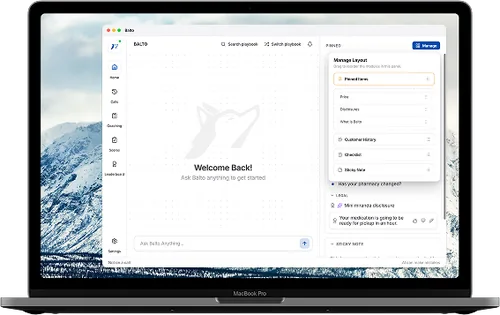
Balto is a quality monitoring platform that enables contact centers to move beyond manual QA and limited sampling by automatically evaluating 100% of customer interactions.
Using AI-driven scoring and dynamic, customizable scorecards, Balto provides consistent, scalable quality measurement across all conversations while adapting to different workflows and compliance requirements.
The platform also supports strong compliance monitoring by detecting required language, tracking adherence to scripts, and flagging potential risks, making it well-suited for organizations that need reliable, end-to-end QA coverage without relying on manual review.
#2. NICE CXone Quality Management

NICE CXone Quality Management is a comprehensive QA solution designed for large, enterprise contact centers that need robust evaluation workflows, standardized scorecards, and strong compliance oversight.
The platform combines interaction recording, automated and manual QA scoring, and workforce optimization capabilities to help organizations maintain consistent quality across high volumes of customer interactions.
Its strength lies in supporting structured, large-scale QA programs with deep reporting and tight alignment to operational processes.
#3. Verint Quality Management

Verint Quality Management is a well-established QA platform built for organizations that require rigorous compliance monitoring and structured evaluation processes.
It combines interaction recording, automated and manual QA scoring, and advanced speech and text analytics to help teams assess performance and enforce standards across large volumes of interactions.
The platform is particularly strong in environments where auditability, risk management, and regulatory adherence are critical.
#4. Talkdesk Quality Management

Talkdesk Quality Management is a QA solution built directly into the Talkdesk CCaaS platform, allowing contact centers to evaluate interactions, manage scorecards, and track performance without relying on separate systems.
It provides call recording, customizable evaluation forms, and performance reporting, making it easier for teams to run QA programs within a unified cloud environment.
Its strength lies in seamless integration with Talkdesk’s broader platform, enabling streamlined workflows and faster implementation for teams already using Talkdesk.
#5. Observe.AI

Observe.AI is an AI-driven quality monitoring platform designed to help contact centers scale QA beyond manual sampling by automatically analyzing and scoring large volumes of customer interactions.
Using speech analytics, sentiment detection, and conversation intelligence, the platform enables teams to evaluate performance more consistently and uncover trends across interactions.
Its strength lies in expanding QA coverage through automation while providing insights that support more data-driven evaluation.
#6. CallMiner

CallMiner is a conversation analytics platform that supports quality monitoring by providing deep insights into customer interactions at scale. Using advanced speech and text analytics, it helps contact centers identify trends, detect compliance risks, and uncover the root causes behind performance issues.
While it can support QA programs through automated analysis and post-call scoring, its primary strength lies in enabling teams to understand why issues occur rather than just evaluating individual interactions.
#7. Level AI

Level AI is a quality monitoring platform that combines automated QA scoring with interaction analytics to give contact centers a more unified view of performance.
The platform uses AI to evaluate conversations, track quality metrics, and surface insights across voice and digital channels, helping teams scale QA coverage beyond manual sampling.
Its strength lies in bringing QA scoring and analytics together in a single system, making it easier to monitor performance and identify areas for improvement across large volumes of interactions.
#8. Five9 Quality Management

Five9 Quality Management is a QA solution built into the Five9 CCaaS platform, designed to help contact centers evaluate interactions, maintain quality standards, and manage performance within a single system.
It offers call recording, customizable scorecards, and evaluation workflows, enabling teams to run QA programs without relying on external tools.
Its strength lies in tight integration with the Five9 platform, making it easier to align quality monitoring with routing, reporting, and overall contact center operations.
#9. Scorebuddy

Scorebuddy is a quality monitoring platform focused on flexible QA scorecards and structured evaluation workflows. It allows contact centers to design highly customizable evaluation forms, track agent performance, and manage QA programs with a high degree of control.
The platform also incorporates AI-assisted scoring to help reduce manual effort, while still supporting traditional QA processes. Its strength lies in enabling teams to tailor QA frameworks to their specific operational and compliance needs.
#10. Genesys Cloud CX Quality Management

Genesys Cloud CX Quality Management is a built-in QA solution within the broader Genesys Cloud CX platform, designed for contact centers that want to manage quality monitoring directly within their existing CCaaS environment.
It provides interaction recording, evaluation workflows, customizable scorecards, and performance tracking, allowing teams to assess quality without relying on third-party tools.
Its strength lies in tight integration with the Genesys ecosystem, making it easier to implement and manage QA alongside routing, reporting, and workforce operations.
How to Choose the Right Quality Monitoring Platform
Selecting a quality monitoring platform isn’t just about features; it’s about finding a solution that aligns with your QA strategy, operational needs, and scale.
Use the following process to guide your evaluation and procurement:
- Define your QA goals: Clarify what you’re trying to achieve, whether it’s increasing QA coverage, improving compliance, reducing manual workload, or standardizing evaluations across teams.
- Evaluate QA coverage and automation: Look for platforms that can move you beyond manual sampling toward automated scoring across a high percentage, or ideally 100%, of interactions.
- Assess scorecard flexibility: Ensure the platform supports customizable, dynamic scorecards that can adapt to different call types, workflows, and compliance requirements.
- Understand real-time vs post-call capabilities: Determine whether you need real-time QA visibility, post-call analysis, or both, depending on how quickly you need to identify and act on issues.
- Check integration with your existing stack: Confirm compatibility with your CCaaS platform, CRM, and workforce management tools to avoid data silos and implementation challenges.
- Evaluate ease of implementation and maintenance: Consider how complex the platform is to deploy, configure, and manage over time, especially if you have limited technical resources.
- Review analytics and reporting depth: Make sure the platform provides clear, actionable insights, not just raw data, to support QA programs and operational decision-making.
- Validate compliance and security capabilities: If you operate in a regulated industry, prioritize tools with strong compliance monitoring, audit trails, and data security features.
- Request a demo and test real use cases: Evaluate how the platform performs with your actual workflows, scorecards, and interaction types before making a final decision.
- Consider total cost of ownership: Look beyond pricing to include implementation time, resource requirements, and long-term scalability.
From Manual QA to Scalable Quality Monitoring
Call center quality monitoring is rapidly shifting from manual, sample-based QA to automated, AI-driven evaluation at scale. The right platform can help you move beyond limited visibility and inconsistent scoring toward a more comprehensive, data-driven approach to quality.
As you evaluate your options, focus on solutions that deliver meaningful QA coverage, flexible scoring, and actionable insights, not just surface-level analytics. The platforms that succeed in 2026 will be the ones that make quality monitoring more consistent, scalable, and aligned with real operational needs.
FAQs
Call center quality monitoring tools evaluate customer interactions to measure agent performance, ensure compliance, and improve customer experience.
They analyze calls using recordings, transcripts, and AI to score interactions, identify issues, and surface performance insights.
Top tools include Balto, NICE CXone, Verint, Talkdesk, Observe.AI, CallMiner, Level AI, Five9, Scorebuddy, and Genesys Cloud CX.
AI analyzes conversations at scale, automatically scoring interactions, detecting key behaviors, and identifying trends without manual review.
Common metrics include QA score, First Call Resolution (FCR), Average Handle Time (AHT), Customer Satisfaction (CSAT), and compliance adherence.
They provide consistent scoring and actionable insights, helping managers identify coaching opportunities and improve agent behavior over time.
Yes, most modern tools integrate with CCaaS platforms, CRMs, and workforce management systems to streamline data and workflows.
Yes, automated QA tools are especially valuable for enterprises because they scale evaluation across large volumes of interactions.
Implementation can range from a few weeks to several months, depending on the platform, integrations, and complexity of the QA program.
They reduce manual QA effort, improve agent performance, and enhance customer experience, leading to lower costs and better operational outcomes.
Liked What You Read? See Balto in Action.
Balto helps leading contact centers turn insights into outcomes, in real time. Book a live demo to discover how our AI powers better conversations, coaching, and conversions.