Top 10 Gridspace Alternatives& Competitors 2025
Looking for alternatives or competitors to Grispace? When searching for a contact center AI solution, consider core features like agent assist, coaching, QA, and analytics. The best Gridspace alternative is Balto, but other providers like Observe AI and Cresta also provide unique value.
What is Gridspace?
Gridspace is a voice automation and intelligence platform that builds production-grade AI voice agents for contact centers and regulated industries.
It handles complete inbound and outbound call workflows, providing real-time conversation handling, compliance, and operational insights through purpose-built speech and language models.
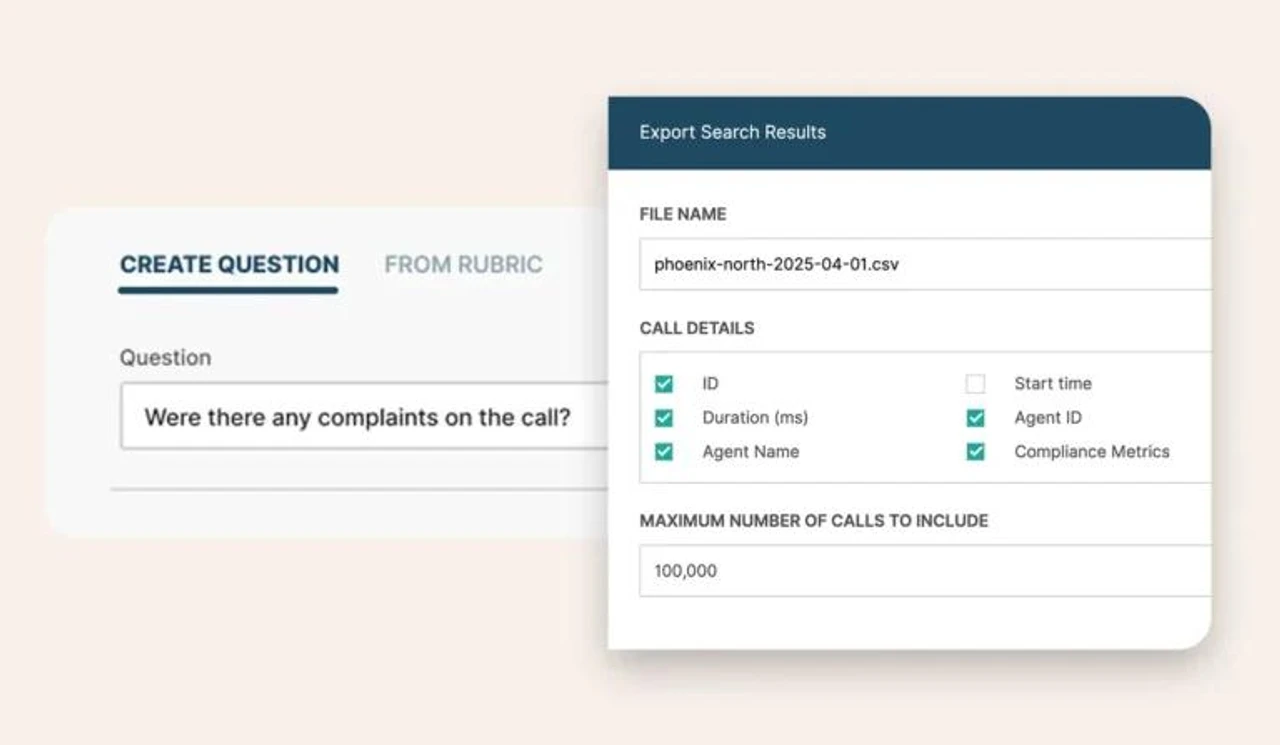
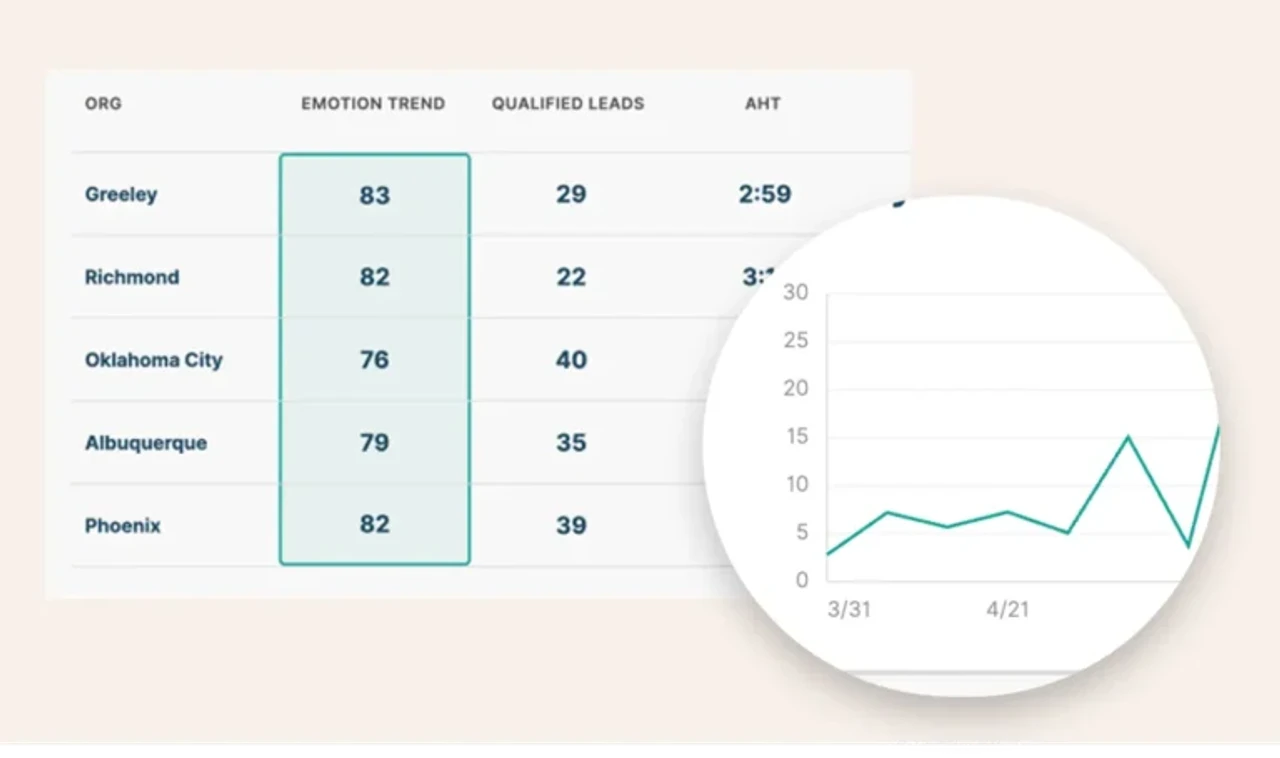
Gridspace Overview
Gridspace is best suited for enterprises and large contact centers that need to automate high-volume voice workflows with strict security, accuracy, and compliance requirements.
It’s ideal for teams in regulated industries like healthcare, insurance, and financial services that want reliable AI voice agents to handle complex inbound and outbound calls at scale.
Gridspace Features and Capabilities
- AI Voice Agents for Inbound and Outbound Calls
- Real-Time Voice Workflow Automation
- Purpose-Built Speech and Language Models
- Secure, Compliant Infrastructure for Regulated Industries
- Operational Insights and Call Analytics
- Flexible Integrations with Telephony and Contact Center Platforms
-
Highly capable AI voice agents that handle full call workflows rather than simple IVR-style tasks.
-
Purpose-built speech models optimized for noisy, complex contact center environments.
-
Strong compliance and security posture suitable for healthcare, insurance, and financial services.
-
Real-time automation at scale with proven large-seat deployments.
-
Deep telephony integrations across major CCaaS and on-prem systems.
-
Primarily voice-focused, with fewer capabilities for omnichannel or text-based CX needs.
-
May require technical lift to integrate into legacy telephony or custom workflows.
-
Less widely adopted than larger CCaaS players, which can impact familiarity and ecosystem support.
-
Limited public transparency around pricing, making cost forecasting harder.
-
Best suited for large enterprises, so smaller teams may find it more complex than they need.
Gridspace Alternatives & Competitors 2025
| Feature | Gridspace | Balto | Cresta | Cogito / Verint | Gong | Chorus.ai / ZoomInfo | CallMiner | ASAPP | Uniphore | Level AI | Observe.AI |
|---|---|---|---|---|---|---|---|---|---|---|---|
| Real-Time Agent Guidance | |||||||||||
| Post-Call Analytics | |||||||||||
| QA Automation | |||||||||||
| Emotion or Sentiment Detection | |||||||||||
| Sales Intelligence / Deal Insights | |||||||||||
| Omnichannel Support (Voice + Chat) | |||||||||||
| Knowledge Assist / Content Surfacing | |||||||||||
| CRM & Platform Integrations |
Top Gridspace Alternatives & Competitors
1. Balto

Balto is a real-time agent guidance platform built to improve live conversations, standing in contrast to automation-first solutions like Gridspace.
While Gridspace focuses on AI voice agents that handle calls end-to-end, Balto delivers in-the-moment prompts and coaching that help human agents perform better, stay compliant, and resolve issues on the first call.
Key features
-
Real-time agent guidance that listens to the call and delivers instant prompts (unlike Gridspace’s automation-driven voice-agent workflows)
-
Real-time QA that scores calls as they happen instead of relying purely on post-call analysis
-
Real-time coaching dashboards that give supervisors visibility into active conversations
-
A no-code Playbook Builder that lets teams update guidance in minutes without engineering
-
Post-call insights that connect guidance to outcomes, giving teams visibility that automation-only tools don’t provide
-
Improves agent performance during the call, not after
-
Ensures consistent, compliant call handling across large teams without scripting rigid automation
-
Accelerates onboarding and reduces ramp time because agents get support exactly when they need it
-
Easy to customize and iterate on guidance without technical help, unlike more complex solutions
-
Designed for agent adoption with simple, clear in-call prompts that guide human behavior
-
Omnichannel is available, but the primary strength is on voice interactions
-
Best suited for organizations that want humans in the loop rather than full call automation
-
Works best when leadership aligns around real-time coaching and behavioral consistency
Contact centers that want their human agents to perform better in real time, improving compliance, customer satisfaction , and first-call resolution, rather than replacing agents with automated voice workflows.
Why Are Contact Centers Switching From Gridspace to Balto?

Improve Human Agent Performance
Teams that want to strengthen live conversations, boost compliance, and raise CSAT may move to Balto’s real-time guidance that supports agents during every call.

Trusted by Top Contact Centers
Your business is in good hands with Balto. With a 4.8 rating and over 300 reviews on G2, Balto is the favorite real-time solution for top-performing contact centers.

Gain Visibility Into What’s Happening Live
Balto offers real-time QA, coaching dashboards, and in-the-moment insights that provide the transparency and control many teams feel they lose with fully automated voice-agent systems.
Why You Should Choose Balto Over Gridspace
With our smarter AI, simple onboarding with one-day integrations, and focus on agent empowerment, we think the choice is clear. We invite you to get a demo to see the difference for yourself.
Here's what our fans have to say on G2
Justin N.
Mid-Market, Customer Service
Easy Peasy. Balto allows me to focus on my calls because of the help it gives especially with the notes that it generates. It would allow me to not worry about my notes which is a requirement for my job. Balto is a big help for my daily tasks.
Ali C.
Small Business, Sales
Life changing. Balto capture the conversation accurately and it summarizes everything.
Christian E.
Mid-Market, Sales & Compliance
Balto makes life easy! What I love most about Balto is the real-time coaching feature. It’s amazing how I can get live feedback and guidance during calls, helping me stay on track and handle tough objections smoothly. Instead of waiting for post-call reviews, I’m able to improve instantly, which boosts my confidence and performance right in the moment.
Vincent V.
Enterprise, Customer Service
An amazing tool for our operations. Its summarization feature for every call, almost every feature that balto has saves our company so much time. And its AI is so helpful making me save 50-70 percent of my time on work. I can hardly think of dislikes.
2. Cresta

Cresta is an AI-powered agent assistance and analytics platform built to elevate human performance, offering a different approach from automation-first tools like Gridspace.
While Gridspace specializes in AI voice agents that handle calls end-to-end, Cresta focuses on real-time coaching, guided workflows, and post-call insights that help agents and supervisors improve conversations at scale.
Key features
-
Real-time agent assistance that surfaces recommended responses and next best actions (unlike Gridspace’s automated voice-agent workflows)
-
AI-driven coaching tools that highlight coaching moments and performance trends
-
Post-call analytics that track behaviors, KPIs , and adherence to playbooks
-
Knowledge surfacing and search that help agents quickly find answers during a call
-
Supervisor dashboards that show team performance and coaching opportunities
-
Strengthens human agent performance with real-time suggestions rather than replacing agents with automation
-
Provides robust post-call analytics and trend analysis that automation-centric platforms don’t emphasize
-
Offers strong coaching tools that help supervisors identify skill gaps and replicate top-performer behaviors
-
Surfaces knowledge dynamically to reduce handle time and improve accuracy
-
Well-suited for teams wanting deeper behavioral insights rather than automated call handling
-
Primarily focused on human-in-the-loop workflows, so it doesn’t offer full call automation like Gridspace
-
Real-time guidance and analytics may require operational change management
-
Works best for teams prioritizing coaching and performance rather than automated call deflection
Contact centers that want AI to augment and elevate human agents, improving coaching, consistency, and performance, rather than relying on automated voice agents to handle calls independently.
3. Cogito / Verint

Cogito (now part of Verint) uses real-time emotion, conversation and generative AI to coach agents mid-call by analyzing hundreds of voice signals and nudging behavior for better outcomes.
It gives supervisors live visibility into customer and employee experience while helping agents be more empathetic, effective, and sales-oriented.
Key features
-
Real-time coaching and guidance during calls (live cues, prompts)
-
Emotion and sentiment detection (tone, pace, engagement)
-
Conversation analytics and agent performance insights for supervisors
-
Integration with telephony/CRM and scalable across large contact centers
-
Generative-AI-driven agent assistants, summaries, and supervisor alerts
-
Helps agents adapt in real time to tone and emotion, improving empathy and call outcomes.
-
Provides supervisors with live team performance data and early warning on difficult calls.
-
Strong in helping convert service interactions into sales and upsell opportunities.
-
Scales across large operations and supports remote/BPO agents with consistent intelligence.
-
The reliance on emotion and behavioral cues may feel intrusive or overly monitored to some agents.
-
High-level capability means implementation/integration complexity may be significant.
-
It may deliver less value for non-voice or purely digital channel environments.
-
Outcomes depend strongly on the quality of change management, agent buy-in, and data integration.
Large contact centers (especially in regulated or high-emotion sectors like finance, insurance, healthcare) looking to elevate agent empathy, boost conversion from service to sales, and gain live visibility into both employee and customer experience.
4. Gong

Gong is a revenue intelligence platform that analyzes sales calls, emails, and meetings to show teams what drives deals, which is fundamentally different from automation-focused tools like Gridspace.
While Gridspace builds AI voice agents to handle call workflows, Gong focuses on understanding human-led sales conversations so leaders can coach reps, forecast accurately, and replicate winning behavior.
Key features
-
Conversation intelligence that analyzes sales calls and meetings instead of automating them like Gridspace
-
Deal and pipeline insights that show risks, next steps, and forecast accuracy
-
Coaching tools that highlight rep behaviors and improvement opportunities
-
Cross-channel visibility across calls, emails, and messages
-
Integrations with CRMs to tie conversation data directly to revenue outcomes
-
Deep visibility into sales conversations and buyer behavior that automated voice agents cannot capture
-
Strong forecasting and pipeline analytics for revenue teams
-
Helps sales leaders coach more effectively by surfacing patterns in top-performer behavior
-
Automatically captures and organizes all customer interactions across channels
-
Designed for revenue intelligence rather than customer service automation
-
Does not offer AI voice agents or automated call handling like Gridspace
-
Focused on sales teams, so it is not a replacement for contact center automation workflows
-
Limited real-time agent assistance during live calls compared to guidance-focused platforms
-
Requires CRM integration and adoption to get full value
Sales teams that want to understand what drives deals, coach reps more effectively, and forecast with confidence rather than automating conversations with AI voice agents.
5. Chorus AI / ZoomInfo

Chorus AI, now part of ZoomInfo, is a conversation intelligence platform that captures and analyzes sales calls so teams can understand buyer behavior, coach reps, and improve pipeline health. This is very different from automation-first tools like Gridspace, which focus on AI voice agents handling call workflows rather than analyzing human-led conversations.
Key features
-
Automatic recording and transcription of sales calls instead of automated voice handling like Gridspace
-
Conversation analytics that identify topics, objections, and deal signals
-
Deal and pipeline visibility that highlights risks, next steps, and competitive mentions
-
Coaching tools that surface skill gaps and top-performer patterns
-
Tight integration with ZoomInfo data to enrich conversations with buyer context
-
Provides deep insight into sales conversations in a way that automated voice agents cannot
-
Strong coaching and onboarding tools that help reps improve quickly
-
Valuable deal intelligence tied directly to CRM and ZoomInfo data
-
Helps managers identify trends across calls, meetings, and messages
-
Useful for scaling consistent sales behavior across teams
-
Does not offer call automation or workflow handling like Gridspace
-
Built for sales teams rather than contact center or support workflows
-
Limited real-time intervention; most insights come after the call
-
Requires adoption of ZoomInfo ecosystem to unlock its full value
Sales teams that want rich insights into their calls, stronger coaching, and better pipeline visibility, rather than automated voice agents that handle conversations directly.
6. CallMiner

CallMiner is an enterprise conversation analytics platform that analyzes 100 percent of customer interactions across voice and text. Unlike automation-first tools like Gridspace, which focus on AI voice agents handling calls, CallMiner specializes in large-scale analytics, compliance monitoring, and customer insight discovery to improve operations and customer experience.
Key features
-
Omnichannel interaction analytics across voice, chat, email, and text, rather than automated call handling like Gridspace
-
Post-call and historical analytics that reveal trends in sentiment, intent, and outcomes
-
QA automation that scores interactions and identifies coaching opportunities
-
Compliance and risk monitoring across all customer interactions
-
Dashboards and reporting that help leaders understand behavior patterns at scale
-
Extremely strong at large-scale analytics, something automated voice agents are not designed for
-
Covers every channel, not only voice
-
Robust QA automation that reduces manual review and improves consistency
-
Deep compliance and risk-use cases that benefit regulated organizations
-
Provides broad operational insights across millions of interactions
-
Does not automate calls or provide voice agents like Gridspace
-
Limited real-time assistance during live conversations
-
Insights require operational follow-through to drive change
-
Best suited for analytics-driven teams rather than those seeking automation or real-time guidance
Organizations that want deep, omnichannel conversation analytics, QA automation, and compliance insights rather than automated voice agents handling customer calls end-to-end.
7. ASAPP

ASAPP is an AI-driven agent assistance and automation platform that helps contact centers improve efficiency and reduce handle time. Unlike automation-first tools like Gridspace, which focus on AI voice agents taking over the call, ASAPP augments human agents with real-time suggestions, automation, and post-call optimization.
Key features
-
Real-time agent assistance that surfaces recommendations and next actions instead of fully automating calls like Gridspace
-
Automated after-call work that shortens wrap time and improves agent productivity
-
AI-driven workflow automation to speed up complex tasks for agents
-
Post-call analytics and quality insights that highlight behavioral trends
-
Integrations with major contact center platforms to embed AI in existing workflows
-
Enhances human agents rather than replacing them with automated voice agents
-
Strong productivity gains through reduced handle time and automated wrap-up
-
Helps supervisors identify performance gaps and coaching opportunities
-
Useful for complex workflows where agents need fast access to information
-
Designed to streamline existing processes within the contact center tech stack
-
Does not offer full call automation like Gridspace
-
Limited insights for non-voice channels compared to broader analytics platforms
-
Real-time suggestions require workflow alignment and change management
-
Best suited for operations that want augmentation rather than automation
Contact centers that want to boost agent productivity and consistency through real-time assistance and workflow automation, rather than handing off full conversations to automated voice agents.
8. Uniphore

Uniphore is an enterprise-grade AI and automation platform designed for contact centers and customer service teams, offering everything from real-time agent assist to full conversational automation.
Unlike Gridspace, which focuses primarily on AI voice agents handling conversations end-to-end, Uniphore supports both automation and human-agent augmentation across voice, chat, and self-service in a unified stack.
Key features
-
Real-time agent assistance with next-best actions, knowledge surfacing, and in-call support
-
Self-service and autonomous AI agents for both voice and digital channels
-
Conversation capture, transcription, and analytics across voice, text, and screen
-
Omnichannel support for voice, chat, and digital engagement
-
End-to-end platform with workflows, knowledge layers, and AI models unified in one system
-
Supports both automation and agent assist rather than relying solely on automated voice agents
-
Strong omnichannel capabilities across voice, chat, and digital
-
Deep analytics and insight features including sentiment, emotion, and topic discovery
-
Enterprise-ready architecture designed for scale and data security
-
Low-code and no-code tools that speed up deployment
-
Broad platform scope can introduce complexity and require change management
-
May require significant integration effort for teams without mature CX processes
-
Real-time and automation features may be more than smaller teams need
-
Higher cost or longer time-to-value compared to more specialized platforms
-
Some users report the platform takes time to fully optimize
Large or complex contact centers that want a unified AI platform to enhance agent performance and automate workflows across both voice and digital channels, rather than relying on voice-only automation.
9. Level AI

Level AI is a conversation intelligence and QA automation platform that analyzes customer interactions across voice and digital channels.
Unlike Gridspace, which focuses on AI voice agents that automate call workflows, Level AI is built to improve how human agents perform through smarter QA, coaching insights, and omnichannel analytics.
Key features
-
Omnichannel conversation analytics across voice, chat, email, and messaging instead of automated call handling like Gridspace
-
AI-powered QA automation that evaluates interactions and flags coaching opportunities
-
Real-time and post-call insights that highlight intent, sentiment, and top issues
-
Knowledge surfacing tools that help agents quickly find answers during conversations
-
Supervisor dashboards that track behavior, performance trends, and coaching needs
-
Strong QA automation that reduces manual review and improves scoring consistency
-
Covers multiple channels, not only voice
-
Provides clear coaching insights to help supervisors improve agent performance
-
Useful for identifying customer trends, friction points, and emerging issues
-
Supports fast onboarding by giving agents easy access to knowledge and call context
-
Does not offer AI voice agents or automated call workflows like Gridspace
-
Limited real-time intervention compared to live guidance platforms
-
Requires process alignment to fully benefit from QA automation
-
Best suited for teams focused on agent performance rather than call automation
-
Insights rely on supervisors acting on them to drive real-world changes
Contact centers that want strong QA automation, omnichannel analytics, and better coaching workflows, rather than automated voice agents that take over calls from human agents.
10. Observe AI

Observe AI is a contact center intelligence platform that analyzes customer interactions and automates QA to improve agent performance. Unlike Gridspace, which focuses on AI voice agents that automate call workflows, Observe AI is designed to give human agents better feedback, coaching, and insights across every interaction.
Key features
-
Omnichannel conversation analytics that evaluate voice and digital interactions rather than automating calls like Gridspace
-
AI-powered QA automation that scores calls, flags issues, and reduces manual review
-
Real-time and post-call insights that surface sentiment, intent, and behavioral trends
-
Coaching tools that help supervisors identify skill gaps and drive consistent agent improvement
-
Integrations with major CCaaS and CRM platforms for unified performance data
-
Strong QA automation that dramatically reduces manual scoring time
-
Provides detailed insights into agent behavior and customer sentiment
-
Helps supervisors coach more effectively with evidence-based feedback
-
Covers voice and digital channels rather than focusing solely on voice
-
Improves agent consistency and compliance through systematic evaluation
-
Does not offer AI voice agents or automated call handling like Gridspace
-
Less focused on real-time, in-the-moment guidance compared to live agent assist platforms
-
Insights require follow-up and coaching to translate into performance improvements
-
Best suited for teams that prioritize QA modernization over call automation
-
Reporting and dashboards can require customization for specific workflows
Contact centers that want to modernize their QA program, analyze every interaction for performance trends, and improve agent coaching instead of relying on automated voice agents to handle conversations.
Key Features to Consider When Choosing Contact Center Software
When evaluating contact center software, it is important to understand which features will actually move the needle for agent performance, compliance, and customer experience. A strong platform should deliver powerful agent assist, streamline QA workflows, and actionable analytics and insights, among other features.
When evaluating tools like Gridspace, Balto, and others, weigh how each performs in these key areas, balancing sophistication with usability to match your organization’s size, goals, and customer experience strategy.
Top Gridspace Alternatives
Top Gridspace alternatives include platforms like Balto, Cresta, Cogito, Level AI, and ASAPP, each offering different strengths across real-time guidance, QA automation, analytics, and agent performance support.
When comparing them, buyers should evaluate real-time capabilities, coaching tools, omnichannel analytics, and how well the platform improves human agent performance rather than relying solely on automation.
Balto stands out because it helps agents get conversations right as they happen, delivering instant in-call prompts that improve compliance, reduce repeat calls, and boost CSAT in a way automated voice agents cannot match.
FAQs
Top Gridspace competitors include Balto, Cresta, Cogito, Level AI, ASAPP, and Observe AI, each offering different strengths across real-time guidance, QA automation, analytics, and agent performance improvement.
Balto focuses on improving live conversations by giving agents real-time prompts, guidance, and coaching, while Gridspace centers on AI voice agents that automate full call workflows, making Balto the stronger choice for teams who want humans supported rather than replaced.
Gridspace is respected for its AI voice-agent technology, but it is not the market leader across the broader AI contact center space, which includes major players focused on real-time guidance, QA automation, and omnichannel analytics.
Balto is widely considered the best AI platform for real-time agent coaching because it listens to calls live and delivers instant guidance that improves compliance, reduces handle time, and boosts CSAT.
Teams moving away from Gridspace should assess whether they need real-time human-agent support, omnichannel analytics, QA automation, easier customization, and more visibility into live conversations, since these are areas where guidance-focused platforms like Balto provide greater value.
Found What You Were Looking For? Discover the Better Alternative — Balto.
See how Balto outperforms other AI solutions with real-time guidance, QA automation, and insights that instantly improve agent performance.