Top 10 Uniphore Alternatives& Competitors 2025
Looking for alternatives or competitors to Uniphore? When evaluating conversational AI, consider capabilities like real-time agent assist, QA automation, analytics, and integrations. The best Uniphore alternatives include NICE and Verint/Cogito, but other platforms like Balto and Observe offer strong value depending on your goals.
What is Uniphore?
Uniphore is an enterprise conversational AI platform that combines real-time agent assist, analytics, and automated QA to improve customer service and sales performance.
It analyzes voice interactions to surface insights, guide agents during live calls, and automate post-call workflows, helping large contact centers drive efficiency, consistency, and customer outcomes.
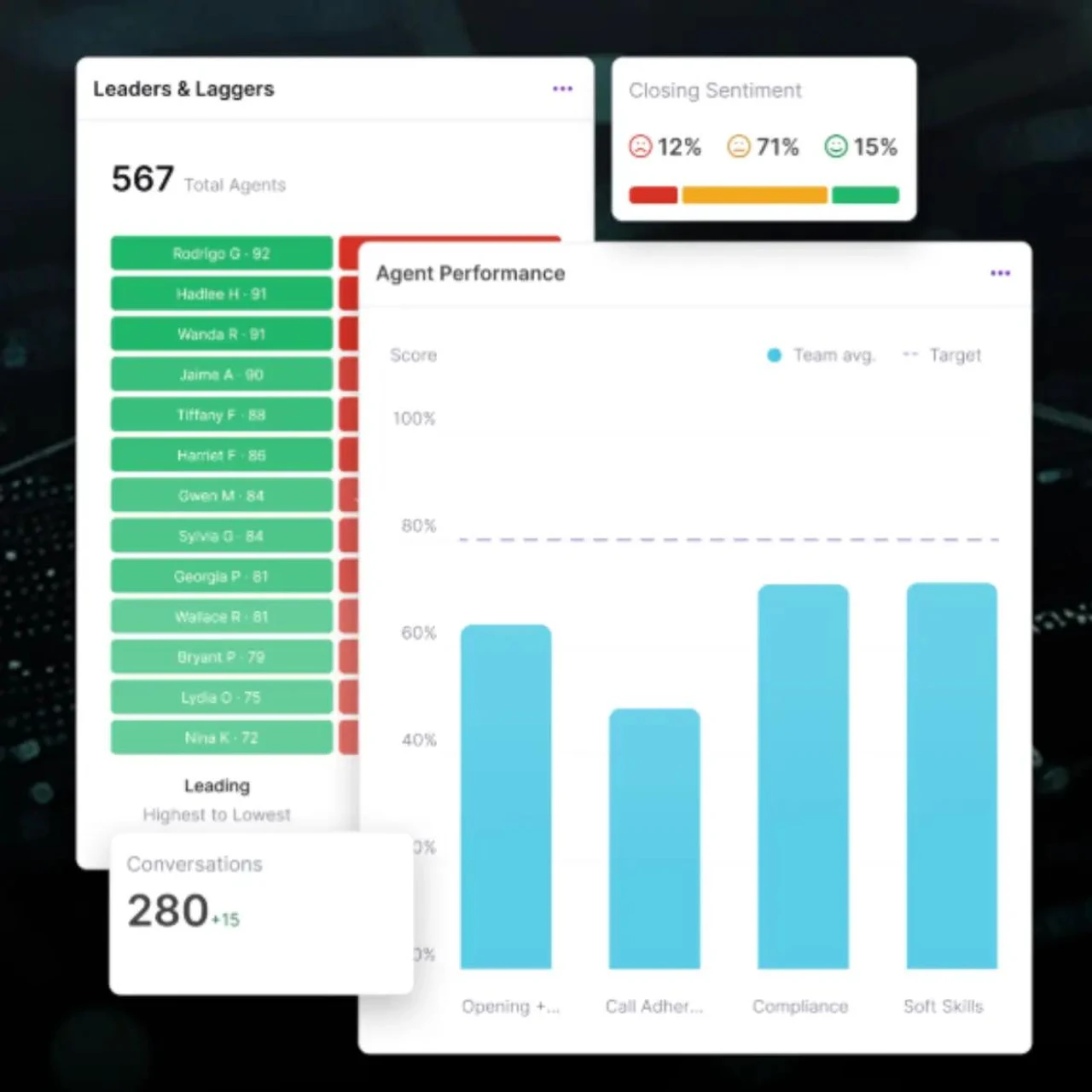
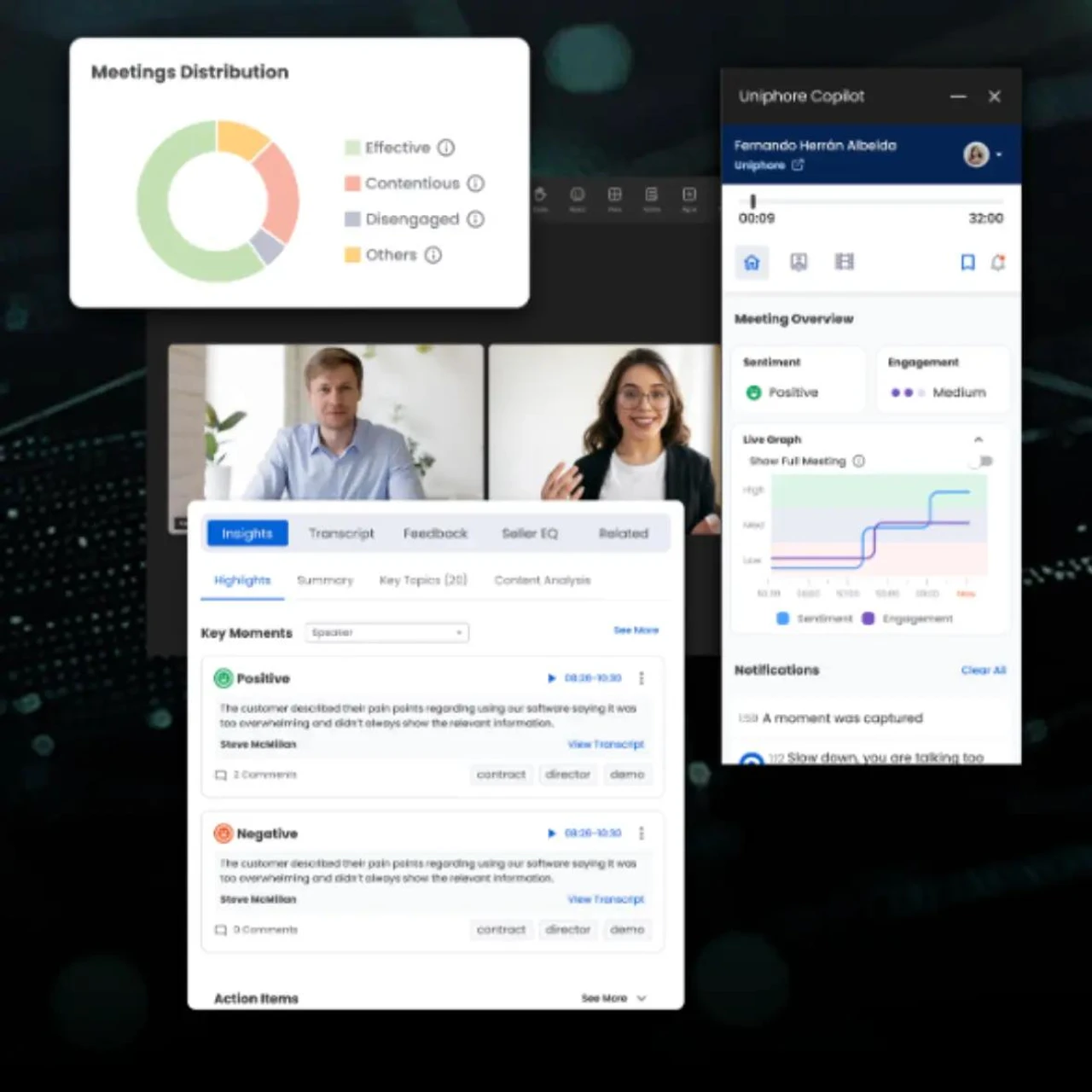
Uniphore Overview
Uniphore is best for large, high-volume contact centers that need enterprise-grade conversational AI to analyze customer interactions, support agents in real time, and automate quality and compliance workflows.
It’s ideal for organizations that want to combine emotion detection, post-call analytics, and live agent assist to improve consistency, reduce effort, and drive stronger customer outcomes across voice and digital channels.
Uniphore Features and Capabilities
- Real-Time Agent Assist
- Emotion and Sentiment Detection
- Automated Quality Assurance
- Conversation Intelligence and Analytics
- Post-Call Summarization and Automation
- Enterprise Workflows and AI Orchestration
-
Combines real-time assist and analytics, offering support during and after calls.
-
Emotion and sentiment detection adds helpful context for difficult interactions.
-
Automated QA and compliance reduce manual review effort.
-
Highly customizable for enterprise needs, with strong integrations.
-
Supports multiple interaction channels, including voice, video, and text.
-
Complex, resource-heavy implementation compared to lighter tools.
-
Higher cost than most agent-assist or summarization platforms.
-
Real-time guidance is less flexible than newer adaptive platforms.
-
Emotion detection can be unreliable in noisy or diverse environments.
-
Not suited for quick deployment, best for large enterprise teams.
Uniphore Alternatives & Competitors 2025
| Feature | Uniphore | NICE | Cogito / Verint | Balto | Observe AI | Cresta | Talkdesk | Genesys | Tethr | CallMiner | ASAPP |
|---|---|---|---|---|---|---|---|---|---|---|---|
| Real-Time Agent Assist | |||||||||||
| Emotion & Sentiment Detection | |||||||||||
| Conversation Intelligence & Analytics | |||||||||||
| Automated QA | |||||||||||
| Post-Call Automation | |||||||||||
| Workflow Automation | |||||||||||
| Omnichannel Support | |||||||||||
| Enterprise Integrations & Scalability |
Top Uniphore Alternatives & Competitors
1. NICE

NICE is an enterprise contact center platform offering advanced analytics, real-time agent assist, and automated quality management at a large scale.
Compared to Uniphore, NICE provides a broader WFO/WEM ecosystem and deeper automation capabilities, making it a strong alternative for enterprises that need end-to-end operational intelligence rather than a single conversational AI layer.
Key features
-
Enlighten AI-powered interaction analytics across voice and digital channels
-
Automated QA scoring and compliance monitoring at high volume
-
Real-time agent assist and next-best-action recommendations
-
Workforce and service optimization tools within the NICE CXone suite
-
Extensive CCaaS, CRM, and ecosystem integrations for enterprise environments
-
One of the most comprehensive analytics and QA automation platforms on the market
-
Strong real-time guidance with deep automation capabilities
-
Highly scalable for global, multi-site operations
-
Unified ecosystem that consolidates multiple point solutions
-
More complex and resource-intensive than most standalone AI tools
-
Can be expensive for mid-market or fast-growing teams
-
Longer implementation cycles compared to lighter platforms
-
Real-time assist may require specific modules and configuration
Large, enterprise contact centers needing a full-suite AI, QA, and analytics platform with deep automation and scalability.
Why Are Contact Centers Switching from Uniphore to Balto?

More Flexible and Adaptive Real-Time Guidance
Uniphore’s real-time assist can feel rigid and workflow-heavy, while Balto delivers dynamic prompts that adapt instantly to what customers say, improving accuracy and consistency on every call.

Faster Deployment with Lower Operational Overhead
Balto is easier to implement and maintain than Uniphore’s enterprise-scale AI stack, allowing teams to roll out real-time guidance and automated QA quickly without complex orchestration or heavy configuration.

Trusted by Top Contact Centers
Your business is in good hands with Balto. With a 4.8 rating and over 300 reviews on G2, Balto is the favorite real-time solution for top-performing contact centers.
Why You Should Choose Balto Over Uniphore
With our smarter AI, instant coaching, and real-time guidance, we think the choice is clear. We invite you to get a demo and see the difference for yourself
Here's what our fans have to say on G2
Justin N.
Mid-Market, Customer Service
Easy Peasy. Balto allows me to focus on my calls because of the help it gives especially with the notes that it generates. It would allow me to not worry about my notes which is a requirement for my job. Balto is a big help for my daily tasks.
Ali C.
Small Business, Sales
Life changing. Balto capture the conversation accurately and it summarizes everything.
Christian E.
Mid-Market, Sales & Compliance
Balto makes life easy! What I love most about Balto is the real-time coaching feature. It’s amazing how I can get live feedback and guidance during calls, helping me stay on track and handle tough objections smoothly. Instead of waiting for post-call reviews, I’m able to improve instantly, which boosts my confidence and performance right in the moment.
Vincent V.
Enterprise, Customer Service
An amazing tool for our operations. Its summarization feature for every call, almost every feature that balto has saves our company so much time. And its AI is so helpful making me save 50-70 percent of my time on work. I can hardly think of dislikes.
2. Cogito / Verint

Verint, combined with Cogito’s behavioral intelligence technology, delivers a powerful mix of analytics, automated QA, and real-time behavioral coaching.
Compared to Uniphore, this pairing offers stronger empathy and tone-based guidance, plus a mature workforce optimization suite, making it a top alternative for enterprises prioritizing agent behavior and performance consistency.
Key features
-
Automated QA scoring and compliance workflows across large call volumes
-
Cogito-powered real-time behavioral cues that detect tone, stress, and empathy levels
-
Advanced interaction analytics with trend and root-cause insights
-
Workforce optimization tools for forecasting, scheduling, and performance management
-
Enterprise-grade integrations across CCaaS, CRM, and WEM systems
-
Best-in-class behavioral guidance and emotional intelligence modeling
-
Highly scalable QA and analytics for large global centers
-
Strong coaching and performance management workflows
-
Deep WFO/WEM capabilities beyond conversational AI
-
More complex and costly than lighter-weight agent-assist platforms
-
Real-time guidance focuses on behavior rather than process or workflow steps
-
Implementation requires significant configuration and enterprise coordination
-
Too heavy for teams needing simple real-time assist or summaries
Enterprises wanting behavioral real-time coaching plus automated QA and analytics within a mature WFO ecosystem.
3. Balto

Balto is a real-time agent guidance and QA automation platform that gives agents dynamic prompts, workflows, and compliance cues during live calls.
Compared to Uniphore, Balto offers more flexible, adaptive in-call guidance with faster deployment, making it a strong choice for teams that want immediate performance impact rather than a heavy enterprise AI stack.
Key features
-
Real-time dynamic prompts and next-best-action workflows
-
Automated QA scoring and compliance monitoring
-
AI-driven post-call summaries and coaching insights
-
Agent assist for voice and digital channels
-
Integrations with major CCaaS and CRM platforms
-
Delivers more adaptive real-time guidance than Uniphore
-
Faster to deploy and easier to maintain across large teams
-
Strong automated QA functionality out of the box
-
Improves consistency and first-call resolution immediately
-
Not designed for emotion detection or multimodal analysis
-
Less suited to extremely complex enterprise orchestration use cases
-
Not a full WFO/WEM or CCaaS suite
-
Post-call analytics exist, but are not the platform’s primary focus
Contact centers needing highly flexible real-time guidance and automated QA that improve performance during every interaction.
4. Observe AI

Observe AI is a leading QA and analytics platform that automates call evaluations, compliance monitoring, and coaching workflows. Compared to Uniphore, Observe AI is lighter and easier to deploy, with a strong focus on post-call insights and QA automation rather than enterprise-scale orchestration or multimodal emotion detection.
Key features
-
Automated QA scoring and evaluator workflows
-
Compliance and risk detection across large call volumes
-
AI-driven call summaries and transcription
-
Performance dashboards and coaching recommendations
-
Integrations with major CCaaS, CRM, and workforce systems
-
Stronger and more accessible QA automation than Uniphore for most teams
-
Easier setup and faster time-to-value
-
Effective coaching insights without heavy configuration
-
Widely adopted in modern contact centers seeking to replace manual QA
-
Limited real-time agent assist compared to Balto, Cresta, or Uniphore
-
No emotion detection or multimodal interaction modeling
-
Not designed for complex enterprise orchestration workflows
-
Lacks Uniphore’s breadth in analytics across voice, video, and digital channels
Contact centers needing powerful, scalable QA automation and post-call analytics without the complexity of a full enterprise conversational AI platform.
5. Cresta

Cresta is an AI agent-assist and coaching platform that delivers real-time guidance, automated summaries, and performance insights across sales and service teams.
Compared to Uniphore, Cresta offers a lighter, more modern real-time guidance experience with faster deployment, though it lacks Uniphore’s deeper emotion detection and enterprise orchestration capabilities.
Key features
-
Real-time coaching and next-best-action recommendations
-
Automated call summaries and after-call work reduction
-
Performance analytics and coaching dashboards
-
AI-powered playbooks for sales, support, and service agents
-
Integrations with leading CCaaS and CRM platforms
-
Strong real-time guidance with a more flexible UX than Uniphore
-
Automated summaries streamline agent wrap-up
-
Easier to deploy and manage than enterprise-heavy AI platforms
-
Effective coaching tools for improving agent behavior
-
Limited or no emotion detection compared to Uniphore
-
Not as robust in QA automation as Observe AI or Balto
-
Less suited for complex enterprise workflow orchestration
-
Analytics are strong but not as multilayered as NICE or Verint
Teams wanting modern real-time coaching and automated summaries without the complexity of an enterprise-scale AI stack.
6. Talkdesk

Talkdesk is a cloud contact center (CCaaS) platform with integrated AI capabilities for automation, self-service, analytics, and real-time agent assistance.
While Uniphore focuses heavily on in-depth emotion AI, multimodal analytics, and advanced real-time guidance, Talkdesk offers a more unified approach built directly into its CCaaS ecosystem, making it easier to deploy and manage across voice and digital channels.
Key features
-
AI-powered Agent Assist with contextual recommendations and knowledge surfacing
-
Automated QA and scoring through Talkdesk Quality Management AI
-
Virtual agents for voice and digital channels
-
Workflow automation and orchestration with Talkdesk Studio
-
Analytics and dashboards across CX, QA, and operational performance
-
Deep integrations with CRM, ticketing systems, and back-office apps
-
Strong all-in-one CCaaS platform with built-in AI and automation
-
Easier and faster to deploy compared to Uniphore’s enterprise-level stack
-
Solid real-time assistance and QA automation capabilities
-
Flexible workflow automation for routing, escalations, and processes
-
Emotion AI and behavioral modeling are not as advanced as Uniphore
-
Real-time guidance is less adaptive than specialized tools like Balto
-
Some analytics require add-on modules to reach Uniphore-level depth
-
Less suited for organizations needing deep multimodal sentiment and intent analysis
Teams that want a modern CCaaS platform with integrated AI for routing, automation, QA, and real-time agent support without the complexity of managing a standalone enterprise AI stack like Uniphore.
7. Genesys

Genesys combines routing intelligence, workforce engagement, automation, and analytics into a unified contact center solution.
While Uniphore emphasizes multimodal emotion AI, deep real-time guidance, and in-depth interaction analytics, Genesys focuses on orchestrating end-to-end customer journeys with strong automation, routing, and agent assistance built into its CCaaS ecosystem.
Key features
-
Predictive routing and journey optimization powered by AI
-
Agent Assist with recommended responses, next-best actions, and knowledge surfacing
-
Voicebots and chatbots for automated self-service
-
Workforce forecasting, scheduling, and quality management
-
Analytics across customer journeys, interactions, and operational performance
-
Extensive integrations through the Genesys AppFoundry marketplace
-
Extremely robust all-in-one CCaaS solution with deep enterprise capabilities
-
Strong automation and routing intelligence that reduces operational workload
-
Solid real-time agent assistance features built directly into the platform
-
Broad ecosystem of integrations and add-ons
-
Real-time guidance is not as specialized or adaptive as Uniphore’s
-
Emotion AI and behavior modeling capabilities are limited compared to Uniphore
-
Full value often requires multiple Genesys modules, increasing cost and complexity
-
Can take longer to fully deploy in large or highly customized environments
Enterprises seeking an end-to-end CCaaS platform with strong routing, automation, and operational AI capabilities, especially those who want AI embedded across the customer journey rather than a standalone advanced interaction analytics engine like Uniphore.
8. Tethr

Tethr is a conversation intelligence platform built primarily for post-call analysis, customer insights, and identifying friction points across service interactions.
Compared to Uniphore, which specializes in real-time agent assist, emotion AI, and deep multimodal analysis, Tethr focuses on delivering actionable insights from recorded conversations to improve coaching, QA, and customer experience initiatives.
Key features
-
Post-call analytics across voice and digital channels
-
Automated scoring using Tethr’s “Effort Score” and other CX metrics
-
Insight dashboards for identifying trending issues, friction points, and operational inefficiencies
-
Searchable transcript repository for QA, compliance, and coaching
-
Integrations with CCaaS, CRM, and data platforms for insight distribution
-
Very strong in post-call analytics and customer effort measurement
-
Easy to deploy and lightweight compared to enterprise AI stacks
-
Great for surfacing patterns in customer behavior and agent performance
-
More affordable and less complex than Uniphore
-
No real-time agent assistance or in-the-moment coaching
-
No emotion AI, multimodal analysis, or behavioral modeling
-
Limited automation and workflow capabilities
-
Not ideal for organizations needing live guidance or deep compliance intelligence
Teams that want an easy-to-use post-call analytics platform to uncover insights, reduce customer effort, and improve coaching without the complexity of deploying an enterprise AI solution like Uniphore.
9. CallMiner

CallMiner is a leading speech and interaction analytics platform designed to analyze large volumes of customer conversations across voice and text channels.
Compared to Uniphore, which emphasizes real-time guidance, emotion AI, and multimodal behavioral analysis, CallMiner excels at deep post-call analytics, automated QA, and trend discovery at scale.
Key features
-
Large-scale speech and text analytics across channels
-
Automated quality scoring and compliance monitoring
-
Root-cause analysis, topic clustering, and sentiment insights
-
Customer experience dashboards for identifying trends and friction points
-
Integrations with CCaaS, CRM, BI, and workforce systems
-
Extremely strong at deep post-call analytics and insight generation
-
Powerful automated QA and compliance monitoring
-
Scales well for enterprises with high call volume
-
Flexible integrations and analytics exports for BI teams
-
No real-time guidance or in-the-moment coaching
-
Emotion and behavioral modeling are not at Uniphore’s depth
-
Insights are delivered post-call, not during live interactions
-
Requires time and expertise to tune and operationalize analytics
Organizations that need powerful post-call analytics and QA at scale, especially those focused on compliance, customer experience insights, and operational trend discovery rather than live agent support and real-time AI guidance.
10. ASAPP

ASAPP is an AI-powered agent assist platform focused on reducing handle time and improving resolution through real-time recommendations and automation.
Compared to Uniphore, which emphasizes emotion AI, multimodal analytics, and enterprise orchestration, ASAPP prioritizes in-the-moment efficiency and streamlined guidance for high-volume service environments.
Key features
-
Real-time agent assist with contextual suggestions
-
Automated response recommendations for faster resolution
-
AI-driven call summaries and wrap-up support
-
Performance insights focused on handle time and productivity
-
Integrations with major CCaaS and CRM platforms
-
Strong real-time assist designed to improve efficiency quickly
-
Helps reduce average handle time and agent workload
-
Easier to deploy than enterprise-heavy AI platforms
-
Well-suited for high-volume contact center use cases
-
Limited emotion and sentiment modeling compared to Uniphore
-
Less depth in analytics and QA automation
-
Fewer workflow orchestration and customization options
-
Narrower feature scope outside real-time assist
High-volume contact centers that want real-time AI assistance to improve efficiency and resolution speed without the complexity of a full enterprise conversational AI platform.
Key Features to Consider When Choosing an AI Conversation Platform
Selecting the right AI conversation platform depends on your goals, whether they’re improving agent performance, automating quality assurance, or integrating best with your existing stack. To make the best decision, focus on features that drive measurable impact and align with your contact center’s needs:
When evaluating tools like NICE, Balto, or Talkdesk, weigh how each performs in these key areas, balancing sophistication with usability to match your organization’s size, goals, and customer experience strategy.
Top Uniphore Alternatives
While Uniphore is a powerful option for enterprises seeking emotion AI, deep analytics, and complex orchestration, it’s not the only solution in the market.
Platforms like NICE, Verint/Cogito, and Balto each offer distinct strengths, ranging from large-scale QA automation and behavioral intelligence to real-time coaching and faster deployment with less operational overhead.
The right platform depends on your priorities, whether that’s advanced analytics, compliance, workflow flexibility, or improving agent performance during live conversations.
For teams that want immediate impact and measurable improvements without enterprise complexity, Balto stands out as a highly intuitive, real-time alternative to Uniphore.
FAQs
Top Uniphore competitors include NICE, Verint/Cogito, Balto, Observe AI, Cresta, Talkdesk AI, Genesys AI, Tethr, CallMiner, and ASAPP. Each platform offers different strengths across real-time agent assist, QA automation, analytics, and enterprise CX workflows.
Uniphore delivers enterprise-grade analytics and emotion AI, while Balto focuses on real-time, adaptive guidance that helps agents perform better during live conversations.
Teams often choose Balto when they want faster deployment, greater workflow flexibility, and immediate improvements in call quality and compliance.
Uniphore is a recognized leader in enterprise conversational AI, particularly for emotion detection and multimodal analytics. However, platforms like NICE, Verint/Cogito, and Balto lead in areas such as QA automation, behavioral coaching, and real-time agent guidance.
Balto is widely regarded as one of the best solutions for real-time agent coaching, offering dynamic prompts, next-best-action workflows, and automated QA that guide agents during live calls.
When evaluating alternatives, consider deployment complexity, real-time guidance quality, QA automation, analytics depth, workflow flexibility, and how well the platform integrates with your existing CCaaS and CRM stack.
Found What You Were Looking For? Discover the Better Alternative — Balto.
See how Balto outperforms other AI solutions with real-time guidance, QA automation, and insights that instantly improve agent performance.