






Best AI for Objection Handling on Outbound Sales Calls in 2026


The best AI for objection handling on outbound sales calls is Balto , the AI Workforce for the contact center, because real-time Agent Assist surfaces the winning objection response on the rep's screen at the moment the prospect objects. That in-the-moment delivery is the difference between a call that advances and a call that ends on "not interested."
Objection handling isn't a post-call review problem. Learning from past objections is useful, and Category 2 tools like Gong do it well. But no post-call analysis helps the rep on the call happening right now. Only real-time Agent Assist puts the response on screen while the prospect is still on the line.
Here are the top platforms across three categories:
Category 1: Real-time Agent Assist for Sales (handles objections in the moment)
- 1. Balto: Best for real-time Agent Assist that surfaces winning objection responses on the rep's screen as objections happen
- 2. Cresta: Best for sales-motion contact centers with custom generative AI trained on top-performer objection responses
Category 2: Sales Conversation Intelligence (learn from past objections, coach post-call)
- 3. Gong: Best for revenue intelligence and post-call coaching on objection patterns across the sales org
- 4. Chorus (ZoomInfo): Best for conversation intelligence tied to CRM and pipeline data
- 5. Observe.AI: Best for compliance-heavy sales operations combining conversation intelligence with QA
Category 3: AI Sales Assistants + Dialer AI (workflow + AI engagement)
- 6. Salesloft Rhythm: Best for AI-orchestrated sales engagement inside the Salesloft platform
- 7. Outreach Kaia: Best for real-time note-taking and question detection inside the Outreach dialer
- 8. Nooks: Best for AI-powered parallel dialing with post-call AI summaries for outbound SDR teams
Here are the five criteria the guide walks through to evaluate each tool:
- 1. Latency. Does the AI help in the moment, or only post-call?
- 2. Objection depth. Are objection responses tuned to your specific product and market?
- 3. Sales motion fit. Is it built for outbound sales, or bolted on to a service platform?
- 4. Closed-loop learning. Do wins from top performers become guidance for the rest of the team?
- 5. Rep workflow. Is the guidance visible on the rep's screen without stealing focus from the prospect?
The rest of this guide walks through each tool, when to use it, and why in-the-moment objection handling is the highest-impact AI investment a sales leader can make.
Why Objection Handling Is the Highest-Impact Moment on Every Sales Call
The math on outbound sales is unforgiving. Cold outbound converts at around 2% on average. Every rep who picks up the phone is fighting a distribution that gives them one call in fifty where the prospect actually engages. On the calls that do engage, objections show up on the majority of conversations, and how the rep handles the objection determines whether the call ends or advances.
The five most common objections on outbound sales calls are consistent across verticals: price, timing, competition, need, and authority. Every rep hears variations of "we don't have budget," "the timing isn't right," "we already have a vendor," "we don't have that problem," and "I'm not the decision maker." A trained rep with a solid playbook handles each of these. A new rep or a distracted rep freezes.
Real-time is where the impact lives. An objection is a fork in the road that closes in seconds. The rep either has the right response in the moment or the call ends. Post-call review is valuable for finding patterns across the team, coaching the reps who freeze most often, and identifying which response language correlates with closed-won. But none of that helps *this* call.
That's why the framing matters when sales leaders shortlist objection-handling AI. Gong, Chorus, and Observe.AI are excellent at finding what worked in past calls. Real-time Agent Assist tools are excellent at putting the answer on the rep's screen right now. Both matter. Only one helps the rep who's on the phone this minute.
How to Evaluate AI Tools for Objection Handling
Not every "AI sales tool" moves objection handling the same way. Before you shortlist, ask five questions:
- 1. Latency: does the AI help in the moment, or only post-call? Objection handling is a real-time behavior. If the AI's output shows up in a dashboard the next morning, it's a coaching tool, not an objection-handling tool. Both have value, but they solve different problems.
- 2. Objection depth: are objection responses tuned to your specific product and market? Generic prompts underperform. Look for platforms that ingest your top-performer conversations, your playbooks, and your industry-specific objection language. A pricing objection in SaaS is different from a pricing objection in home services.
- 3. Sales motion fit: is it built for outbound sales, or bolted on to a service platform? Ask each vendor how many of their customer base runs outbound sales as the primary motion. Service-first platforms often have "sales use case" pages but the underlying models are trained on service conversations.
- 4. Closed-loop learning: do wins from top performers become guidance for the rest of the team? The tool should surface what works and turn it into a live prompt on the next call, not just a report the coaching team reviews in aggregate.
- 5. Rep workflow: is the guidance visible on the rep's screen without stealing focus from the prospect? Prompts have to be scannable in under a second. Anything that requires the rep to click through screens or read paragraphs of guidance is worse than nothing during a live call.
Comparison Table: 8 AI Tools for Objection Handling Scored
| Platform | Category | Latency | Sales Motion Fit | Deployment |
|---|---|---|---|---|
| Balto | Category 1 (Agent Assist) | Real-time (in-the-moment) | Purpose-built for outbound sales + service | 4-6 weeks |
| Cresta | Category 1 (Agent Assist) | Real-time (in-the-moment) | Sales-heavy contact centers | 6-10 weeks |
| Gong | Category 2 (Conversation Intelligence) | Post-call | Revenue teams (SDR + AE) | 4-8 weeks |
| Chorus (ZoomInfo) | Category 2 (Conversation Intelligence) | Post-call | ZoomInfo customer base | 4-6 weeks |
| Observe.AI | Category 2 (Conversation Intelligence) | Post-call + limited real-time | Compliance-heavy sales | 6-10 weeks |
| Salesloft Rhythm | Category 3 (Sales Assistant + Dialer) | Workflow + limited AI | Salesloft customer base | 2-6 weeks |
| Outreach Kaia | Category 3 (Sales Assistant + Dialer) | Real-time notes + post-call | Outreach customer base | 2-6 weeks |
| Nooks | Category 3 (Sales Assistant + Dialer) | Post-call summaries | Outbound SDR teams | 2-4 weeks |
The comparison isn't about which tool is objectively best. It's about which tool actually helps at the moment of the objection versus which tool helps you learn from objections later.
Category 1: Real-time Agent Assist for Sales (Handles Objections In-the-Moment)
Category 1 is the only category that helps the rep at the moment an objection lands. Real-time Agent Assist surfaces the response on screen so reps don't have to remember the LAER framework, look up the answer in a knowledge base, or improvise. For any sales organization where objection handling directly affects conversion, this is the primary lever.
1. Balto: Best for Real-Time Agent Assist That Surfaces Winning Objection Responses In-the-Moment

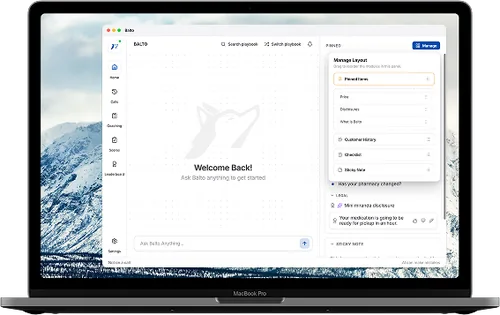
Balto is purpose-built for real-time Agent Assist . Dynamic prompts trigger on keywords in the conversation, so when a prospect says "we don't have budget," the winning objection response appears on the rep's screen before the rep needs to reach for it. AgentGPT (a knowledge base chat assistant) handles ad-hoc questions during the call ("what's our discount for annual pre-pay?"). AI Notes automates CRM updates after the call so reps spend more time on the next dial and less time on data entry.
The closed-loop model is what makes the platform structurally different. Automated QA scores 100% of calls against the same behavioral standards that drive the real-time prompts, and coaching sessions are auto-bundled from the calls where objection handling made the difference. What top reps do on their winning calls becomes the guidance the rest of the team sees in real time.
Best for: any sales organization where objection handling directly ties to conversion: SaaS SDR/AE teams, financial services outbound, insurance sales, home services, and BPO/outsourced sales.
Key features:
- Real-time dynamic prompts triggered by keywords in the live conversation
- AgentGPT for ad-hoc rep questions during the call
- AI Notes automating post-call CRM updates
- Closed-loop QA + coaching on shared behavioral standards
- Agentic Insights across 100% of calls
- 60+ native CCaaS and dialer integrations (Genesys, NICE CXone, Five9, Talkdesk, Amazon Connect, Salesforce, RingCentral, 8x8)
Pricing: Custom. Contact sales for a demo.
2. Cresta: Best for Sales-Motion Contact Centers with Custom Generative AI Trained on Top-Performer Objection Responses

Cresta specializes in real-time behavioral coaching during live conversations, with custom generative AI models trained on your top-performer calls. The core differentiator is model customization: rather than using generic objection response libraries, Cresta ingests your best reps' actual conversations and surfaces those patterns to the rest of the team as live prompts.
Best for: larger sales operations (500+ reps) where custom generative AI model tuning on top-performer calls justifies the investment.
Key features:
- Real-time behavioral coaching prompts during live calls
- Custom generative AI models trained on top-performer conversations
- Conversation intelligence and post-call analytics
- Native integrations with modern CCaaS and dialer platforms
Pricing: Custom, enterprise-tier.
Category 2: Sales Conversation Intelligence (Learn from Past Objections, Coach Post-Call)
Category 2 tools analyze recorded sales conversations to surface patterns across the team. They're excellent for finding which objections show up most often, which reps handle them best, and what response language correlates with closed-won. Their weakness is that none of this helps the rep on the call right now. Category 2 is complementary to Category 1, not a substitute.
3. Gong: Best for Revenue Intelligence and Post-Call Coaching on Objection Patterns Across the Sales Org

Gong is the category leader in revenue intelligence. Its platform records and analyzes sales conversations across email, phone, and video meetings, then surfaces the patterns that separate winning deals from lost ones. The objection handling angle is post-call: leaders and managers see which objections show up most, which reps handle them well, and which language correlates with closed-won.
Best for: revenue teams that want conversation intelligence across the full deal cycle, not just outbound calls.
Key features:
- Post-call conversation intelligence across voice, video, and email
- Deal risk scoring and pipeline analytics
- Coaching workflows for managers
- Native integrations with major CRMs and sales engagement platforms
Pricing: Custom, enterprise-tier.
4. Chorus (ZoomInfo): Best for Conversation Intelligence Tied to CRM and Pipeline Data

*Note: Chorus was acquired by ZoomInfo in 2021. Chorus remains a distinct product within the ZoomInfo platform, with tight integration to ZoomInfo's contact data and pipeline analytics.*
Chorus is ZoomInfo's conversation intelligence platform. Its differentiator versus Gong is the native tie into ZoomInfo's contact and account data, which lets the analytics correlate conversation patterns with pipeline outcomes at the account level. For teams that already use ZoomInfo heavily, Chorus makes sense as the conversation intelligence layer.
Best for: revenue teams already standardized on the ZoomInfo platform.
Key features:
- Post-call conversation intelligence
- Native integration with ZoomInfo contact and pipeline data
- Deal analytics and coaching workflows
- CRM integrations
Pricing: Bundled with ZoomInfo tiers.
5. Observe.AI: Best for Compliance-Heavy Sales Operations Combining Conversation Intelligence with QA

Observe.AI combines conversation intelligence with 100% automated QA and generative post-call summaries. The QA-first orientation makes it a natural fit for compliance-heavy sales operations (financial services outbound, insurance sales, debt collection sales) where post-call analytics depth and regulatory scoring matter as much as objection coaching.
Best for: compliance-heavy sales operations that need conversation intelligence and QA in the same platform.
Key features:
- 100% call coverage with automated QA scoring
- Generative AI post-call summaries
- Compliance-specific scorecards (TCPA, HIPAA)
- Coaching workflow integration
Pricing: Custom.
Category 3: AI Sales Assistants + Dialer AI (Workflow + AI Engagement)
Category 3 tools sit at the sales engagement and dialer layer. AI features are increasingly built in (auto note-taking, question detection, next-best-action) but the AI is bolt-on to a workflow product, not the core objection-handling engine. Useful complementary layer for sales workflow, but a rep at the moment an objection lands still needs a Category 1 tool for the response itself.
6. Salesloft Rhythm: Best for AI-Orchestrated Sales Engagement Inside the Salesloft Platform

Salesloft Rhythm is Salesloft's AI-driven sales orchestration layer. It prioritizes reps' daily task list, surfaces the highest-signal buyer actions to focus on next, and integrates conversation intelligence for post-call review. Its objection-handling capability is workflow-level: reps see prioritized follow-ups after a call rather than real-time objection prompts during the call.
Best for: sales teams standardized on the Salesloft platform for cadences and engagement.
Key features:
- AI-driven task prioritization and buyer signal detection
- Native cadence and dialer integration
- Post-call conversation intelligence
- CRM sync
Pricing: Bundled with Salesloft tiers.
7. Outreach Kaia: Best for Real-Time Note-Taking and Question Detection Inside the Outreach Dialer

Outreach Kaia is the AI layer inside the Outreach sales engagement platform. Its real-time features include automatic note-taking during calls and question detection (identifying when prospects ask a question the rep might have missed). Post-call, Kaia summarizes the conversation and surfaces action items. It's the closest Category 3 tool to real-time assistance, though the assistance is around note-taking and question capture rather than objection response.
Best for: sales teams standardized on Outreach for engagement and dialing.
Key features:
- Real-time note-taking during live calls
- Question detection and prompt surfacing
- Post-call AI summaries and action items
- Native Outreach dialer and cadence integration
Pricing: Bundled with Outreach tiers.
8. Nooks: Best for AI-Powered Parallel Dialing with Post-Call AI Summaries for Outbound SDR Teams

Nooks is a newer entrant purpose-built for outbound SDR teams. Its core product is AI-powered parallel dialing (multiple lines at once with AI filtering out voicemails and gatekeepers), plus post-call AI summaries and CRM updates. Nooks focuses on throughput for SDRs making high-volume outbound.
Best for: outbound SDR teams focused on high-volume cold calling throughput.
Key features:
- AI-powered parallel dialing (multiple lines simultaneously)
- Voicemail and gatekeeper filtering
- Post-call AI summaries and CRM updates
- Coaching workflow
Pricing: Custom, seat-based.
Common Mistakes Sales Leaders Make Buying AI for Objection Handling
Every objection-handling AI project I see makes at least one of the mistakes below. These are the reasons so many sales orgs deploy AI and still see the same reps freeze on the same objections quarter after quarter.
- 1. Buying conversation intelligence when the problem is in-the-moment. Gong is excellent for post-call review, but if reps freeze at the objection, no post-call analysis fixes that call. Diagnose whether the drag is coaching or in-the-moment execution before you buy.
- 2. Assuming dialer AI is the same thing. Salesloft Rhythm and Outreach Kaia have AI features around the dialer, but the AI isn't the objection-handling engine. They're workflow tools, and workflow doesn't put an answer on the rep's screen at the moment of the objection.
- 3. Not tuning to the specific product and market. Generic objection responses underperform. The AI needs to ingest your top-performer conversations and playbooks so the prompts sound like your best reps, not like the vendor's default library.
- 4. Ignoring the rep workflow layer. Prompts that steal focus from the prospect are worse than no prompts. Scannable in under a second, or don't bother.
- 5. Treating training as an alternative to real-time assist. Coaching is compounding, but reps still forget under pressure. Real-time Agent Assist is the safety net that catches the drop when a coached response doesn't fire.
Objection Handling AI Diagnostic: Which Category Fits Your Sales Motion?
Different sales problems point to different categories. This 5-question diagnostic routes you to the category best matched to what your sales org needs most.
Key Sales AI Statistics
Bring It All Together
Objection handling isn't a post-call review problem. It's an in-the-moment behavior, and only Category 1 tools help at the moment the prospect objects. Balto ranks #1 because real-time Agent Assist is what the platform is purpose-built for, and nine years of iterating on the closed-loop model means the guidance the rep sees is what the top performers on your team have already proven works.
Category 2 tools (Gong, Chorus, Observe.AI) are complementary. They're excellent at finding patterns across past calls, coaching reps on objections they consistently miss, and correlating language with closed-won. Use them alongside a Category 1 tool, not instead of one.
Category 3 tools (Salesloft Rhythm, Outreach Kaia, Nooks) are the workflow layer. They orchestrate cadences, filter dialing, and take notes. The AI features are useful for rep productivity but don't put a response on the screen at the moment of an objection.
If objection handling is dragging your conversion, start with Category 1. The other two categories add compounding value on top.
FAQs
AI for objection handling on outbound sales calls is software that helps reps respond to prospect objections (like "no budget" or "not the right time") more effectively. The strongest category is real-time Agent Assist, which surfaces the winning objection response on the rep's screen the moment the objection is spoken.
Other categories include conversation intelligence (which reviews past calls to identify patterns) and sales engagement AI (which orchestrates workflow around the dialer). Only the real-time category actually helps in the moment.
Balto is the strongest fit for in-the-moment objection handling because real-time Agent Assist is what the platform is purpose-built for. Dynamic prompts trigger on keywords in the live conversation, and the response appears on the rep's screen before they need to reach for it.
Cresta is the strongest direct competitor with a similar real-time approach, particularly for large enterprise sales operations with the budget for custom generative AI model training on top-performer calls.
Real-time Agent Assist puts a response on the rep's screen during the live call. Conversation intelligence analyzes recorded calls after they end and surfaces patterns for coaching.
Both matter, but they solve different problems. Real-time helps the rep on the call happening right now. Conversation intelligence helps you find which reps freeze most often and which language correlates with closed-won across past calls. The strongest sales orgs use both, in that order of priority.
Yes, when the tool matches the drag. Contact centers running Balto's real-time Agent Assist typically see double-digit conversion rate increases after deployment, driven mostly by rep confidence at the objection moment and consistent response language across the team.
If your reps handle objections well but pipeline volume is the constraint, conversion AI won't help as much as dialing AI. Diagnose the drag before buying.
The five most common objections across outbound sales verticals are price ("we don't have budget"), timing ("not the right time"), competition ("we already have a vendor"), need ("we don't have that problem"), and authority ("I'm not the decision maker").
Real-time Agent Assist tools surface tuned responses to each objection based on your top-performer language, so newer reps get the winning phrasing without having to remember it themselves.
Real-time Agent Assist deployments typically show measurable AHT and conversion changes within the first month, because the impact is on-call and immediate. Reps get better in the first week of use, and the compounding effect across the team builds over the first quarter.
Conversation intelligence platforms take longer to show conversion impact because the causal chain runs through coaching cycles, which typically compound over multiple weeks or quarters.
A dialer is the software that places calls (parallel dialing, power dialing, click-to-dial). An AI sales assistant is software that helps the rep during or after the call.
Some tools combine both. Salesloft Rhythm and Outreach Kaia embed AI features inside their sales engagement dialers. Nooks combines parallel dialing with post-call AI summaries. None of these tools puts a real-time objection response on the rep's screen; that's what Category 1 real-time Agent Assist tools do.
Autonomous AI voice agents (from vendors like Regal.io, Air.ai, and Cognigy) can handle routine outbound calls end-to-end (verification, appointment setting, lead qualification). Their capability on complex objection handling is still developing, and most sales teams pair them with human reps rather than replacing reps entirely.
The strongest deployments use AI voice agents for the top-of-funnel routine calls and route qualified prospects to human reps backed by real-time Agent Assist for the deals that matter.
Five questions filter serious platforms from marketing hype. First, does the AI help in the moment or only post-call? Second, is it tuned to your specific product and market? Third, is it built for outbound sales or bolted on to a service platform?
Fourth, do wins from top performers become guidance for the rest of the team automatically? Fifth, is the prompt scannable in under a second so the rep doesn't lose focus on the prospect during the call?
Liked What You Read? See Balto in Action.
Balto helps leading contact centers turn insights into outcomes, in real time. Book a live demo to discover how our AI powers better conversations, coaching, and conversions.