Top 10 Voiceops Alternatives& Competitors 2025
Looking for alternatives or competitors to Voiceops? When evaluating conversation intelligence and QA platforms, consider automated QA, post-call analytics, coaching, and compliance. The best Voiceops alternative is Level AI, but alternatives like Balto stands out because they improve agent performance and compliance in real time, not after the call ends.
What is Voiceops
Voiceops is a conversation intelligence and QA platform used by contact centers, sales, and customer support teams to analyze customer calls at scale.
It scores conversations, surfaces coaching insights, and flags compliance risks, helping organizations understand what’s happening across calls, improve agent performance over time, and ensure consistent service and compliance.
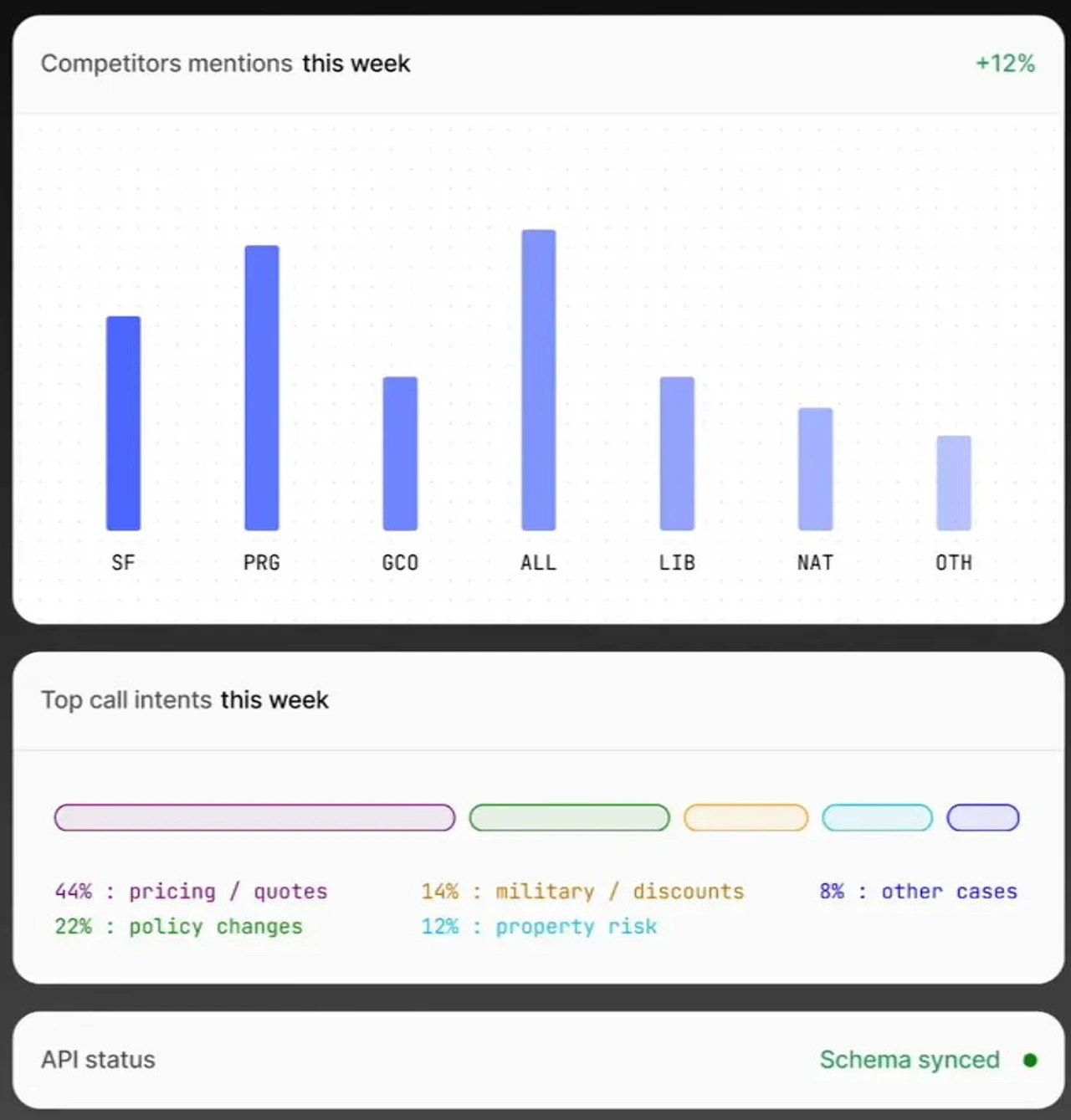
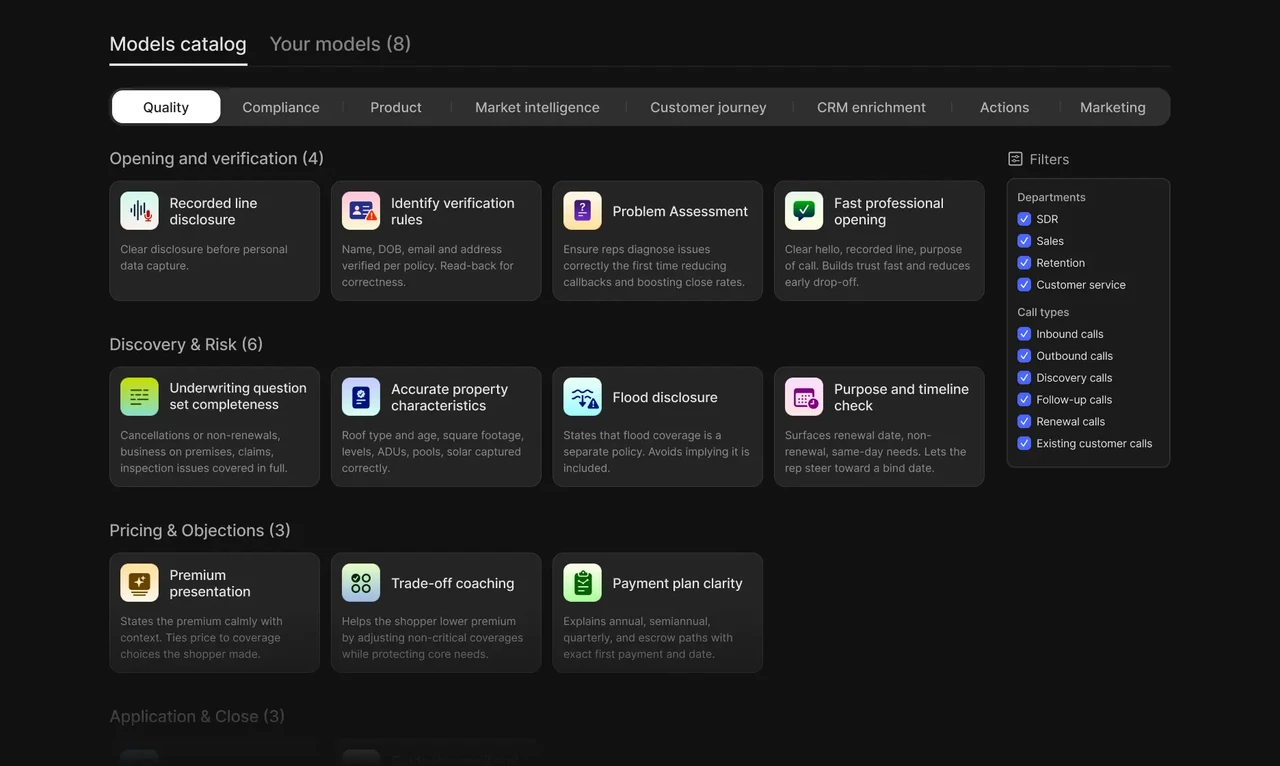
Voiceops Overview
Voiceops is best suited for mid-market and enterprise contact centers that need scalable visibility into customer conversations across large call volumes.
It’s ideal for organizations that want to automate quality assurance, analyze 100% of their calls, monitor compliance, and identify coaching opportunities and performance trends after conversations take place.
Voiceops Features and Capabilities
- Automated Quality Assurance
- Post-Call Conversation Intelligence
- Coaching Insights & Performance Management
- Compliance Monitoring & Risk Detection
- Voice of the Customer Insights
- CRM Enrichment & Workflow Automation
-
Automatically scores 100% of calls, helping teams replace manual sampling and reduce QA workload.
-
Surfaces themes, objections, compliance issues, and performance patterns across large call volumes.
-
Flags risky language and missing disclosures, which is valuable for highly-regulated industries.
-
Identifies coaching opportunities and compares performance across agents, teams, and time periods.
-
Insights can be pushed into CRMs, dashboards, and workflows to support reporting and decision-making.
-
Analyzes conversations after they happen; cannot prevent mistakes or guide agents during live calls.
-
No real-time prompting, agent guidance, or live compliance assistance
-
Improvements rely on managers reviewing insights and following up later, which can slow behavior change
-
Insights rely on execution to create value; teams must apply insights through coaching and training.
-
Organizations other conversation intelligence tools may find some redundancy in post-call analytics capabilities.
Voiceops Alternatives & Competitors 2025
| Feature | Voiceops | Level AI | CallMiner | Cogito / Verint | Balto | Observe AI | NICE | Gong | Chorus / ZoomInfo | Talkdesk | Calabrio |
|---|---|---|---|---|---|---|---|---|---|---|---|
| Conversation Intelligence & Analytics | |||||||||||
| Automated QA | |||||||||||
| Coaching & Performance Management | |||||||||||
| Compliance & Risk Management | |||||||||||
| Real-Time Capabilities | |||||||||||
| Operational & CX Insights | |||||||||||
| CRM Enrichment & Workflow Automation | |||||||||||
| Ease of Configuration & Implementation |
Top Voiceops Alternatives & Competitors
1. Level AI

Level AI is an AI-powered conversation intelligence and quality assurance platform designed to help contact centers analyze customer conversations at scale. Compared to Voiceops, Level AI positions itself as a more flexible, modern alternative for automated QA and post-call analytics, with an emphasis on configurable insights and AI-driven scoring.
Key features
-
Automated QA scoring across 100% of calls
-
Conversation intelligence with topic, intent, and sentiment analysis
-
Customizable QA scorecards and evaluation criteria
-
Coaching insights and performance dashboards for agents and managers
-
Integrations with CCaaS platforms, CRMs, and analytics tools
-
Strong automated QA capabilities that reduce reliance on manual reviews
-
Flexible configuration for QA criteria, workflows, and reporting
-
Modern AI models that surface insights quickly across large call volumes
-
Useful coaching analytics for identifying performance gaps and trends
-
Scales well for mid-market and enterprise contact centers
-
Primarily focused on post-call analysis with limited real-time agent support
-
Insights require follow-up coaching to drive behavior change
-
Implementation and tuning can require ongoing admin involvement
-
Less emphasis on live compliance guidance compared to real-time tools
-
Value depends on how consistently managers act on QA insights
Contact centers that use Voiceops primarily for automated QA and post-call analytics and are looking for a modern, configurable alternative. Level AI is ideal for teams that want deep QA coverage, flexible scoring, and actionable insights, but are comfortable improving performance through post-call coaching rather than in-call guidance.
Why Are Contact Centers Switching from Voiceops to Balto?

Fix Calls in Real-Time, Not After the Fact
Voiceops helps teams understand what went wrong after a conversation ends, while Balto is designed for teams that want to prevent those issues altogether by guiding agents live during calls.

Historical Reporting Matters Less Than Live Agent Performance
For teams less focused on post-call dashboards and more focused on real-time execution, Balto is often a better fit than Voiceops.

Trusted by Top Contact Centers
Your business is in good hands with Balto. With a 4.8 rating and over 300 reviews on G2, Balto is the favorite real-time solution for top-performing contact centers.
Why You Should Choose Balto Over Voiceops
With our smarter AI, simple onboarding with one-day integrations, and focus on agent empowerment, we think the choice is clear. We invite you to get a demo to see the difference for yourself.
Here's what our fans have to say on G2
Justin N.
Mid-Market, Customer Service
Easy Peasy. Balto allows me to focus on my calls because of the help it gives especially with the notes that it generates. It would allow me to not worry about my notes which is a requirement for my job. Balto is a big help for my daily tasks.
Ali C.
Small Business, Sales
Life changing. Balto capture the conversation accurately and it summarizes everything.
Christian E.
Mid-Market, Sales & Compliance
Balto makes life easy! What I love most about Balto is the real-time coaching feature. It’s amazing how I can get live feedback and guidance during calls, helping me stay on track and handle tough objections smoothly. Instead of waiting for post-call reviews, I’m able to improve instantly, which boosts my confidence and performance right in the moment.
Vincent V.
Enterprise, Customer Service
An amazing tool for our operations. Its summarization feature for every call, almost every feature that balto has saves our company so much time. And its AI is so helpful making me save 50-70 percent of my time on work. I can hardly think of dislikes.
2. CallMiner

CallMiner is an enterprise conversation analytics and quality management platform used by contact centers to analyze customer interactions at scale. Compared to Voiceops, CallMiner offers deeper analytics and compliance capabilities for large, regulated organizations, with a heavier emphasis on post-call insight and governance.
Key features
-
Advanced conversation analytics across voice and digital channels
-
Automated and assisted QA scoring with customizable evaluation frameworks
-
Robust compliance monitoring and risk detection
-
Dashboards and reporting for CX, operations, and risk teams
-
Integrations with CCaaS platforms, CRMs, and data warehouses
-
Industry-leading conversation analytics for large call volumes
-
Strong compliance and risk management features for regulated industries
-
Powerful reporting and dashboards for cross-functional stakeholders
-
Supports complex QA programs and enterprise governance needs
-
Proven scalability for global contact center environments
-
Implementation and configuration can be complex and time-consuming
-
Heavier administrative overhead compared to more lightweight platforms
-
Primarily focused on post-call analysis with no real-time agent guidance
-
Maybe more than some teams need if QA and analytics requirements are simple
-
Higher cost of ownership for smaller or mid-market teams
Large or highly regulated contact centers that use Voiceops for compliance, QA, and post-call analytics and need deeper enterprise-grade capabilities. CallMiner is best suited for organizations with mature QA programs, dedicated analytics resources, and complex regulatory requirements, rather than teams looking for fast deployment or real-time agent support.
3. Cogito / Verint

Cogito is a conversation intelligence platform, now owned by Verint, that uses AI to analyze voice interactions and provide guidance to contact center agents.
Compared to Voiceops, Cogito differentiates itself by combining post-call analytics with limited real-time behavioral cues, focusing on emotional intelligence and conversation dynamics rather than QA scoring alone.
Key features
-
AI-driven analysis of tone, pace, and conversational behaviors
-
Real-time cues that alert agents to changes in customer engagement or sentiment
-
Post-call analytics and performance insights for managers
-
Integration with Verint’s broader workforce engagement and analytics suite
-
Dashboards that track conversational behaviors and coaching trends
-
Unique focus on emotional intelligence and conversational dynamics
-
Some real-time feedback during calls, unlike purely post-call platforms
-
Strong fit within Verint’s enterprise ecosystem
-
Useful coaching insights tied to communication behaviors, not just outcomes
-
Well-suited for teams focused on soft skills and customer experience
-
Real-time guidance is subtle and limited compared to full agent assist tools
-
Less robust automated QA scoring than Voiceops or QA-first platforms
-
Implementation and configuration can be complex, especially within large stacks
-
Primarily benefits voice interactions, with less emphasis on omnichannel analysis
-
Best value often requires adoption of Verint’s broader platform
Contact centers that use Voiceops for post-call insights but want to add a layer of real-time behavioral feedback focused on empathy and conversation quality. Cogito is best suited for enterprise teams invested in the Verint ecosystem and prioritizing emotional intelligence and soft-skill coaching over detailed QA scoring or live scripting.
4. Balto

Balto is a real-time agent guidance platform that helps contact center agents navigate live conversations with customers. Unlike Voiceops, which focuses on post-call analysis and QA, Balto is designed to improve calls as they happen by coaching agents in the moment.
Key features
-
Real-time agent guidance during live calls
-
Dynamic talk tracks and prompts based on call context
-
Live compliance alerts and required disclosure reminders
-
Real-time objection handling and next-best-action suggestions
-
CRM enrichment and automated workflow triggers based on call outcomes
-
Improves call outcomes immediately, not after coaching follow-ups
-
Helps prevent compliance issues instead of flagging them post-call
-
Reduces ramp time for new agents with in-call guidance
-
Drives consistent behavior across agents without relying solely on managers
-
Fast to deploy and easy for agents to adopt during live conversations
-
Does not provide deep post-call analytics or QA dashboards like Voiceops
-
Not designed for historical trend analysis across large call volumes
-
Limited use for teams that only want reporting and analytics
-
Best results depend on well-defined talk tracks and playbooks
-
Typically complements, rather than replaces, analytics-heavy platforms
Teams using Voiceops who are frustrated that insights come too late to change outcomes. Balto is ideal for contact centers that want to shift from reactive QA and coaching to real-time performance improvement, especially for organizations focused on compliance, conversion, CSAT , and agent consistency during live calls.
5. Observe AI

Observe AI is an AI-powered conversation intelligence and quality assurance platform designed for contact centers that want to analyze customer interactions at scale.
Compared to Voiceops, Observe AI offers a very similar post-call analytics and automated QA approach, with a strong emphasis on AI-driven scoring, insights, and manager workflows.
Key features
-
Automated QA scoring across 100 percent of customer calls
-
Conversation intelligence with topic, intent, and sentiment detection
-
Customizable QA scorecards and evaluation frameworks
-
Coaching insights, performance dashboards, and call playback tools
-
Integrations with CCaaS platforms, CRMs, and workforce tools
-
Strong automated QA capabilities that reduce manual call reviews
-
AI-driven insights that surface trends and performance gaps quickly
-
Flexible QA configuration for different teams, regions, or use cases
-
Well-designed dashboards for managers and QA teams
-
Scales effectively for mid-market and enterprise contact centers
-
Primarily focused on post-call analysis with limited real-time agent guidance
-
Coaching remains reactive and dependent on manager’s follow-up
-
Feature overlaps with other conversation analytics and QA platforms
-
Configuration and tuning may require ongoing QA and admin effort
-
Less differentiated if teams already use a similar QA-focused tool like Voiceops
Contact centers that use Voiceops for automated QA and post-call analytics and want a comparable platform with flexible AI-driven scoring and reporting. Observe AI is a good fit for teams that value deep QA coverage, scalable analytics, and structured coaching workflows.
6. NICE

NICE is an enterprise customer experience platform that offers conversation intelligence, quality management, and analytics as part of its CXone suite. Compared to Voiceops, NICE provides a broader, all-in-one enterprise solution that combines post-call analytics, QA, compliance, and workforce tools within a single ecosystem.
Key features
-
Conversation intelligence and analytics across voice and digital channels
-
Automated and assisted QA scoring and evaluation workflows
-
Compliance monitoring and risk detection for regulated environments
-
Workforce engagement, performance, and CX analytics within CXone
-
Native integration with NICE’s CCaaS, WFM, and workforce tools
-
Very strong enterprise-grade analytics and compliance capabilities
-
Broad, integrated platform covering QA, CX, and workforce management
-
Well-suited for large, global contact centers with complex needs
-
Deep experience supporting regulated industries
-
Reduces the need for multiple point solutions within NICE’s ecosystem
-
Implementation and configuration can be complex and time-intensive
-
Higher cost and longer time to value compared to lighter-weight platforms
-
Primarily focused on post-call analysis with no real-time agent guidance
-
Less flexible if teams want best-in-class tools rather than a full suite
-
Can feel heavy for teams that only need conversation intelligence or QA
Large enterprise contact centers that use Voiceops for QA, analytics, and compliance and want to consolidate tools into a single CX platform. NICE is ideal for organizations with complex operational requirements, global scale, and dedicated resources to manage a comprehensive CXone deployment, rather than teams seeking fast implementation or real-time agent support.
7. Gong

Gong is a conversation intelligence and revenue analytics platform used primarily by sales and go-to-market teams to analyze calls, meetings, and emails. Compared to Voiceops, Gong is focused on sales performance and pipeline visibility rather than contact center QA, compliance, or high-volume call analysis.
Key features
-
Automatic recording and transcription of sales calls and meetings
-
Conversation intelligence that surfaces buyer signals, objections, and next steps
-
Deal and pipeline analytics tied to CRM data
-
Coaching tools for reviewing calls, sharing snippets, and reinforcing best practices
-
Integrations with CRMs and sales engagement platforms
-
Strong visibility into sales conversations and deal health
-
Useful coaching insights for improving rep performance and messaging
-
Tight CRM integration that connects conversations to pipeline outcomes
-
Intuitive interface for sales managers and revenue leaders
-
Widely adopted and well understood in revenue organizations
-
Not designed for contact center QA or automated call scoring
-
Limited compliance and risk management capabilities
-
Primarily focused on post-call analysis with no real-time agent guidance
-
Less effective for high-volume inbound or support call environments
-
Can overlap with other sales enablement or analytics tools
Sales and revenue teams that use Voiceops but want deeper visibility into sales conversations, deal progression, and pipeline risk. Gong is best suited for organizations where calls are primarily sales-driven and success is measured by win rates and forecasting accuracy, rather than QA coverage, compliance, or contact center efficiency.
8. Chorus / ZoomInfo

Chorus, now part of ZoomInfo, is a conversation intelligence platform that analyzes sales calls and meetings to surface coaching opportunities, talk patterns, and deal insights.
Compared to Voiceops, Chorus is built for sales and go-to-market teams, with a focus on post-call analysis and tight integration with ZoomInfo’s data ecosystem rather than contact center QA or compliance.
Key features
-
Automatic recording and transcription of sales calls and video meetings
-
AI-driven insights on talk ratios, objection handling, and messaging patterns
-
Deal and account context enriched by ZoomInfo’s contact, firmographic, and intent data
-
Coaching tools for reviewing calls, sharing clips, and scoring rep performance
-
Integrations with CRMs and sales engagement platforms
-
Strong alignment with ZoomInfo’s B2B data and go-to-market tooling
-
Easy for sales reps and managers to adopt
-
Useful conversational insights for coaching and onboarding
-
Seamless CRM integration for tying calls to deals and accounts
-
Well-suited for distributed or remote sales teams
-
Not designed for high-volume contact center environments
-
Lacks automated QA scoring and robust compliance monitoring
-
Primarily focused on post-call analysis with no real-time agent guidance
-
Revenue analytics and forecasting are less comprehensive than some competitors
-
Feature overlaps with other ZoomInfo products in larger stacks
Sales teams already using ZoomInfo that want a straightforward conversation intelligence and coaching platform. Chorus is ideal for organizations that prioritize post-call sales insights and coaching effectiveness over automated QA, compliance, or real-time agent support.
9. Talkdesk

Talkdesk is a cloud contact center platform (CCaaS) that includes quality management and analytics as part of its broader CX suite. Compared to Voiceops, Talkdesk offers conversation analytics and QA as native capabilities within its telephony platform, rather than as a standalone conversation intelligence tool.
Key features
-
Native call recording and transcription within the Talkdesk CCaaS platform
-
Quality management tools with automated and assisted QA scoring
-
Conversation analytics and reporting for contact center performance
-
Compliance monitoring and call evaluation workflows
-
Integrations with CRMs and third-party workforce and analytics tools
-
Built-in QA and analytics reduce the need for separate point solutions
-
Tight integration with Talkdesk’s telephony and routing capabilities
-
Simplified vendor management for Talkdesk customers
-
Suitable for teams that want a unified CCaaS and QA stack
-
Scales well for mid-market and enterprise contact centers
-
Analytics and QA capabilities are less specialized than dedicated platforms like Voiceops
-
Limited flexibility compared to best-in-class conversation intelligence tools
-
Primarily focused on post-call analysis with no real-time agent guidance
-
Switching CCaaS providers can be disruptive if Talkdesk is not already in use
-
May not meet advanced analytics or compliance needs for complex environments
Contact centers already using Talkdesk that want built-in quality management and analytics without adding another vendor. Talkdesk is a good fit for teams that use Voiceops primarily for basic QA and reporting and prefer an integrated CCaaS solution over a standalone conversation intelligence platform.
10. Calabrio

Calabrio is a workforce performance and quality management platform designed for contact centers that want to improve agent performance and operational efficiency.
Compared to Voiceops, Calabrio focuses more on workforce engagement, QA workflows, and performance management, with conversation analytics as part of a broader WFO suite rather than a standalone intelligence layer.
Key features
-
Quality management with automated and assisted QA scoring
-
Call recording, playback, and evaluation workflows
-
Performance dashboards for agents, supervisors, and leadership
-
Workforce engagement and analytics tools
-
Integrations with CCaaS platforms and CRMs
-
Strong QA and workforce performance management capabilities
-
Well-suited for contact centers with established QA programs
-
Good visibility into agent performance and operational metrics
-
Integrates well with major contact center platforms
-
Familiar interface for teams already using WFO tools
-
Conversation intelligence is less advanced than analytics-first platforms like Voiceops
-
Limited real-time agent guidance during live calls
-
Configuration and administration can be complex for some teams
-
Insights are primarily used post-call and require follow-up coaching
-
Less differentiated for teams seeking AI-first analytics or real-time support
Contact centers that use Voiceops primarily for QA and performance tracking and want a broader workforce optimization platform. Calabrio is best suited for teams that prioritize agent performance management, evaluations, and operational reporting over deep conversation intelligence or real-time agent guidance.
Key Features to Consider When Choosing Contact Center Software
When evaluating contact center software, it is important to understand which features will actually move the needle for agent performance, compliance, and conversation intelligence. A strong platform should include robust analytics, automated QA, and real-time capabilities, among other core features.
When evaluating tools like Level AI, Balto, and others, weigh how each performs in these key areas, balancing sophistication with usability to match your organization’s size, goals, and customer experience strategy.
Top Voiceops Alternatives
Top Voiceops alternatives include platforms like Level AI, Balto, NICE, Calabrio, and Talkdesk, each offering different strengths across automated QA, conversation analytics, compliance, and agent performance.
When comparing these solutions, buyers should evaluate QA coverage, analytics depth, coaching workflows, compliance capabilities, and whether insights are applied after the call or used to influence outcomes in real time.
Balto stands out by focusing on live agent guidance, delivering in-call prompts, talk tracks, and compliance reminders that help agents perform consistently and avoid mistakes as conversations unfold; something post-call analytics and QA tools cannot address on their own.
FAQs
The best Voiceops competitors in 2025 include Level AI, CallMiner, Observe.ai, Verint, NICE, Calabrio, Talkdesk, and Balto. These platforms offer varying strengths across automated quality assurance, conversation intelligence, compliance monitoring, and agent performance management.
The right alternative depends on whether your priority is post-call analytics, enterprise governance, or real-time agent support.
Voiceops focuses on post-call conversation analysis, automated QA, and coaching insights after interactions end. Balto takes a different approach by guiding agents in real time with live prompts, talk tracks, and compliance reminders that improve outcomes during the call.
Teams often compare Balto and Voiceops when they want to move from reactive coaching to in-the-moment performance improvement.
Voiceops is a well-established player in automated QA and post-call conversation intelligence, particularly for teams managing large call volumes. However, the market has expanded, and several platforms now lead in specific areas such as enterprise analytics, workforce optimization , or real-time agent guidance.
Balto is widely recognized as a leading AI platform for real-time agent coaching. Unlike tools that analyze conversations after they happen, Balto delivers live guidance, compliance prompts, and next-best-action suggestions while agents are on the call, helping teams improve consistency, conversion, and compliance in the moment.
When switching from Voiceops, consider whether you need deeper analytics, easier QA configuration, stronger compliance support, or faster impact on agent performance. Teams should also evaluate time to value, integration with existing systems, and whether improvements happen post-call or in real time.
Clarifying these priorities helps ensure the new platform aligns with your contact center’s goals.
Found What You Were Looking For? Discover the Better Alternative — Balto.
See how Balto outperforms other AI solutions with real-time guidance, QA automation, and insights that instantly improve agent performance.