













How to Analyze Voice of the Customer (VOC): Step-by-Step Guide for Contact Centers


Understanding what customers really think is the foundation of great service, but it’s not always easy to capture.
Voice of the Customer (VOC) is the practice of collecting, analyzing, and acting on customer feedback to improve products, services, and overall experience.
In this guide, we’ll show you how to analyze Voice of the Customer data using proven frameworks, practical tools, and real-time insights powered by Balto.
Top methods to collect VOC feedback include:
- Post-call surveys: Capture satisfaction immediately after interactions.
- Call transcripts and recordings: Analyze tone, emotion, and key themes in conversations.
- Chat and email logs: Identify recurring issues or sentiment trends in written exchanges.
- Social media and reviews: Monitor public feedback for emerging topics or pain points.
- Customer interviews: Uncover deeper motivations and expectations behind feedback.
- Behavioral and product usage data: Look at what customers do (feature adoption, drop-offs, repeat usage) to complement what they say.
Key metrics and KPIs in Voice of the Customer research include:
- Customer Satisfaction (CSAT): Gauges immediate satisfaction with an interaction.
- Net Promoter Score (NPS): Measures long-term loyalty and advocacy.
- Customer Effort Score (CES): Tracks how easy it is for customers to resolve issues
- Sentiment Score: Quantifies emotional tone across conversations.
- First Contact Resolution (FCR): Indicates how effectively agents solve issues on the first try.
- Churn Rate: Monitors attrition to validate whether CX improvements drive retention.
- Customer Lifetime Value (CLV): Captures the long-term financial impact of better experiences.
In the sections ahead, we’ll break down what VOC analysis is, why it matters for contact centers, and the exact steps to turn feedback into measurable CX improvements.
You’ll also learn common VOC mistakes, key metrics to track, and how Balto brings real-time analytics to every customer interaction, turning every call into a source of insight and impact.
What Is Voice of the Customer (VOC) Analysis?

Voice of the Customer (VOC) analysis is the process of collecting, interpreting, and acting on customer feedback to understand what people truly think and feel about your business, not just what they tell you in surveys.
It connects the dots between what customers say, how they say it, and what they actually do across every interaction.
At its core, VOC analysis transforms unstructured input like call transcripts, chat logs, survey responses, and social media comments into structured insights that can guide decisions across product, service, and customer experience (CX) teams.
Why Voice of Customer Analysis Matters for Contact Centers
For contact centers, Voice of the Customer analysis is more than a feedback exercise, it’s a performance multiplier. Every customer conversation contains data that can reveal how well your agents, processes, and products are meeting expectations.
VOC analysis turns that constant stream of dialogue into actionable intelligence that drives measurable business results.
Here’s why it matters:
Improves Customer Satisfaction (CSAT) and Loyalty
When teams continuously monitor and respond to customer sentiment, issues are resolved faster and relationships improve.
According to industry benchmarks, businesses that actively analyze VOC data see up to 30-50% higher CSAT scores and stronger repeat engagement.
Identifies Hidden Friction Points
VOC analysis uncovers patterns that traditional QA misses, such as recurring complaints, confusing workflows, or moments of frustration that lead to churn.
These insights help managers fix root causes instead of symptoms.
Strengthens Agent Coaching and QA
Analyzing customer language side by side with agent behavior helps supervisors pinpoint what drives positive outcomes.
Real-time speech analytics tools, like Balto , flag key moments in live calls so managers can coach in the moment, not days later.
Drives Product and Process Improvements
Insights from customer conversations often highlight product bugs, missing features, or unclear policies long before they appear in surveys.
Sharing VOC data with product and operations teams turns the contact center into a strategic feedback hub.
Quantifies the Customer Experience
With structured VOC analytics , contact centers can link customer emotion directly to key metrics like resolution rate, average handle time, churn, and NPS, making it easier to demonstrate the ROI of CX initiatives.
In short, VOC analysis transforms every conversation into an opportunity to delight customers, empower agents, and prove the business value of great service.
Top Methods to Collect Voice of Customer Feedback
A strong Voice of the Customer program starts with diverse, reliable data sources.
The more ways you capture both structured and unstructured customer sentiment, the clearer your picture of the overall experience becomes.
Here are the top methods contact centers use to collect VOC feedback:
The most effective VOC programs combine several of these inputs into a unified analytics system.
That way, teams can correlate direct feedback (what customers tell you) with indirect signals (what their actions reveal), producing a full, accurate view of customer experience.
How to Analyze Voice of Customer Data (Step-by-Step Process)
Once customer feedback is collected, the real value comes from how it’s analyzed.
Voice of the Customer (VOC) analysis turns scattered data points into insights that can shape better service, smarter coaching, and more loyal customers.
Here’s a practical eight-step framework:

1. Define Your Goals
Start with a clear intent. Are you trying to improve CSAT, reduce churn, or identify training gaps?
Setting objectives helps you focus on the most relevant data sources and metrics instead of drowning in noise.
2. Aggregate Data Across Channels
Centralize all feedback, including call transcripts, survey scores, chat logs, and social mentions, in one place. This gives you a single source of truth to identify consistent patterns across touchpoints.
3. Clean and Organize the Data
Remove duplicates, spam, or irrelevant responses from your data set. Tag each entry by channel, topic, or customer type.
For unstructured data (like call transcripts), categorize comments into themes such as “pricing,” “support quality,” or “technical issues.”
4. Analyze Themes and Sentiment
Use text and speech analytics to uncover what customers are talking about, and how they feel about it.
Voice of Customer sentiment analysis tools detect emotional tone (positive, negative, neutral), while thematic tagging surfaces common drivers of satisfaction or frustration.
5. Quantify the Findings
Turn insights into measurable trends. Track frequency (how often an issue appears), sentiment shifts over time, and correlations with key performance indicators like first contact resolution (FCR), NPS, or average handle time (AHT).
6. Visualize the Results
Dashboards and data visualization tools help teams quickly see what matters.
Charts showing top complaint categories, trending keywords, or sentiment over time make it easy to share findings across departments.
7. Identify Root Causes and Priorities
Not every issue deserves equal attention. Prioritize by impact: what’s causing the most friction or affecting the largest number of customers?
This turns VOC data analysis into an action plan instead of a static report.
8. Act and Measure Outcomes
Share insights with relevant teams (CX, Product, Operations) and implement targeted improvements. Continue to monitor how those changes affect metrics like CSAT, churn, or resolution time.
VOC analysis is cyclical: every action creates new data to learn from.
Key Metrics & KPIs in VOC Research
Measuring the Voice of the Customer isn’t just about collecting feedback; it’s about translating that feedback into quantifiable indicators of experience, loyalty, and performance.
The right KPIs help you track progress, prove ROI, and ensure your VOC program drives real impact across the organization.
Here are the key metrics that define effective VOC research for contact centers:
Customer Satisfaction (CSAT)
CSAT is a post-interaction rating that captures how happy customers are with a specific experience. It’s quick, familiar, and one of the most direct measures of service quality.
Net Promoter Score (NPS)
NPS measures long-term loyalty by asking how likely a customer is to recommend your company to others.
Tracking NPS trends over time helps identify when customer perception is improving or slipping, a leading indicator of retention.
Customer Effort Score (CES)
CES is one of the best predictors of loyalty. It measures how easy it was for a customer to get an issue resolved. The lower the effort, the higher the likelihood of repeat business.
Sentiment Score
Sentiment score uses AI or speech analytics to determine the emotional tone of customer interactions (positive, neutral, or negative) in real time.
First Contact Resolution (FCR)
FCR indicates how effectively agents resolve issues the first time around.
McKinsey research shows that high FCR correlates strongly with improved satisfaction and reduced operational costs.
Churn Rate
A lagging but critical KPI, tracking how many customers stop engaging or cancel services, helps validate whether improvements in sentiment or satisfaction actually drive retention.
Customer Lifetime Value (CLV)
CLV is the ultimate measure of loyalty. When VOC insights lead to better experiences, CLV increases, proving that listening to customers isn’t just good practice, it’s good business.
The most advanced VOC programs connect these metrics instead of tracking them in isolation, enabling leaders to prioritize fixes with the highest measurable impact.
Common VOC Analysis Mistakes (and How to Avoid Them)
Even strong Voice of the Customer programs can fall short when feedback gets trapped in silos or buried in dashboards.
Here are the five most common VOC pitfalls contact centers face:

Keeping Insights Siloed Within Departments
VOC data often lives in separate systems: QA tracks calls, Product logs bugs, Marketing monitors reviews.
When these insights aren’t shared, patterns go unnoticed and opportunities for improvement slip through the cracks.
Trying to Fix Everything at Once
It’s easy to get overwhelmed by feedback volume and try to solve every issue immediately. But spreading resources too thin leads to shallow fixes that don’t move key metrics.
Collecting Feedback but Not Acting on It
Too often, VOC data ends up as a report instead of a roadmap. Without clear ownership or follow-through, even the most insightful findings stall out.
Gathering Input but Never Following Up
Customers notice when their feedback disappears into the void. When organizations fail to acknowledge it, loyalty drops.
Treating VOC as a One-Time Project
Some teams treat VOC as a quarterly survey or end-of-year analysis. That approach misses the dynamic nature of customer sentiment and evolving expectations.
When contact centers overcome these five pitfalls, they turn VOC analysis into a continuous improvement engine that listens, learns, and acts in real time.
Transforming VOC Insights into CX Improvements
Few organizations effectively close the loop between gathering feedback and taking action.
The gap isn’t data, it’s discipline. Transforming VOC insights into customer experience (CX) improvements requires clear ownership, structured communication, and follow-through.
Here’s how high-performing contact centers make VOC data drive real change:
Share Insights Across Teams
VOC analysis shouldn’t live in a dashboard. Circulate findings across Product, Customer Service , and Operations so everyone understands the “why” behind customer feedback.
When teams share one source of truth, they can coordinate improvements that span the entire customer journey.
Prioritize High-Impact Issues
Not every data point deserves action. Focus on the themes that most affect satisfaction or churn, like “long hold times” or “confusing refund policy.”
Rank each issue by customer volume, business risk, and ease of resolution to guide resource allocation.
Design Targeted Actions
Translate insights into specific, measurable initiatives: retraining agents, revising scripts, updating FAQs, or optimizing workflows.
For product-related feedback, collaborate with engineering and design teams to address recurring friction points.
Close the Feedback Loop
Communicate back to customers when changes are made. A simple “You told us X, so we did Y” message builds trust and signals accountability.
Customers who feel their feedback led to action show greater loyalty than those who don’t.
Track and Iterate
Use metrics like CSAT, NPS, and sentiment score to monitor the effects of each improvement.
VOC should be a continuous loop: every change generates new data that helps you refine the experience further.
When VOC insights flow directly into coaching, process design, and product strategy, the contact center evolves from a cost center into a strategic growth engine.
How Balto Enables Real-Time Voice of Customer Analytics
Traditional Voice of the Customer analytics often happens after the fact, once a call ends, a survey closes, or a transcript is processed. By then, the moment to make a difference has passed.
Balto flips that timeline, turning every live conversation into a source of real-time insight and improvement.
Here’s how Balto brings VOC analytics to life inside the contact center:
Real-Time Call Analysis
Balto listens to customer conversations as they happen, detecting keywords, intent, and emotional tone in real time.
Instead of waiting for post-call reporting, supervisors and agents can see live trends, enabling faster, more empathetic responses.
Instant Sentiment and Trend Detection
Balto’s AI continuously evaluates sentiment across thousands of interactions. When patterns of frustration or confusion emerge, managers are alerted immediately, helping them address systemic issues before they escalate into churn.
Actionable Coaching Prompts
Real-time insights don’t just reveal problems; they empower agents to solve them in the moment.
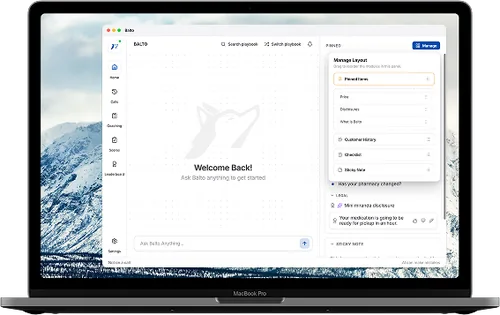
Balto delivers on-screen guidance and coaching cues that help agents adjust tone, language, and behavior dynamically.
Automatic Data Capture for Continuous VOC Loops
Every analyzed conversation feeds back into your organization’s broader VOC program.
With structured transcripts, categorized themes, and sentiment summaries, Balto provides a steady stream of clean, actionable data, with no manual tagging required.

Seamless Integration with CX Metrics
Balto connects conversation insights to KPIs like CSAT, FCR, and NPS, giving leaders a clear view of how real-time coaching and sentiment tracking influence customer outcomes.
In short, Balto makes the voice of the customer actionable, not historical. By turning conversations into instant data and guidance, it helps contact centers move from reactive analysis to proactive experience design, one call at a time.
Turning Customer Voice Analysis into Real-Time Action
In the past, VOC programs relied on static surveys and delayed insights. Today, AI-powered platforms like Balto give contact centers the power to capture, interpret, and act on customer sentiment the moment it’s expressed.
When every call becomes a source of live intelligence, teams no longer have to wait to improve. They coach in real time, resolve friction instantly, and build stronger relationships with every interaction.
FAQs
A Voice of the Customer (VOC) analysis typically follows five key steps:
- Define goals: Identify what you want to learn (e.g., improve CSAT, reduce churn).
- Collect feedback: Gather data from calls, chats, surveys, and social channels.
- Analyze themes and sentiment: Categorize comments and detect emotional tone.
- Prioritize and act: Focus on the insights that most affect KPIs.
- Monitor results: Track how improvements influence satisfaction, loyalty, and revenue.
This process creates a continuous feedback loop that keeps CX improvements aligned with customer needs.
The most effective VOC programs combine structured feedback (CSAT, NPS, surveys) with unstructured feedback (call transcripts, chat logs, social mentions).
To improve coverage, gather input across multiple touchpoints and store it in a centralized voice of customer analytics solution.
VOC sentiment analysis uses AI and natural language processing (NLP) to detect the emotional tone behind customer feedback, whether positive, negative, or neutral.
By measuring emotion at scale, teams can spot frustration, confusion, or delight across thousands of interactions and take action before problems escalate.
Core VOC metrics include Customer Satisfaction (CSAT), Net Promoter Score (NPS), Customer Effort Score (CES), Sentiment Score, First Contact Resolution (FCR), and Customer Lifetime Value (CLV).
Together, these metrics provide a 360° view of how customers feel, how efficiently issues are resolved, and how loyalty changes over time.
Different VOC platforms specialize in different areas, from survey analytics to omnichannel sentiment tracking, but Balto stands out for enabling real-time VOC insights directly during live customer calls.
AI accelerates VOC analysis by automating data collection, categorization, and sentiment detection across large volumes of customer feedback.
It identifies patterns and emotions that humans might miss, helping teams uncover root causes faster and take action sooner.
AI also enables real-time insight generation, allowing contact centers to coach agents and resolve issues mid-conversation.
Real-time VOC systems integrate with live call analytics to flag key emotions, keywords, or topics as they occur.
Supervisors can then guide agents instantly, while automated workflows trigger next steps such as follow-up surveys or escalation alerts.
Balto transforms every call into a source of instant VOC data. Its AI analyzes speech patterns, intent, and sentiment in real time, surfacing insights that help teams improve customer experience on the spot.
Instead of waiting for post-call reports, contact centers using Balto can listen, learn, and act simultaneously, turning every conversation into an opportunity to strengthen relationships and drive better outcomes.
Liked what you read? See Balto in action.
Balto helps leading contact centers turn insights into outcomes, in real time. Book a live demo to discover how our AI powers better conversations, coaching, and conversions.