















Call center automation isn’t just a competitive advantage anymore — it’s the new baseline.
As customer expectations rise and operational costs follow suit, the smartest contact centers are turning to automation to do more with less.
In 2025, automation is transforming every corner of the contact center — from how calls are routed to how agents are coached.
At Balto , we work with forward-thinking teams who are embracing these changes to boost efficiency, streamline operations, and deliver better customer experiences at scale.
Here are the 11 contact center automation trends shaping the future of contact centers:
- AI-Powered Agent Assistance: Real-time guidance helps agents resolve issues faster and with more confidence.
- Intelligent Call Routing: AI matches customers to the right agent, reducing transfers and improving satisfaction.
- Voice Analytics: Tools detect tone and emotion to flag issues, coach agents, and improve outcomes.
- Self-Service Automation: Chatbots and IVRs are solving more customer problems, without agent involvement.
- Automated QA & Compliance: AI scores every interaction so managers can focus on coaching, not sampling.
- Robotic Process Automation (RPA): Repetitive backend tasks like CRM updates are handled without human input.
- Omnichannel Workflows: This contact center automation trend ties phone, chat, email, and SMS into one seamless support system.
- Post-Call Automation: Summaries, tagging, and follow-ups now happen instantly, not manually.
- Coaching & Training: AI-driven insights power personalized learning paths and faster onboarding.
- Cloud-Based Solutions: Scalable, remote-friendly platforms lay the groundwork for modern contact center automation trends in 2025.
- Security & Privacy: Stronger protections are built in as automation handles more sensitive data.
In this post, we’ll break down the technology and AI trends impacting contact center automation — what they mean, why they matter, and how your contact center can take full advantage in 2025 to reap the benefits.
11 Call Center Automation Trends Shaping 2025
Stay competitive, reduce manual work, and improve CX with these contact center automation trends in 2025.

1. AI-Powered Agent Assistance
Real-time agent assist is one of the AI trends impacting contact center automation in 2025.
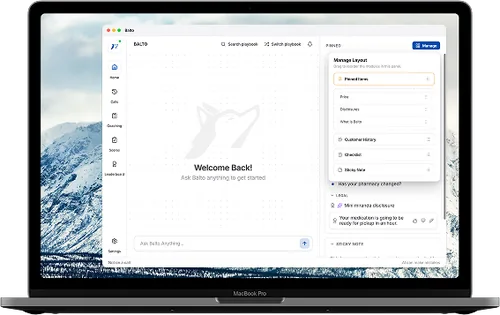
Agent assist tools act like copilots during live calls, surfacing compliance prompts, helpful responses, and next-best actions right when agents need them.
These tools cut handle time, reduce errors, and help every agent perform like a top performer.
2. Intelligent Call Routing
Forget static IVR trees. AI-powered call routing dynamically directs customers to the best available agent based on intent, sentiment, or past behavior.
That means higher first-call resolution and less time wasted on transfers or hold music.
3. Voice Analytics
Advanced speech analytics tools now detect emotion, tone, and pacing in real time, offering insight into both customer sentiment and agent performance.
This helps flag escalations early and gives managers data they can actually act on.
4. Self-Service Automation
Smart IVRs, chatbots, and voicebots are handling more complex tasks every year.
With natural language understanding and integration into CRMs, self-service isn’t just about deflecting calls — it’s about solving real problems, 24/7.
This improves the customer experience and provides a higher level of customer service to your valued customers.
5. Automated QA & Compliance

Manual scorecards are out.
One of the major AI trends impacting contact center automation is automated QA that can automatically analyze and score 100% of calls, identifying coaching moments, compliance risks, and soft-skill gaps at scale.
6. Robotic Process Automation (RPA)
RPA handles the backend grunt work: logging cases, updating CRMs, scheduling callbacks, and more.
By removing these repetitive tasks, agents can focus on what they do best: solving complex customer problems.
7. Omnichannel Workflows
Customers expect seamless transitions across phone, chat, SMS, and email.
With omnichannel contact center automation trends in 2025, agents can manage all those touchpoints from one place — no more switching tabs or losing context.
8. Post-Call Automation

After-call work (ACW) can eat up hours every week.
That’s where a major AI trend impacting contact center automation comes in: AI-led post-call or after-call work.
Now, AI can auto-generate call summaries, update CRM fields, and even draft follow-up messages, slashing wrap time and boosting productivity .
9. Coaching and Training
AI isn’t replacing managers in 2025, it’s helping them coach smarter.
Automation platforms now deliver personalized training plans based on real call data, making coaching feedback more targeted, timely, and scalable.
Looking for more contact center management tips?
Successful call center management involves keeping in mind industry best practices, like:
- Hire for grit and empathy — not just experience
- Put in place onboarding that actually sticks
- Leverage AI as a copilot (not a replacement)
- Create feedback loops that drive growth
- Build a culture of recognition
- Understand the role of technology in the contact center
- Use data to drive decision-making
- Centralize and democratize access to data
- Communicate with your employees regularly
- Ensure proper scheduling
Read our in-depth guide: 10 Contact Center Management Tips: Best Practices, Metrics, & Roles That Drive Success
10. Cloud-Based Solutions
Cloud contact center platforms offer flexibility, scalability, and faster feature deployment — plus support for hybrid and remote teams.
When paired with automation tools, they reduce operational drag and improve uptime.
11. Security and Privacy
As automation tools handle more sensitive data, securing that information is critical.
In 2025, expect to see more platforms built with end-to-end encryption, role-based access, and automated compliance audits baked in.
Whether you’re just starting out or already ahead of the curve, the key is to keep evolving.
Even small steps toward contact center automation — like real-time agent assist or automated QA — can drive major improvements in efficiency, consistency, and customer satisfaction.
Ready Or Not, Contact Center Automation is Here
Call center automation trends aren’t a future vision — they’re already transforming how leading contact centers operate.
Whether you’re optimizing workflows, enhancing agent performance, or delivering faster, more personalized support, the right tools make a measurable impact.
The good news? You don’t have to tackle it all at once.
Start with the areas where contact center automation trends can deliver quick wins in 2025 — like agent assist, QA, or post-call wrap-up — and build from there.
Quiz: Is Your Contact Center Ready for Automation?
FAQs
Call center automation refers to using technology — especially AI and RPA — to streamline repetitive tasks, support agents in real time, and improve the overall customer experience.
It includes everything from automated call routing and self-service tools to post-call summaries and coaching support.
AI speeds up service by assisting agents during live calls, automatically routing customers, generating real-time insights, and handling post-call work.
It reduces manual effort, boosts accuracy, and helps teams resolve more calls with fewer resources.
The most impactful tools include real-time agent assist platforms, AI-powered QA systems, RPA bots for backend tasks, intelligent IVRs, and omnichannel workflow automation.
These tools can be used individually or integrated for end-to-end automation.
RPA (Robotic Process Automation) handles repetitive backend tasks like updating CRMs, logging tickets, copying data between systems, or scheduling follow-ups.
It frees agents from low-value work so they can focus on helping customers.
Omnichannel automation connects all customer touchpoints — phone, chat, SMS, social, and email — into a single workflow.
It ensures consistent support across channels, reduces context-switching for agents, and allows seamless handoffs without losing customer history.
In 2025, there are several AI trends impacting contact center automation.
These key trends include real-time AI support, automated QA, intelligent routing, advanced self-service options, RPA, and increased investment in cloud platforms and security.
These technologies are helping contact centers cut costs, scale faster, and improve the customer experience.
Predictive routing uses AI to match callers with the best agent based on real-time data, behavior, and history.
It increases first-call resolution, reduces wait times, and ensures customers speak with the right person the first time, improving customer satisfaction and other key metrics.
Even as customers embrace chat and messaging, many still rely on phone support.
AI-powered IVRs help modernize the phone experience with natural language understanding and dynamic routing, improving outcomes without increasing agent load.
Voicebots handle routine inbound questions (like balance checks or FAQs), while auto dialers streamline outbound outreach for sales, collections, or follow-ups.
Together, they reduce agent workload and increase volume without sacrificing quality.
Expect more advanced generative AI, real-time summarization tools, proactive AI outreach, and deeper integrations between automation platforms and CRMs.
The next wave of automation will focus on hyper-personalization, predictive support, and near-instant resolution.
Liked what you read? See Balto in action.
Balto helps leading contact centers turn insights into outcomes, in real time. Book a live demo to discover how our AI powers better conversations, coaching, and conversions.