















Voice AI agents are becoming a core part of modern contact center strategy, but not all platforms solve the same problem.
Below is a ranked list of the top 9 voice AI agent companies today, spanning autonomous, agent-assist, and hybrid approaches:
- Cognigy: Enterprise-grade conversational automation for large, complex contact centers.
- PolyAI: Multilingual voice assistants focused on natural customer conversations.
- Lindy: No-code voice agents for sales and support workflows.
- Retell AI: Inbound-focused voice AI with analytics and compliance support.
- Balto: Real-time agent assist that guides human agents during live calls.
- Vapi: Developer-first APIs for highly customizable voice agents.
- Synthflow: Rapid-deployment, no-code voice automation.
- Bland AI: Flexible voice agents for inbound and outbound use cases.
- Regal: AI-driven outbound and lifecycle engagement voice automation.
This guide breaks down how each type of voice AI agent works, when autonomous versus agent-assist models make sense, and how to evaluate platforms based on enterprise readiness, risk, and customer experience.
What Is a Voice AI Agent?
A voice AI agent is software that uses artificial intelligence to participate in spoken phone conversations. It can understand what a caller says, determine the intent, and respond verbally in real time.
Depending on the design, a voice AI agent may fully handle a call on its own, assist a human agent during the conversation, or do some of both.
At a technical level, voice AI agents combine several core components:
- Automatic speech recognition to convert speech to text
- Natural language understanding to interpret meaning
- Decision logic to determine the next action
- Text-to-speech to respond audibly.
These systems are typically integrated with telephony infrastructure, IVRs, CCaaS platforms, and backend systems like CRMs or ticketing tools.
A voice AI agent is not the same thing as a traditional IVR or a scripted voice bot. Legacy systems rely on rigid menus and predefined flows. Modern voice AI agents use machine learning models that can handle natural language, adapt to context, and respond dynamically.
That said, more advanced technology also introduces new considerations around accuracy, latency, compliance, and customer experience.
Types of Voice AI Agents (Autonomous vs Agent Assist vs Hybrid)
Voice AI agents fall into three categories based on how much of the conversation is handled by AI versus a human agent.
Understanding these categories is essential for evaluating risk, customer experience impact, and operational fit.
Autonomous Voice AI Agents
Autonomous voice AI agents are designed to handle phone conversations without human involvement. They answer calls, understand customer intent, ask follow-up questions, and complete predefined tasks such as routing, scheduling, payments, or basic issue resolution.
These systems are often positioned as a way to reduce call volume, lower costs, or provide 24/7 coverage.
They work best for high-volume, repetitive use cases with clear success criteria, such as appointment reminders, balance checks, order status, or simple FAQs.
In more advanced implementations, autonomous agents can integrate with backend systems to complete transactions end-to-end.
However, fully autonomous voice agents introduce tradeoffs. They require careful training, strong guardrails, and clear fallback paths when conversations become ambiguous, emotional, or complex.
For enterprises, governance, compliance, and escalation logic are critical considerations.
Voice AI Agent Assist (Real-Time Agent Assist)
Voice AI agent assist platforms do not replace human agents. Instead, they listen to live calls and provide real-time guidance to the agent during the conversation.
This may include suggested responses, next-best actions, compliance reminders, knowledge retrieval, or coaching prompts.
Agent assist is designed to improve call quality, consistency, and outcomes while keeping humans in control of the interaction. Because the agent remains the speaker, these systems typically carry less customer-facing risk than fully autonomous voice agents.
They are often used to support onboarding, reduce handle time, improve adherence to scripts or regulations, and ensure critical steps are not missed.
Real-time agent assist is frequently viewed as a lower-risk entry point into voice AI. It augments human performance rather than automating it, making it easier to deploy across sensitive or complex call types where trust, empathy, and judgment matter.
Hybrid Voice AI Agents
Hybrid voice AI agents combine elements of autonomy and agent assist.
In these models, AI may handle parts of the interaction independently, such as call intake, identity verification, or simple requests, before handing the call to a human agent with full context.
In other cases, AI may continue to assist the agent after the handoff with real-time guidance.
Hybrid approaches aim to balance efficiency with control. They can reduce agent workload on routine tasks while preserving human involvement for nuanced or high-stakes conversations.
This model is increasingly common in enterprise environments where full automation is not feasible or desirable, but some level of voice AI-driven deflection or pre-processing is valuable.
How Voice AI Agents Are Used in Contact Centers Today
Voice AI agents are most commonly used to improve efficiency and consistency in contact centers, but their role varies widely depending on the level of automation an organization is comfortable with.
In many environments, autonomous voice AI agents are deployed at the front of the call to handle high-volume, low-complexity interactions. These include tasks like call routing, appointment scheduling, order status checks, identity verification, and simple FAQs.
When implemented carefully, this approach can reduce wait times and free human agents to focus on more complex or sensitive conversations.
Agent assist is often applied to onboarding, regulated interactions, sales conversations, and quality assurance, where consistency and accuracy directly impact outcomes.
Hybrid models are also becoming more common. In these setups, AI may manage the initial intake or resolution of routine requests before handing off to a human agent, while continuing to provide guidance during the call.
Across all models, successful deployments share a focus on reliability, low latency, and clear escalation paths.
Rather than replacing human agents outright, most contact centers today use voice AI to reduce friction, improve call quality, and support agents in delivering better customer experiences.
💬 Top 9 Voice AI Agent Companies (Ranked List)
The voice AI agent market spans everything from fully autonomous phone agents to real-time systems that support human agents during live calls.
The companies below represent a cross-section of the most relevant platforms for contact centers today, evaluated based on enterprise readiness, clarity of use case, scalability, and customer experience impact.
1. Cognigy | 🏆 Best Voice AI Agent for Enterprise Contact Centers

Cognigy by NICE is widely recognized for large-scale, enterprise-grade conversational automation. Its platform supports complex dialog flows, multilingual interactions, and deep integrations with existing contact center infrastructure.
Cognigy is best suited for organizations managing high call volumes across regions that want to automate well-defined interactions while maintaining strong governance and control.
2. PolyAI

PolyAI specializes in natural, multilingual voice assistants designed for enterprise contact centers.
The platform focuses heavily on conversational quality and seamless handoff to human agents, making it a strong choice for customer-facing automation where brand voice and CX matter.
3. Lindy

Lindy offers a no-code platform for building voice AI agents that can handle inbound and outbound calls. It is often used for sales, support, and operational workflows where speed of deployment and flexibility are priorities.
4. Retell AI

Retell AI focuses on inbound customer support use cases, with emphasis on natural conversation handling, analytics , and compliance support. It is commonly used by teams looking to automate specific call types without building from scratch.
5. Balto | 🏆 Best Voice AI Agent Platform for Real-Time Agent Assist

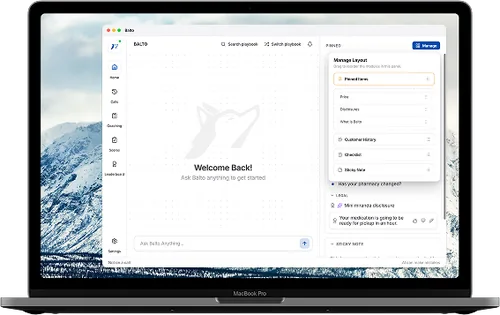
Balto takes a fundamentally different approach from autonomous voice agents. Rather than replacing human agents, Balto provides real-time guidance during live calls, helping agents say the right thing at the right time.
The platform listens to conversations and delivers in-the-moment prompts, compliance reminders, and coaching insights that improve call quality, consistency, and outcomes.
Because the human agent remains in control of the conversation, Balto is especially well-suited for regulated, complex, or high-stakes interactions where trust, empathy, and judgment matter.
6. Vapi

Vapi is a developer-first platform that provides APIs and infrastructure for building highly customizable voice agents. It is commonly used by teams that want deep control over workflows, integrations, and call behavior across voice channels.
7. Synthflow

Synthflow is a no-code voice AI builder designed for rapid deployment. It enables teams to launch conversational voice automation quickly, with integrations into CRMs and support systems, making it attractive for experimentation and lighter-weight use cases.
8. Bland AI

Bland AI focuses on customizable, scalable voice agents for outbound and inbound use cases. It is often used by technically sophisticated teams that want flexibility in how voice agents are built and deployed.
9. Regal

Regal AI focuses on AI-powered outbound and inbound voice automation for customer engagement teams. The platform is often used for proactive outreach, sales acceleration, and lifecycle engagement, blending conversational AI with contact center workflows.
When Autonomous Voice Agents Make Sense (and When They Don’t)
Autonomous voice AI agents can be powerful in the right context, but they are not a universal replacement for human agents. Their success depends heavily on the type of interaction, the tolerance for risk, and the expectations customers bring into the call.
Autonomous voice agents tend to make sense when call types are high-volume, predictable, and transactional.
Common examples include appointment reminders, order or delivery status, balance inquiries, identity verification, and simple scheduling.
In these scenarios, success criteria are clear, conversations follow a narrow path, and customers are often motivated by speed rather than personalization.
When paired with strong escalation rules, autonomous agents can reduce wait times and deflect routine calls effectively.
They are far less effective when conversations involve emotional nuance, ambiguity, or high stakes.
Billing disputes, cancellations, complaints, regulated disclosures, and complex troubleshooting often require empathy, judgment, and the ability to adapt in real time.
In these cases, even small errors in understanding or tone can damage trust and increase repeat contact.
For enterprise contact centers, the biggest risks are not technical but experiential. Latency, transcription errors, or rigid decision trees can frustrate customers quickly.
Without clear fallback paths to a human agent, autonomous voice agents may resolve fewer issues than expected while creating downstream work.
As a result, many organizations adopt a cautious approach. They deploy autonomous agents for narrowly defined use cases while relying on human agents, often supported by real-time agent assist, for complex or sensitive interactions.
Common Mistakes Buyers Make with Voice AI
As organizations rush to adopt voice AI, many run into preventable issues that stem from unclear definitions, unrealistic expectations, or underestimating the complexity of voice interactions.
Understanding these common pitfalls can help buyers evaluate platforms more effectively and avoid costly missteps.
Treating All Voice AI As The Same Category
One of the most common mistakes is assuming that IVR, conversational bots, autonomous voice agents, and real-time agent assist are interchangeable.
These tools solve very different problems and carry very different levels of risk. Without a clear taxonomy, teams often evaluate the wrong solutions or expect outcomes that the technology was never designed to deliver.
Prioritizing Cost Reduction Over Customer Experience
Many voice AI initiatives start with the goal of reducing headcount or call volume. While efficiency matters, optimizing too aggressively for cost can lead to brittle implementations that frustrate customers and increase repeat contact.
Voice AI that degrades experience often creates more work downstream rather than less.
Underestimating Latency And Accuracy Requirements
Voice interactions are unforgiving. Even small delays, transcription errors, or awkward turn-taking can make an AI agent feel unnatural or unreliable.
Buyers risk focusing on feature lists and demos without rigorously testing performance under real call conditions.
Deploying Autonomous Agents Without Clear Escalation Paths
Autonomous voice agents work best when they know their limits. Failing to define when and how a call should be handed off to a human agent can trap customers in unproductive loops and damage trust.
Escalation should be a design principle, not an afterthought.
Ignoring Compliance, Security, And Governance Early
Enterprise contact centers operate in regulated environments, yet some teams evaluate voice AI as a purely technical upgrade.
Data handling, call recording, auditability, and model governance need to be addressed from the outset, not retrofitted after deployment.
Assuming Automation Eliminates The Need For Human Agents
Voice AI is often positioned as a replacement for people, but most successful implementations use it to support human agents rather than remove them entirely.
Treating AI as a substitute rather than an augmenting tool can lead to unrealistic expectations and disappointing results.
Enterprise Evaluation Criteria for Voice AI Agents
Choosing a voice AI agent platform is less about flashy demos and more about how well the technology performs under real contact center conditions.
Enterprise buyers should evaluate voice AI against criteria that reflect scale, risk, and customer experience impact.
Conversational Accuracy And Natural Language Understanding
At the foundation, the platform must accurately understand what callers say and respond appropriately. This includes handling accents, interruptions, varied phrasing, and multi-turn conversations.
Poor accuracy quickly erodes trust and increases repeat contact.
Latency And Real-Time Performance
Voice interactions require near-instant response. Even small delays can make conversations feel unnatural or frustrating.
Buyers should assess end-to-end latency in live environments, not just in controlled demos.
Escalation And Human Handoff Capabilities
No voice AI handles every scenario. The platform should make it easy to transfer calls to human agents when confidence drops, emotions escalate, or complexity increases.
Handoffs should preserve context so customers do not need to repeat themselves.
Integration With Existing Contact Center Infrastructure
Enterprise voice AI must work within existing ecosystems, including CCaaS platforms, CRMs, ticketing systems, and knowledge bases.
Smooth integration reduces implementation time and minimizes disruption to agent workflows.
Compliance, Security, And Data Governance
For regulated industries, compliance is non-negotiable. Buyers should evaluate how the platform handles call recording, data retention, access controls, auditability, and model governance, as well as how it supports regulatory requirements.
Scalability And Reliability At Enterprise Volume
Voice AI should perform consistently at peak call volumes and across regions. This includes uptime guarantees, redundancy, and the ability to scale without degrading accuracy or response time.
Transparency And Control Over AI Behavior
Enterprises need visibility into how the AI makes decisions and the ability to configure guardrails. Platforms should offer control over scripts, thresholds, fallback logic, and updates, rather than operating as a black box.
Measurement, Analytics, And ROI Visibility
Finally, buyers should understand how success is measured. The platform should provide clear reporting on call outcomes, containment or assist rates, quality improvements, and downstream impact on metrics like CSAT, handle time, and repeat contact.
Choosing The Right Voice AI Strategy For Your Contact Center
Voice AI agents are not one-size-fits-all. The right approach depends on your call types, risk tolerance, customer expectations, and operational maturity.
For most enterprise contact centers, success comes from clarity, understanding when automation helps, when humans matter most, and how to combine the two without compromising customer experience.
FAQs
The top voice AI agent companies include Cognigy, PolyAI, Lindy, Retell AI, Balto, Vapi, Synthflow, Bland AI, and Regal, with each serving different automation and agent-assist use cases.
A voice bot typically follows scripted flows, while a voice AI agent uses natural language understanding to handle dynamic, conversational interactions in real time.
For contact centers handling complex, regulated, or high-stakes conversations, Balto stands out because it improves live calls in real time while keeping human agents in control of the conversation.
In most contact centers, voice AI agents augment human agents rather than replace them, handling routine tasks or providing real-time guidance during live calls.
For large-scale enterprise contact centers seeking conversational automation with strong governance and integrations, Cognigy is one of the most established and widely adopted platforms.
Voice AI agents use speech recognition to transcribe calls, natural language models to interpret intent, and decision logic to respond or guide actions with minimal latency.
Key risks include transcription errors, poor escalation handling, latency, and customer frustration when conversations fall outside predefined scenarios.
Voice AI can reduce handle time, improve consistency, surface relevant information instantly, and help agents follow best practices during live conversations.
Yes. Most enterprise-ready voice AI platforms are designed to integrate with existing CCaaS, CRM, and backend systems rather than replace them.
Pricing varies widely based on usage, deployment model, and capabilities, ranging from per-minute or per-call fees to enterprise licensing agreements.
Liked what you read? See Balto in action.
Balto helps leading contact centers turn insights into outcomes, in real time. Book a live demo to discover how our AI powers better conversations, coaching, and conversions.