







Best AI Agent Assist Software for Support Teams: The 9 Top Tools by Category (2026)


AI agent assist software for support teams is software that helps support teams resolve customer issues faster, but the category covers two distinct types of tools: autonomous AI agents that handle conversations on their own, and AI agent assist platforms that augment human agents during live calls. Most buyers researching this category don't realize they're comparing across both tiers, and that's where most evaluation mistakes happen.
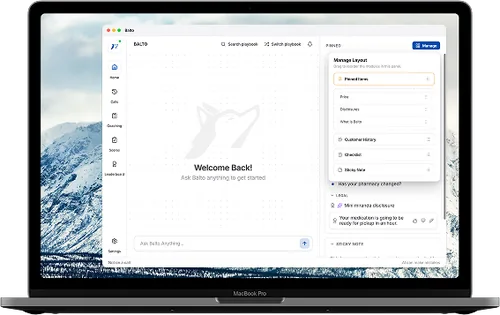
This guide ranks the 9 best AI agent assist software for support teams in 2026, split by category, with where Balto , the AI Workforce for the contact center, sits in the human-augmentation tier and why. Here's what the guide covers:
- Category 1: AI Agents (Autonomous Support Deflection): Intercom Fin, Ada, Forethought, Decagon
- Category 2: AI Agent Assist (Real-Time Human Augmentation): Balto, Cresta, Observe.AI, Level AI, ASAPP
- A side-by-side comparison table of all 9 tools
- A 6-point decision framework for picking your category
- A short interactive quiz to narrow down the specific tool fit
- The closed-loop architecture (agent assist plus QA plus coaching on shared standards) that produces compounding ROI
What's the Difference Between AI Agents and AI Agent Assist?
The terms get used loosely in the market, but the two categories solve completely different operational problems.
AI agents (autonomous deflection) handle customer conversations end-to-end, without a human in the loop. The customer types a question in chat or sends an email, the AI reads it, retrieves the answer from a connected knowledge base, and replies. If the AI can't resolve the case, it escalates to a human. Best fit: digital-first, high-volume, FAQ-heavy support where the goal is to deflect routine work and free human agents for complex cases.
AI agent assist (human augmentation) keeps a human agent in the loop and gives that agent real-time prompts, knowledge surfacing, compliance reminders, and post-call summaries. The AI does not handle the conversation. It makes the human handle the conversation better. Best fit: voice-leading contact centers where calls require judgment, empathy, or compliance accuracy that autonomous AI can't reliably deliver.
The two categories are not interchangeable. An autonomous AI agent will struggle on complex voice calls. An agent assist platform won't deflect ticket volume on its own. Most mature support operations need both, with a closed-loop system that ties autonomous deflection on digital to human-agent productivity on voice.

Want a deeper reset on what agent assist is and how each sub-type works under the hood? Read our complete guide to agent assist in call centers →
How We Evaluated These 9 AI Tools for Support Teams
Six criteria drove the ranking:
- Category fit. Does the tool augment a human agent, or replace one for routine cases?
- Channel coverage. Voice, digital, or both, and how deeply each channel is supported.
- Integration depth with CCaaS, CRM, and knowledge base systems.
- Closed-loop capabilities. Does QA, coaching, and conversation insights talk to the agent assist surface, or do they live in separate tools?
- Documented KPI lift. Vendor-published or third-party benchmarks for AHT, FCR, ramp time, or deflection rate.
- Pricing transparency. Public pricing tiers vs custom-quote-only.
Buyers in voice contact centers should weight integration depth and closed-loop capabilities most heavily. The biggest single predictor of agent assist ROI in voice operations is whether the tool runs alongside QA and coaching on shared standards, or runs in isolation as a point solution that plateaus.
Quick Summary: 9 AI Tools for Support Teams (by Category)
*Category 1: AI Agents (Autonomous Deflection)*
- Intercom Fin: autonomous AI agent for SaaS and B2C helpdesk deflection, trained on your help docs and bundled with Intercom.
- Ada: enterprise multi-channel autonomous AI agent, covering chat, voice, email, and SMS for large support orgs.
- Forethought: purpose-built for ticket workflows. Auto-resolves and auto-triages support tickets in Zendesk and Salesforce.
- Decagon: high-volume enterprise autonomous AI agent that handles transactional support actions, not just FAQ answers.
*Category 2: AI Agent Assist (Real-Time Augmentation)*
- Balto: best overall for voice contact centers. The closed-loop where real-time agent assist, automated QA, coaching, and insights run on shared standards.
- Cresta: real-time AI coaching and objection-handling prompts, optimized for sales-heavy contact centers.
- Observe.AI: automated QA scoring across 100% of calls plus real-time agent assist, strongest in compliance-heavy verticals.
- Level AI: conversation intelligence consolidated with real-time agent assist for mid-market and enterprise contact centers.
- ASAPP: enterprise-grade agent assist plus generative AI for very large contact centers (1,000+ agents) with custom AI requirements.
Comparison Table: AI Agent Assist Software at a Glance
| Tool | Category | Best For | Channel | Closed-Loop |
|---|---|---|---|---|
| Balto | Agent Assist | Voice contact centers, closed-loop | Voice + Digital | |
| Cresta | Agent Assist | Sales-heavy contact centers | Voice + Digital | Partial |
| Observe.AI | Agent Assist | Compliance-heavy verticals | Voice + Digital | Partial |
| Level AI | Agent Assist | Conversation intelligence | Voice + Digital | Partial |
| ASAPP | Agent Assist | Large enterprise contact centers | Voice + Digital | Partial |
| Intercom Fin | AI Agent | SaaS / B2C deflection | Digital | |
| Ada | AI Agent | Enterprise multi-channel deflection | Digital + Voice | |
| Forethought | AI Agent | Ticket triage + auto-resolution | Digital | |
| Decagon | AI Agent | High-volume enterprise deflection | Digital |
Category 1: AI Agents (Autonomous Support Deflection)
The four tools below share the same architecture. An AI agent handles the customer conversation end-to-end on digital channels (chat, email, ticket), and escalates to a human only when it can't resolve the case. They're strongest for support orgs with mature knowledge bases and high routine-volume that's bleeding agent time on repetitive questions.
1. Intercom Fin: Best for SaaS / B2C Helpdesk Autonomous Deflection

Intercom Fin is the autonomous AI agent built on top of Intercom's customer messaging platform, powered by GPT models and your existing Intercom help center content. Fin reads customer questions in chat or email, retrieves answers from your help docs, and replies in natural language. When a question goes beyond the help center, Fin escalates to a human agent in the Intercom Inbox.
Best for: SaaS and B2C teams already running Intercom with mature help-center content who want to deflect routine help-doc questions on chat and email without rebuilding their support stack.
Key features:
- GPT-powered conversational AI trained on your help center
- Auto-resolution with intelligent escalation to human agents
- Multi-channel coverage: web, mobile, social, email
- Resolution-based pricing model
- Out-of-the-box integration with Intercom Inbox, Articles, and ticket workflows
Pricing: Resolution-based, starting at $0.99 per autonomous resolution. Bundled with Intercom plans (Starter at $74 per month and up), scaling with seats and resolutions.
2. Ada: Best for Enterprise Multi-Channel Deflection

Ada is an enterprise-grade autonomous AI agent platform that handles customer conversations across chat, voice, email, and SMS on one platform. Strong fit for large multi-channel support organizations that want autonomous AI across digital and voice deflection on a single vendor footprint.
Best for: Enterprise support teams running multi-channel volume (voice IVR plus digital channels) that want autonomous AI deflection unified on one platform.
Key features:
- Voice and digital channel autonomous AI in one platform
- No-code conversation builder usable by ops teams without engineering
- Pre-built integrations with Salesforce, Zendesk, Snowflake, and Twilio
- Brand-voice customization for tone and personality
- Generative AI grounded in your existing knowledge base
Pricing: Custom enterprise pricing, quote-based. No public tiers; deployments typically start in the $50K-plus annual range.
3. Forethought: Best for Ticket Triage and Auto-Resolution

Forethought is an autonomous AI agent purpose-built for support ticket workflows. The platform has three products: Solve (auto-resolves common tickets), Triage (intent-classifies and routes incoming tickets), and Assist (suggests replies to human agents inside the ticket UI). Strongest in helpdesk and ticket-heavy support organizations.
Best for: Support teams running ticket-heavy volume on Zendesk or Salesforce Service Cloud who want to auto-resolve and auto-route without rebuilding their helpdesk stack.
Key features:
- Solve: auto-resolves tickets without agent involvement
- Triage: intent classification and routing to the right agent or team
- Assist: agent reply suggestions sidecar to the ticket UI
- Native Zendesk and Salesforce Service Cloud integrations
- Resolution analytics and deflection reporting
Pricing: Custom enterprise pricing, tiered by ticket volume.
4. Decagon: Best for High-Volume Enterprise Support Deflection

Decagon is a newer autonomous AI agent platform that built its reputation on high-volume enterprise deployments (Eventbrite, ClassPass, Bilt Rewards). Decagon handles complex multi-turn customer conversations and integrates deeply with backend systems for transactional support actions like refunds, account updates, and order changes.
Best for: Mid-market and enterprise support teams with high digital volume that want autonomous AI to handle transactional support actions, not just answer FAQ questions.
Key features:
- Multi-turn conversation handling for transactional support, not just informational answers
- Deep backend integrations enabling support actions like refunds and account updates
- Custom AI agent persona configurable per brand
- Channel coverage: chat, email, SMS
- Enterprise-grade analytics and conversation review tools
Pricing: Custom enterprise pricing. No public tiers; deployment-heavy.
Category 2: AI Agent Assist (Real-Time Human Augmentation)
The five tools below all augment a human agent during the conversation. They surface prompts, knowledge, compliance reminders, and post-call summaries to the agent's screen as the call unfolds, and they score the call afterward against the QA scorecard. They're strongest for support orgs running voice volume where calls require human judgment, empathy, or compliance accuracy. Most mature voice contact centers also pair agent assist with automated QA and coaching, which is where the closed-loop architecture matters. For more on the real-time guidance category specifically, see our piece on the best real-time agent guidance tools .
1. Balto: Best Overall for Voice Contact Centers (The Closed-Loop)

Balto is the AI Workforce for the contact center, a closed-loop system where real-time agent assist, automated QA, coaching, and conversation insights all run on shared standards. Where most agent assist tools deliver a real-time prompt and stop there, this architecture means the patterns flagged by QA on yesterday's calls become real-time prompts on today's calls, and the conversations agents have feed back into refreshed coaching plans. This is the difference between point-in-time agent assist and compounding-ROI agent assist.
Trusted by mid-market and enterprise contact centers across financial services, healthcare, debt collection, home services, and sales-heavy operations. G2 rating: 4.8 stars across 559 reviews.
Best for: Voice contact centers that want real-time agent assist to compound with QA, coaching, and insights on shared standards, not run as a siloed point tool.
Key features:
- Real-time agent assist with live in-call prompts, compliance reminders, objection handling, and knowledge surfacing
- Automated QA scoring across 100% of calls (versus 1-3% manual coverage)
- Closed-loop coaching where QA flags become coaching moments become real-time prompts
- BaltoGPT Insights surfacing conversation analytics at the executive level
- Top-performer training data so the AI learns from your best agents, not generic industry baselines
- Integrations with 50+ CCaaS platforms (Five9, NICE, Genesys, Talkdesk, Amazon Connect, Dialpad, and more)
Pricing: Custom enterprise pricing, aligned with agent seat count and the modules deployed (Agent Assist, QA, Coaching, Insights).
Want to see how Balto's closed-loop runs on your own calls? Book a 15-minute demo →
2. Cresta: Best for Sales-Heavy Contact Centers

Cresta is a real-time agent assist platform focused on the sales and retention motion. Strong in objection handling, next-best-action prompting, and AI coaching for inside sales and outbound teams. Built on a generative AI architecture with custom models trained per customer.
Best for: Inside sales, outbound sales, and retention-focused contact centers that need real-time AI coaching on objection handling and closing.
Key features:
- Real-time agent assist with objection handling and next-best-action prompts
- Sales-specific call coaching and post-call review workflows
- Custom generative AI models trained per customer
- Conversation intelligence and intent tracking
- Salesforce and leading CCaaS integrations
Pricing: Custom enterprise pricing, no public tiers.
3. Observe.AI: Best for Compliance-Heavy Verticals

Observe.AI started as a post-call QA and speech analytics platform and has expanded into real-time agent assist. Strongest in compliance-heavy verticals like financial services, healthcare, and debt collection, where automated QA scoring against disclosure scorecards is mission-critical. Auto QA flags every call across the operation.
Best for: Financial services, healthcare, and debt collection contact centers where compliance disclosure scoring and 100% call QA coverage are the top priorities.
Key features:
- Auto QA scoring across 100% of call coverage
- Real-time agent assist with compliance prompts and disclosure reminders
- Generative AI conversation analytics
- Coaching workflows tied to QA findings
- Pre-built compliance scorecards for TCPA, HIPAA, and debt collection regulations
Pricing: Custom enterprise pricing, tiered by seat count and modules.
4. Level AI: Best for Conversation Intelligence + Agent Assist

Level AI combines conversation intelligence (analyzing every call for trends, intent, and sentiment) with real-time agent assist. Strong for contact centers that want analytics and agent assist consolidated on a single platform without buying separate tools. Generative AI powers QA scoring and customer experience analytics.
Best for: Mid-market and enterprise contact centers that want conversation intelligence and agent assist consolidated on a single platform.
Key features:
- Real-time agent assist combined with conversation intelligence
- AI auto QA scoring across 100% of calls
- Customer sentiment analytics and intent tracking
- Coaching insights derived from conversation analytics
- Integrations with major CCaaS platforms
Pricing: Custom enterprise pricing, no public tiers.
5. ASAPP: Best for Large Enterprise Contact Centers

ASAPP is an enterprise-grade AI platform for contact centers that combines AI agent assist, generative AI, and workflow automation. Strongest in very large enterprise contact centers (Verizon, JetBlue, US Bank scale) with deep customization requirements and complex integration footprints.
Best for: Very large enterprise contact centers (1,000+ agents) with custom AI requirements, complex integration footprints, and the budget for an enterprise-grade deployment.
Key features:
- AI agent assist covering both voice and digital channels
- Generative AI conversation summarization and reply suggestions
- Custom AI model training per customer
- Workflow automation for after-call work
- Enterprise-scale CCaaS integrations with enterprise SLAs
Pricing: Enterprise pricing, no public tiers. Deployment is consulting-heavy.
Do You Need AI Agents, AI Agent Assist, or Both?
The decision hinges on six factors. Walk through each and the category will become obvious for your operation.
1. Primary support channel. Voice-heavy operations need Category 2 (agent assist). Digital-heavy operations lean Category 1 (autonomous AI agents). Mixed operations usually need both, paired together.
2. Volume profile. High-volume routine work that's FAQ-driven or transactional fits Category 1. Complex, judgment-driven calls that require empathy or compliance accuracy fit Category 2.
3. Top pain point. If your top pain is deflection of routine ticket or chat work, Category 1 solves it. If your top pain is lifting agent performance, consistency, or ramp time, Category 2 solves it.
4. Existing stack. A strong knowledge base plus a modern helpdesk SaaS (Zendesk, Intercom, Salesforce Service Cloud) makes Category 1 deployment fast. A CCaaS plus voice volume plus some form of QA program makes Category 2 deployment fast.
5. Compliance burden. Light compliance needs make Category 1 straightforward. Heavy compliance (financial services, healthcare, debt collection) requires Category 2 with pre-built compliance scorecards.
6. Roadmap horizon. If you want a quick deflection win in one quarter, Category 1 delivers fastest. If you want multi-year ROI compounding through closed-loop maturity, Category 2 with the closed-loop architecture is the long-term bet. For a deeper view on the financial case, see our piece on the ROI of investing in agent assist platforms .
Most mature support operations end up needing both. The closed-loop story is what ties them together: agent assist on voice, autonomous AI on digital, all coordinated on shared standards. Balto is built for that closed-loop and integrates with both CCaaS platforms and digital channels.

How to Choose AI Agent Assist Software for Your Support Team
AI agent assist software for support teams is not one product category. It's two. Category 1 (autonomous AI agents) deflects routine digital volume by handling conversations end-to-end. Category 2 (AI agent assist) augments human agents on complex calls by surfacing prompts, knowledge, and compliance reminders in real time. Both categories are valid, both have leading vendors, and the choice depends on your channel mix, your volume profile, and your compliance burden.
What ties them together is the closed-loop architecture: agent assist plus automated QA plus coaching plus insights, all running on shared standards. This is the difference between point-in-time agent assist deployments that plateau and architectures that compound ROI year after year. Balto operates the closed-loop end-to-end across every call and integrates with 50+ CCaaS platforms.
The three phases of AI in the contact center are clear. Automation handles routine deflection (Category 1). Augmentation lifts the performance of human agents (Category 2). Intelligence ties them together through a closed-loop that learns from every conversation and feeds back into the next.
FAQs
AI agents are autonomous AI tools that handle customer conversations on their own across chat, email, or ticket channels, escalating to a human only when they can't resolve the case. AI agent assist software is different: it keeps a human agent in the loop and gives that agent real-time prompts, knowledge surfacing, compliance reminders, and post-call summaries during the conversation.
The two categories solve different operational problems. AI agents deflect routine digital volume. AI agent assist lifts the performance of human agents on complex, voice-leading calls. Most mature support operations need both, paired through a closed-loop system.
Start with your primary support channel and volume profile. If you're voice-heavy with complex calls that require judgment or compliance accuracy, AI agent assist (Category 2) is your move. If you're digital-heavy with high routine volume that's FAQ-driven, autonomous AI agents (Category 1) deflect that work effectively.
Mixed support operations usually need both. A closed-loop architecture that ties autonomous deflection on digital to agent assist on voice is where the next decade of contact center ROI lives.
For voice contact centers, Balto leads the AI agent assist category. Its closed-loop architecture (agent assist plus automated QA plus coaching plus insights on shared standards) produces compounding ROI rather than point-in-time gains. Mature deployments hit 20-30% AHT reduction, 8-15% FCR lift, and 30-50% reduction in new-agent ramp time.
For sales-heavy contact centers, Cresta is the strongest fit. For compliance-heavy verticals, Observe.AI. For mid-market teams with conversation intelligence priorities, Level AI. For very large enterprise, ASAPP.
A real-time agent assist platform follows a four-step pipeline. Speech-to-text transcribes the conversation in real time. NLP and intent recognition classify what's happening on the call. The system pulls relevant content from connected sources (knowledge base, CRM, scorecard, top-performer call data).
The agent assist surface then delivers the right prompt, answer, or checklist item to the agent's screen as the conversation unfolds. After the call, AI summarizes the conversation, scores it against the QA scorecard, and updates the agent dashboard with patterns to coach against.
Compliance-heavy verticals (financial services, healthcare, debt collection) need pre-built compliance scorecards, automated disclosure tracking, and real-time prompts that fire when an agent is about to miss a required disclosure. Observe.AI and Balto both have strong compliance feature depth. Observe.AI leans post-call QA, while the closed-loop approach feeds compliance findings back into real-time prompts on the next call.
The financial value of compliance agent assist is real: a single TCPA violation can cost $500-$1,500 in penalty risk, so eliminating compliance misses at scale pays for the platform quickly.
The leading agent assist platforms integrate with most major CCaaS systems and CRMs out of the box. Balto integrates with 50+ CCaaS platforms including Five9, NICE, Genesys, Talkdesk, Amazon Connect, and Dialpad. Observe.AI, Cresta, Level AI, and ASAPP all integrate with the major CCaaS players as well.
Integration depth varies between vendors. Verify that the integration covers live transcription streams, CRM data lookups, and post-call data write-backs to your QA system before signing.
Most AI agent assist platforms (the five Category 2 tools above) use custom enterprise pricing tied to agent seat count and the modules deployed. Pricing is not publicly listed. Expect agent-seat-month pricing in the mid-double-digits to low-triple-digits range for the assist module, with additional cost for QA, coaching, and insights modules.
Autonomous AI agent platforms (Fin, Decagon) often use resolution-based pricing, charging per autonomous resolution rather than per seat. Intercom Fin lists pricing starting at $0.99 per resolution.
Mature real-time agent assist deployments typically deliver 20-30% AHT reduction, 8-15% FCR lift, 30-50% reduction in new-hire ramp time, and 5-10 point CSAT lifts on routine call resolution. Compliance-focused deployments eliminate most TCPA-type violations, where each violation can carry $500-$1,500 in penalty risk.
The biggest ROI multiplier is the closed-loop architecture. Agent assist alone delivers point-in-time savings. Agent assist paired with automated QA and coaching on shared standards delivers compounding ROI as patterns flagged by QA on this week's calls become real-time prompts on next week's calls.
Yes, and most mature operations end up running both. Autonomous AI agents handle the routine digital deflection (FAQs, account lookups, transactional support actions) so human agents focus on the complex calls that genuinely need human judgment. AI agent assist then lifts the performance of those human agents on the calls they keep.
The architecture that produces the most value pairs the two together with a closed-loop system that shares standards across autonomous deflection, agent assist, automated QA, and coaching.
Most AI agent assist platforms have a 30-90 day deployment window from contract signing to live use, with most of that time spent on integration configuration, scorecard setup, and top-performer training data ingestion. Pilots typically run on a single team or queue for 30-60 days to validate KPI lift before broader rollout.
Faster deployment is possible when the platform has out-of-the-box integrations with your CCaaS, your QA scorecards are already documented, and your coaching workflows are mature. Slower deployment usually reflects integration complexity or organizational change-management.
Liked what you read? See Balto in action.
Balto helps leading contact centers turn insights into outcomes, in real time. Book a live demo to discover how our AI powers better conversations, coaching, and conversions.