










Top 10 Poly AI Alternatives & Competitors 2026
Looking for the best Poly AI alternatives? When choosing a Voice AI Agent platform, prioritize automation accuracy, seamless human handoff, enterprise integrations, and implementation complexity. The best enterprise Poly AI alternative is Balto, while competitors like Replicant, Cognigy, and Retell AI offer autonomous, CCaaS-native, or developer-focused voice automation options.
What is Poly AI?
PolyAI is an enterprise-focused Voice AI Agent platform built to automate customer service phone conversations at scale. It specializes in highly natural voice interactions, inbound call automation, and seamless escalation to live agents within enterprise contact center environments.
Poly AI Overview
PolyAI is best suited for large enterprise contact centers seeking to automate high-volume customer service calls with highly natural voice interactions. It’s ideal for organizations prioritizing autonomous containment and conversational realism, particularly those operating complex service environments that require reliable live agent escalation and enterprise-grade deployment support.
Poly AI Features and Capabilities
Pros
- checkDesKnown for delivering life-like, human-sounding Voice AI Agent interactions
- checkStrong enterprise focus for large-scale contact centers handling high call volumes
- checkReliable live agent escalation & structured human handoff when conversations exceed automation boundaries
- checkGlobal and multilingual capabilities to designed to support international brands with Voice AI Agent deployments
- checkManaged deployment model, which can reduce internal operational burden for enterprise teams
Cons
- closeDeployment can require significant coordination, work, and alignment compared to lighter-weight tools
- closeLess flexible for developer-led experiemntation; not suitable for organizations seeking API-first solutions
- closePrimarily focused on autonomous automation; layered architectures may require additional orchestration
- closeCost structures are typically aligned to large enterprise engagements rather than mid-market
- closeAutonomous Voice AI Agents may struggle without proper governance and oversight layers
Poly AI Alternatives & Competitors 2026
Swipe to compare all vendors →
| Feature | Poly AI | Balto | Replicant | Kore.ai | NICE Cognigy | Genesys Cloud CX | Five9 IVA | Talkdesk Autopilot | Retell AI | Bland AI | Google Dialogflow CX |
|---|---|---|---|---|---|---|---|---|---|---|---|
| Voice Automation Accuracy & Reliability | ✓ | ✓ | ✓ | ✓ | ✓ | ✓ | ✓ | ✓ | ✓ | ✓ | ✓ |
| Human Handoff & Escalations | ✓ | ✓ | ✓ | ✓ | ✓ | ✓ | ✓ | ✓ | ✓ | ✓ | ✓ |
| Enterprise-Level Integrations | ✓ | ✓ | ✓ | ✓ | ✓ | ✓ | ✓ | ✓ | ✗ | ✗ | ✗ |
| Compliance & Governance Controls | ✓ | ✓ | ✓ | ✓ | ✓ | ✓ | ✓ | ✓ | ✗ | ✗ | ✗ |
| Ease of Implementation | ✗ | ✓ | ✗ | ✗ | ✗ | ✓ | ✓ | ✓ | ✓ | ✓ | ✗ |
| Workflows & Conversation Control | ✓ | ✓ | ✓ | ✓ | ✓ | ✓ | ✓ | ✓ | ✓ | ✓ | ✓ |
| Reporting & Analytics | ✓ | ✓ | ✓ | ✓ | ✓ | ✓ | ✓ | ✓ | ✗ | ✗ | ✗ |
| Scalability for Enterprise Volume | ✓ | ✓ | ✓ | ✓ | ✓ | ✓ | ✓ | ✓ | ✗ | ✗ | ✓ |
✓ Offered · ✗ Not offered
Top Poly AI Alternatives & Competitors
Balto
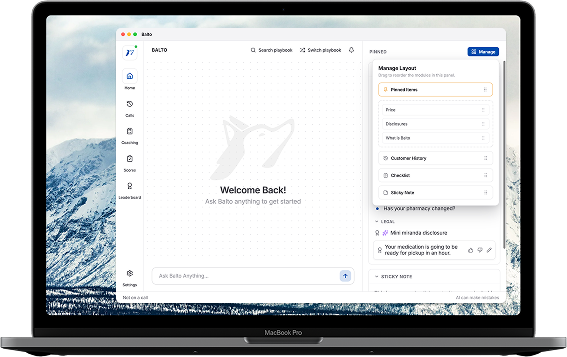
That’s usBalto is an enterprise Voice AI Agent platform built for contact centers that require automation aligned with live operations, compliance oversight, and seamless human handoff. Unlike Poly AI, which focuses primarily on autonomous voice containment and highly natural conversational realism, Balto delivers a layered Voice AI Agent architecture designed to integrate directly into existing contact center workflows with built-in governance and human-in-the-loop alignment.
Key features
- boltEnterprise-ready Voice AI Agent deployment
- boltLayered architecture with human-in-the-loop oversight
- boltSeamless live agent handoff with full context transfer
- boltNative CRM and CCaaS integrations
- boltBuilt-in compliance guardrails and governance controls
- boltReal-time workflow orchestration and escalation logic
- boltOperational reporting and performance visibility
Pros
- checkDesigned specifically for enterprise contact centers, not standalone voice containment
- checkStrong human handoff alignment with preserved context and workflow continuity
- checkBuilt-in compliance, auditability, and governance support
- checkIntegrates directly with major CCaaS and CRM systems
- checkSupports layered automation strategies rather than pure containment
Cons
- closeLess focused on “conversation-first” brand positioning compared to Poly AI
- closeNot intended as a developer-first programmable voice infrastructure platform
- closeEnterprise implementation may involve structured onboarding processes
- closeMay be more robust than smaller teams require for lightweight automation use cases
Why Are Contact Centers Switching from Poly AI to Balto’s Voice AI Agents?
Enterprise-Ready Deployment Without Heavy Engineering Overhead
Balto delivers a production-ready Voice AI Agent platform built for contact centers, reducing the need for ongoing engineering management
Seamless Human Handoff with Operational Context
Balto enables smooth escalation from Voice AI Agents to live agents with preserved conversation context, ensuring continuity and minimizing customer friction during transfers.
Trusted by Top Contact Centers
Your business is in good hands with Balto. With a 4.8 rating and over 300 reviews on G2, Balto is the favorite Voice AI Agent solution for top-performing contact centers.
Why You Should Choose Balto Over Poly AI
With our smarter AI, simple onboarding with one-day integrations, and focus on agent empowerment, we think the choice is clear. We invite you to get a demo to see the difference for yourself.
Get a DemoHere’s what our fans have to say on G2
"It is time sufficient & very useful since we are unable to memorize all scenarios[...]. It helps us also for holistic customer experience."
Benedict V.
Sr. Customer Service Assistant
"It gives the user a more effective way to assist the customer's concern through scripts & troubleshooting steps that pop up using audio cues. Because of this, I can efficiently assist the customer without wasting my time looking for resources."
Erica M.
Customer Service Representative
"I love having all the information I need right at my disposal and that it can be updated seamlessly as needed. Balto helps me meet and exceed my monthly quality assurance metrics each month."
Erica C.
Patient Balance Solution Advisor
"I really like Balto's note-taking ability live on the call. [...] Balto helps agents keep track of calls and provides insights into call volume and reasons for calls."
Farzan G.
Desktop Support II / Field Tech
"It keeps me in compliance, with a level of profesionalism, as well it keeps me in a good flow and order for the applications."
Tania S.
License Insurace Agent.
"Balto makes call reviews a breeze. Balto is a great call assistant for our support analysts. It provides reminders of critical call script items and helps guide the analysts through effective call handling. The best benefits start after the call. Analysts are provided customizable call summary information that can be used to fill out tickets, all calls are QA scored, and supervisors are provided AI powered search and analysis features. Balto has been extremely helpful with implementation and recommendations for effective usage."
Verified User
Enterprise, Customer Service & Sales
"Balto is amazing. I like how it captures the conversation. This saves me so much time when logging my call notes. It’s truly amazing and I use it with every call I receive or make. It’s very easy to incorporate words as well. Balto is so easy to use and the features that come with Balto are so helpful. Balto is also very easy to install and integrate into your company’s system."
Diana W.
Small Business, Customer Service
"Very Easy to Use. Balto is the simplest, easy to learn software I’ve used in the industry. I can’t think of a time when I didn’t use it in a call. I use Balto quite frequently throughout my day. Balto is also easy to integrate and implement into whatever software you use. The customer service is top notch and the number of features is fantastic!"
Isaiah
Mid-Market, Sales
"It automatically highlights what you can say to the customer with it's amazing recognition of what customer says. It also now has notes automatically."
Mary Jane M.
"I like that Balto can be tailored to how I specifically talk with customers. I love that it gives me tips when explaining the process to customers."
Lori-Ann H.
"What I love most about Balto is that it keeps me on track when I feel like I don't know where to go next of if I happen to forget what to do next."
Verified User
"I love the Checklist. It's so helpful to see what I've already said/done and the animations help make me feel happy and encourages me on a bad day"
Sha'Quan J.
"Being able to copy and paste the summary notes onto an appointment for a clear understanding by team and all involved of the situation discussed."
Jenna C.
appointment booking
"It's always there to share tips and ideas with how you can improve and allows you to see what you may have missed and needs to be stated."
Wardella B.
"I enjoy the ability to check if I missed any QA questions before an audit so that I can know what parts of the script I commonly overlook"
Denise R.
"The suggested script made it easier for me to ask open ended questions. This helps me converse with the customer and assess their needs."
Angelica B.
"What I like best is that it gives you tips or information while you are speaking. It is very accurate with what you are talking about."
esmeralda u.
CUSTOMER SERVICE ASSOCIATE
"I love the real-time listening. I'm not waiting until after the call to make adjustments, I can make them at the moment I need them."
Verified User
"how balto listens to you on a call, it hears what your saying and then tells you what you have hit and missed keeping you on track."
daniel k.
benefits consultant
"the 1st set of Questions were PERFECT and now you added more thats already and originally part of the Market Place requirement"
Marilyn T.
"Its very helpfull when I'm in need of ways to help get a payment for our company and helps me keep track of the conversation."
Lacy M.
"I like that Balto keeps me on track, helps me to review what I can do better on the next call, and gives real time rebuttals."
Verified User
"That it catches automatically the workflow and allows you to realize what part of the Script you havent said. As well it automatically detects rela..."
Yazmin P.
Account Manager
"That balto really helps out with the quality of service we provide."
Jonathan M.
customer service insurance supervisor
"Most of its features but more on the ability to review data, it help me to quantify the data that I need and help me analyze reports more accuratel..."
Romina T.
Operations Manager
"It's good, especially if it's an outbound calling campaign, because all the objections and what you say can be provided by Balto, and it won't be d..."
Krian S.
Scheduling Coordinator
"Balto can do anything & everything we could want. Which, could be overwhelming, if the content and features weren't explained/trained properly. The..."
Alexis K.
Manager of Guest Care
"My job requires detailed reviews of our phone calls; summaries of what the customer and agent discussed. Instead of trying to recall what was said ..."
Nashon C.
Sales manager
"It has made remote work and training seamless as Balto guides the agent new or experienced through the call, and with dynamic prompts to help with ..."
John Z.
Operations Manager
"Balto helps my team get through their calls and know where to go next without having to disrupt the "human" aspect of the call! They can form rela..."
Beth P.
Data Entry Manager
"Call explorer for myself but the checklist is very easy to utilize and custom with every agent"
Anna R.
Quality Assurance Supervisor and Training Assistant
"Balto has worked continuously with my company to find a happy medium on the kind of summary they are providing after calls. I am more than happy wi..."
Melissa T.
Assistant Account Manager
"I truly appreciate how Balto ensures our customer service is up to par and of top tier quality."
Raphael R.
Stabilization Manager
"Balto is very user friendly. This software is really simple to learn and use. Balto provides increase confidence in its users, let's not forget to ..."
Sarina T.
Assistant Account Manager
"Balto has been helpful for gaining insights, spotting trends, and coaching agents more effectively, which ultimately helps us improve our customer ..."
Aliyah H.
Contact Center Supervisor
"Having a partner like Balto has been great. The features are very helpful to our team and the implementation process was exceptional. Andrew and th..."
Tony J.
operations manager
"It is user friendly and accurate. It has helped me run my team's QA and helped me to be more efficient with feedback."
Tatiana G.
Internal Collections Supervisor
"Balto is fantastic. The company does an amazing job and is continually working to update and innovate."
Sam Wheaton
Contact Center Supervisor
"One of the best tools I’ve used! Whereas before, we took samples of calls, and did as much as we could, but we had hundreds of calls happening daily, and it was pretty impossible to capture all of that. Now people can see what’s actually being said, transcripts can be pulled up, instead of listening to hours of calls. We’ve seen noticeable improvements with close rates"
Alex D.
Call Center Supervisor
"We wanted to find a way to help our team members consistently provide a high level of patient experience every single phone call they had."
Pamela Velasquez
Manager
"This helps newly hired employees feel more comfortable on the phone right out of the gate."
Britni H.
Recovery Specialist Supervisor
"Balto helps guide the conversation and keeps our team consistent and compliant."
Luan D.
IT Leader or Manager
"Balto is Awesome. Balto is very using and populates quick responses and shows us exactly what to say and keeps us compliant."
Anonymous
Enterprise, Customer Service
"It actively listens to your call and suggests phrases to help you out with closing the client through the entire process."
Verified User
"It goes with your call flow. Easy to use, and it tells you how well you are doing along with your team and so much more!"
Lessette L.
"I appreciate how well the Balto app summarizes and organizes conversations. Its user-friendly interface makes it easy to navigate."
John Nero P.
Team Leader
"Balto solves quick objection rebuttals & real-time coaching, eliminating the need for hard copies of sales scripts. The leaderboard stats help me track key points in real-time, increasing my sales."
Mark M.
Sales Group Supervisor
"The software is great. But the implementation process was exceptional! The team we worked with was knowledgable, efficient, & did a fantastic job of getting us up & running with very limited interruption to the team."
Andrew M.
Owner
"It was very easy to write the play book and use the dynamic prompts."
Steven J.
Operations Director
"Everything! The checklist keep my agents on track, the agents love when they get a win and the confetti goes off. I love the dynamic prompts that h..."
Jessica P.
Call Center Director
"I love ho wbalto capture the essence of the conversation & How balto summarize every conversation and provided insights."
John-Nero P.
Associate Director of Admissions
"its AI feature for analytics, and the summarization of each interaction."
Vincent V.
Admissions director
"What I love most about Balto is the real-time coaching feature. It’s amazing how I can get live feedback and guidance during calls, helping me stay..."
Christian E.
ASSOCIATE DIRECTOR OF ADMISSIONS
"Balto's AI to detect what is being said in the call and the ability to prompt the agent on the phone with the right things to say in every scenario..."
Luis M.
Head of Operations
"I really love the real-time speech analytics tool Balto offers. It provides real-time insights into conversations, ensuring we cover everything nec..."
Matthew T.
Director of Portfolio Management
"We infused Balto into our ecosystem, we encourage our team members to utilize the different aspects of the tool, and over the last year, we’ve seen our NPS score take a gradual incline and over the last two months, a very steep incline. There’s a direct correlation with our percent of compliance to our Balto metrics. […] Over the last two months, we’ve consistently been in the 93-95% range and we’re now in a 65-70% range on our NPS score."
Barry Pritchett
VP of Care Logistics
"We had to scale fast and get new agents trained quickly,"
Ken Monroe
VP of Customer Service
"If you wanted to find one specific moment in a call,"
Chip Kennedy
VP of Shared Services
"Before Balto, our supervisors had to listen to each call manually. That’s just not scalable."
James Luxton
VP of Customer Service
"Our blueprint works; but we wanted to help our agents follow it and set them up for success,"
Jeremy Duane
Director of Sales
"Balto has fundamentally changed our onboarding process. We’ve reduced training time from about six months to one month."
Aaron Asher
Owner
"With Balto, agents had the right words at the right moment and our handle time dropped."
Mark Poisson
Director of AI
"If you wanted to find one specific moment in a call,"
Ivonne Ortiz
Director of Training & Quality
"Balto has been a great tool from a coaching perspective and gives our agents real-time rebuttals."
Tony F.
VP of Sales and Business Development
"Balto is a great tool for increasing compliance adherence, conversions, and suggestive call guidance."
Brandon T.
President
"We did a review with one of our agents, and she had been a consistently good agent but not a top sales performer. She was always mid to low in terms of closes. And so we brought Balto in and in that first year, after doing that, her conversion rate literally doubled, which was shocking because nothing else had changed."
Contact Center Technology Leader at Leading Flooring Company
Replicant
Replicant is an autonomous Voice AI Agent platform focused on automating high-volume customer service calls through natural voice interactions. It emphasizes full-call containment, aiming to resolve common service inquiries without requiring live agent intervention. Compared to Poly AI, Replicant similarly prioritizes autonomous voice automation at enterprise scale, with a strong focus on replacing repetitive inbound service calls rather than layering automation alongside live agent workflows.
Key features
- boltAutonomous inbound customer service automation
- boltNatural language voice interactions
- boltStructured live agent handoff when needed
- boltEnterprise CRM and telephony integrations
- boltPre-built customer service workflows
- boltPerformance monitoring and containment analytics
Pros
- checkStrong focus on high-volume service call containment
- checkDesigned for enterprise contact center environments
- checkEmphasizes measurable automation rates and deflection
- checkProvides structured escalation to human agents
- checkClear positioning around replacing repetitive call types
Cons
- closePrimarily optimized for autonomous containment rather than layered human-in-the-loop models
- closeMay require significant workflow design for complex edge cases
- closeLess focused on real-time agent assist or hybrid automation strategies
- closeEnterprise deployment can involve structured onboarding and configuration
Kore.ai
Kore.ai is an enterprise conversational AI platform that supports Voice AI Agent automation across contact centers, customer service, and digital channels. It is designed for large organizations seeking scalable automation with strong orchestration, workflow control, and integration flexibility. Compared to Poly AI, Kore.ai positions itself as a broader enterprise automation platform, supporting voice and omnichannel deployments rather than focusing exclusively on highly natural phone-based containment.
Key features
- boltEnterprise Voice AI Agent automation across channels
- boltVisual workflow and conversation design tools
- boltPre-built industry-specific automation templates
- boltCRM, CCaaS, and backend system integrations
- boltGovernance, compliance, and security controls
- boltAnalytics and performance dashboards
Pros
- checkBuilt for large enterprise deployments with global scale
- checkSupports both voice and digital automation strategies
- checkStrong workflow configuration and orchestration capabilities
- checkRobust integration ecosystem
- checkEmphasis on governance and enterprise security
Cons
- closeBroader platform scope may require more configuration compared to voice-specialized vendors
- closeImplementation can be complex depending on enterprise architecture
- closeVoice experience may require tuning to match highly natural conversational benchmarks
- closeMay be more platform-heavy than organizations seeking voice-only automation need
NICE Cognigy
Cognigy is an enterprise conversational AI platform that enables organizations to design and deploy Voice AI Agents across contact center and customer service environments. It focuses on workflow orchestration, conversational control, and enterprise system integrations. Compared to Poly AI, Cognigy emphasizes platform flexibility and orchestration depth across voice and digital channels, rather than concentrating primarily on highly natural, phone-first autonomous containment.
Key features
- boltEnterprise Voice AI Agent deployment across channels
- boltLow-code conversation and workflow builder
- boltAdvanced orchestration and escalation logic
- boltNative CRM and CCaaS integrations
- boltEnterprise security, governance, and compliance controls
- boltAnalytics and performance reporting tools
Pros
- checkStrong orchestration and workflow customization capabilities
- checkDesigned for complex enterprise automation environments
- checkSupports both voice and digital conversational use cases
- checkMature integration ecosystem
- checkEmphasis on governance and enterprise-grade controls
Cons
- closeMay require significant configuration for large-scale deployments
- closeBroader platform scope can introduce implementation complexity
- closeVoice experience quality may depend on tuning and design
- closeMay be more flexible than necessary for voice-only automation strategies
Genesys Cloud CX
Genesys Cloud CX refers to Genesys’ built-in artificial intelligence capabilities, including Voice AI Agent automation embedded directly into the CCaaS platform. It enables contact centers to deploy automated voice interactions, routing logic, and AI-driven workflows within the broader Genesys ecosystem. Compared to Poly AI, which operates as a dedicated Voice AI Agent platform, Genesys Cloud CX is natively integrated into a full contact center suite, making it particularly attractive to organizations already standardized on Genesys infrastructure.
Key features
- boltBuilt-in Voice AI Agent automation
- boltIntelligent call routing and IVR enhancement
- boltNative CRM and backend system integrations
- boltEmbedded analytics and reporting tools
- boltEnterprise security and compliance controls
- boltScalability within the Genesys contact center environment
Pros
- checkSeamless integration for organizations already using Genesys
- checkUnified platform for routing, automation, and agent experience
- checkEnterprise-grade scalability and infrastructure
- checkCentralized reporting within the CCaaS ecosystem
- checkReduced vendor sprawl compared to standalone automation tools
Cons
- closeBest optimized for Genesys customers rather than platform-agnostic deployments
- closeMay offer less specialization in autonomous voice containment compared to dedicated vendors
- closeAutomation capabilities are tied to the broader CCaaS roadmap
- closeCustomization depth may require platform expertise
Five9 Intelligent Virtual Assistant (IVA)
Five9 Intelligent Virtual Agent is the Voice AI Agent capability built into the Five9 CCaaS platform, enabling automated voice interactions within the broader contact center environment. It supports inbound call automation, routing, and structured escalation to live agents as part of the Five9 ecosystem. Compared to Poly AI, which operates as a standalone Voice AI Agent platform, Five9’s automation is embedded directly into its contact center suite, making it a natural option for organizations already standardized on Five9 infrastructure.
Key features
- boltBuilt-in Voice AI Agent automation within the Five9 platform
- boltIntelligent call routing and conversational IVR
- boltNative integration with Five9 telephony and reporting
- boltCRM and backend system connectivity
- boltEnterprise security and compliance controls
- boltScalable automation aligned with CCaaS infrastructure
Pros
- checkSeamless deployment for existing Five9 customers
- checkUnified reporting across automation and live agent activity
- checkEnterprise-grade scalability and reliability
- checkReduced vendor complexity compared to standalone platforms
- checkStructured handoff to live agents within the same environment
Cons
- closePrimarily optimized for Five9 users rather than platform-agnostic deployments
- closeMay offer less specialization in highly natural autonomous voice containment
- closeCustomization flexibility is tied to the Five9 ecosystem
- closeOrganizations using other CCaaS platforms may require migration
Talkdesk Autopilot
Talkdesk Autopilot is the Voice AI Agent automation product within the Talkdesk Cloud Contact Center platform. It enables organizations to deploy automated voice interactions, conversational IVR, and structured escalation to live agents directly inside the Talkdesk ecosystem. Compared to Poly AI, which operates as a standalone Voice AI Agent platform focused on highly natural autonomous conversations, Talkdesk Autopilot positions automation as a native capability within a broader CCaaS suite.
Key features
- boltBuilt-in Voice AI Agent automation within Talkdesk Cloud
- boltConversational IVR and intelligent call routing
- boltNative CRM and backend system integrations
- boltUnified analytics across automation and live agent performance
- boltEnterprise security and compliance controls
- boltScalable deployment within the Talkdesk infrastructure
Pros
- checkSeamless deployment for existing Talkdesk customers
- checkUnified reporting across routing, automation, and live agent workflows
- checkReduced vendor sprawl compared to standalone Voice AI platforms
- checkEnterprise-ready scalability and infrastructure
- checkStructured live agent handoff within the same platform
Cons
- closePrimarily optimized for organizations already standardized on Talkdesk
- closeMay offer less specialization in highly natural autonomous voice containment
- closeCustomization flexibility is tied to the Talkdesk ecosystem
- closePlatform-agnostic deployments may require broader evaluation
Retell AI
Retell AI is a developer-focused Voice AI Agent platform that enables teams to build programmable voice automation using APIs and real-time conversational infrastructure. It is designed for engineering-led organizations that want flexibility in designing call flows, integrating LLMs, and controlling voice logic at a granular level. Compared to Poly AI, which delivers a managed enterprise Voice AI Agent deployment model, Retell AI emphasizes API-driven customization and composable voice infrastructure rather than pre-packaged enterprise contact center workflows.
Key features
- boltAPI-first Voice AI Agent infrastructure
- boltReal-time speech recognition and synthesis
- boltProgrammable call logic and workflow control
- boltTelephony and backend system integrations
- boltLLM orchestration flexibility
- boltScalable cloud-based deployment
Pros
- checkHigh flexibility for engineering teams building custom Voice AI Agents
- checkRapid iteration and experimentation capabilities
- checkFine-grained control over conversation design
- checkWell-suited for startups and growth-stage companies
- checkScalable programmable voice infrastructure
Cons
- closeRequires ongoing engineering ownership and maintenance
- closeLimited out-of-the-box enterprise governance and compliance tooling
- closeReporting and operational analytics may require custom development
- closeNot optimized as a managed enterprise contact center solution
Bland AI
Bland AI is a programmable Voice AI Agent platform built for developers who want to create customizable voice automation using APIs and LLM-driven conversational logic. It provides real-time voice infrastructure for inbound and outbound calls, enabling teams to design flexible call flows and automate interactions through code. Compared to Poly AI, which focuses on managed enterprise Voice AI Agent deployments for large contact centers, Bland AI emphasizes developer control, rapid experimentation, and composable voice infrastructure.
Key features
- boltAPI-driven Voice AI Agent development
- boltReal-time speech recognition and voice synthesis
- boltProgrammable call logic and automation workflows
- boltInbound and outbound call support
- boltTelephony integrations
- boltCloud-based scalable infrastructure
Pros
- checkHighly flexible for engineering-led voice automation projects
- checkFast iteration and experimentation capabilities
- checkSuitable for both inbound and outbound automation use cases
- checkDeveloper-friendly infrastructure and APIs
- checkScalable cloud deployment
Cons
- closeRequires engineering resources for implementation and maintenance
- closeLimited built-in enterprise governance and compliance controls
- closeReporting and operational visibility may require custom configuration
- closeNot designed as a managed enterprise contact center solution
Google Dialogflox CX
Google Dialogflow CX is a cloud-based conversational AI framework that enables organizations to build Voice AI Agent experiences using Google Cloud infrastructure. It provides advanced conversation design tools, intent management, and backend integrations, but requires orchestration and engineering ownership to deploy at enterprise scale. Compared to Poly AI, which offers a managed enterprise Voice AI Agent deployment model focused on phone-based containment, Dialogflow CX functions as a flexible development framework rather than a fully packaged contact center automation platform.
Key features
- boltCloud-based Voice AI Agent development framework
- boltAdvanced conversation flow builder
- boltIntent recognition and natural language understanding
- boltIntegration with Google Cloud services and APIs
- boltCustomizable escalation and routing logic
- boltScalable infrastructure on Google Cloud
Pros
- checkHighly flexible framework for building custom Voice AI Agents
- checkStrong natural language understanding capabilities
- checkDeep integration with Google Cloud ecosystem
- checkScalable infrastructure for global deployments
- checkSuitable for complex, custom conversational architectures
Cons
- closeRequires significant engineering ownership and orchestration
- closeLimited out-of-the-box contact center workflow alignment
- closeGovernance, compliance, and reporting require configuration
- closeNot a turnkey enterprise Voice AI Agent solution
Key Features to Consider When Choosing Voice AI Agents
Selecting a Voice AI Agent platform is not just about conversation quality. Enterprise contact centers must evaluate automation through the lens of accuracy, risk management, operational alignment, and scalability. The right platform should support both automation efficiency and customer trust.
Voice Automation Accuracy
Enterprises should evaluate accuracy across real-world edge cases, escalation triggers, and high-risk customer interactions, not just ideal demo flows.
Seamless Human Handoff
No Voice AI agent resolves 100% of conversations. The ability to escalate to a live agent with preserved conversation history, customer data, and intent context is critical.
Enterprise Integrations
A Voice AI agent should integrate directly with CCaaS platforms, CRM systems, ticketing tools, and backend data sources.
Compliance and Governance Controls
Platforms should provide structured workflow control, monitoring, and compliance protections to reduce operational and reputational risk.
Reporting and Performance Visibility
Look for reporting that captures containment rates, escalation reasons, resolution outcomes, and operational impact across interactions.
Scalability for Enterprise Volumes
Voice AI agents must support high call volumes without quality degradation. Evaluate infrastructure reliability, deployment capabilities, and performance consistency at scale.
When evaluating tools like Poly AI, Balto, and other Voice AI Agent platforms, compare how each performs in these critical areas and determine whether developer flexibility or enterprise readiness better matches your organization’s goals.
Top Poly AI Alternatives
Top Poly AI alternatives include Balto, Replicant, Cognigy, Kore.ai, and Genesys AI, each offering different strengths across Voice AI Agent automation, human handoff, enterprise integrations, and orchestration flexibility. When comparing Poly AI competitors, buyers should evaluate automation accuracy, seamless escalation to live agents, integration with existing contact center infrastructure, and whether the platform prioritizes autonomous containment or layered operational alignment. Balto stands out because it delivers a Voice AI Agent platform purpose-built for live production environments, with seamless human handoff, built-in compliance safeguards, and deep CRM and CCaaS integrations. Unlike containment-first Voice AI platforms, Balto focuses on governance, workflow control, and real-time operational alignment, ensuring Voice AI Agents enhance customer interactions without requiring heavy internal engineering management.
FAQs
Balto is a layered enterprise Voice AI Agent platform designed to align automation with live contact center operations, compliance controls, and seamless human handoff. Poly AI focuses primarily on autonomous voice containment with highly natural conversational experiences for high-volume service calls.
Both platforms serve enterprise contact centers, but they prioritize different models. Poly AI emphasizes autonomous Voice AI Agent containment, while Balto is built for organizations that want automation tightly integrated with live agent workflows, governance, and operational oversight.
Yes. Poly AI supports structured escalation to live agents when automation boundaries are reached. However, enterprises should evaluate how conversation context, customer data, and workflow continuity are preserved during the handoff process.
Poly AI prioritizes conversational realism and containment rates, while Balto emphasizes operational accuracy, workflow control, and compliance safeguards. Organizations concerned with governance, auditability, and production reliability may prefer a layered Voice AI Agent model aligned with live operations.
Poly AI is built for enterprise contact centers seeking autonomous Voice AI Agent automation at scale. It is not positioned as a developer-first API infrastructure platform like some programmable voice tools.
Balto is designed for structured enterprise deployment aligned with existing contact center workflows and integrations. Poly AI also follows an enterprise implementation model, often involving configuration, integration, and optimization processes suited to large-scale environments.
Yes. Poly AI supports integration with enterprise telephony, CRM systems, and contact center infrastructure to enable routing, data exchange, and escalation to live agents.
Balto is best suited for enterprise contact centers that prioritize layered automation, seamless human handoff, compliance safeguards, and operational alignment. Poly AI may be a stronger fit for organizations primarily focused on autonomous voice containment with highly natural conversational experiences.
Found What You Were Looking For? Discover the Better Alternative, Balto.
See how Balto outperforms other AI solutions with real-time guidance, QA automation, and insights that instantly improve agent performance.

Book by phone
+1 (701) 347-8614Call and speak directly with our AI agent to schedule your demo, available 24/7, no wait time.
Call Now