















The top voice AI agent use cases today go far beyond basic call automation.
Enterprise contact centers are using voice AI agents to reduce operational cost, improve compliance, increase conversion rates, and support agents in real time.
At Balto, we see organizations succeed when they separate autonomous voice AI from agent-assist applications and deploy each intentionally, not reactively.
Below are 15 high-impact voice AI agent use cases shaping modern contact centers:
- 24/7 FAQ Resolution: Handle high-volume, repetitive questions without agent involvement.
- Appointment Scheduling: Book, reschedule, or cancel appointments automatically.
- Payment Reminders: Conduct compliant outbound reminder and collections workflows.
- Lead Pre-Qualification: Screen inbound prospects before routing to sales.
- Intelligent Call Triage: Authenticate callers and route with structured summaries.
- After-Hours Support: Capture requests and escalate urgent issues overnight.
- Compliance Prompting: Surface required disclosures during live calls.
- Objection Handling Support: Provide real-time next-best-action guidance.
- Guided Troubleshooting: Walk agents through structured diagnostic workflows.
- Knowledge Retrieval: Surface relevant policies and playbooks in real time.
- Contextual Handoff: Pass structured data to agents to reduce repetition.
- Healthcare Intake: Capture patient details and symptom information.
- Banking Self-Service: Support secure balance and transaction inquiries.
- E-Commerce Order Management: Manage tracking, returns, and exchanges.
- Insurance Claims Intake: Collect initial claim details and route appropriately.
In this guide, we’ll break these use cases into autonomous, agent-assist, hybrid, and industry-specific categories. You’ll learn when each approach makes sense, how to prioritize safely, and how to implement voice AI in a way that improves both operational performance and customer experience.
What is a Voice AI Agent?
A voice AI agent is a software system that uses speech recognition, natural language processing, and machine learning to handle phone conversations in real time.
Unlike traditional IVR systems that rely on rigid menu trees, voice AI agents understand natural speech, interpret intent, and respond dynamically based on context.
A voice AI agent can answer calls, ask questions, capture information, route conversations, complete transactions, and escalate complex issues to a human when needed. It can operate autonomously, or it can work alongside human agents in a human-in-the-loop model.

There are three primary types of voice AI agents used in contact centers today:
1. Autonomous Voice AI: These systems handle entire interactions without a live agent. They are typically deployed for high-volume, repetitive tasks such as appointment scheduling, order tracking, balance inquiries, and payment reminders.
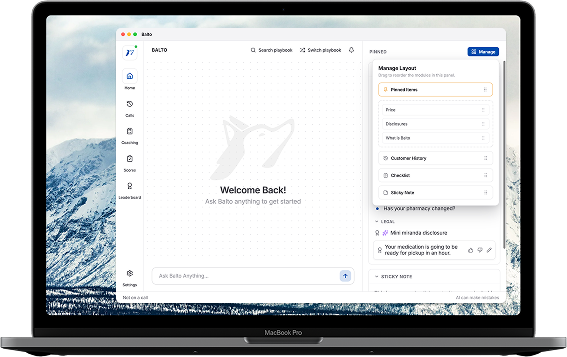
2. Real-Time Agent Assist Voice AI: Rather than replacing agents, this model supports them during live calls. It listens to conversations in real time and provides prompts, compliance reminders, objection-handling suggestions, knowledge base articles, or next-best actions.
3. Hybrid Voice AI: Hybrid systems combine automation and human support. The AI may handle the beginning of the call, gather context, and then pass structured data to a live agent for resolution.
How Voice AI Agents Are Used in Contact Centers Today
In today’s contact centers, voice AI agents are primarily used to manage volume, reduce cost, and improve consistency across customer interactions.
At the front of the call flow, autonomous voice AI handles high-volume, predictable requests such as order status, appointment changes, balance inquiries, identity verification, and payment reminders. This reduces queue times and allows live agents to focus on more complex or emotional conversations.
Within live calls, real-time agent assist tools listen to conversations and provide dynamic support. They surface compliance disclosures, suggest next-best responses, retrieve relevant knowledge base content, and guide agents through structured workflows.
This improves first-call resolution, shortens average handle time, and reduces the risk of missed steps or regulatory errors.
Many enterprise deployments use a hybrid model. The AI gathers context, verifies information, and triages the issue before transferring to a human agent with a structured summary. This reduces repetition for customers and creates a smoother handoff experience.
Rather than fully replacing agents, most contact centers are using voice AI systems to rebalance work. Automation absorbs repetitive demand, while human agents handle nuanced, high-stakes interactions where judgment and empathy matter most.
Top 15 Voice AI Agent Use Cases
Voice AI agents deliver the most value when they are tied to specific, measurable business outcomes.
Below are 15 high-impact voice AI agent use cases, grouped into four categories:
- Autonomous voice AI
- Real-time agent assist
- Hybrid models
- Industry-specific applications
Each reflects practical contact center scenarios where enterprises are seeing improvements in cost, efficiency, compliance, and customer experience.
Autonomous Voice AI Agent Use Cases
Autonomous voice AI handles complete interactions without live agents, making it ideal for high-volume, predictable call types.
1. 24/7 Customer Support for FAQs
Resolve routine questions such as order status, billing details, store hours, policy information, and account updates without human intervention.
By deflecting repetitive calls, contact centers reduce queue times and free agents to focus on complex or revenue-generating conversations.
2. Appointment Scheduling and Rescheduling
Book, modify, or cancel appointments in healthcare, home services, and professional services environments. Automated scheduling reduces administrative workload, minimizes no-shows through reminders, and ensures calendar accuracy across systems.
3. Payment Reminders and Collections
Place outbound calls for payment reminders, due date notifications, and basic collections workflows with built-in compliance controls. Structured scripts and logging reduce regulatory risk while improving recovery rates and operational efficiency.
4. Lead Capture and Pre-Qualification
Screen inbound calls by collecting key qualification criteria such as budget, urgency, and service needs before routing high-intent prospects to sales. This improves conversion rates and reduces time spent on unqualified inquiries.
Real-Time Agent Assist Voice AI Use Cases
Agent Assist supports live representatives during active calls, reducing risk and improving performance.
5. Compliance and Disclosure Prompts
Surface required scripts and regulatory disclosures in real time to reduce legal exposure and audit risk. Automated prompts help ensure that mandatory statements are delivered consistently across teams and shifts.
6. Objection Handling and Next-Best Actions
Provide dynamic suggestions based on customer intent, sentiment, and conversation context. This guidance helps agents respond confidently, increase retention, and improve upsell or cross-sell effectiveness.
7. Guided Troubleshooting Workflows
Walk agents through structured diagnostic steps to reduce repeat calls and increase first-call resolution. This is particularly valuable in technical support environments where process adherence directly impacts customer satisfaction.
8. Real-Time Knowledge Retrieval
Automatically surface relevant articles, policies, product documentation, or playbooks during live conversations. By eliminating manual searches, agents can respond faster and maintain conversational flow.
Hybrid Voice AI Use Cases
Hybrid models combine automation and human expertise for balanced control and efficiency.
9. Intelligent Call Triage and Routing
Gather context, authenticate customers, identify intent, and route calls to the correct queue with structured summaries. This reduces transfers, shortens handle time, and improves the customer’s first impression.
10. After-Hours Escalation Management
Handle routine inquiries autonomously and escalate urgent or complex issues to on-call staff. This ensures 24/7 availability without requiring full overnight staffing.
11. Contextual Handoff to Live Agents
Capture structured data upfront, such as account details and issue type, and pass it to agents before the conversation begins. This reduces repetition for customers and creates a smoother, more professional handoff experience.
Industry-Specific Voice AI Agent Use Cases
Certain industries see an outsized impact from voice AI when applied to common operational challenges.
12. Healthcare Intake and Symptom Screening
Collect patient demographics, insurance details, and symptom information before connecting to clinical staff. Early triage improves efficiency while preserving clinician time for high-acuity cases.
13. Banking and Financial Self-Service
Support balance inquiries, transaction history, fraud alerts, identity verification, and basic account updates through secure authentication flows. This reduces call center load while maintaining strict compliance standards.
14. E-Commerce Order Management
Handle order tracking, returns, exchanges, delivery updates, and refund status at scale. Automated support improves response times during peak demand periods and seasonal surges.
15. Insurance Claims Intake
Capture initial claim details, incident descriptions, and policy information before routing to adjusters. Structured intake reduces processing delays and ensures consistent documentation across claims teams.
How to Prioritize Voice AI Agent Use Cases

Not every voice AI agent use case should be implemented at once.
The most successful contact centers start with focused, low-risk opportunities that deliver measurable impact quickly, then expand strategically:
- Begin with call volume and repetition. High-frequency, predictable call types are typically the safest entry point for autonomous automation.
- Next, evaluate risk and regulatory exposure. If calls involve compliance-heavy disclosures or legal sensitivity, real-time agent assist may deliver stronger ROI than full automation.
- You should also assess customer experience impact. If wait times are high and simple requests dominate queues, automation can improve speed and satisfaction.
- Agent assist may drive faster performance if agents struggle with consistency, training gaps, or complex workflows.
- Finally, consider operational readiness. Do you have clean data, defined workflows, and clear escalation paths? Voice AI performs best when processes are well-structured.
Before investing, it helps to pressure-test your priorities.
This structured approach reduces risk, builds internal confidence, and creates a measurable foundation for broader voice AI adoption.
When Not to Use Voice AI Agents
Voice AI agents can deliver meaningful efficiency gains, but they are not appropriate for every interaction. In certain scenarios, automation can increase risk, damage customer trust, or create operational complexity rather than reduce it.
Highly Emotional or Crisis Situations
Calls involving medical emergencies, bereavement, fraud distress, account lockouts, or sensitive complaints require human empathy, emotional intelligence, and nuanced judgment.
In high-stress moments, customers are often seeking reassurance as much as resolution. Automation in these situations can feel impersonal or dismissive, potentially escalating frustration and eroding brand trust.
For crisis-oriented interactions, human agents remain essential.
Complex, Non-Standard Workflows
If resolution paths vary significantly from call to call and rely heavily on agent discretion, contextual reasoning, or cross-department coordination, AI systems may struggle without extensive customization and oversight.
Attempting to automate highly variable workflows can lead to frequent escalations, customer confusion, and increased handle times instead of efficiency gains.
Poorly Defined Processes
Voice AI performs best when workflows are structured, documented, and consistently executed. If your organization lacks standardized scripts, clear escalation paths, updated knowledge bases, or clean data, automation will likely expose those weaknesses.
In many cases, process optimization should precede AI deployment.
Low Call Volume Environments
For teams with limited inbound demand or highly specialized interactions, the cost, integration effort, and change management required for AI deployment may outweigh the operational benefit.
In lower-volume environments, targeted agent assist tools may provide stronger ROI than full automation.
High Regulatory Risk Without Guardrails
In heavily regulated industries such as healthcare, finance, or insurance, deploying autonomous AI without compliance monitoring, transcript logging, structured disclosures, and clear escalation logic can create legal and audit exposure.
Governance frameworks must be in place before scaling automation in these environments.
In these cases, starting with agent assist or workflow optimization may be a more strategic first step than full automation.
How to Implement Voice AI Safely
Deploying voice AI agents successfully requires more than technical integration; it demands structured governance, clear guardrails, and a phased rollout that balances automation with human oversight.
1. Define the Use Case and Success Metrics
Start with a narrowly scoped use case tied to measurable outcomes such as call deflection rate, average handle time, first-call resolution, compliance adherence, conversion rate, or CSAT impact.
Clearly define baseline metrics before launch so improvements can be quantified. Avoid broad “AI transformation” goals in favor of focused, outcome-driven pilots.
2. Map Workflows and Escalation Paths
Document call flows, decision trees, prompts, authentication steps, and handoff logic in detail. Every automated interaction should have a clearly defined human escalation trigger based on intent confusion, emotional signals, regulatory requirements, or repeated failure points.
Well-designed escalation protects both customer experience and brand reputation.
3. Establish Human-in-the-Loop Oversight
Determine where humans review, approve, or intervene throughout the lifecycle of deployment. This may include real-time supervision dashboards, post-call QA monitoring, compliance audits, and structured exception handling processes.
Human oversight builds trust internally and ensures accountability.

4. Implement Compliance and Security Controls
Ensure recordings, transcripts, authentication flows, data storage, and third-party integrations align with regulatory requirements and enterprise security standards. Audit logging, disclosure tracking, encryption, and role-based access controls are essential, particularly in healthcare, finance, and insurance environments.
5. Pilot Before Scaling
Launch with a limited call type, geography, or customer segment. Measure quantitative performance data alongside qualitative feedback from agents and customers. Use this pilot phase to refine prompts, optimize workflows, and validate escalation logic before expanding coverage.
6. Train Agents and Stakeholders
Prepare teams for the operational shift through structured onboarding and clear communication. Agents should understand when and how AI supports them , how to override automation when necessary, and how performance will be measured. Supervisors should be trained to interpret AI-driven insights and coach effectively.
7. Monitor, Measure, and Iterate Continuously
Voice AI is not “set and forget.” Ongoing analytics , QA review, compliance monitoring, and model tuning are necessary to maintain performance, improve accuracy, and reduce drift over time.
Continuous iteration ensures the system evolves alongside customer behavior and business priorities.
From Use Cases to Measurable Impact
Voice AI agents are not a single solution; they are a set of strategic capabilities that can reshape how contact centers operate.
The highest-performing organizations do not begin with blanket automation , but with clearly defined use cases, align deployment to risk tolerance and customer expectations, and expand methodically.
Whether you prioritize autonomous resolution, real-time agent assist, or a hybrid model, the goal is the same: reduce friction, improve consistency, and elevate human agents to handle the conversations that truly require judgment and empathy.
FAQs
The top voice AI agent use cases include 24/7 customer support for FAQs, appointment scheduling, payment reminders, intelligent call triage, lead qualification, compliance prompting, guided troubleshooting, and industry-specific workflows such as healthcare intake or insurance claims capture.
In contact centers, voice AI agent business use cases focus on reducing call volume through automation, improving agent performance with real-time assist, ensuring compliance, shortening average handle time, and increasing first-call resolution.
No. While some deployments are fully autonomous, many enterprises use voice AI agents in a human-in-the-loop model to support live agents with prompts, knowledge retrieval, and compliance guidance rather than replacing them.
Industries with high call volume and structured workflows benefit most, including healthcare, financial services, insurance, telecommunications, retail, and home services.
They reduce wait times, provide 24/7 availability, eliminate repetitive information gathering, and create smoother handoffs to live agents, improving both speed and consistency.
Risks include poor customer experience if workflows are not well designed, compliance exposure in regulated industries, inaccurate intent detection, and brand damage if escalation paths are unclear.
Autonomous voice AI handles entire interactions without a human agent, while agent assist supports live representatives in real time by surfacing prompts, disclosures, and guidance during calls.
Implementation timelines vary by complexity. A narrowly scoped use case can be piloted in weeks, while enterprise-wide deployments may take several months depending on integrations, compliance requirements, and change management.
When deployed correctly, voice AI agents can meet enterprise security and compliance standards through encryption, authentication controls, audit logging, and structured disclosure management. Governance is critical.
Start with a single high-volume, low-complexity use case tied to measurable outcomes. Pilot, measure performance, refine workflows, and then expand based on data rather than assumptions.
Liked What You Read? See Balto in Action.
Balto helps leading contact centers turn insights into outcomes, in real time. Book a live demo to discover how our AI powers better conversations, coaching, and conversions.