













11 Best AI Tools for Real-Time Sentiment Analysis During Customer Support Calls


Delivering excellent customer support isn’t just about solving problems; it’s about understanding how customers feel in the moment.
Sentiment analysis uses AI to analyze tone, pitch, and word choice while a call is still happening to help agents respond faster and more empathetically.
Companies like Balto are leading the way, giving contact centers the ability to detect frustration or confusion instantly and adjust before the interaction is lost.
What are the best AI tools for customer support sentiment analysis?
- Balto: Real-time coaching and sentiment detection built for live calls.
- Dialpad: AI-powered call center with live transcription and sentiment alerts.
- Observe.AI: Automates QA while tracking customer sentiment trends.
- Cresta: Provides real-time coaching prompts to improve agent performance.
- Level AI: Offers fine-grained emotion detection and manager assist tools.
- CallMiner: Enterprise-ready analytics platform for voice and digital channels.
- SentiSum: Omnichannel sentiment analysis with auto-tagging and CX integrations.
- IBM Watson: Enterprise-grade NLP with global language and sentiment coverage.
- Nice CXone: Cloud contact center suite with built-in sentiment analysis.
- Talkdesk: AI-powered CX cloud with real-time sentiment monitoring and coaching.
- Zonka Feedback: AI sentiment analysis from customer feedback, with alerts and workflows.
Key features to look for in sentiment analysis software:
- Dual-channel analysis: Combines speech and transcription for higher accuracy.
- Fine-grained emotion detection: Goes beyond positive/negative to capture specific feelings.
- Real-time coaching prompts: Guides agents during challenging conversations.
- Supervisor alerts: Flags calls trending negative for immediate escalation.
- Automated QA: Evaluates 100% of interactions without manual review.
Wondering how to choose the right sentiment analysis tool for your business?
Think about your support priorities. Do you need coaching tools to help agents in the moment? Automated QA to reduce compliance workload? Or large-scale insights to uncover customer trends?
The best platform depends on your team size, support channels, and goals.
What is Real-Time Sentiment Analysis
Real-time sentiment analysis is the process of evaluating a customer’s emotions and tone while an interaction is still happening, not just after a call ends.
Unlike traditional post-call analytics , which provide insights too late to change the outcome, real-time tools use AI to transcribe, analyze, and interpret both the words and vocal cues of a conversation instantly.
This means an agent can see sentiment shift from positive to negative in the moment and adjust their approach right away.
For example, if real-time sentiment analysis software detects rising frustration, it might prompt the agent with empathy-driven responses or alert a supervisor to join the call.
By combining natural language processing (NLP) with acoustic analysis (tone, pitch, and pace), modern platforms deliver a more accurate picture of customer emotions.
The result is a live feedback loop that helps agents de-escalate issues, resolve problems faster, and improve the customer experience before the call is over.
Why Real-Time Sentiment Analysis Matters in Customer Support
Every customer interaction is a chance to strengthen or damage the relationship. Real-time sentiment analysis ensures you don’t find out too late that a call went poorly.
By surfacing customer emotions as they unfold, these tools give agents and supervisors the power to turn difficult conversations around.
Here’s why real-time sentiment analysis matters:
- Immediate course correction: Agents can adapt their tone, pacing, or word choice when the software detects rising frustration or confusion.
- Proactive escalation: Supervisors receive alerts when sentiment trends negatively, allowing them to step in before a call is lost.
- Better coaching opportunities: Instead of waiting for QA reviews, managers can provide guidance in the moment or use flagged calls as targeted coaching examples.
- Customer satisfaction gains: Faster issue resolution and empathy-driven responses lead to higher CSAT and reduced churn.
- Operational efficiency: Automating sentiment monitoring helps QA teams analyze 100% of calls without extra manual work.
In short, real-time sentiment analysis doesn’t just measure emotions; it helps contact centers act on them instantly, improving both customer experience and agent performance.
What Are the Best AI Tools For Customer Sentiment Analysis
Below are the eleven best customer sentiment analysis tools in 2025 with their strengths, standout features, and best-fit use cases.
| Tool | Strengths | Best For | Pros | Cons |
|---|---|---|---|---|
| Balto | Real-time coaching, sentiment & QA automation | Live call support, QA teams | Purpose-built for calls; strong coaching & QA coverage | Narrower focus; less suited for omnichannel CX |
| Dialpad | Live transcription, built-in sentiment alerts | All-in-one contact center platform | Native to CCaaS; easy to deploy; intuitive interface | Sentiment is less nuanced; tied to the Dialpad ecosystem |
| Observe.AI | QA automation, sentiment trend analysis | QA teams automating evaluations at scale | Automates QA; strong compliance analytics; omnichannel | Limited live coaching; feels more like a QA tool |
| Cresta | Real-time coaching, performance dashboards | Coaching & performance-focused centers | Balanced coaching & analytics; proven ROI | Higher price point; less QA automation |
| Level AI | Fine-grained emotion detection, escalation alerts | Enterprises needing proactive interventions | Deep emotion detection, supervisor assist, and integrations | Too advanced for small teams; mostly voice-focused |
| CallMiner | Enterprise-scale analytics, omni-channel support | Large, data-driven organizations | Mature, feature-rich; scalable; customizable reporting | Complex setup; longer deployment cycle |
| SentiSum | Omnichannel sentiment & auto-tagging | CX teams needing fast omnichannel insights | Strong integrations (Zendesk, Intercom, HubSpot); easy to use | Less advanced speech analytics; limited enterprise features |
| IBM Watson | Multi-language, enterprise-grade NLP | Global enterprises need customization | Extremely powerful; supports 50+ languages; customizable | Complex, resource-heavy; overkill for smaller centers; limited to text |
| Nice CXone | Native sentiment in the full CX suite | Large orgs using unified CCaaS | Comprehensive CX platform; strong analytics | Costly; best for Nice CXone ecosystem users |
| Talkdesk | Real-time monitoring & coaching in CX cloud | Companies already using Talkdesk | Seamless integration; strong AI automation | Less advanced sentiment depth vs. standalone tools |
| Zonka Feedback | AI sentiment & theme analysis; post-call CSAT/NPS/CES surveys; alerts | Support and CX teams tracking post-call sentiment and acting on feedback | Strong qualitative insights; real-time alerts; easy integrations | Not live call monitoring; depends on surveys or transcripts |
1. Balto

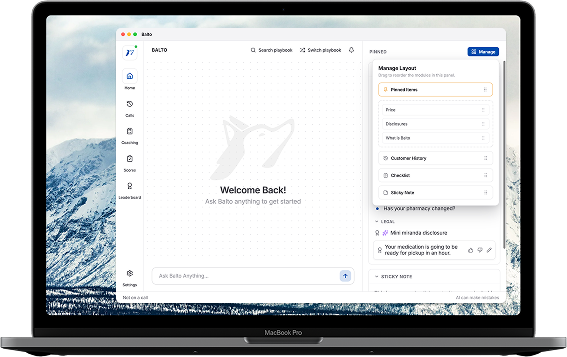
Balto specializes in real-time call coaching paired with sentiment detection. As agents speak with customers, Balto transcribes conversations, flags emotional shifts, and offers on-screen prompts to guide tone, empathy, and resolution strategies.
Key features:
- Dual-channel analysis ( speech and transcription)
- Live coaching prompts based on customer sentiment
- Automated QA covering 100% of calls
- Supervisor alerts when calls trend negative
Best for: Contact centers that want real-time coaching and QA automation to improve agent performance on every call.
2. Dialpad

Dialpad integrates sentiment analysis directly into its AI-powered contact center platform. It provides live transcription and alerts managers when customer sentiment dips, so they can intervene or support the agent on the spot.
Key features:
- Live sentiment scoring (positive, neutral, negative)
- Real-time transcription and searchable call records
- AI coaching tips to help agents adjust in the moment
- Native integration with contact center workflows
Best for: Businesses that want an all-in-one call center platform with built-in sentiment analysis.
3. Observe.AI

Observe.AI focuses on QA automation and performance insights, using AI to evaluate every interaction for compliance, sentiment, and coaching opportunities. Its sentiment detection capabilities help identify trends across teams as well as during live calls.
Key features:
- AI-driven QA replacing manual sampling
- Sentiment scoring across calls, chats, and emails
- Supervisor dashboards with actionable insights
- Integration with CRM and QA workflows
Best for: Teams looking to automate QA at scale while tracking customer sentiment.
4. Cresta

Cresta blends agent coaching with performance insights, using AI to surface real-time prompts that help agents adapt to the emotional state of the customer. It emphasizes productivity gains while maintaining empathy in conversations.
Key features:
- Real-time coaching prompts during calls
- Sentiment-driven conversation analytics
- Performance dashboards for managers
- Proven ROI in customer satisfaction and sales lift
Best for: Contact centers focused on continuous coaching and performance improvement.
5. Level AI

Level AI is known for fine-grained emotion detection and its “Real-Time Manager Assist” feature, which alerts supervisors when calls need escalation. It provides detailed sentiment scoring that goes beyond positive/negative to capture frustration, confusion, or joy.
Key features:
- Emotion detection across multiple dimensions
- Real-time escalation alerts for supervisors
- Semantic analysis of customer intent
- Integration with leading CCaaS platforms
Best for: Enterprises that need deep sentiment insights and proactive escalation support.
6. CallMiner

CallMiner is an established leader in enterprise-grade speech and interaction analytics , offering sentiment detection across calls, chats, and emails. It’s best suited for large-scale operations that need both real-time monitoring and robust historical analysis.
Key features:
- Real-time voice and text sentiment tracking
- Analytics at scale (millions of interactions)
- Customizable dashboards and reports
- Integrations with CRM, QA, and BI platforms
Best for: Large contact centers seeking scalable analytics and enterprise integrations.
7. SentiSum

SentiSum provides omnichannel sentiment analysis across voice, chat, email, and surveys.
It uses AI to auto-tag interactions by intent, urgency, and sentiment, helping support teams quickly identify and prioritize customer issues.
Key features:
- Real-time tagging for sentiment, intent, and urgency
- Cross-channel analytics for calls, chat, email, and surveys
- Integrations with Zendesk, Intercom, and HubSpot
- Easy-to-use dashboards for CX teams
Best for: Support teams seeking fast omnichannel sentiment insights with simple integrations.
8. IBM Watson

IBM Watson offers enterprise-grade NLP and sentiment detection across text, audio, and video. Known for multi-language support, it’s ideal for global operations needing robust, customizable AI.
Key features:
- Sentiment and emotion detection across 50+ languages
- Advanced NLP with sarcasm and nuance detection
- Highly customizable for enterprise workflows
- Strong integration options for large-scale CX platforms
Best for: Enterprises needing scalable, global, text-based sentiment analysis with advanced customization.
9. Nice CXone

Nice CXone is a cloud contact center platform with built-in real-time sentiment analysis. It combines speech analytics, agent guidance, and customer experience tools in one ecosystem.
Key features:
- Native real-time sentiment scoring
- Supervisor dashboards and alerts
- Integrated call recording and analytics
- Workforce optimization tools
Best for: Large organizations wanting sentiment analysis within a unified contact center suite.
10. Talkdesk

Talkdesk includes real-time sentiment analysis as part of its AI-powered CX cloud platform. It monitors calls for emotional cues and provides supervisors with insights to improve agent coaching and customer outcomes.
Key features:
- Real-time call monitoring and sentiment scoring
- AI-driven coaching and workflow automation
- Supervisor dashboards with intervention tools
- Integrations with CRM and CX platforms
Best for: Companies already using Talkdesk for CX who want integrated sentiment analysis.
11. Zonka Feedback

Zonka Feedback is an AI-powered Customer Feedback & Intelligence Platform that helps teams analyze customer sentiment across support touchpoints and act on it quickly. While it is not a native call monitoring tool, Zonka Feedback complements customer support calls by analyzing post-call surveys, ticket feedback, and conversation transcripts synced from helpdesk and CRM systems.
Key features:
- AI sentiment, emotion, and urgency analysis on open-text feedback
- Post-call CSAT, CES, and NPS surveys triggered via helpdesk integrations
- Real-time alerts for negative or urgent feedback
- Thematic analysis to spot recurring support issues
- Centralized inbox and workflows to act on feedback
Best for: Support and CX teams that want AI-driven sentiment insights from post-call feedback and support interactions, with fast visibility and closed-loop action rather than live call monitoring.
With so many strong options, the “best” tool really depends on your priorities, whether that’s coaching agents live, automating QA, or scaling analytics across thousands of interactions.
If you’re ready to see how real-time sentiment analysis can transform both agent performance and customer satisfaction, it’s worth experiencing it in action.
Key Features to Look For in Sentiment Analysis Software
Not all sentiment analysis tools are created equal. The most effective platforms combine speed, accuracy, and actionable insights, enabling agents and managers to respond in real time.
The best customer support sentiment analysis tools will offer:
- ✅ Dual-channel analysis: Combines speech (tone, pitch, pace) with transcription-based text analysis for higher accuracy.
- ✅ Fine-grained emotion detection: Goes beyond positive/negative scoring to identify frustration, confusion, joy, and more.
- ✅ Aspect-based analysis: Pinpoints sentiment around specific topics (e.g., pricing, wait times) to uncover root causes.
- ✅ Real-time coaching prompts: Surfaces on-screen guidance to help agents de-escalate and adjust on the spot.
- ✅ Supervisor alerts: Notifies managers when calls trend negative so they can intervene proactively.
- ✅ Automated QA: Evaluates 100% of interactions, saving time compared to manual reviews.
- ✅ Omnichannel coverage: Extends sentiment tracking beyond calls to chat, email, and social for a full customer view.
- ✅ CRM integrations: Syncs insights with your CRM to build long-term sentiment histories and workflows.
By focusing on these features, you’ll choose a platform that doesn’t just measure customer emotions, but also helps your team act on them in real time.
Benefits of Using Sentiment Analysis Tools in Contact Centers
Sentiment analysis tools aren’t just about tracking how customers feel. They directly impact how your team performs and how customers experience your brand.

Here are some of the top benefits contact centers can expect:
Improved Agent Efficiency
Real-time prompts help agents course-correct mid-conversation, which reduces handle time and increases first-call resolution.
Instead of relying on post-call coaching, agents get immediate guidance that keeps interactions on track.
Higher Customer Satisfaction (CSAT)
By surfacing negative sentiment as it happens, agents can respond with empathy before frustration boils over.
Customers feel heard and supported in the moment, driving up satisfaction scores.
Reduced Churn and Complaints
Early detection of dissatisfaction prevents minor issues from escalating into cancellations or formal complaints.
This proactive approach helps preserve customer relationships and reduces the cost of recovery efforts.
Better Coaching and Training
Sentiment analysis creates a steady stream of coaching opportunities. Managers can pinpoint exactly where agents struggled and deliver targeted feedback, making training more relevant and effective.
Scalable Quality Assurance
Traditional QA only reviews a small sample of calls, but automated sentiment tracking evaluates 100% of interactions. This provides a fairer, more accurate view of agent performance while freeing QA teams from repetitive tasks.
Deeper Customer Insights
Sentiment trends reveal recurring themes, such as pricing frustration or product confusion, that can be shared across departments.
These insights empower businesses to fix root issues and improve customer experience beyond the call center.
Together, these benefits make sentiment analysis tools a strategic investment: improving day-to-day performance while building stronger long-term customer relationships.
Choose the Right Sentiment Analysis Tool For Your Business
With so many capable platforms on the market, the “best” sentiment analysis tool isn’t universal: it’s the one that aligns with your business goals, workflows, and customer expectations.
To narrow down your options, take our interactive quiz.
Turn Sentiment Insights Into Action
Real-time sentiment analysis has moved from a “nice-to-have” to a critical capability for modern contact centers.
The right tool doesn’t just measure emotions, it empowers agents to respond in the moment, gives supervisors the visibility they need to step in, and equips leaders with the insights to improve customer experience at scale.
Whether your top priority is coaching, QA automation, or strategic insight, there’s a solution built to fit your needs.
What matters most is acting on sentiment, not just tracking it.
Quiz: Find the Best AI Sentiment Analysis Tool for Your Call Center
FAQs
Some of the leading platforms include Balto, Dialpad, Observe.AI, Cresta, Level AI, CallMiner, SentiSum, IBM Watson, Nice CXone, and Talkdesk.
Each excels in different areas: from Balto’s real-time coaching, to Observe.AI’s QA automation , to IBM Watson’s enterprise-grade NLP.
The best choice depends on your team size, support channels, and business priorities.
Balto is purpose-built for live call coaching and sentiment detection. Other strong options include Dialpad, Cresta, and Level AI, which analyze conversations as they happen to guide agents and supervisors.
If you’re already invested in a CCaaS platform, Talkdesk, and Nice CXone also provide integrated real-time call sentiment monitoring.
By detecting frustration, confusion, or satisfaction in real time, sentiment analysis enables agents to adjust their responses before issues escalate.
This leads to faster resolutions, higher CSAT scores, and stronger customer relationships.
Accuracy depends on the quality of the AI models and whether they combine both speech analysis (tone, pitch, pace) and text analysis (transcriptions).
Leading tools can reliably capture shifts in customer sentiment, though no model is 100% perfect; human oversight still adds value.
Key features include dual-channel analysis, fine-grained emotion detection, real-time coaching prompts, supervisor alerts, automated QA, omnichannel coverage, and CRM integrations.
Together, these ensure your team gets both accuracy and actionable insights.
For large-scale contact centers, CallMiner, IBM Watson, and Nice CXone are strong enterprise choices with robust integrations and analytics across millions of interactions.
Balto also fits well in enterprise environments where real-time coaching and QA automation are priorities, giving agents live support while ensuring compliance at scale.
Sentiment analysis typically categorizes interactions as positive, negative, or neutral.
Emotion detection goes deeper, identifying specific feelings like frustration, joy, or confusion, and giving a more nuanced view of the customer experience.
Most advanced tools integrate with CRMs to log sentiment scores and trigger workflows.
For example, a flagged negative call might automatically create a follow-up task in Salesforce or alert an account manager to step in.
Liked What You Read? See Balto in Action.
Balto helps leading contact centers turn insights into outcomes, in real time. Book a live demo to discover how our AI powers better conversations, coaching, and conversions.