














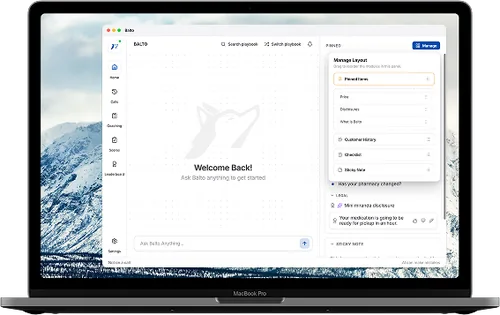


In 2026, the most effective call center cost reduction strategies focus on improving agent productivity, eliminating operational inefficiencies, and using AI-powered tools like Balto to help agents resolve issues faster.
Below are 15 of the most effective call center cost reduction strategies for 2026:
- Improve Workforce Forecasting and Scheduling: Accurate forecasting ensures staffing levels match demand, reducing costly overstaffing or overtime.
- Reduce Agent Turnover Through Better Training and Support: Investing in onboarding and coaching improves retention and lowers hiring and training costs.
- Implement Continuous Agent Coaching: Ongoing coaching improves performance, helping agents resolve issues faster and more accurately.
- Increase Agent Utilization Without Causing Burnout: Optimizing schedules and workflows increases productive agent time while maintaining sustainable workloads.
- Improve Knowledge Accessibility for Agents: A well-structured knowledge base helps agents quickly find answers, reducing handle time.
- Improve First Call Resolution (FCR): Resolving issues during the first interaction reduces repeat contacts and overall support volume.
- Identify Root Causes of High Contact Volume: Addressing underlying product or communication issues can prevent unnecessary customer inquiries.
- Optimize Average Handle Time (AHT): Streamlining workflows and improving agent tools helps resolve issues faster without sacrificing quality.
- Improve Call Routing and Skill-Based Matching: Routing customers to the right agent the first time reduces transfers and speeds up resolution.
- Streamline Escalation and Case Management: Clear escalation paths prevent delays and unnecessary handoffs between teams.
- Deploy AI Agent Assist Tools: Real-time guidance helps agents respond more effectively and reduces the time required to resolve issues.
- Implement Self-Service and Conversational AI: Automated systems can handle routine requests, allowing agents to focus on more complex issues.
- Automate Quality Assurance and Conversation Analysis: AI-driven QA tools analyze interactions at scale and help identify coaching opportunities.
- Consolidate Contact Center Technology Tools: Simplifying the technology stack reduces licensing costs and improves agent efficiency.
- Use Conversation Analytics to Identify Efficiency Gains: Data-driven insights reveal opportunities to reduce handle time and eliminate unnecessary contacts.
The guide below explores these strategies in more detail, starting with the workforce, operational, and technology improvements that have the greatest impact on contact center efficiency.
Why Call Center Costs Are Rising in 2026
Contact center costs have been steadily rising over the past several years, driven by a combination of labor pressures, increasing customer expectations, and growing technology complexity.
In most contact centers, staffing accounts for roughly most of the total operating costs, including salaries, benefits, training, and turnover expenses.
At the same time, customer behavior has changed. Customers now expect faster responses, seamless transitions between channels, and immediate resolution of issues. When support experiences fail to meet these expectations, customers are more likely to call back multiple times or escalate issues across channels.
This increases both contact volume and repeat interactions, driving up operational costs even when headcount remains stable.
Technology investments are also expanding. Contact centers have adopted a growing stack of tools, including workforce management platforms , quality assurance software, analytics tools, knowledge bases, and AI solutions.
While these technologies can improve performance, fragmented systems often introduce additional licensing costs, integration challenges, and operational inefficiencies.
Finally, the shift toward digital and AI-enabled customer service has created a paradox. Organizations are investing heavily in automation and conversational AI to reduce costs, but these tools require implementation, integration, and ongoing management.
Without careful planning, technology adoption can temporarily increase expenses before efficiency gains are realized.
For CX and operations leaders, the result is a clear challenge: controlling support costs without sacrificing customer experience.
The Biggest Drivers of Contact Center Costs
To reduce contact center costs effectively, leaders first need to understand where those costs actually come from. While the exact distribution varies by industry and operating model, most contact centers follow a similar cost structure, according to research by Deloitte :
- 60-70% labor costs
- 15-25% technology costs
- 10-15% operational overhead and infrastructure
Because staffing represents such a large portion of the budget, even small improvements in productivity, scheduling accuracy, or agent retention can have a meaningful impact on overall costs.
Beyond labor, technology and platform costs have grown steadily over the past decade. Infrastructure and telecommunications expenses also contribute to the overall cost structure.
Even with the shift toward cloud-based contact center platforms, organizations still pay for voice infrastructure, telecom usage, and network capacity to support high interaction volumes.
Finally, inefficiencies within processes themselves can drive hidden costs. Repeat contacts, long handle times, and poor knowledge management all increase the number of agent hours required to resolve customer issues.
When these operational inefficiencies accumulate, they inflate the cost per contact and make support operations more expensive to scale.
Understanding this cost structure is essential because it clarifies where the greatest opportunities for savings exist.
Top 15 Call Center Cost Reduction Strategies for 2026

Reducing contact center costs in 2026 requires more than simply cutting budgets or outsourcing support.
The most effective organizations focus on improving how their contact centers operate by increasing agent productivity, streamlining workflows, and using technology to resolve customer issues more efficiently.
The strategies below highlight the most impactful ways contact center leaders can lower costs while maintaining or improving customer experience.
🧑💻People: Workforce Optimization Strategies for Call Center Cost Reduction
1. Improve Workforce Forecasting and Scheduling Accuracy
When staffing levels are poorly aligned with actual contact volume, organizations either overstaff during slow periods or rely heavily on overtime during peaks.
Modern workforce management platforms use historical interaction data, seasonal patterns, and real-time analytics to predict demand more precisely.
By improving scheduling accuracy and aligning staffing with expected call volumes, contact centers can reduce idle time, minimize overtime costs, and maintain consistent service levels.
2. Reduce Agent Turnover Through Better Training and Support
Recruiting, onboarding, and training new agents can require significant time and resources, and cost up to $22,691 per agent . Additionally, high churn often leads to inconsistent customer experiences.
Investing in structured onboarding programs, clear career pathways, and ongoing support helps improve retention and reduce hiring costs. When agents feel confident in their role and supported by their organization, they tend to stay longer and perform more effectively.
3. Implement Continuous Coaching and Skill Development
Continuous coaching helps agents refine their communication skills, product knowledge, and problem-solving abilities over time.
Regular feedback based on real customer interactions allows supervisors to identify opportunities for improvement and reinforce best practices. As agents become more effective at resolving issues quickly and accurately, organizations often see improvements in first call resolution and reductions in average handle time .
4. Increase Agent Utilization Without Causing Burnout
Agent utilization measures how much of an agent’s working time is spent handling customer interactions or performing productive tasks.
Low utilization can indicate inefficient scheduling or operational bottlenecks, while excessively high utilization can lead to burnout and turnover. The goal is to strike a balance that maximizes productivity while maintaining a manageable workload.
Improving scheduling, reducing unnecessary administrative tasks, and streamlining workflows can help organizations increase productive time without negatively impacting employee well-being.
5. Improve Knowledge Accessibility for Agents
When agents struggle to find accurate information during a customer interaction, handle times increase and resolution rates decline.
A well-organized knowledge base allows agents to quickly access policies, troubleshooting steps, and product information while assisting customers. Modern knowledge systems can also surface relevant answers automatically based on the context of the conversation.
By making information easier to find, contact centers enable agents to resolve issues faster and with greater confidence, reducing both operational costs and customer frustration.
🌐Process: Operational Efficiency Improvements for Call Center Cost Reduction
6. Reduce Repeat Contacts by Improving First Call Resolution (FCR)
First Call Resolution is one of the most powerful levers for reducing contact center costs. When customers need to call back multiple times to resolve the same issue, the total number of interactions increases, which directly drives up labor and operational expenses.
Improving FCR requires a combination of better agent training, stronger knowledge management, and clearer internal processes. When agents are empowered to fully resolve issues during the first interaction, contact centers reduce repeat contacts, lower overall call volume, and improve both efficiency and customer satisfaction.
7. Identify and Eliminate the Root Causes of High Contact Volume
Many calls stem from preventable issues such as confusing billing statements, unclear product instructions, or system errors that create customer confusion. By analyzing contact drivers and categorizing interaction reasons, organizations can identify patterns that generate unnecessary volume.
Addressing these root causes, whether through product improvements, clearer customer communication, or better self-service resources, can significantly reduce inbound contacts and lower overall support costs.
8. Optimize Average Handle Time (AHT) Without Sacrificing Quality
Average Handle Time is a key operational metric that directly affects the cost per contact. However, reducing AHT should not come at the expense of customer experience.
The most effective organizations improve AHT by streamlining workflows, eliminating redundant steps, and ensuring agents have the information they need at the right moment.
Improvements in knowledge management, call routing, and agent tools can help agents resolve issues more efficiently while maintaining high-quality service.
9. Improve Call Routing and Skill-Based Matching
When customers are transferred between multiple agents or departments, interactions become longer and more costly. Skill-based routing systems match customer inquiries with agents who have the relevant expertise, allowing issues to be resolved more quickly.
This reduces transfer rates, shortens interaction times, and increases the likelihood that customers will receive a complete resolution during their first contact.
10. Streamline Escalation and Case Management Processes
Poorly defined escalation processes can cause delays, increase handling time, and create frustration for both agents and customers.
Establishing clear escalation paths, improving internal collaboration between teams, and implementing structured case management workflows can help ensure issues move quickly to the right specialists.
By reducing delays and minimizing unnecessary handoffs, contact centers can resolve complex cases more efficiently and control operational costs.
🤖Technology: AI and Automation Strategies for Call Center Cost Reduction

11. Deploy AI Agent Assist to Improve Agent Productivity
AI-powered Agent Assist tools analyze conversations in real time and provide agents with suggested responses, relevant knowledge base articles, and next-best-action recommendations.
Many platforms also automate tasks such as note-taking and call summaries, reducing the amount of manual work agents must complete after each interaction.
By helping agents resolve issues faster and more consistently, AI agent assist tools like Balto’s can lower average handle time and improve first call resolution without requiring additional staffing.
12. Implement Self-Service and Conversational AI for Routine Requests
Conversational AI systems, including chatbots and intelligent IVR, can handle routine requests without requiring a live agent.
When implemented effectively, self-service options allow customers to resolve issues quickly while reducing overall contact volume. This allows agents to focus on more complex problems that require human judgment, improving both operational efficiency and customer satisfaction.
13. Automate Quality Assurance and Conversation Analysis
AI-driven QA tools can automatically analyze large volumes of customer conversations, identifying compliance risks, customer sentiment trends, and coaching opportunities.
By automating much of the review process, organizations can gain broader visibility into performance while reducing the amount of manual effort required from QA teams.
These insights also support more targeted coaching, which helps improve agent performance over time.
14. Consolidate Contact Center Tools to Reduce Licensing and Complexity
Many contact centers operate with fragmented technology stacks that include multiple analytics platforms, knowledge systems, workforce management tools, and reporting solutions. Managing a large number of disconnected systems can increase licensing costs, create integration challenges, and slow down agent workflows.
A streamlined technology stack can lower software expenses while also improving agent productivity by minimizing screen switching and system complexity.
15. Use Analytics and Conversation Intelligence to Identify Efficiency Gains
Advanced analytics platforms provide deeper visibility into customer interactions, helping contact center leaders identify patterns that affect operational costs.
Conversation intelligence tools can reveal which issues generate the highest call volumes, which processes increase handle time, and where customers experience friction during support interactions.
With these insights, organizations can prioritize operational improvements that have the greatest impact on cost efficiency. Data-driven decision-making allows contact centers to continuously refine workflows, reduce unnecessary interactions, and optimize overall performance.
Metrics That Drive Cost Efficiency
Reducing contact center costs requires more than implementing new tools or processes; leaders must also track the operational metrics that directly influence support expenses.
Industry research shows that the average cost per contact ranges from roughly $5 to $12 across many contact centers, depending on channel mix and complexity of interactions.
Small improvements in efficiency metrics can translate into meaningful savings at scale. For example, reducing handle time by even a few seconds per interaction can save hundreds or thousands of agent hours over the course of a year in high-volume centers.
| Impact on Cost | Optimization Strategy | |
|---|---|---|
| Average Handle Time (AHT) | Longer interactions increase total agent labor hours required to support contact volume | Use real-time Agent Assist, knowledge automation, and better training to resolve issues faster |
| First Call Resolution (FCR) | Low resolution rates create repeat contacts, increasing overall support volume and staffing requirements | Improve agent training, knowledge management, and escalation workflows to resolve issues on the first interaction |
| Agent Utilization | Low utilization means agents spend less time on productive work, raising the cost required to handle each interaction | Improve workforce forecasting, scheduling, and workflow efficiency |
| Cost Per Contact | Directly reflects the operational cost required to resolve a customer issue | Reduce labor costs through automation, better routing, and improved operational efficiency |
| Customer Satisfaction (CSAT) / Net Promoter Score (NPS) | Poor customer experience drives repeat contacts, escalations, and longer handle times | Improve agent coaching, quality monitoring, and customer experience design |
| Call Deflection Rate | Low deflection increases contact volume handled by agents | Expand self-service options such as chatbots, knowledge bases, and conversational IVR |
The following metrics are especially important for understanding and improving cost efficiency.
- Average Handle Time (AHT): Average Handle Time measures the total time agents spend resolving an interaction, including talk time, hold time, and after-call work.
- First Call Resolution (FCR): First Call Resolution tracks the percentage of customer issues resolved during the first interaction. When customers must call back multiple times, total contact volume increases, and costs rise accordingly.
- Agent Utilization : Agent utilization measures the percentage of an agent’s available time spent handling customer interactions or completing productive tasks. Improving utilization through better workforce management and workflow optimization allows organizations to handle the same contact volume with fewer staffing resources.
- Cost Per Contact: Cost per contact represents the average expense required to resolve a single customer interaction. This metric combines multiple operational factors, including labor costs, technology expenses, and contact volume. Tracking cost per contact over time helps leaders evaluate whether efficiency initiatives are actually reducing operating expenses.
- Customer Satisfaction (CSAT) and Net Promoter Score (NPS): While these are experience metrics rather than cost metrics, they play an important role in operational efficiency. Poor customer experiences often lead to repeat contacts, escalations, and longer interaction times. Maintaining strong CSAT and NPS scores helps reduce unnecessary contacts and improves the efficiency of support operations.
- Call Deflection Rate: Call deflection measures how often customers resolve issues through self-service channels such as chatbots, knowledge bases, or automated IVR systems instead of contacting an agent. Higher deflection rates can significantly reduce contact volume and allow organizations to scale support without increasing headcount.
Tracking these metrics together provides a clearer picture of where operational inefficiencies exist and where cost reduction opportunities are most likely to emerge.
By improving handle time, increasing resolution rates, and enabling more efficient use of agent time, contact centers can reduce support costs while maintaining a high-quality customer experience.
How to Build a Cost Reduction Roadmap

The most successful organizations approach cost optimization as a structured initiative, using data to identify inefficiencies, prioritize high-impact opportunities, and implement changes in a deliberate sequence.
A clear roadmap helps leaders move beyond short-term fixes and build a sustainable strategy for improving operational efficiency.
1. Identify the Primary Cost Drivers in Your Contact Center
Before implementing cost reduction initiatives, leaders should first analyze where spending is concentrated.
For most contact centers, labor represents the largest expense, followed by technology platforms and infrastructure costs. Reviewing operational data such as contact volume, handle time, staffing levels, and technology usage can reveal where inefficiencies exist.
Understanding the primary cost drivers allows organizations to focus improvement efforts on the areas that will have the greatest financial impact.
2. Benchmark Key Operational Metrics
Once cost drivers are identified, the next step is to benchmark core operational metrics such as Average Handle Time, First Call Resolution , agent utilization, and cost per contact.
Comparing these metrics against historical performance or industry benchmarks helps leaders understand whether their operations are performing efficiently. Benchmarking also establishes a baseline that can be used to measure the impact of future improvement initiatives.
3. Prioritize High-Impact Efficiency Opportunities
Not all cost reduction strategies deliver the same level of impact. Some improvements, such as reducing repeat contacts or improving agent productivity, can produce meaningful savings with relatively modest changes. Others may require larger investments or longer implementation timelines.
Contact center leaders should evaluate potential initiatives based on their expected impact, implementation complexity, and alignment with broader customer experience goals.
4. Implement Technology That Supports Agent Efficiency
Technology investments should be guided by operational goals rather than trends. Tools that improve agent productivity, automate repetitive tasks, or streamline workflows often provide the strongest return on investment .
Examples include AI-powered agent assist tools, automated quality assurance platforms, and analytics systems that surface opportunities for improvement. When implemented thoughtfully, these technologies help agents resolve issues faster and more consistently.
5. Measure Impact and Continuously Refine Operations
Cost reduction is not a one-time project. After implementing improvements, organizations should monitor operational metrics closely to evaluate their effectiveness.
Tracking changes in handle time, resolution rates, contact volume, and cost per contact helps determine whether initiatives are delivering the expected results. Continuous measurement and refinement allow contact centers to adapt to changing customer behavior and maintain long-term efficiency improvements.
Building a More Efficient Contact Center in 2026
The most effective cost reduction strategies are not about cutting service levels or reducing headcount. Instead, they focus on improving the systems, processes, and tools that help agents resolve customer issues more efficiently.
By strengthening workforce management, streamlining operational workflows, and deploying technologies that support agents in real time, contact centers can significantly reduce the cost per contact while maintaining a high-quality customer experience.
Improvements in metrics such as First Call Resolution , Average Handle Time, and agent utilization compound over time, allowing organizations to handle growing interaction volumes without proportional increases in staffing.
As customer expectations continue to evolve, the contact centers that succeed in 2026 will be those that treat efficiency as a strategic capability. With the right roadmap and the right technology, organizations can lower operational costs while empowering agents to deliver faster, more consistent support.
FAQs
The most effective call center cost reduction strategies in 2026 focus on improving agent productivity, reducing repeat contacts, and using AI-powered tools to streamline workflows.
Key approaches include workforce optimization , improving first call resolution, deploying AI agent assist, and consolidating contact center technology stacks.
Labor is typically the largest cost driver in a contact center, accounting for about 60–70% of total operating expenses. This includes agent salaries, benefits, recruiting, training, and management overhead.
AI can reduce contact center costs by automating routine interactions, assisting agents in real time, and analyzing conversations to identify efficiency improvements.
These capabilities help reduce average handle time, improve first call resolution, and lower the cost per contact.
Outsourcing can reduce costs in some cases, but it is not always the most sustainable long-term strategy. Many organizations achieve greater cost efficiency by improving internal operations, adopting automation , and increasing agent productivity.
Reducing Average Handle Time allows agents to resolve more interactions within the same amount of working time. This improves productivity and lowers the labor cost required to handle a given volume of contacts.
Improving First Call Resolution reduces the number of repeat contacts required to resolve customer issues. Fewer repeat interactions mean lower total contact volume and reduced operational costs.
Technologies that improve agent productivity and automate routine work typically deliver the greatest cost savings. These include AI agent assist tools, conversational AI for self-service, automated quality assurance systems, and contact center analytics platforms .
Tool consolidation reduces licensing costs, simplifies integrations, and improves agent efficiency by minimizing screen switching between systems. A streamlined technology stack also lowers maintenance overhead and training complexity.
Contact center leaders should monitor metrics such as Average Handle Time, First Call Resolution, agent utilization, cost per contact, call deflection rate, and customer satisfaction scores. These metrics provide insight into both operational efficiency and customer experience.
Companies reduce support costs without harming customer experience by improving agent efficiency rather than simply cutting resources. Strategies such as better knowledge management, AI-powered agent assistance, and improved routing help resolve issues faster while maintaining service quality.
Liked What You Read? See Balto in Action.
Balto helps leading contact centers turn insights into outcomes, in real time. Book a live demo to discover how our AI powers better conversations, coaching, and conversions.