















12 First Call Resolution Best Practices: Complete Guide for Contact Centers


First Call Resolution (FCR) best practices help contact centers empower agents to solve customer issues on the very first interaction. Strong FCR performance leads to fewer repeat calls, lower operational costs, and happier customers who remain loyal.
With AI-powered real-time guidance, Balto provides the tools and software that help contact centers improve FCR, giving agents the confidence and knowledge they need to resolve issues during the first call.
The 12 most effective strategies to improve FCR include:
- Training and empowering agents
- Improving knowledge bases
- Using AI-powered real-time guidance
- Optimizing IVR and call routing
- Monitoring call analytics
- Aligning incentives with resolution goals
- Fostering cross-team collaboration
- Capturing and acting on customer feedback
- Streamlining workflows
- Conducting root-cause analysis
- Creating agent feedback loops
- Balancing efficiency with empathy
Companies that implement these best practices often see 15–25% improvements in FCR rates, which directly drive higher CSAT, more efficient operations, and long-term customer loyalty.
👉 In this guide, you’ll learn how to apply all 12 best practices, avoid common mistakes, track the right metrics, and explore the future of FCR with AI-powered solutions like Balto.
What is First Call Resolution (FCR)?

First Call Resolution (FCR) measures the percentage of customer issues resolved during the first contact—without requiring follow-up calls, emails, or escalations. It’s one of the most important contact center KPIs because it links directly to customer experience, efficiency, and agent satisfaction.
FCR = (Issues resolved on first contact / Total customer issues) ×100
Industry benchmarks vary:
- SaaS: 65–75%
- Telecom/Finance: 70–85%
- Healthcare/Insurance: 60–70%
According to Gartner, 96% of customers who face high-effort service experiences become disloyal, while 94% of customers with low-effort experiences are likely to repurchase.
Why First Call Resolution Matters
FCR drives measurable benefits across four areas:
- Customer Satisfaction & Loyalty → SQM Group reports that customers who get a resolution on the first call have CSAT scores 18% higher than those requiring multiple contacts.
- Cost Efficiency → Forrester found that each 1% FCR improvement can save enterprises $276,000 annually in service costs.
- Employee Engagement → Zendesk reports that agents in high-FCR environments have 23% higher job satisfaction.
- Revenue Impact → PwC research shows companies with strong FCR performance see 12–15% higher retention rates and 8–10% increases in lifetime value.
Key Metrics for Measuring FCR
Tracking FCR requires a mix of primary and supporting metrics:
Primary Metrics:
- FCR Rate: (# resolved on first contact ÷ total issues) × 100
- FCR Quality Score: Combines resolution accuracy + CSAT feedback
- Customer Effort Score (CES) : Post-call survey of perceived effort
- Agent Confidence Levels: Self-reported confidence in resolution
Supporting Metrics:
- Repeat Contact Rate: % of customers who contact again in 7–30 days
- Escalation Rates: Frequency of supervisor involvement
- Average Handle Time (AHT) : Should be optimized alongside FCR
Balto integrates real-time analytics that track FCR as conversations happen, so managers and agents don’t have to wait for after-the-fact reporting.
12 First Call Resolution Best Practices and Tips for Agents

1. Train & Empower Agents with Comprehensive Skills
Agents need more than scripts—they need confidence and authority to resolve complex issues. Training should include:
- Product mastery: Roleplay scenarios based on real customer cases
- Troubleshooting frameworks: “5 Whys” and decision trees
- Communication skills: Translating technical language for customers
- Decision authority: Empowering agents to resolve without escalations
Improving agent performance plays a central role in building FCR success. Some of the most effective first call resolution tips for agents include continuous coaching, scenario-based roleplays, and decision-making authority to resolve issues without escalation.
2. Improve Knowledge Base with Searchable, Updated Content
Outdated or hard-to-search knowledge bases kill FCR. Best practices:
- Organize by customer problem patterns (not just product categories)
- Implement natural language search so agents can query like customers do
- Update content in real time when product features change
- Track which articles correlate with successful resolutions
3. Use AI-Powered Real-Time Guidance (Balto)
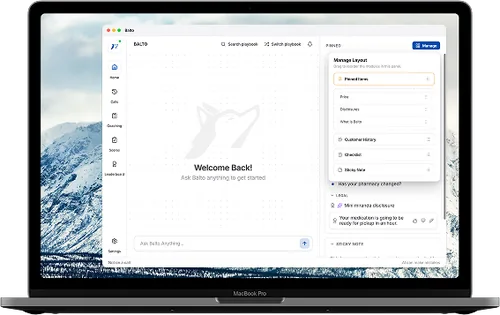
Balto’s AI platform provides real-time coaching during live calls. It listens, surfaces the right answers instantly, and suggests the best next action—helping agents resolve issues without escalation.
Capabilities include:
- Conversation analysis + sentiment tracking
- Knowledge surfacing during calls
- Compliance reminders and empathetic phrasing suggestions
💡 Example: If a customer asks about billing, Balto instantly provides the right answer, so the agent doesn’t need to put the caller on hold.
4. Optimize IVR & Call Routing
Smart routing ensures customers connect with the right agent the first time. Best practices:
- Implement skills-based routing using agent skill profiles
- Use NLP-based IVR to understand customer intent
- Preserve context transfer so agents don’t need to re-ask questions
- Offer callback options instead of long hold times
5. Monitor Call Analytics for FCR Performance
Analytics reveal where resolution breaks down. Key practices:
- Use conversation analytics to identify common blockers
- Build agent scorecards that track FCR + CSAT
- Apply predictive analytics to flag high-risk cases in real time
Balto’s platform provides live analytics dashboards so supervisors can coach agents mid-call—not just after reviews.
6. Align Incentives with FCR Goals
Agents perform based on what they’re rewarded for. To align incentives:
- Use FCR-weighted scorecards instead of just AHT
- Offer bonuses tied to quality + FCR + CSAT
- Recognize high-FCR agents with career growth opportunities
- Avoid penalizing necessary transfers that resolve complex cases
7. Foster Cross-Team Collaboration
FCR often depends on smooth handoffs and shared knowledge across departments like billing, technical support, and product development. Silos make it harder for agents to resolve issues without escalating.
Best practices for collaboration:
- Use shared knowledge platforms so support agents can access technical documentation without escalation.
- Deploy real-time messaging tools so agents can consult specialists while the customer is still on the call.
- Schedule cross-department reviews of recurring customer issues to find permanent fixes.
Cross-functional collaboration ensures agents are never left without the resources they need to resolve issues during the first interaction.
8. Capture & Act on Customer Feedback
Customers themselves provide the clearest signal about whether issues were resolved effectively. Capturing and using feedback improves both processes and agent performance.
Best practices:
- Run post-resolution surveys immediately after calls.
- Conduct follow-up outreach 3–7 days later to confirm solutions are stuck.
- Analyze negative feedback for root causes and process gaps.
- Celebrate and replicate positive feedback patterns across the team.
9. Streamline Workflows & Remove Bottlenecks
Even well-trained agents can’t succeed if workflows slow them down. Inefficient systems, approvals, and data silos all block FCR.
Best practices:
- Map current resolution processes to identify bottlenecks.
- Automate routine tasks (like password resets or account lookups).
- Empower agents with more decision-making authority to prevent escalations.
- Integrate multiple systems into a single agent interface.
Workflow optimization is one of the fastest ways to improve FCR and reduce unnecessary repeat contacts.
10. Conduct Root-Cause Analysis
Low FCR rates usually point to deeper systemic problems. Root-cause analysis helps uncover those issues and eliminate them permanently.
Methods to use:
- 5 Whys technique → ask why an issue occurred until you reach the root.
- Fishbone diagrams → map out process, people, system, and product factors.
- Trend monitoring → identify recurring issues across calls and customers.
Insights from root-cause analysis should flow directly into product updates, documentation, and training.
11. Create Agent Feedback Loops
Agents are on the frontlines—they know what’s blocking FCR better than anyone. Structured feedback loops make sure their insights improve operations.
Best practices:
- Hold weekly one-on-one coaching sessions to review FCR challenges.
- Run team debriefs where agents share successful resolution techniques.
- Collect anonymous feedback for honest input on processes and tools.
- Recognize agents whose ideas lead to measurable FCR improvements.
Strong feedback loops give agents ownership in improving performance and reducing the gap between management goals and frontline realities.
12. Balance Efficiency with Empathy
FCR isn’t just about fixing problems quickly—it’s about leaving the customer feeling understood. Agents must balance speed with empathy to build trust.
Best practices:
- Train on active listening and emotional intelligence.
- Teach agents to acknowledge frustration before moving to solutions.
- Track Customer Effort Score (CES) alongside FCR to balance metrics.
- Provide agents with customer history data for personalized service.
Balto supports agents not only with real-time answers but also with empathetic phrasing suggestions, ensuring efficiency never comes at the expense of customer care.
Common Mistakes to Avoid in FCR
Even well-meaning strategies can backfire if they’re not applied thoughtfully. Here are the most common pitfalls contact centers should avoid:

1. Focusing only on FCR percentage without tracking resolution quality
Many teams chase a high FCR number without checking whether the “resolution” actually solved the customer’s problem long-term. An agent may close the issue on the first call, but if the customer has to call back days later for the same issue, that’s a false success.
Always pair FCR with quality metrics like CSAT, CES, or repeat contact rates to ensure the focus is on meaningful resolutions, not vanity numbers.
2. Over-emphasizing handle time at the cost of complete solutions
Average Handle Time (AHT) is an important efficiency metric, but when it’s prioritized above all else, agents may feel pressured to rush customers off the phone. This leads to incomplete fixes and repeat calls — the exact opposite of what FCR is meant to achieve.
Instead, encourage agents to take the time they need for thorough problem-solving, even if it slightly increases AHT. Customers value a complete resolution more than a fast but ineffective one.
3. Penalizing all transfers, even those that resolve issues
Transfers are often seen as a failure, but not all transfers are bad. In some cases, connecting a customer to a specialist is the fastest way to achieve first contact resolution.
Penalizing agents for necessary transfers discourages collaboration and can lead to poor customer experiences. A smarter approach is to monitor the type of transfer — unnecessary hand-offs should be reduced, but helpful transfers that ensure resolution should be supported.
4. Failing to update knowledge bases as products evolve
A knowledge base is only as good as the accuracy of its content. Outdated articles, broken links, or missing information slow agents down and frustrate customers, making it harder to achieve FCR.
Many contact centers build a knowledge base once and forget to maintain it. The best teams treat it as a living resource, with real-time updates, regular audits, and agent feedback loops to keep information fresh and useful.
The Future of FCR with AI and Automation
AI and automation are transforming how contact centers approach FCR:
- Real-time agent guidance → Balto helps agents resolve issues live.
- Predictive call routing → Customers matched with the right agent before the call begins.
- Automated workflows → Routine tasks resolved without agent involvement.
- Conversation intelligence → AI analyzing calls to identify blockers and best practices.
Improving first call resolution best practices drives higher CSAT, reduces repeat calls, and empowers agents to perform at their best.
By applying these first call resolution tips consistently, contact centers can see measurable improvements in efficiency and customer loyalty.
With Balto’s AI-powered real-time guidance, agents always know the right thing to say, at the right time—leading to faster resolutions and happier customers.
Quiz: Is Your Contact Center FCR-Ready?
FAQs
Most industries consider 70–75% a good FCR rate, while top-performing contact centers can reach 80% or higher. More complex industries like healthcare or insurance often average closer to 60–70%. The key is tracking improvement over time, not just chasing a benchmark..
The formula is simple: (Issues resolved on first contact ÷ Total customer issues) × 100. To measure accurately, track not just whether the case was closed, but also whether the customer had to contact you again within 7–30 days. Combining operational data with customer feedback gives the truest FCR score.
Common challenges include poor knowledge base access, inefficient call routing, and limited agent authority. Training gaps and outdated systems also slow resolution, forcing repeat contacts. Fixing these areas is often the fastest way to improve FCR.
Agents can boost FCR by preparing with customer history, using real-time tools like Balto, and practicing active listening. Confirming the resolution before ending the call also prevents repeat issues. Consistent coaching and feedback help reinforce these habits.
AI tools support agents with instant answers, compliance prompts, and sentiment tracking during calls. This reduces hold times and escalations, helping agents resolve issues on the first attempt. AI also analyzes calls to uncover patterns and training opportunities.
FCR measures whether the issue was solved in the first contact, while CSAT measures how satisfied the customer felt afterward. High FCR usually leads to high CSAT, but both should be tracked together for a full picture of service quality.
Training should focus on scenario-based roleplays, structured problem-solving, and communication skills. Regular coaching, call reviews, and peer mentoring keep skills sharp and help agents handle complex cases confidently.
Accurate call routing ensures customers connect with the right agent immediately. Poor routing often forces transfers, which lowers FCR. Skills-based and AI-driven routing systems make a big difference here.
Yes — FCR has a stronger impact on customer satisfaction than AHT. Customers care more about having their issue resolved quickly in one call than shaving a minute off handle time. The goal is to balance both metrics without sacrificing resolution quality.
Real-time guidance gives agents instant prompts and answers during live calls. This helps them resolve issues without holds or escalations, improving consistency across the team. Tools like Balto ensure every agent has “the right words, right away.”
Liked what you read? See Balto in action.
Balto helps leading contact centers turn insights into outcomes, in real time. Book a live demo to discover how our AI powers better conversations, coaching, and conversions.