















Contact centers often evaluate chatbots vs voicebots when making automation decisions. Both technologies promise faster service and lower costs, but they create very different customer experiences, especially in high-volume, high-stakes support environments.
A chatbot is a text-based conversational tool used on digital channels like web chat or messaging apps. A voicebot interacts through spoken language on phone calls or IVR systems.
While both rely on AI to understand intent and respond, their interface, risks, and ideal use cases differ significantly.
For contact center leaders, choosing between a chatbot and a voicebot is not just a technology decision. It is a CX decision. Platforms like Balto see firsthand how automation succeeds when it supports agents and fails when it replaces them too aggressively.
This guide breaks down the key differences between chatbots and voicebots, compares their strengths and limitations, and shows where agent assist AI fits into a balanced contact center strategy.

What Is a Chatbot?
A chatbot is a text-based conversational interface that uses AI to respond to typed user inputs.
Chatbots typically live on websites, in mobile apps, or inside messaging platforms like SMS, WhatsApp, or in-product chat, where users read responses and reply by typing.
In customer service and contact center environments, chatbots are most often used to automate high-volume, repeatable interactions.
Examples include answering FAQs, checking order status, routing users to the right resource, or collecting information before handing a conversation off to a human agent.
Modern chatbots work best in structured, low-friction scenarios. They are generally faster and less expensive to deploy than voice-based solutions, and they allow users to scan, reread, and interact asynchronously.
This makes chatbots well-suited for information-heavy tasks, visual workflows, and digital-first support channels where customers expect to type rather than speak.
What Is a Voicebot?
A voicebot is a conversational AI system that interacts with users through spoken language rather than text.
Voicebots listen to what a customer says, interpret intent using natural language processing, and respond out loud using text-to-speech technology. They are most commonly used in phone-based support, IVR systems, and voice-enabled devices where typing is impractical or impossible.
In contact centers, voicebots are often deployed to handle high-volume inbound calls such as balance checks, appointment scheduling, payment reminders, or basic troubleshooting.
Because speaking is faster and more natural than typing for many users, voicebots can quickly capture intent and deflect simple calls away from live agents.
At the same time, voicebots introduce additional complexity. They rely on accurate speech recognition , are more sensitive to background noise and accents, and can create friction when conversations become nuanced or emotionally charged.
As a result, voicebots work best when tightly scoped and paired with clear escalation paths to human agents.
Contact Center Chatbots vs Voicebots: Key Differences
The core difference between chatbots and voicebots in contact centers is how customers experience effort, speed, and risk during an interaction.
Chatbots operate through text, which makes them easier to scan, correct, and revisit. This gives customers more control in information-heavy or multi-step conversations, especially on digital channels.
Voicebots operate through speech, which can feel faster and more natural for simple requests, but introduces friction when accuracy breaks down.
Background noise, accents, and rigid call flows can quickly escalate frustration. Voice interactions also make it harder for customers to review information or correct misunderstandings.
From an operational standpoint, chatbots are typically faster and less expensive to deploy. Voicebots require additional layers like speech recognition, telephony integration, and ongoing tuning.
In contact centers, the decision often comes down to channel preference, conversation complexity, and how safely automation can replace or support human agents.
Chatbot vs Voicebot Comparison Table
The table below compares chatbots and voicebots across key contact center dimensions, including interaction style, implementation complexity, customer experience risk, and ideal use cases.
This side-by-side view highlights where each approach works best, and where automation can introduce friction if applied too broadly.
| Dimension | Chatbot | Voicebot |
|---|---|---|
| Primary Interface | Text-based messaging | Spoken conversation over voice |
| Typical Channels | Website chat, in-app chat, SMS, messaging platforms | Phone calls, IVR systems, voice-enabled devices |
| User Effort | Requires reading and typing | Hands-free, faster for simple intents |
| Best For | Information-heavy tasks, step-by-step workflows, async support | Quick intent capture, simple requests, call deflection |
| Conversation Complexity | Handles multi-turn, detailed interactions well | Struggles as conversations become nuanced or lengthy |
| CX Risk | Lower. Users can reread, correct, and self-pace | Higher. Misheard inputs and rigid flows escalate frustration |
| Implementation Complexity | Moderate | High, due to telephony and speech layers |
| Cost to Deploy and Maintain | Generally lower | Generally higher |
| Ideal Role in Contact Centers | Frontline digital self-service and triage | Initial call handling and simple phone-based automation |
Common Contact Center Use Cases for Chatbots and Voicebots
Both chatbots and voicebots can reduce contact center conversation volume and improve efficiency, but only when they are matched to channel expectations and conversation complexity.
The goal is not maximum automation, but to use automation where it reliably improves speed and experience without increasing customer effort or frustration.
Chatbots tend to perform best in digital, information-heavy workflows, while voicebots are better suited for short, voice-first interactions. Understanding these distinctions helps teams avoid over-automation and design support journeys that feel intentional rather than rigid.
Chatbot Use Cases

Chatbots are well-suited for structured, repeatable tasks on digital channels where customers expect to type and read responses.
Common contact center use cases include:
- Answering FAQs
- Checking order or account status
- Resetting passwords
- Retrieving information from a knowledge base
They are also effective for guided workflows such as onboarding, form completion, or pre-chat intake before escalating to a live agent.
Because chatbots support asynchronous conversations and visual elements like links and menus, they work especially well for troubleshooting steps, policy explanations, and internal employee support.
Voicebot Use Cases

Voicebots are typically used to automate simple, high-volume phone interactions.
Common use cases include:
- Call routing
- Appointment scheduling
- Balance inquiries
- Payment reminders
- Basic issue triage
In contact centers with heavy inbound call volume, voicebots can reduce queue times by handling straightforward requests or gathering intent before transferring to an agent.
Voicebots work best when conversations are short, tightly scoped, and easy to resolve without nuance. As complexity increases, clear escalation paths to human agents become critical to protecting customer experience.
Limitations and Risks of Chatbots and Voicebots
While chatbots and voicebots can improve efficiency and reduce contact center volume, they also introduce meaningful risks when applied too broadly.
Many automation failures stem not from the technology itself, but from misalignment between the tool, the channel , and the customer’s actual needs.
Understanding these limitations is essential to designing automation that helps rather than harms customer experience.
Chatbot Limitations and Risks
Chatbots struggle most when conversations become emotionally charged, ambiguous, or urgent.
Because interactions rely on reading and typing, customers may abandon chat when they are stressed, confused, or short on time, and even well-trained chatbots can fail when users describe issues in unexpected ways, leading to repetitive loops or irrelevant responses.
Another common risk is over-automation. When chatbots are positioned as a replacement for human support rather than an entry point, customers can feel trapped in rigid workflows with no clear path to escalation.
This often increases repeat contacts and agent workload downstream, offsetting any initial efficiency gains.
Chatbots can also create accessibility challenges for users who have difficulty typing or reading long responses.
Without thoughtful design and clear handoff options, chat-based automation can unintentionally exclude or frustrate segments of the customer base.
Voicebot Limitations and Risks
Voicebots introduce additional layers of technical and experiential risk. Speech recognition accuracy can be affected by accents, background noise, speech patterns, or call quality.
When a voicebot misinterprets intent, customers are forced to repeat themselves, which quickly erodes trust and patience.
Voice interactions also limit how information is delivered. Long explanations, lists, or policy details are harder to process when spoken aloud, increasing cognitive load and the likelihood of misunderstanding. Unlike chat, customers cannot easily review or correct responses, making errors more disruptive.
Rigid call flows are another major risk. When voicebots cannot gracefully handle deviations or escalate at the right moment, customers often hang up or demand an agent, sometimes already frustrated.
In these cases, automation does not reduce cost. It simply shifts frustration to the human agent who inherits the call.
When Automation Backfires in Contact Centers
Both chatbots and voicebots tend to fail in similar scenarios: complex troubleshooting, disputes, emotionally sensitive conversations, or situations where flexibility and empathy matter.
In these moments, customers expect human judgment, not scripted responses.
Automation backfires when success is measured solely by containment or deflection rates rather than resolution quality. A high automation rate means little if customers must recontact support or escalate through multiple channels to get help.
Without guardrails and escalation paths, chatbots and voicebots can quietly degrade customer experience while appearing successful on surface metrics.
For contact centers, the challenge is not choosing whether to automate. It is deciding where automation should stop, and where human support must remain central.
Where Agent Assist AI Fits In
Agent assist AI plays a different role in contact centers than chatbots and voicebots.
Rather than automating customer interactions end to end, it augments human agents during live conversations, helping teams improve outcomes without introducing the risks of over-automation.
What Is Agent Assist?
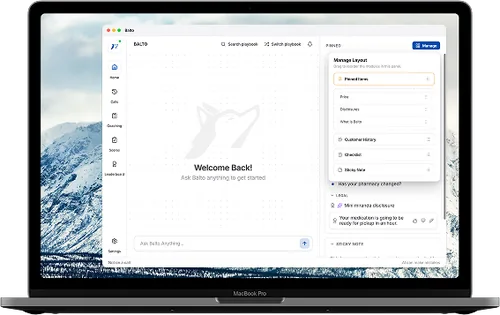
Agent assist AI is a category of conversational intelligence that supports human agents in real time.
As an agent speaks with or chats with a customer, agent assist tools analyze the conversation as it happens and surface relevant guidance instantly.
This guidance can include recommended responses, knowledge base articles, compliance reminders, objection handling tips, or next-best actions based on customer intent. The agent remains in full control of the conversation, using AI as a decision-support layer rather than a replacement.
In contact centers, this approach preserves empathy and flexibility while improving speed, accuracy, and consistency.
Agent Assist vs Chatbots vs Voicebots
The key distinction between agent assist and bots is who the AI is designed to serve.
Chatbots and voicebots interact directly with customers, attempting to resolve issues without human involvement. Agent assist, by contrast, is built to help agents perform better during live interactions.
Bots are effective for simple, predictable requests, but they struggle when conversations shift or become emotionally complex. Agent assist thrives in exactly those moments, offering support without forcing customers into scripted flows.
Instead of deflecting interactions away from agents, agent assist enhances agent performance across both voice and digital channels, reducing errors and improving first-contact resolution.
Top Agent Assist Use Cases

Agent assist AI is particularly valuable in scenarios where accuracy, empathy, and consistency matter.
Common use cases include:
- Compliance and disclosure prompts
- Objection handling
- Guided troubleshooting
- Faster onboarding for new agents
It is also effective for reducing handle time without sacrificing quality by surfacing the right information at the right moment, rather than requiring agents to search multiple systems.
In quality assurance and coaching, agent assist can reinforce best practices during the call, not weeks later in a QA review.
Agent Assist Strengths and Limitations
The primary strength of agent-assist AI is risk reduction. Because customers interact with a human, there are no speech recognition errors, rigid workflows, or dead ends.
Conversations remain flexible, empathetic, and adaptive, while AI improves consistency behind the scenes.
However, agent assist is not a replacement for self-service automation. It does not reduce volume in the same way chatbots or voicebots can.
Its value lies instead in improving the quality and outcome of conversations that already require a human touch. For contact centers, agent assist works best as part of a balanced strategy, complementing bots rather than competing with them.
Mixed Results? This is common. Many contact centers benefit from a layered approach that combines chatbots or voicebots for self-service with agent-assist AI for conversations that require human judgment.
Choosing the Right Tool For Your Contact Center
Chatbots, voicebots, and agent assist AI each play a role in modern contact centers, but they solve different problems.
Chatbots and voicebots are most effective when interactions are predictable, low-risk, and easy to automate. The most successful teams use bots to handle volume where it makes sense, and rely on agent assist AI to support humans when judgment, empathy, and adaptability matter.
Rather than asking which technology is “better,” the more useful question is where automation should stop, and how AI can help agents deliver better outcomes in the moments that matter most.
FAQs
A chatbot communicates through text on digital channels, while a voicebot interacts through spoken language on the phone or voice-based systems. The key difference is the interface, not the underlying AI .
Neither is inherently better. Voicebots work best for short, voice-first interactions, while chatbots are better suited for information-heavy or asynchronous digital conversations.
Use a chatbot when customers expect to type and review information. Use a voicebot when phone calls dominate, and requests are simple and predictable.
No. Voicebots handle basic tasks and triage, but complex, emotional, or high-stakes conversations still require human agents.
Customer experience depends on fit, not format. Both chatbots and voicebots can improve CX when scoped correctly, and both can harm it when overused or applied to the wrong problems.
Both struggle with nuance, emotional sensitivity, and edge cases. Over-automation can increase frustration, repeat contacts, and escalation rates.
Yes. Many contact centers use voicebots for initial call handling and chatbots for follow-ups, confirmations, or digital support.
Both rely on natural language processing to understand intent. Voicebots add speech recognition and text-to-speech layers to enable spoken interactions.
They can be, when built with proper data handling, compliance controls, and vendor security standards. Security risks typically stem from poor implementation, not the technology itself.
Agent assist AI is a strong alternative when conversations require human judgment. It supports agents in real time instead of attempting full automation, reducing CX and compliance risk.
Liked what you read? See Balto in action.
Balto helps leading contact centers turn insights into outcomes, in real time. Book a live demo to discover how our AI powers better conversations, coaching, and conversions.