














How to Deal with Call Center Burnout (15 Tested Strategies)


Call center burnout is one of the most common challenges facing contact center leaders today. When agents spend long stretches handling back-to-back interactions, managing frustrated customers, and trying to meet strict performance metrics, stress can build quickly.
Understanding how to deal with call center burnout requires more than encouraging agents to manage stress individually. In most cases, burnout reflects operational pressures such as workload design, repetitive tasks, and limited support during complex calls.
Below are 15 proven strategies contact center leaders can use to reduce burnout and create a more sustainable agent experience.
- Maintain sustainable agent utilization levels. Keeping utilization at reasonable levels ensures agents have time to recover and avoid cognitive overload.
- Rotate agents across channels and responsibilities. Moving between calls, chats, and other tasks can reduce monotony and improve engagement.
- Provide structured coaching and feedback. Regular coaching helps agents build skills and feel supported rather than constantly evaluated.
- Offer clear career development paths. Opportunities for advancement can increase motivation and reduce long-term disengagement.
- Recognize and reward strong performance. Positive recognition helps counterbalance the emotional strain of difficult customer interactions.
- Implement strong knowledge management systems. Easy access to accurate information helps agents resolve issues faster and with more confidence.
- Streamline CRM and operational systems. Reducing system friction lowers the mental effort required to manage customer interactions.
- Automate post-call documentation. Tools that generate call summaries or automate updates reduce repetitive administrative work.
- Improve workforce management and scheduling. Better forecasting distributes workloads more evenly and prevents sustained overload.
- Provide faster access to customer context. Immediate visibility into customer history reduces call complexity and frustration.
- Provide real-time guidance during calls. AI-powered agent assist tools can surface prompts and relevant information while conversations are happening.
- Automatically surface knowledge and recommended actions. AI can reduce the time spent searching for answers during complex calls.
- Use conversation analytics to identify coaching opportunities. AI insights help managers deliver more targeted feedback.
- Automate routine customer requests. Virtual agents can handle simple inquiries, reducing call volume pressure on human agents.
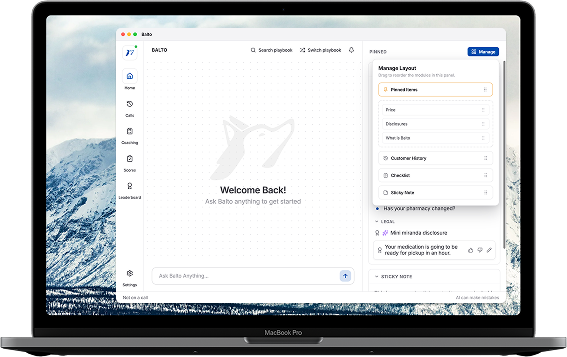
- Enable real-time coaching and performance support. AI tools like Balto can guide agents during difficult interactions and improve confidence.
In the sections below, we’ll explore why burnout is so common in contact centers, how to recognize early warning signs, and how leaders can use these strategies to create a healthier and more sustainable agent experience.
What Is Call Center Burnout?

Call center burnout is a form of chronic workplace stress that occurs when agents face sustained emotional pressure, high workloads, and strict performance expectations over long periods of time.
It typically shows up as emotional exhaustion, declining motivation, and reduced job performance.
In contact centers, burnout often develops gradually rather than suddenly. Agents may feel mentally drained after long stretches of back-to-back calls, struggle to maintain empathy with frustrated customers, or feel constant pressure to meet performance metrics like Average Handle Time (AHT), First Call Resolution (FCR), and CSAT scores.
Left unaddressed, burnout can affect both individual well-being and operational performance. Burned-out agents are more likely to experience lower engagement, increased absenteeism, and higher turnover, all of which can disrupt service quality and increase costs for contact center leaders.
Why Burnout Is So Common in Contact Centers
While burnout can occur in any profession, contact centers have several structural characteristics that make agents particularly vulnerable.
First, the workload is often continuous. In many contact centers, agents handle calls or digital interactions back-to-back with little downtime, creating sustained cognitive and emotional pressure throughout the day.
Second, the work itself can be emotionally demanding. Agents regularly interact with customers who are frustrated, confused, or upset, and they are expected to remain calm, empathetic, and solution-oriented in every interaction.
Third, strict performance metrics add additional pressure. Contact center agents are typically measured across multiple operational KPIs, including handle time, resolution rates, quality scores, and customer satisfaction.
While these metrics are essential for operational management , they can also create constant performance pressure if not balanced carefully.
Finally, many contact centers still rely on repetitive workflows and rigid scripts. When agents spend long periods repeating similar interactions or navigating slow systems, the work can become mentally exhausting.
For these reasons, call center burnout is rarely just an individual well-being issue. More often, it reflects the structure of the work itself. Workload design, performance expectations, tools, and support systems all play a role in shaping the daily experience of agents.
Call Center Burnout Statistics
Burnout is one of the most persistent challenges in contact center operations. Research across the industry consistently shows that high workload, emotional labor, and performance pressure contribute to elevated stress and turnover among agents.
A few statistics help illustrate the scale of the problem:
- Call center agent burnout is the #2 reason that agents leave their jobs, after poaching by competitors.
- More than 80% of call center agents report that the pressure of their role weighs on their well-being
- Approximately 53% of call center agents report experiencing symptoms of burnout, including emotional exhaustion, stress, and loss of motivation over time.
- Of the call center agents who report burnout, over 50% say they are likely to quit their jobs within six months.
- The annual agent churn rate is approximately 30% . This can translate into significant recruiting, onboarding, and training costs each year.
- Burned-out employees are 63% more likely to take a sick day, 50% less likely to pursue better performance, and 13% less confident in their own performance.
These statistics highlight why burnout is not just an HR concern. It is an operational issue that directly affects service quality, agent retention, and the overall cost structure of contact center operations.
Common Symptoms of Call Center Burnout
For contact center leaders, monitoring key performance indicators can help reveal early warning signs that agents are under sustained stress. Several metrics are particularly useful for identifying potential burnout risks.
Rising Agent Turnover
One of the clearest indicators of burnout is increased agent attrition. When agents consistently leave within their first year or turnover begins to climb across a team, it often signals deeper issues with workload, stress, or support.
High turnover can create a difficult cycle for contact centers. As experienced agents leave, remaining team members may face heavier call volumes while new hires ramp up, which can further increase stress and accelerate additional attrition.
Monitoring turnover trends alongside exit interview feedback can help leaders identify whether burnout is contributing to staffing instability.
Extremely High Agent Utilization
Agent utilization measures the percentage of an agent’s available time spent handling customer interactions or completing related tasks. While high utilization can appear efficient on paper, sustained utilization rates that approach full capacity often leave agents with little recovery time between calls.
When agents spend most of their shift handling back-to-back interactions, cognitive fatigue builds quickly. Over time, this constant workload pressure can contribute to emotional exhaustion and reduced engagement.
Maintaining reasonable occupancy levels and ensuring agents have time for breaks, coaching, and administrative tasks can help reduce sustained stress.
Increasing Average Handle Time (AHT)
A gradual increase in Average Handle Time (AHT) can sometimes signal burnout rather than purely operational inefficiency.
When agents feel mentally fatigued or overwhelmed, it may take longer to navigate systems, recall information, or guide customers through solutions. Burned-out agents may also struggle to maintain focus during complex calls, which can extend interaction times.
While AHT fluctuations can have many causes, consistent increases combined with other indicators may suggest that agents are under excessive strain.
Declining First Call Resolution (FCR)
First Call Resolution measures the percentage of customer issues resolved during the first interaction. When burnout begins to affect agent performance, FCR rates may decline as agents struggle to maintain the same level of problem-solving focus and empathy.
Lower resolution rates often lead to repeat contacts, which increases call volume and adds further pressure on agents. This creates a feedback loop where stress and workload continue to reinforce each other.
Falling CSAT and Employee Engagement
Customer Satisfaction (CSAT) scores and internal employee engagement surveys can also reveal early signs of burnout. Agents experiencing emotional exhaustion may find it harder to remain patient, empathetic, and solution-oriented during difficult conversations.
At the same time, declining employee engagement scores can indicate that agents feel unsupported or disconnected from their work.
Tracking both customer-facing and employee experience metrics provides a more complete picture of how agent wellbeing is evolving over time.
What Causes Call Center Agent Burnout

Call center burnout is rarely caused by a single factor. In most cases, it develops when several operational pressures combine over time.
High workloads, emotionally demanding interactions, strict performance expectations, and repetitive workflows can create sustained stress for agents throughout the day.
High Call Volume and Workload Pressure
One of the most common drivers of burnout is sustained call volume combined with high agent occupancy. In many contact centers, agents move directly from one interaction to the next with very little downtime between calls.
Over time, this continuous workload pressure can lead to emotional exhaustion and reduced engagement.
Emotional Labor From Difficult Conversations
Agents are expected to remain calm, patient, and empathetic even when customers are frustrated or angry. Managing these interactions repeatedly throughout the day can be mentally draining, especially when agents lack sufficient time between calls to reset.
Without adequate support or recovery time, the emotional demands of the role can contribute significantly to burnout.
Strict Performance Metrics
Agents are often measured simultaneously on metrics such as:
- Average Handle Time (AHT)
- First Call Resolution (FCR)
- Customer Satisfaction (CSAT)
- Quality assurance scores
When agents feel constant pressure to meet multiple targets at once, the job can begin to feel like a continuous evaluation. This pressure can reduce confidence, increase anxiety during calls, and make difficult customer interactions even more stressful.
Lack of Support During Complex Calls
Agents often face situations where they must resolve complicated issues while navigating multiple systems, policies, or knowledge bases. When agents lack quick access to accurate information or real-time guidance, these calls can become particularly stressful.
Providing better tools, knowledge access, and coaching support can significantly reduce the strain associated with complex interactions.
Repetitive Tasks and Scripts
Many contact center roles involve repeating similar interactions dozens or even hundreds of times per day. Over time, this repetition can contribute to mental fatigue and disengagement.
Agents may also spend significant time completing repetitive administrative tasks, such as writing call summaries, navigating multiple systems, or following rigid scripts.
👍 How to Overcome Call Center Burnout (15 Proven Strategies)
Contact center leaders can make meaningful improvements in burnout by adjusting management practices, improving operational tools, and using technology to reduce cognitive load on agents.
The following strategies address burnout across three key areas: management practices, operational technology, and AI-assisted support.
Management Strategies to Prevent Burnout
1. Maintain Healthy Agent Utilization Levels
Sustained occupancy leaves agents with little time to recover between interactions. Maintaining reasonable utilization levels helps reduce cognitive fatigue and allows agents time for breaks, coaching , and administrative tasks.
2. Rotate Tasks Across Channels and Responsibilities
Handling the same type of interaction repeatedly can quickly become mentally exhausting. Allowing agents to rotate between calls, chats, emails, and administrative work can introduce variety and reduce monotony.
3. Provide Structured Coaching and Feedback
Regular coaching sessions give agents an opportunity to discuss difficult calls, develop new skills, and receive constructive guidance. When feedback focuses on growth rather than punishment, it can reduce performance anxiety and improve confidence.
4. Offer Clear Career Development Paths
Agents are less likely to burn out when they see opportunities to grow within the organization. Providing pathways into roles such as quality assurance, workforce management , training, or team leadership can improve engagement and retention.
5. Recognize and Reward Strong Performance
Positive recognition can counterbalance the emotional strain of difficult customer interactions. Simple recognition programs, performance incentives, and public acknowledgment of strong customer service can improve morale and motivation.
Technology That Helps Reduce Agent Burnout
6. Implement Strong Knowledge Management Systems
Agents should be able to quickly find accurate answers during customer conversations. A well-structured knowledge base reduces the time spent searching for information and improves agent confidence during complex interactions.
7. Streamline CRM and System Navigation
Agents often work across multiple platforms during a single interaction. Integrating systems and simplifying workflows can reduce the friction agents experience when accessing customer data or updating records.
8. Automate Post-Call Documentation
After-call work, such as writing summaries or updating records, can consume a significant portion of an agent’s time. Automating call summaries and documentation can reduce repetitive tasks and free agents to focus on customer interactions.
9. Improve Workforce Management and Scheduling
Better forecasting and scheduling tools can help contact centers distribute workload more evenly across teams. This reduces the risk of sustained high occupancy and allows agents to maintain healthier work rhythms.
10. Provide Faster Access to Customer Context
When agents have immediate access to relevant customer history, they can resolve issues more quickly and avoid repetitive questioning. This reduces call complexity and helps agents maintain smoother conversations.
How AI Can Support Agents and Reduce Stress

11. Provide Real-Time Agent Guidance During Calls
AI-powered agent assist tools can surface relevant information, scripts, or compliance guidance during conversations. This helps agents handle difficult situations with greater confidence.
12. Automatically Surface Recommended Actions
Instead of requiring agents to search knowledge bases, AI systems can suggest relevant answers based on the customer’s question or conversation context.
13. Automate Quality Monitoring and Coaching Insights
AI-powered QA tools can analyze conversations at scale and highlight coaching opportunities. This allows managers to provide more targeted feedback without relying solely on manual call reviews.
14. Reduce Repetitive Contacts Through Automation
AI-powered virtual agents or conversational IVR can handle routine requests such as password resets, order status checks, or appointment scheduling. This allows human agents to focus on more meaningful interactions.
15. Assist With Real-Time Coaching and Performance Support
Building a Sustainable Agent Experience
Preventing burnout isn’t just about responding when problems appear. The most effective contact centers design systems that support agents consistently over time.
This means monitoring operational metrics, maintaining reasonable workloads, and ensuring agents have the tools and support they need to succeed.
Interactive Contact Center Wellbeing Checklist
Leaders who want to reduce burnout should regularly evaluate whether their contact center environment supports agent well-being.
Contact Center Wellbeing Checklist
The following checklist highlights key operational areas that influence burnout risk:
Management Practices
- Agent utilization levels are sustainable
- Agents rotate across channels or responsibilities when possible
- Managers provide consistent coaching and development support
- Clear career paths exist for agents
- Recognition and incentives reinforce strong performance
Operational Technology
- Knowledge management systems help agents quickly find answers
- CRM and operational tools are streamlined
- Post-call documentation is automated where possible
- Workforce management tools distribute workload efficiently
- Agents have immediate access to customer context
AI-Assisted Agent Support
- Agents receive real-time guidance during calls
- Relevant knowledge and recommended actions are surfaced automatically
- Conversation analytics help managers identify coaching opportunities
- Automation handles routine customer requests
- Real-time coaching tools support agents during difficult conversations
Regularly reviewing these areas helps contact center leaders identify operational gaps that contribute to agent stress. When organizations improve how work is structured, supported, and measured, they create a more sustainable environment for both agents and customers.
Reducing Burnout Starts With Better Contact Center Design
Call center burnout is often treated as an individual well-being issue, but in reality, it is usually a reflection of how the work itself is structured.
Sustained call volume, strict performance pressure, fragmented tools, and repetitive tasks can gradually erode agent engagement and performance.
The most effective contact centers address burnout by improving the system around the agent.
Balanced workloads, supportive management practices, better technology, and real-time guidance all help reduce cognitive strain and create a more sustainable work environment.
When organizations invest in the agent experience, the benefits extend far beyond employee well-being. Stronger agent support leads to better customer conversations, higher resolution rates, and more stable contact center operations.
FAQs
Call center burnout is a form of chronic workplace stress that occurs when agents face sustained workloads, emotional pressure from customer interactions, and strict performance expectations over long periods of time.
Agents often experience burnout due to high call volumes, emotionally demanding customer conversations, repetitive tasks, and constant pressure to meet operational metrics such as AHT, FCR, and CSAT.
Common symptoms include emotional exhaustion, declining performance, irritability with customers, increased absenteeism, disengagement from work, and higher turnover.
Industry research suggests that a majority of contact center agents report significant workplace stress, and annual agent turnover rates often range around 30% , with burnout cited as a major contributing factor.
Managers can prevent burnout by maintaining reasonable workloads, monitoring agent utilization , providing regular coaching, offering career development opportunities, and improving the tools agents use during customer interactions.
When agents handle back-to-back interactions with little downtime, cognitive fatigue builds quickly, increasing stress and making it harder to maintain empathy, focus, and performance.
Technology can reduce burnout by simplifying workflows, improving knowledge access, automating repetitive tasks like call summaries, and helping agents resolve customer issues more efficiently.
Regular coaching helps agents develop skills, gain confidence during difficult conversations, and feel supported by leadership, which can reduce stress and improve engagement.
Companies support mental health by offering reasonable workloads, encouraging regular breaks, providing access to counseling resources, and fostering a culture where agents feel comfortable discussing challenges.
If left unaddressed, burnout can lead to higher turnover, lower productivity, declining customer satisfaction, increased hiring costs, and reduced overall contact center performance.
Liked What You Read? See Balto in Action.
Balto helps leading contact centers turn insights into outcomes, in real time. Book a live demo to discover how our AI powers better conversations, coaching, and conversions.