
















Improving customer satisfaction in a call center is about designing conversations that make customers feel genuinely understood.
Balto helps teams do exactly that by turning every call into an opportunity to build trust, resolve issues faster, and boost Customer Satisfaction (CSAT) scores.
Customer satisfaction (CSAT) measures how happy customers are with the service they receive.
It’s usually captured through post-interaction surveys like, “How satisfied were you with your experience?” The higher the score, the stronger the customer loyalty, and the healthier your business.
Here are 10 proven strategies to improve customer satisfaction in a call center:
- Empower agents to resolve issues on the first call: Reduce transfers and follow-ups with better tools and authority.
- Reduce wait times with smart routing and forecasting: Shorter queues mean happier customers.
- Personalize every interaction: Use CRM data to tailor tone, language, and recommendations.
- Improve CSAT scores through better agent coaching: Provide real-time feedback that strengthens empathy and accuracy.
- Leverage AI and real-time analytics to enhance CX: Identify sentiment shifts and guide agents instantly.
- Maintain consistent satisfaction across teams: Standardize QA , training, and knowledge sharing.
- Create a feedback loop between QA and operations: Turn insights into tangible process improvements.
- Recognize and reward great service: Motivated agents deliver better experiences.
- Close the loop with customers: Show that feedback drives real change.
- Continuously measure and optimize: Track CSAT, FCR, and sentiment to sustain improvement.
In this guide, we’ll explore why customer satisfaction matters, the factors that influence it most, and the actionable methods that can help your team meet and exceed customer expectations.
Why Customer Satisfaction Is Crucial in Call Centers
Customer satisfaction (CSAT) isn’t just a vanity metric; it’s the heartbeat of every successful call center.
A strong CSAT score signals that your customers feel heard, understood, and valued, while a weak one points to friction points that erode loyalty and brand trust.
In call centers, where every conversation shapes the customer’s perception of your company, satisfaction directly impacts both revenue and retention. Companies that lead in customer experience outperform laggards by nearly 80% in revenue growth.
On the flip side, Zendesk reports that 61% of customers will switch brands after a single bad experience.
Beyond business outcomes, CSAT also serves as an early warning system for operational inefficiencies. Declining satisfaction scores often reveal deeper issues: long handle times, inconsistent agent coaching, outdated scripts, or low first call resolution (FCR).
By tracking and improving CSAT, call centers can:
- Detect emerging service problems before they escalate
- Strengthen brand reputation through consistent, high-quality interactions
- Improve agent performance and morale by aligning coaching with real customer feedback
- Reduce churn and increase lifetime value through stronger customer trust
In other words, CSAT isn’t just a metric; it’s a reflection of how well your people, processes, and technology work together to deliver a seamless customer experience.
CSAT Benchmarks by Industry
Customer satisfaction expectations vary widely across industries. A “good” CSAT score in one sector might be considered underperforming in another.
Understanding these benchmarks helps call center leaders set realistic targets and measure progress against peers.
Here’s a snapshot of average CSAT benchmarks by industry:
| Industry | Average CSAT Score (%) |
|---|---|
| Retail & eCommerce | 80–85% |
| Technology & SaaS | 78–83% |
| Financial Services | 78–83% |
| Healthcare | 76–81% |
| Hospitality & Travel | 86–81% |
| Utilities & Telecom | 72–77% |
Across sectors, a CSAT of 75-85% is generally considered strong.
Companies in customer-facing, service-intensive industries like hospitality and retail tend to score higher, while those in complex or regulated sectors, like utilities and finance, see more variability.
But don’t just chase a number. Focus on consistent improvement and benchmark against organizations with similar customer expectations, complexity, and contact volumes.
Calculate Your CSAT

Before you can improve customer satisfaction, you need to measure it accurately.
Customer Satisfaction Score (CSAT) is one of the simplest and most reliable metrics for gauging how customers feel about your service after an interaction.
The formula is straightforward:
CSAT (%) = (Number of satisfied customers ÷ Total number of responses) × 100
💡 Try it yourself: Use the calculator below to quickly find out your team’s CSAT.
Just enter the number of satisfied customers and total survey responses, and we’ll do the math for you.
Top Factors That Affect Call Center Customer Satisfaction
Customer satisfaction in a call center isn’t just about resolving issues; it’s about how that resolution feels to the customer.
Even when outcomes are the same, tone, empathy, and ease of experience can make the difference between a five-star review and a lost customer.
Here are the key factors that most influence CSAT performance:
First Call Resolution (FCR)
The faster a customer’s issue is fully resolved, the happier they’ll be.
Research shows that CSAT scores drop by 19% for each additional touchpoint a customer must use to resolve their problem.
Empower agents with the authority, context, and tools to resolve issues the first time around.
Average Handle Time (AHT)
Efficiency matters, but not at the expense of empathy.
A balanced AHT ensures customer satisfaction because customers aren’t rushed, but also aren’t kept waiting. Track both speed and sentiment together to identify where efficiency and satisfaction align.
Wait Time and Queue Management
Nothing frustrates customers faster than long hold times. Intelligent call routing, callback options, and forecasting based on call volume trends can prevent unnecessary delays.
Agent Empathy and Communication
Customers remember how they were treated long after the issue is resolved. Active listening, clear explanations, and a positive tone all contribute to trust and satisfaction.
Personalization
A one-size-fits-all script doesn’t cut it anymore. Use CRM integrations and caller history to tailor conversations, remembering names, past interactions, and preferences.
According to Salesforce, 65% of customers say they will stay loyal if a company offers them personalized service.
Agent Knowledge and Confidence
Even the friendliest tone can’t compensate for inaccurate information.
Up-to-date knowledge bases and product refreshers ensure agents can answer confidently and consistently.
Feedback and Follow-Through
Customers want to feel heard. Closing the loop demonstrates responsiveness and builds credibility. Teams that act on customer feedback see improved loyalty intent, according to Zendesk .
Common Mistakes That Lower Satisfaction (and Best Practices to Avoid Them)
Even the most experienced call centers can fall into habits that quietly chip away at customer satisfaction.
Recognizing these pitfalls and knowing how to course-correct is key to maintaining consistently high CSAT scores.
Here are some of the most common mistakes, along with the best practices to replace them:

Treating Scripts as One-Size-Fits-All
❌ Mistake: Overly rigid scripts make interactions sound robotic, frustrating customers who want to feel understood, not processed.
✅ Best Practice: Give agents flexible frameworks instead of word-for-word scripts. Encourage them to personalize responses while keeping key compliance and tone elements consistent.
💬 Example: Instead of reading, “I’m sorry you’re having trouble with your account,” an agent could say, “I can see how that would be frustrating. Let’s get this fixed for you right away.”
Focusing Only on Speed (Not Quality)
❌ Mistake: Prioritizing low handle times often leads to rushed or incomplete resolutions, which in turn cause callbacks, repeat tickets, and lower CSAT.
✅ Best Practice: Balance efficiency metrics like AHT with qualitative KPIs such as FCR and post-call sentiment. Reward teams for resolving issues effectively, not just quickly.
💬 Example: A financial services contact center noticed higher satisfaction after changing incentives from “shortest average call” to “highest FCR improvement.”
Ignoring Customer Feedback
❌ Mistake: Customers who take time to share feedback expect acknowledgment. Failing to act on surveys or comments signals indifference.
✅ Best Practice: Close the loop by summarizing feedback trends in team meetings and showing what’s being improved. Share results publicly: “You asked, we listened.”
💬 Example: A telecom provider reduced repeat complaints by 22% after addressing a top feedback theme (confusing billing explanations) flagged in post-call surveys.
Coaching Only After Issues Arise
❌ Mistake: Reactive coaching corrects mistakes but doesn’t prevent them. Agents end up repeating poor habits until a QA review catches them.
✅ Best Practice: Adopt real-time coaching and ongoing micro-learning sessions. Tools like Balto ’s real-time guidance alert agents mid-call when tone, empathy, or compliance slips, enabling instant course correction.
💬 Example: After implementing a real-time guidance tool, a national retail call center saw a 14% CSAT increase in one quarter, driven by live prompts helping agents adjust during customer interactions.
Failing to Maintain Consistency Across Teams
❌ Mistake: When one shift or location delivers a stellar experience and another doesn’t, customers lose trust in your brand.
✅ Best Practice: Standardize training, knowledge bases, and QA criteria across teams. Use dashboards to monitor CSAT by queue or region to spot inconsistencies early.
💬 Example: A healthcare support center aligned its QA rubrics across all sites and saw its overall CSAT jump from 76% to 83% within six months.
How to Improve CSAT in a Call Center (10 Strategies)

If you’re wondering how to increase customer satisfaction in a call center, it takes more than quick fixes. It’s about building a system that empowers agents, streamlines processes, and keeps feedback flowing.
Here are ten proven strategies used by high-performing contact centers around the world.
1. Empower Agents to Resolve Issues on the First Call
First Call Resolution (FCR) is one of the strongest predictors of satisfaction. Give agents the authority, training, and access to systems they need to solve problems without transfers.
Not only does this shorten handle times, but it also shows customers that their time is respected.
2. Reduce Wait Times with Smart Routing and Forecasting
Long hold or wait times are a quick path to frustration. Use intelligent call routing, callback options, and workforce management tools that match staffing to real-time demand.
3. Personalize Every Interaction
Customers don’t want to repeat themselves. Integrate your CRM so agents see customer history, preferences, and sentiment before each call.
4. Improve CSAT Scores Through Better Agent Coaching
Agent coaching is the single biggest lever for improving call quality. Traditional QA reviews catch issues after the fact; real-time coaching empowers agents to correct them live.
Use conversation analytics to identify skill gaps, then reinforce training with live guidance tools like Balto, which prompt agents on tone, empathy, and compliance in the moment.
5. Leverage AI and Real-Time Analytics to Enhance CX
AI doesn’t replace human connection; it enhances it. Use AI to surface actionable insights, such as which phrases drive positive sentiment or when customer tone shifts.
How it helps:
- Real-time prompts help agents stay empathetic and compliant
- Speech analytics identifies top call drivers and friction points
- Predictive routing connects customers with the best-fit agents
6. Maintain Consistent Customer Satisfaction Across Teams
Consistency builds trust. Ensure every customer, no matter the time, location, or channel, receives the same level of care.
How to do it:
- Standardize QA rubrics and coaching frameworks
- Centralize scripts and knowledge bases
- Benchmark team CSAT scores monthly
7. Create a Feedback Loop Between QA and Operations
Don’t let customer insights stay siloed in surveys. Establish a monthly rhythm where QA, operations, and training teams review feedback and share learnings.
The goal is to turn every data point into an actionable improvement, from script adjustments to policy refinements.
8. Recognize and Reward Great Service
Agent morale directly impacts customer service and the customer experience.
Publicly recognize agents with top CSAT or FCR scores and use gamification elements like leaderboards, badges, and bonuses to encourage continuous growth.
9. Close the Loop with Customers
When customers see that their feedback drives change, loyalty grows.
Share tangible outcomes like: “We heard you wanted faster responses, so we added callback options.”
Transparency transforms feedback into trust.
10. Continuously Measure and Optimize
Customer expectations evolve constantly.
Build a dashboard that tracks key metrics like CSAT, FCR, CES , and sentiment in real time, and review data weekly, not quarterly, to spot emerging trends and adjust quickly.
Each of these strategies strengthens a different part of your customer experience : people, process, or technology.
Together, they form a virtuous cycle where happy agents create happy customers, and insights from every interaction drive continuous improvement.
How Balto Helps Increase Customer Satisfaction in Real Time
Improving CSAT starts with empowering agents in the moments that matter: during the conversation, not after it. That’s exactly where Balto makes the difference.
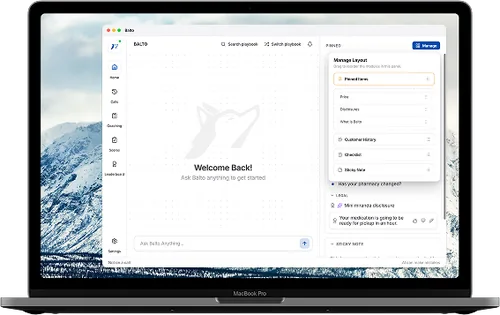
Balto’s real-time guidance platform listens to live calls, analyzes language and sentiment, and instantly surfaces the best next action.
Instead of waiting for post-call feedback, agents get coaching cues as they speak, including reminders to show empathy, confirm resolution, or comply with key talking points.
Here’s how Balto helps call centers boost satisfaction scores:
- Live Coaching: Real-time prompts improve tone, accuracy, and empathy mid-conversation, reducing escalations and repeat calls.
- Instant QA Insights: Supervisors can see which behaviors drive higher CSAT and reinforce them through targeted feedback.
- Data-Driven Consistency: Every agent benefits from the same playbook, ensuring that service quality stays high across shifts, teams, and channels.
- Closed Feedback Loop: Balto connects QA data to coaching outcomes, turning every interaction into a learning opportunity.
The result? Teams using Balto see measurable gains in CSAT, FCR, and compliance, often within the first few weeks.
Agents feel more confident, customers feel more understood, and the entire operation becomes more proactive.

Turn Every Call Into a Better Experience
Delivering great customer satisfaction isn’t about perfection; it’s about presence. Every second your agents spend with a customer is a chance to build trust, loyalty, and long-term value.
With the right mix of coaching, analytics, and real-time support, your call center can transform from reactive problem-solving to proactive experience design.
And with Balto guiding every conversation, improvement becomes immediate and scalable.
FAQs
Call centers can empower agents to resolve issues on the first call, reduce wait times, and personalize every interaction. Continuous coaching, clear communication, and follow-through on feedback are essential.
Leading contact centers also use AI tools to provide real-time guidance that keeps conversations empathetic and efficient.
Key drivers include First Call Resolution (FCR), agent empathy, response time, and accuracy of information. Other factors, such as tone, personalization, and agent morale, also play major roles.
Consistency across teams ensures customers always receive the same high-quality experience.
If you’re wondering how to ensure customer satisfaction, consider how coaching and quality assurance can turn data into effective performance improvements.
Traditional QA identifies issues after calls, while real-time coaching corrects them as they happen. This proactive approach leads to faster resolutions, higher CSAT , and stronger agent confidence.
Likewise, proactive coaching before a call is over makes sure customers get the answers they need before a call is over, improving customer satisfaction in the process.
AI enhances visibility and responsiveness. It can:
- Detect customer sentiment in real time
- Recommend next-best actions for agents
- Identify friction points that lower CSAT
- Automate routine tasks to reduce handling time
By combining these capabilities, AI tools help teams deliver smoother, more personalized interactions that directly lift satisfaction scores.
Blend soft-skills development (empathy, tone, active listening) with technical training (systems, policies, compliance).
Incorporate role-playing, micro-learning, and feedback loops based on real call recordings. Ongoing reinforcement, rather than one-time sessions, keeps skills sharp and consistent across shifts.
Balto listens to live calls and provides real-time prompts that guide agents through difficult conversations.
It flags compliance risks, recommends empathetic phrasing, and helps agents close loops confidently. Supervisors can track trends, coach effectively, and measure improvements, all within the same platform.
The result: higher CSAT, fewer escalations, and happier customers.
Liked what you read? See Balto in action.
Balto helps leading contact centers turn insights into outcomes, in real time. Book a live demo to discover how our AI powers better conversations, coaching, and conversions.