






Automated Agent Performance Tracking: How AI Improves Contact Center Performance


Automated agent performance tracking is transforming how contact centers measure and improve performance.
Instead of relying on manual QA and delayed reports, automated systems continuously monitor agent interactions, analyze performance, and surface insights that help teams improve outcomes at scale.
At a high level, automated agent performance tracking uses AI and analytics to evaluate customer interactions across voice, chat, and digital channels. It captures key metrics like AHT, FCR, CSAT, and compliance, giving managers a complete and up-to-date view of agent performance without manual effort.
Today, these systems generally fall into three categories:
- Post-Interaction QA Tools: Platforms that evaluate calls after they end using scorecards, recordings, and reports.
- AI Analytics Platforms: Tools that analyze interactions at scale to uncover trends, sentiment, and coaching opportunities.
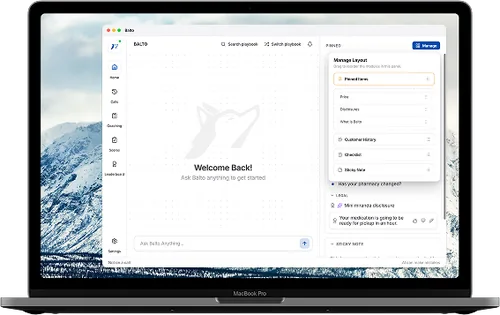
- Real-Time Guidance Platforms: Solutions like Balto that provide live prompts, recommendations, and compliance support during conversations.
Each approach offers value, but only real-time guidance enables teams to improve performance while interactions are still in progress, not after the fact.
In this guide, we’ll break down how automated agent performance tracking works, the key metrics to monitor, the tools that power it, and best practices for implementing a system that drives measurable results.
What Is Automated Agent Performance Tracking?
Automated agent performance tracking is the use of AI and analytics to continuously monitor, evaluate, and improve contact center agent performance across every customer interaction.
Instead of relying on manual reviews or periodic scorecards, these systems capture data from calls, chats, and CRM activity in real time, giving teams immediate visibility into how agents are performing.
This shift is significant. Traditional performance tracking typically reviews only a small percentage of interactions, often days or weeks after they occur. Automated systems, by contrast, evaluate up to 100% of interactions and surface insights instantly.
That means managers can identify issues the moment they arise, rather than discovering them after they’ve already impacted customer experience.
Automated agent performance tracking enables a move from reactive management to proactive optimization. Instead of reviewing what went wrong after the fact, teams can monitor performance in real time, intervene during live interactions, and provide agents with the guidance they need to succeed in the moment.
Why Traditional Performance Tracking Falls Short

Traditional call center agent performance tracking methods were built for a different era of contact centers with lower interaction volumes and less complexity. Today, they struggle to keep up.
Limited Visibility Due to Sampling
Manual QA typically reviews only 1-5% of interactions, leaving the vast majority of customer conversations unexamined and performance issues undetected.
Delayed Insights and Slow Feedback Loops
Performance reviews often happen days or weeks after interactions, making it difficult for agents to connect feedback to specific behaviors or improve in real time.
Heavy Reliance on Manual Efforts
QA teams must listen to calls, score interactions, and compile reports by hand, which limits scalability and introduces inconsistency.
Inconsistent and Subjective Evaluations
Human reviewers may apply scorecards differently, leading to variability in scoring and reduced trust in performance data.
Lack of Real-Time Intervention
Traditional systems can identify what went wrong, but only after the interaction has ended. There’s no ability to intervene while the conversation is still in progress.
Siloed and Fragmented Data
Performance insights are often spread across QA tools , CRM systems, and reporting dashboards, making it difficult to get a unified view of agent performance.
Reactive Instead of Proactive Management
Managers spend more time reviewing past interactions than actively improving live performance, limiting their ability to drive immediate impact.
Difficulty Scaling with Growing Contact Volumes
As contact centers expand across channels and regions, manual tracking approaches become increasingly unsustainable.
How Automated Agent Performance Monitoring Works
Automated agent performance monitoring operates as a continuous system that captures, analyzes, and improves performance across every customer interaction in real time.
💬Automated QA Systems
Automated QA systems evaluate 100% of customer interactions across voice, chat, and digital channels. Instead of relying on manual scorecards , AI automatically transcribes, analyzes, and scores conversations against predefined criteria such as script adherence, compliance, and quality standards.
This ensures consistent, unbiased evaluations at scale, while eliminating the need for time-intensive manual reviews. QA teams can then focus on higher-value analysis rather than routine scoring.
📈AI-Powered Performance Analytics
Once interactions are captured, AI models analyze them to extract deeper insights. This includes detecting customer sentiment, identifying escalation risks, measuring resolution success, and evaluating how effectively agents follow workflows.
These analytics go beyond surface-level metrics, helping teams understand why performance is improving or declining, not just what is happening.
📞Real-Time Agent Monitoring
Unlike traditional systems that operate after the fact, automated monitoring tracks performance as interactions unfold. Managers gain live visibility into conversations, queue activity, and agent behavior through real-time dashboards and alerts.
This enables teams to identify issues immediately, whether it’s a drop in sentiment, a compliance risk, or a struggling agent.
🧑💻Continuous Performance Feedback
Automated systems create ongoing feedback loops by updating performance data after every interaction. Instead of periodic reviews, agents receive a steady stream of insights tied directly to their recent conversations.
This continuous feedback helps reinforce best practices, accelerate skill development, and make coaching more relevant and timely.
🆘Automated Coaching Signals
One of the most powerful capabilities is the ability to surface coaching opportunities automatically. AI can flag moments where an agent missed a step, mishandled an objection, or could have improved the outcome.
In more advanced systems, these signals are delivered in real time, prompting agents with recommended responses, next-best actions, or compliance reminders during live conversations.
Key Metrics for Tracking Agent Performance
To effectively measure agent performance, contact centers rely on a combination of operational, quality, and compliance metrics.
Automated tracking systems ensure these metrics are captured consistently across every interaction, giving teams a complete and accurate view of performance.
Average Handle Time (AHT)
Average Handle Time measures the total time an agent spends on a customer interaction, including talk time, hold time, and after-call work. It’s a key indicator of efficiency, but should be balanced with quality metrics to avoid rushed or incomplete resolutions.
First Call Resolution (FCR)
First Call Resolution tracks the percentage of customer issues resolved during the first interaction, without the need for follow-ups. High FCR is strongly correlated with better customer experience and lower operational costs.
Customer Satisfaction (CSAT)
Customer Satisfaction reflects how customers feel about their interaction, typically measured through post-interaction surveys or AI-driven sentiment analysis. It provides a direct signal of service quality from the customer’s perspective.
Agent Utilization
Agent utilization measures how effectively an agent’s time is spent handling customer interactions versus idle or administrative time. It helps managers understand workforce efficiency and optimize staffing levels.
Quality Assurance Scores
QA scores evaluate how well agents adhere to internal standards, such as communication quality, process compliance, and script adherence. Automated QA systems ensure these scores are applied consistently across all interactions.
Compliance Adherence
Compliance adherence tracks whether agents follow required regulatory and company guidelines during interactions. Automated systems can detect missing disclosures, incorrect language, or risky behavior in real time, helping reduce legal and operational risk.
Benefits and Use Cases of AI-Powered Agent Performance Tracking
AI-powered call center agent performance tracking doesn’t just measure performance. It actively improves it by giving teams real-time visibility, faster insights, and scalable ways to coach and optimize agents across the organization.
Monitoring Live Agent Conversations
AI systems analyze conversations as they happen, giving managers immediate visibility into agent performance. Instead of waiting for post-call reviews, teams can see how interactions are progressing in real time and quickly identify when support is needed.
Detecting Coaching Opportunities Automatically
AI continuously evaluates interactions to identify moments where agents could improve, such as missed steps, weak responses, or ineffective handling of objections. These coaching opportunities are surfaced automatically, allowing managers to prioritize high-impact feedback without manually reviewing calls.
Identifying Performance Gaps Across Teams
By analyzing 100% of interactions, automated systems uncover patterns across agents, teams, and channels. Managers can quickly identify top performers, common challenges, and systemic issues, making it easier to target coaching and improve overall performance.
Tracking Compliance in Real Time
AI can monitor conversations for required disclosures, approved language, and regulatory adherence as interactions unfold. When a risk is detected, the system can flag it immediately or prompt corrective action, helping organizations reduce compliance risk before it escalates.
Improving Onboarding and Training
Automated performance data provides clear insights into where new agents struggle and what top performers do differently. This enables more targeted onboarding programs, faster ramp times, and training that is grounded in real interaction data rather than assumptions.
Together, these capabilities shift performance tracking from a passive reporting function into an active system for continuous improvement. To deliver this in practice, organizations rely on specialized tools that combine real-time monitoring, AI analytics, and in-the-moment guidance for agents.
Tools That Enable Automated Performance Monitoring
Tools That Enable Automated Performance Monitoring
| QA Tools | AI Analytics Platforms | Real-Time Guidance | |
|---|---|---|---|
| Real-time performance monitoring | |||
| AI-driven insights and analytics | |||
| Live coaching during interactions | |||
| Immediate performance improvement | |||
| Compliance support in real time |
Not all agent performance tracking tools are designed to solve the same problem. While many platforms offer analytics and reporting, only a subset are built to actively improve performance as interactions happen.
To understand how automated performance monitoring works in practice, it’s helpful to break the landscape into three categories: post-interaction QA tools, AI analytics platforms, and real-time guidance systems.
Post-Interaction QA and Analytics Tools
These tools focus on evaluating agent performance after interactions are complete. They typically use speech analytics, scorecards, and dashboards to assess quality, compliance, and efficiency.
Common capabilities include:
- Call recording and transcription
- Automated QA scoring
- Performance dashboards and reports
Platforms in this category help teams understand what happened, but only after the fact. While they improve visibility compared to manual QA, they still operate on delayed feedback loops, limiting their ability to drive immediate performance improvements.
AI Performance Analytics Platforms
AI-driven analytics platforms go a step further by using machine learning to uncover patterns and insights across interactions. They can detect sentiment, identify trends, and highlight coaching opportunities at scale.
Common capabilities include:
- Sentiment and intent analysis
- Trend identification across teams and channels
- Automated performance insights and recommendations
These platforms provide deeper, more actionable insights than traditional QA tools. However, most still focus on analyzing completed interactions, meaning insights are delivered after the customer experience has already been impacted.
Real-Time Guidance Platforms

Real-time guidance platforms represent the next evolution of agent performance tracking. Instead of analyzing performance after interactions, they actively support agents during live conversations.
These systems listen to interactions as they happen and provide dynamic prompts, recommended responses, and compliance guidance in the moment.
Key capabilities include:
- Live call monitoring and transcription
- In-the-moment prompts and next-best actions
- Real-time compliance guidance
- Dynamic scripting and objection handling support
This fundamentally changes how performance is managed. Rather than identifying issues after the fact, teams can guide agents toward better outcomes while the interaction is still in progress.
Best Practices for Implementing Automated Performance Management
Implementing automated agent performance tracking is not just about selecting the right tools. To get meaningful results, organizations need to align technology, workflows, and coaching strategies around continuous improvement.

Start with Clear Performance Metrics
Before introducing automation, define the metrics that matter most to your operation. Focus on a balanced set of KPIs, such as AHT, FCR, CSAT, quality scores, and compliance adherence.
Clear metrics ensure that automated systems are aligned with business goals and that performance insights are actionable, not just informational.
Align QA, Operations, and Coaching Teams
Automated performance management works best when QA, operations, and coaching teams are aligned around a shared framework. This includes consistent scorecards, clear expectations, and coordinated workflows for reviewing and acting on performance data.
Alignment reduces silos and ensures that insights lead to real improvements across the organization.
Leverage Real-Time Monitoring for Immediate Impact
One of the biggest advantages of automation is the ability to act in real time. Use live monitoring and alerts to identify issues as they occur and intervene during interactions when possible.
This allows teams to improve outcomes immediately, rather than waiting for post-call reviews.
Focus on Continuous Feedback, Not Periodic Reviews
Shift away from weekly or monthly performance reviews toward continuous feedback loops. Automated systems can deliver insights after every interaction, making feedback more timely and relevant.
This helps agents build skills faster and reinforces best practices in the moment.
Prioritize High-Impact Coaching Opportunities
With access to 100% of interactions, it’s important to focus coaching efforts where they will have the greatest impact. Use AI-driven insights to identify recurring issues, high-risk interactions, and moments that directly affect key metrics.
This ensures that coaching is targeted, efficient, and tied to measurable outcomes.
Integrate with Existing Systems
To maximize value, automated performance tracking should integrate with your existing CCaaS platform, CRM, and workforce management tools. This creates a unified view of agent performance and reduces friction in day-to-day operations.
Strong integrations also make it easier to act on insights without switching between systems.
Continuously Refine and Optimize
Automated performance management is not a one-time implementation. Regularly review metrics, adjust scorecards, and refine workflows based on new data and evolving business needs.
Over time, this creates a system that becomes more accurate, more effective, and more aligned with your organization’s goals.
Balance Automation with Human Oversight
While automation improves consistency and scale, human judgment remains critical. Managers and QA leaders should use automated insights as a foundation, while still applying context, coaching expertise, and strategic decision-making.
This balance ensures that performance management remains both data-driven and human-centered.
Tie Performance Tracking to Business Outcomes
Finally, connect performance metrics to broader business goals such as customer retention, revenue, and operational efficiency. This helps demonstrate ROI and ensures that performance management is seen as a strategic function, not just an operational one.
Agent Performance Tracking Best Practices Checklist
Use this checklist to assess whether your contact center is set up to get real value from automated performance management.
Turn Performance Tracking Into Real-Time Performance Improvement
Automated agent performance tracking is no longer just about measuring what happened. The real value comes from improving performance as it happens.
By combining automated QA, AI-driven analytics, and real-time monitoring, contact centers can move beyond delayed insights and fragmented reporting. Instead, they gain a continuous system for identifying issues, coaching agents, and improving outcomes across every interaction.
For organizations looking to scale performance, improve consistency, and deliver better customer experiences, this approach is quickly becoming the standard.
FAQs
Automated agent performance tracking uses AI and analytics to continuously monitor, evaluate, and improve agent performance across customer interactions without relying on manual reviews.
Contact centers use AI-powered tools to analyze calls, chats, and CRM data, automatically tracking metrics like AHT, FCR, CSAT, and compliance in real time.
Common metrics include Average Handle Time (AHT), First Call Resolution (FCR), Customer Satisfaction (CSAT), agent utilization, QA scores, and compliance adherence.
Agent monitoring focuses on observing interactions, while performance management uses that data to drive coaching , improvement, and business outcomes.
AI enables real-time analysis, automates QA scoring, detects patterns, and surfaces coaching opportunities, making performance tracking faster and more scalable.
Automated systems can handle most QA tasks at scale, but human oversight is still important for context, coaching, and strategic decision-making.
Tools include QA platforms, AI analytics solutions, and real-time guidance systems like Balto that support agents during live interactions.
Managers can use AI insights to identify high-impact coaching moments, prioritize feedback, and deliver more targeted, data-driven coaching.
By identifying issues, improving agent behavior, and enabling faster resolutions, performance tracking leads to higher CSAT and better overall experiences.
Benefits include faster insights, improved coaching, increased efficiency, better compliance, and the ability to scale performance management across teams.
Liked What You Read? See Balto in Action.
Balto helps leading contact centers turn insights into outcomes, in real time. Book a live demo to discover how our AI powers better conversations, coaching, and conversions.