









Top 8 Best Tools for Tracking Agent Performance (2026 Guide)


Agent performance tracking tools are software platforms that monitor, analyze, and improve how agents handle customer conversations.
The best tools for tracking agent performance in 2026 go beyond basic reporting and toward real-time, AI-powered performance improvement, helping contact centers not just measure agent performance, but actively improve it during live customer interactions.
Here are some of the top solutions contact centers are using today:
- Balto , the AI Workforce for the contact center: A closed-loop system connecting guidance, QA, coaching, and insights to continuously improve agent performance on every call
- NICE CXone: Offers a comprehensive workforce optimization suite with analytics and performance tracking
- Observe.AI: Uses AI to automate QA and surface insights from customer conversations
- Verint: Delivers enterprise-grade analytics and performance management across channels
- CallMiner: Specializes in deep conversation analytics and voice-of-customer insights
- Five9: Combines CCaaS infrastructure with real-time dashboards and reporting
- Scorebuddy: Focuses on QA scorecards and structured evaluation workflows
- AmplifAI: Connects performance data to coaching, incentives, and agent engagement
Each of these tools takes a different approach to performance tracking, from post-call analytics to real-time guidance. In this guide, we’ll break down how they compare, what to look for in a platform, and how to choose the right solution for your contact center.
What Is Agent Performance Tracking?
Agent performance tracking is the process of measuring, analyzing, and improving how contact center agents handle customer interactions across channels.
It combines operational metrics, conversation data, and behavioral insights to give managers a clear view of how agents are performing and where they need support.
While manual evaluation methods were traditionally used, modern agent performance tracking tools use AI to analyze 100% of interactions in real time.
Instead of relying on delayed scorecards , these platforms continuously evaluate conversations as they happen, surfacing insights on customer sentiment, compliance risks, and agent behavior. This shift turns performance tracking from a retrospective exercise into a proactive, operational system.
Agent Performance Tracking vs. QA vs. Monitoring
While these terms are often used interchangeably, they serve different roles in the contact center:
- Quality Assurance (QA) focuses on evaluation. It involves scoring interactions to assess whether agents followed scripts, met compliance standards, and delivered quality service. QA is typically retrospective.
- Call Monitoring focuses on visibility. Managers listen to live or recorded calls to understand what’s happening in individual interactions. It’s useful for spot-checking but doesn’t scale across the entire operation.
- Agent Performance Tracking is broader and more strategic. It aggregates data across all interactions, tracks key metrics like AHT, FCR, and CSAT, and connects performance insights directly to coaching and improvement workflows.
In other words, QA and monitoring tell you what happened. Agent performance tracking helps you understand why it happened and what to do next.
Why Performance Tracking Matters for Contact Centers
Agent performance tracking is about creating a system that continuously improves how your contact center operates. When done well, it directly impacts efficiency, agent development, and customer outcomes.
Here’s where it makes the biggest difference:
Faster Agent Onboarding
New agents ramp faster when performance tracking tools provide clear, data-driven feedback from day one. Instead of relying solely on training sessions or shadowing, managers can see exactly where agents struggle and intervene early.
AI-powered platforms take this further by guiding agents during live interactions, helping them learn in context. This shortens the time to proficiency and reduces the risk of early-stage mistakes.
Improved Coaching Effectiveness
Traditional coaching is often based on limited QA samples and subjective feedback. Performance tracking changes that by giving managers a complete, objective view of agent behavior across all interactions.
With access to trends, recurring issues, and specific examples, coaching becomes more targeted and actionable. Managers can zoom in on the highest-impact improvements instead of guessing where support is needed.
Reduced Handle Time
When agents have better visibility into what works, and receive real-time support when they need it, conversations become more efficient.
Performance tracking tools help identify friction points, such as long pauses, repeated explanations, or ineffective call flows. Addressing these issues leads to shorter interactions without sacrificing quality.
Increased First Call Resolution (FCR)
By surfacing the right information at the right time, performance tracking tools help agents resolve issues on the first interaction.
AI-driven insights can highlight when customers are at risk of repeat contact, while real-time guidance ensures agents follow best practices. The result is fewer callbacks, lower operational costs, and higher customer satisfaction.
Better Customer Experience
Ultimately, performance tracking ties directly to the customer experience. When agents are better trained, better supported, and more consistent, customers notice.
Faster resolutions, fewer errors, and more confident interactions lead to higher CSAT and stronger brand trust. Instead of reacting to problems after they happen, contact centers can proactively shape better outcomes in every conversation.
Key Metrics Used to Track Agent Performance
To improve agent performance, you need to measure it consistently and accurately. The most effective contact centers track a mix of efficiency, quality, and compliance metrics to get a full picture of how agents are performing.
No single metric tells the whole story. The real value comes from combining these data points to understand both how agents perform and why.
Modern performance tracking tools bring these metrics together into a unified view, making it easier to identify trends, spot issues early, and drive continuous improvement.
📈 Top 8 Best Tools for Tracking Agent Performance (Top Platforms)
📈 Top 8 Best Tools for Tracking Agent Performance (Top Platforms)
| Tool | Real-Time Performance Monitoring | AI-Driven Insights & Analytics | Coaching & Performance Improvement | CCaaS Integrations | Ease of Implementation |
|---|---|---|---|---|---|
| Balto | |||||
| NICE CXone | |||||
| Observe.AI | |||||
| Verint | |||||
| CallMiner | |||||
| Five9 | |||||
| Scorebuddy | |||||
| AmplifAI |
The best tools for tracking agent performance in 2026 go beyond dashboards and scorecards. While traditional platforms lean on reporting what happened after an interaction, newer solutions use AI to analyze performance in real time and actively improve outcomes as conversations unfold.
Below are the top tools contact centers are using to track and improve agent performance, from enterprise workforce optimization suites to AI-powered coaching platforms.
1. Balto

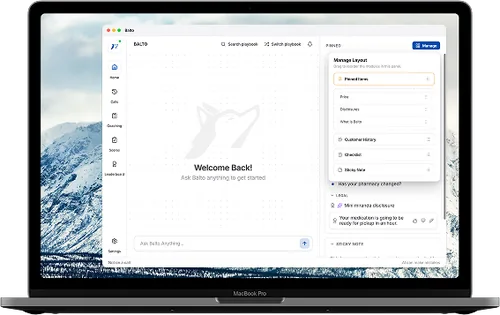
Balto is the AI Workforce for the contact center, a closed-loop system where real-time guidance, automated QA, coaching, and insights run on shared standards and get smarter with every call. Rather than tracking performance after interactions end, Balto connects what happens on a live call to QA scoring, targeted coaching, and BaltoGPT insights, so the entire operation improves continuously.
This connected approach makes Balto fundamentally different from traditional performance tracking tools. What agents do on calls informs QA scores. QA scores trigger coaching. Coaching results feed back into what Balto surfaces in real time on the next call. The loop closes, and performance compounds.
As a result, teams see improvement across metrics like AHT, FCR, and CSAT, not just in isolated coaching sessions but across every conversation the team handles.
2. NICE CXone

NICE CXone is a comprehensive cloud contact center platform that combines workforce optimization, analytics, and performance management into a single system. It helps organizations track agent performance through real-time dashboards, automated quality management, and AI-driven insights across customer interactions.
The platform is particularly strong for enterprises that need a centralized view of performance across teams, channels, and regions. However, while NICE CXone offers monitoring and post-interaction analysis, its approach is targeted towards tracking and optimizing performance at scale rather than improving agent behavior in the moment.
3. Observe.AI

Observe.AI is an AI-powered conversation intelligence platform that helps contact centers track agent performance through automated quality assurance, speech analytics, and coaching insights. It analyzes customer interactions to identify trends in agent behavior, customer sentiment, and compliance.
The platform is particularly effective for teams looking to scale QA and uncover coaching opportunities across large volumes of conversations. Its strength lies in post-interaction analysis and QA automation and it is designed to surface performance insights and coaching opportunities rather than consistently guide agents during live conversations.
4. Verint

Verint is an enterprise customer engagement and workforce optimization platform that helps contact centers track agent performance through analytics, quality management, and compliance monitoring. It provides a centralized view of performance across interactions, channels, and teams, with strength in operational visibility and risk management.
The platform is best for organizations that need deep analytics and compliance. But like many legacy enterprise solutions, its approach is largely centered on analyzing performance after interactions occur rather than improving behavior in real time.
5. CallMiner

CallMiner is a conversation analytics platform that helps contact centers track agent performance through speech and text analysis, customer sentiment tracking, and operational insights. It processes large volumes of interactions to identify patterns in agent behavior, customer issues, and performance trends over time.
The platform is strong for organizations looking to understand the “why” behind performance metrics, such as recurring customer pain points or common agent mistakes. Its focus is on post-interaction analysis and trend identification, rather than influencing agent behavior during live conversations.
6. Five9

Five9 is a cloud contact center platform (CCaaS) that helps organizations track agent performance through real-time dashboards, reporting, and AI-driven insights. It provides visibility into key metrics like handle time, queue performance, and agent activity across voice and digital channels.
The platform is suited for teams that want performance tracking embedded directly into their contact center infrastructure. While Five9 offers strong real-time visibility and reporting, its capabilities are more geared towards monitoring performance than actively guiding agent behavior during live interactions.
7. Scorebuddy

Scorebuddy is a quality assurance platform designed to help contact centers track agent performance through customizable scorecards, evaluation workflows, and coaching tools. It enables teams to assess agent interactions against defined criteria and monitor performance trends over time.
The platform is best for organizations looking to standardize QA processes and improve evaluation consistency. However, its approach is primarily centered on manual and structured performance reviews, rather than continuous AI-driven tracking or real-time performance improvement during live interactions.
8. AmplifAI

AmplifAI is an AI-driven performance management platform that helps contact centers track and improve agent performance through analytics, coaching workflows, and gamification. It aggregates data from multiple systems to provide a unified view of agent performance across metrics like AHT, FCR, and CSAT.
The platform is effective for teams looking to operationalize performance data through structured coaching and incentive programs. But while AmplifAI excels at turning insights into action over time, it is tailored for performance management workflows rather than influencing agent behavior during live interactions.
How to Choose the Right Agent Performance Tracking Platform
Not all agent performance tracking tools are built for the same purpose. The right choice depends on what you’re trying to solve.
Here’s a practical framework to guide your decision:
1. Define Your Primary Objective
Start by identifying what you actually need to improve.
- If your goal is visibility, prioritize tools with strong dashboards and reporting
- If your goal is quality and compliance, look for QA and evaluation capabilities
- If your goal is performance improvement, focus on platforms that support coaching and behavior change
- If your goal is real-time impact, prioritize tools that provide in-the-moment guidance
2. Evaluate Real-Time vs. Post-Interaction Capabilities
One of the biggest differences between platforms is when they deliver value.
- Post-interaction tools analyze calls after they happen and surface insights for later coaching
- Real-time tools support agents during live interactions, helping them adjust in the moment
3. Assess AI Capabilities
Modern performance tracking platforms rely heavily on AI, but not all AI is used the same way. Look for tools that can:
- Analyze 100% of interactions, not just a sample
- Detect sentiment, compliance risks, and performance patterns
- Surface clear, actionable insights
- Support coaching workflows or real-time guidance
4. Consider Coaching and Improvement Workflows
Tracking performance is only valuable if it leads to improvement. Evaluate whether the platform:
- Connects insights directly to coaching actions
- Helps managers prioritize what to coach
- Supports structured feedback and development
- Enables agents to improve during or between interactions
5. Check Integration with Your Existing Stack
Agent performance tracking tools need to work within your existing environment. Make sure the platform integrates with:
- Your CCaaS platform
- CRM systems
- Workforce management tools
- Knowledge bases and internal systems
6. Evaluate Ease of Implementation and Adoption
Even the best tool won’t deliver value if it’s difficult to deploy or adopt. Consider:
- Implementation timelines and required resources
- Ease of use for agents and managers
- Training and onboarding requirements
- Ongoing maintenance and configuration
7. Match the Platform to Your Team Size and Complexity
Different tools are built for different environments.
- Enterprise teams may need scalable platforms with advanced analytics and multi-region support
- Mid-sized teams may benefit from focused tools that are easier to deploy
- Specialized teams may prioritize specific capabilities like QA, analytics, or real-time guidance
From Measuring Agent Performance to Improving It in Real Time
The best agent performance tracking platforms in 2026 are redefining the category by combining AI, automation, and real-time insights to help contact centers improve performance as it happens.
Ultimately, the right platform depends on your goals, your team, and your operating model. But for organizations looking to move faster, improve consistency, and elevate the customer experience, the shift toward real-time performance improvement is becoming less of an advantage and more of a necessity.
FAQs
Agent performance tracking tools are software platforms that measure, analyze, and improve how contact center agents handle customer interactions using metrics , analytics, and AI-driven insights.
Companies track performance using metrics like AHT, FCR , and CSAT, along with QA evaluations, analytics dashboards, and increasingly AI tools that analyze conversations and provide insights.
Top tools include Balto, NICE CXone, Observe.AI, Verint, CallMiner, Five9, Scorebuddy, and AmplifAI, each offering different strengths across real-time guidance, analytics, and performance management.
Common metrics include average handle time (AHT), first call resolution (FCR), customer satisfaction (CSAT), QA scores, agent utilization , and compliance adherence.
AI tools analyze 100% of interactions, detect patterns and risks, automate QA, and provide real-time or post-call insights to improve coaching and decision-making.
They give managers visibility into agent performance, highlight coaching opportunities, track trends, and help prioritize actions to improve team outcomes.
Key features include real-time monitoring, AI-driven insights, QA automation, coaching workflows, integrations, and ease of use.
Yes, many platforms are designed to scale across large teams, offering enterprise-grade analytics, integrations, and performance management capabilities.
Implementation can range from a few weeks to several months, depending on the platform, integrations, and organizational complexity.
ROI typically comes from reduced handle time, higher first call resolution, improved customer satisfaction, and more efficient coaching and operations.
Liked What You Read? See Balto in Action.
Balto helps leading contact centers turn insights into outcomes, in real time. Book a live demo to discover how our AI powers better conversations, coaching, and conversions.