














Call Deflection Rate: What It Is, How to Calculate It, and How to Improve It


Every call your contact center deflects to self-service is a win for both your team and your customers.
But call deflection isn’t about dodging support: it’s about solving problems faster, smarter, and more efficiently.
With AI-powered tools like Balto , contact centers can boost deflection rates while still delivering top-tier customer experiences.
So, what is call deflection rate, exactly?
It’s the percentage of customer inquiries resolved through self-service channels without needing a live agent. It shows how effectively your digital tools handle incoming requests before they reach your team.
The call deflection rate formula is calculated as:
Call Deflection Rate (%) = (Self Service Resolutions / Total Customer Inquiries) x 100
For example, if your contact center handles 10,000 inquiries and 3,500 are resolved through self-service, your call deflection rate is 35%.
Call deflection rate is critical because it:
- Reduces operational costs by minimizing live call volume.
- Frees up agents to focus on complex, high-value interactions.
- Improves customer experience with faster, on-demand solutions.
- Scales support capacity without increasing headcount.
- Provides data-driven insights for continuous self-service optimization.
Common call challenges and how to overcome them include:
- Poor self-service content → Regular audits and updates.
- Clunky IVR menus → Simplified, intuitive call flows.
- Limited chatbot capabilities → AI-powered NLP solutions.
- Lack of proactive support → Automated notifications and outreach.
- Siloed support channels → Unified omnichannel strategies.
In this guide, we’ll break down everything you need to know about call deflection rate: how to measure it, why it’s critical, and which solutions can help you maximize its impact.
What is Call Deflection Rate?

Call deflection rate measures how effectively a contact center resolves customer inquiries through self-service channels like chatbots, knowledge bases, and IVR systems without involving a live agent.
In simple terms, it shows the percentage of interactions that are successfully “deflected” from phone calls or live chats to automated solutions.
Call Containment vs. Call Deflection Meaning
While the terms call deflection and call containment are often used interchangeably, they refer to two distinct strategies in contact center operations.
Both aim to reduce the need for live agent intervention, but they do so at different stages of the customer journey:
- Call deflection happens before a customer reaches a live agent. It redirects inquiries to self-service channels like chatbots, virtual assistants, knowledge base articles, or proactive support messages.
- Call containment occurs after a customer has entered an automated system but before they speak to a live agent. It’s about “containing” the inquiry within self-service by successfully resolving the issue through IVR, voice bots, or non-human guidance systems.
In short:
- Deflection = Prevents the call from happening
- Containment = Prevents the call from reaching an agent after it’s already been initiated
Both strategies are critical for reducing operational costs and streamlining customer support, but the meaning of call deflection in a contact center implies a more proactive approach, enhancing customer convenience and reducing friction upfront.
Why Call Deflection Matters in Contact Centers
Call deflection isn’t just a cost-saving tactic — it’s a strategic approach to scaling customer support, enhancing service and quality assurance , and boosting overall contact center efficiency.
By resolving routine inquiries through self-service channels, contact centers can focus their live agents on high-value, complex interactions that require a human touch.
Here are five reasons why improving your call deflection rate is critical:
1. Reduce Operational Costs
Handling customer inquiries through self-service is significantly more cost-effective than live agent interactions.
Every deflected call saves time and resources, helping contact centers manage higher volumes without proportional staffing increases.
2. Improve Agent Productivity and Morale
When agents aren’t bogged down by repetitive, low-complexity inquiries, they can dedicate more time to solving complex problems.
This not only improves resolution rates but also boosts agent satisfaction by giving them more engaging and meaningful work.
3. Enhance Customer Experience (CX)
Customers expect fast, convenient solutions.
A strong call deflection strategy allows them to resolve simple issues quickly through self-service, reducing wait times and eliminating the need to repeat information across channels.
4. Scale Support Without Sacrificing Quality
As your business grows, the volume of customer interactions scales up.
Effective call deflection enables you to handle increased demand without compromising service levels or incurring excessive labor costs.
5. Drive Continuous Improvement
Tracking deflection rates provides actionable insights into where customers need better self-service options or content.
Over time, this data helps you refine your knowledge base, chatbot flows, and overall customer support strategy.
Call Deflection Rate Formula and Examples
Understanding how to calculate call deflection rate is key to tracking the effectiveness of your self-service initiatives.
The formula is simple but provides powerful insights into how many customer inquiries are successfully resolved without agent intervention.
Call Deflection Rate Formula

Call Deflection Rate is a percentage calculated by taking the total number of inquiries resolved through self-service and dividing it by the total number of inquiries.
This number is then multiplied by 100 to arrive at a final percentage.
Call Deflection Rate (%) = (Self Service Resolutions / Total Customer Inquiries) x 100
Example Call Deflection Rate Calculation
Let’s say your contact center receives 10,000 customer inquiries in a month. Of these, 3,500 are resolved through self-service channels like chatbots, FAQs, or IVR systems.
Your Call Deflection Rate formula would be (3,500 / 10,000) x 100, which equals 35%
This means that 35% of customer issues were successfully deflected away from live agents, reducing workload and operational costs.
Call Center Deflection Rate Benchmarks
Wondering what a solid call deflection rate looks like?
According to industry research cited by consulting firm DB Kay & Associates, a good call deflection rate typically falls a bit below 50% . Leading organizations with mature self-service ecosystems can achieve rates above 50%, depending on industry and inquiry complexity.”
As an example, Verizon was able to increase its call deflection rate to 85% after implementing advanced self-service capabilities.
Keep in mind that rates vary by industry, inquiry complexity, and digital channel adoption.
Call Center Deflection Rate Calculator
What’s your call deflection rate?
Use the interactive calculator to enter your total call volume alongside your self-service resolution count to see your call deflection rate percentage.
Which Solutions Can Be Used to Improve Call Deflection?
If you’re wondering which solutions can be used to improve call deflection rate in your contact center, the answer will require a combination of the right technologies , strategic content, and proactive customer engagement.
Below are key solutions that can significantly boost deflection by empowering customers to resolve their own issues quickly and conveniently.

🤖 AI-Powered Chatbots
Modern chatbots go beyond basic scripts.
With AI and natural language processing (NLP), they can understand customer intent, answer complex questions, and even escalate to human agents when necessary.
Chatbots are often the first line of defense for deflecting inquiries before they reach the contact center.
📖 Robust Knowledge Base & FAQ Portals
An up-to-date, searchable knowledge base allows customers to find answers on their own.
Pairing articles with visual guides, how-to videos, and contextual FAQs can reduce the need for direct support significantly.
📞 Interactive Voice Response (IVR) Systems
An optimized IVR system helps route calls to self-service solutions before engaging a live agent.
Advanced IVR can handle tasks like account lookups, order status, or password resets, directly within the automated flow.
💬 Proactive Support Tools
Proactive call center deflection involves reaching out to customers with solutions before they initiate contact. Examples include:
- Automated email or SMS updates (e.g., delivery status)
- In-app notifications with troubleshooting tips
- Help links embedded in confirmation pages
🧑💻 Real-Time Agent Assist
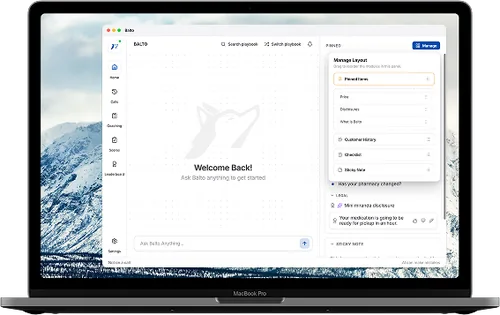
Platforms like Balto provide real-time agent assist solutions that improve deflection rates by providing agents with real-time guidance to promote self-service channels when appropriate.
This ensures inquiries that could have been deflected are handled more efficiently moving forward.
👍 Omnichannel Support Integration
Providing seamless support across channels (chat, email, SMS, social) with a unified customer history ensures that deflection doesn’t disrupt the customer journey.
The more effortless the transition between self-service and assisted service, and the farther along you are on your digital transformation journey, the higher the deflection success rate.
📲 Self-Service Mobile Apps & Portals
Dedicated apps or customer portals where users can manage accounts, track orders, or troubleshoot issues without needing to call are highly effective deflection tools, especially for tech-savvy customers.
Measure and Track Deflection Rate in Your Call Center
Improving your call deflection rate starts with accurate measurement.
By consistently tracking this KPI, you gain valuable insights into how well your self-service solutions are performing and where optimization opportunities exist.
But in order to reliably measure call deflection rate, you’ll need to measure a couple of other key metrics as well:
- Call Deflection Rate (%): Tracks the percentage of inquiries successfully resolved without agent assistance.
- Self-Service Success Rate: Measures how often customers resolve their issues via self-service on their first attempt.
- Containment Rate: Specifically measures inquiries that enter IVR or chatbot flows and are fully resolved without agent escalation.
- Deflection Failure Rate: Tracks instances where customers attempt self-service but still require live agent support.
How can you track these metrics? Here are our recommended best practices:
- Use Analytics Dashboards: Leverage your contact center platform’s analytics tools to monitor deflection performance across channels in real time.
- Tag Self-Service Interactions: Clearly differentiate between inquiries resolved via FAQs, chatbots, IVR, or agent interactions in your reports.
- Survey Post-Interaction Satisfaction: Quick customer surveys post-self-service can reveal qualitative insights about usability and content gaps.
- Set Benchmarks by Channel: Call center deflection rates will vary across IVR, chatbots, and knowledge bases. Establish benchmarks for each to track channel-specific improvements.

Common Challenges with Call Deflection Rate and How to Overcome Them
While the benefits of a high call deflection rate are clear, many contact centers face challenges when implementing and optimizing call deflection strategies.
Here are some of the most common obstacles and how to overcome them.
1. Poor Self-Service Content Quality
❌ Challenge: Outdated, incomplete, or hard-to-find knowledge base articles frustrate customers and drive them back to live support.
✅ Fix: Regularly audit and update your self-service content. Use customer feedback and analytics to identify missing topics or unclear instructions.
2. Overcomplicated IVR Menus
❌ Challenge: Complex or confusing IVR trees increase customer frustration, leading to more zero-outs (pressing “0” to reach an agent).
✅ Fix: Simplify IVR flows to prioritize common inquiries. Test the system from a user perspective to ensure quick, intuitive navigation.
3. Chatbots That Can’t Handle Complex Queries
❌ Challenge: Rigid or poorly trained chatbots can deflect simple inquiries but fail to address more nuanced issues, leading to failed deflections.
✅ Fix: Invest in AI-powered chatbots with natural language processing (NLP) and continuous learning capabilities. Make escalation paths to live agents seamless when necessary.
4. Lack of Proactive Support
❌ Challenge: Waiting for customers to reach out instead of proactively addressing known issues limits deflection opportunities.
✅ Fix: Implement proactive outreach strategies like automated status updates, help center prompts, or in-app notifications to resolve issues before they escalate to calls.
5. Disconnected Support Channels
❌ Challenge: When self-service and live support are siloed, customers often repeat information, creating friction and failed deflection attempts.
✅ Fix: Adopt an omnichannel approach where customer history and interactions are unified across all platforms. Ensure self-service transitions to live support are smooth and contextual.
The Future of Call Deflection in AI-Powered Contact Centers
As customer expectations for speed and convenience continue to rise, call deflection will play an even more critical role in contact center strategies.
The future of call deflection isn’t just about offloading calls, it’s about creating seamless, intelligent customer journeys where self-service feels effortless and personalized.
Here are some of the key trends shaping the future of contact center customer service:
Conversational AI Will Lead the Frontline
Advanced chatbots and voice assistants powered by Artificial Intelligence and Natural Language Understanding (NLU) will handle increasingly complex inquiries, bridging the gap between human-like conversations and automated efficiency.
Proactive, Predictive Support Will Become Standard
AI-driven insights will allow contact centers to anticipate customer needs and resolve issues before a support request is ever made.
Agent-Assisted Deflection Will Gain Traction
Solutions like Balto’s Real-Time Agent Assist will ensure agents consistently promote self-service options when appropriate, turning live conversations into learning loops that improve call deflection strategies.
Unified Omnichannel Deflection
Successful call deflection strategies will span across channels, ensuring customers have a consistent and connected experience whether they’re engaging via chat, voice, email, or social media.
Deflection Will Be a Key Driver of Customer Satisfaction
Rather than viewing deflection purely as a cost-saving measure, contact centers will leverage it as a tool to deliver faster resolutions, reduce friction, and enhance overall customer experience .
In this AI-powered future, call deflection is no longer about avoiding customer contact: it’s about empowering customers with the right answers, in the right place, at the right time.
FAQs
Call deflection is the process of redirecting customer inquiries from live agents to self-service channels such as chatbots, IVR systems, or knowledge bases in order to resolve issues more efficiently and reduce contact center workload.
Call deflection redirects inquiries to self-service channels before reaching a live agent.
Call containment, on the other hand, resolves inquiries within automated systems (like IVR or chatbots) after the customer initiates contact but before escalation to an agent.
Call deflection rate is calculated using the formula:
Call Deflection Rate (%) = (Self-Service Resolutions / Total Customer Inquiries) × 100
It measures the percentage of customer inquiries successfully resolved without agent intervention.
A good call deflection rate typically falls between 20% and 40% for most contact centers.
High-performing organizations with advanced self-service strategies can achieve deflection rates of 50% or higher, depending on industry and inquiry complexity.
You can improve call deflection by:
- Enhancing chatbot and IVR capabilities with AI.
- Maintaining an up-to-date, searchable knowledge base.
- Offering proactive support via emails, notifications, and in-app prompts.
- Training agents to promote self-service options during live interactions.
- Continuously analyzing deflection failures to refine content and workflows.
Key tools for improving call deflection include:
- AI-powered chatbots and virtual assistants
- Interactive Voice Response (IVR) systems
- Self-service knowledge bases and FAQ portals
- Proactive messaging platforms
- AI-enabled solutions like Balto
Common challenges include:
- Poor self-service content quality
- Overly complex IVR menus
- Chatbots with limited capabilities
- Lack of proactive customer support
- Disconnected support channels
- Resistance from customers or agents to adopt self-service
Effective digital channels for call deflection include:
- AI chatbots and live chat widgets
- Knowledge bases and FAQ portals
- IVR self-service menus
- Mobile apps with account management features
- Automated email and SMS updates
A high call deflection rate improves customer satisfaction by providing faster resolutions, reducing wait times, and offering 24/7 support availability.
However, success depends on the quality and usability of self-service options. Poorly designed systems can harm customer experience.
Companies prioritize call deflection in order to:
- Lower operational costs
- Free up agents for complex inquiries
- Scale support capacity efficiently
- Improve customer experience with faster, on-demand solutions
- Gain actionable insights from self-service interactions
Liked what you read? See Balto in action.
Balto helps leading contact centers turn insights into outcomes, in real time. Book a live demo to discover how our AI powers better conversations, coaching, and conversions.