Thinking of Making the Jump to Voice AI Agents? Here's What You'll Want to Know
Thinking about making the leap to AI voice agents? Join us for a practical look at what today’s voice agents can actually do and what it takes to deploy them successfully. We’ll break down real-world capabilities, common pitfalls, and how modern AI voice agents integrate with enterprise platforms to deliver a reliable, transparent, and scalable customer experience.
Voice AI agents are no longer a novelty
Voice AI agents have come a long way. The question now isn’t “Can they talk?” but “Can they deliver reliable outcomes, integrate into your operations, and scale without becoming a black box?”
Early voice AI agents focused on sounding natural. Today, customer expectations have shifted. Organizations want voice AI agents that can solve real contact center problems, not just hold a conversation.
The best voice AI agents today are designed to deliver measurable outcomes like:
- Faster intake and data collection
- Higher conversion or qualification rates
- Better routing and triage
- Reduced after-hours missed opportunities
- Lower agent workload and call handle time
AI agents can handle repetitive tasks, collect information quickly, and support smoother handoffs while human agents focus on nuance, empathy, and complex problem-solving.
The Strongest Voice AI Use Cases Have Clear Things in Common
Successful voice AI deployments tend to start with workflows where AI can reliably:
- Collect structured information (intake, forms, qualification)
- Answer common questions with guardrails
- Route or transfer intelligently
- Trigger actions in connected systems (CRMs, scheduling tools, etc.)
The biggest wins usually come from automating the repetitive “dead time” at the start of calls that customers hate and contact centers pay heavily for.
Most Voice AI Deployments Fail for Three Reasons
Even when voice AI agents sound great, teams often struggle to scale because:
- Leaders can’t clearly see how the AI is performing
- AI tools live outside the contact center platform
- Teams can’t easily review, tune, or improve AI behavior
In other words: the agent works but it feels impossible to manage.
Modern Voice AI Must Live Inside the Same Workflows Humans Use
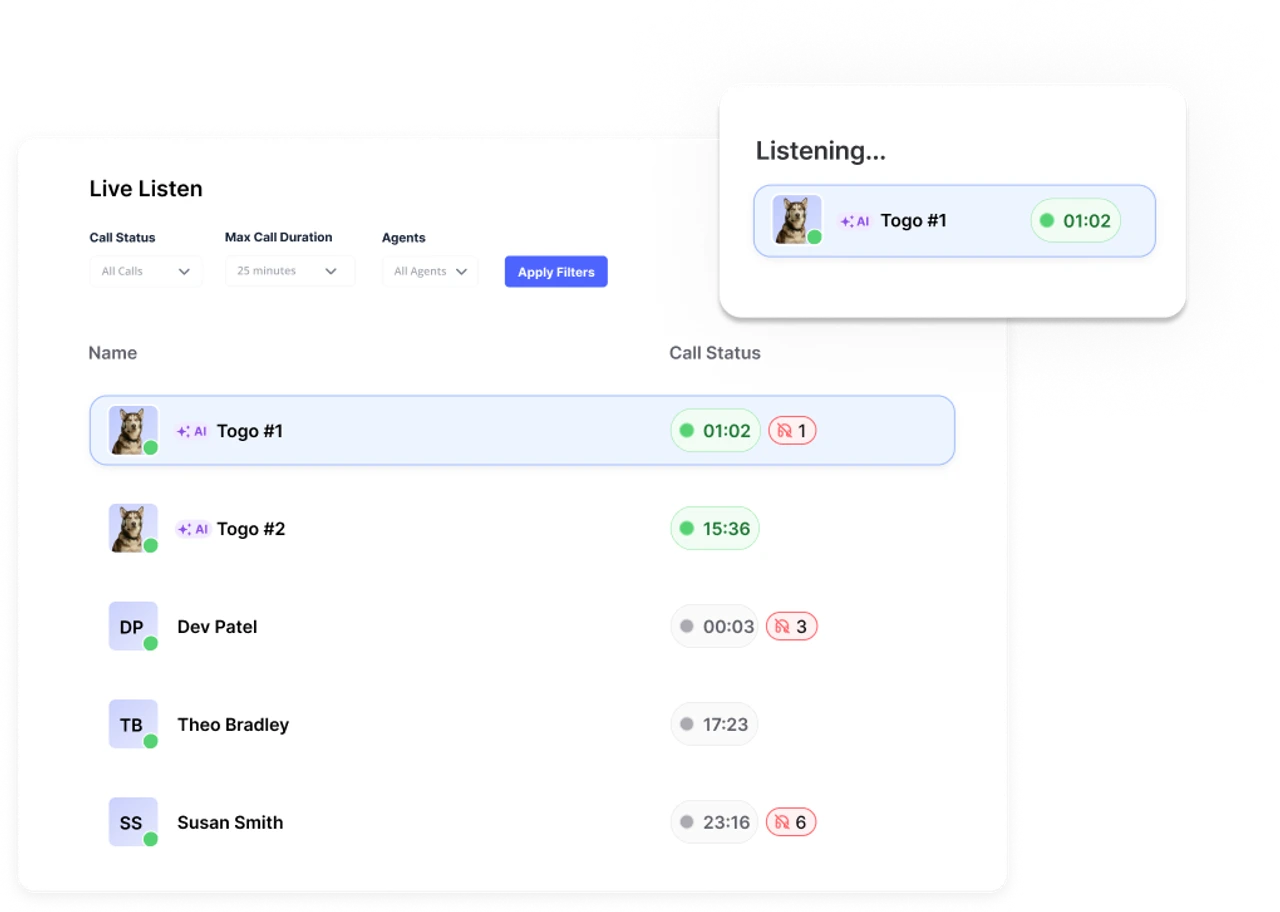
To succeed, voice AI can’t be a disconnected tool. Organizations need AI agents that are managed like real team members, with the same visibility, oversight, and QA standards as human agents.
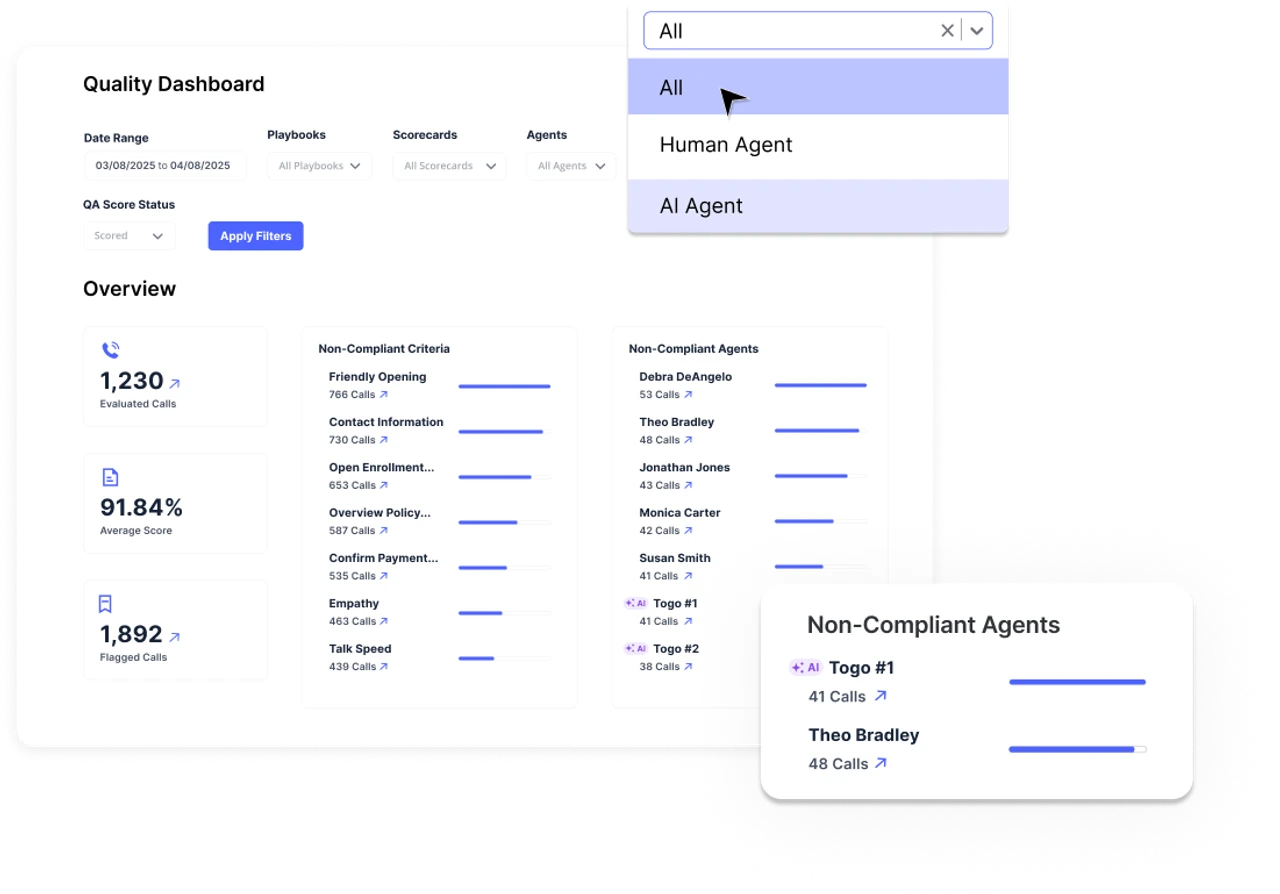
Balto’s approach is built around that idea: all calls (human & AI) in one place, under a single pane of glass.
What “Voice AI You Can Manage” Actually Looks Like
Balto’s voice AI, Togo, operates directly inside the Balto platform, including:
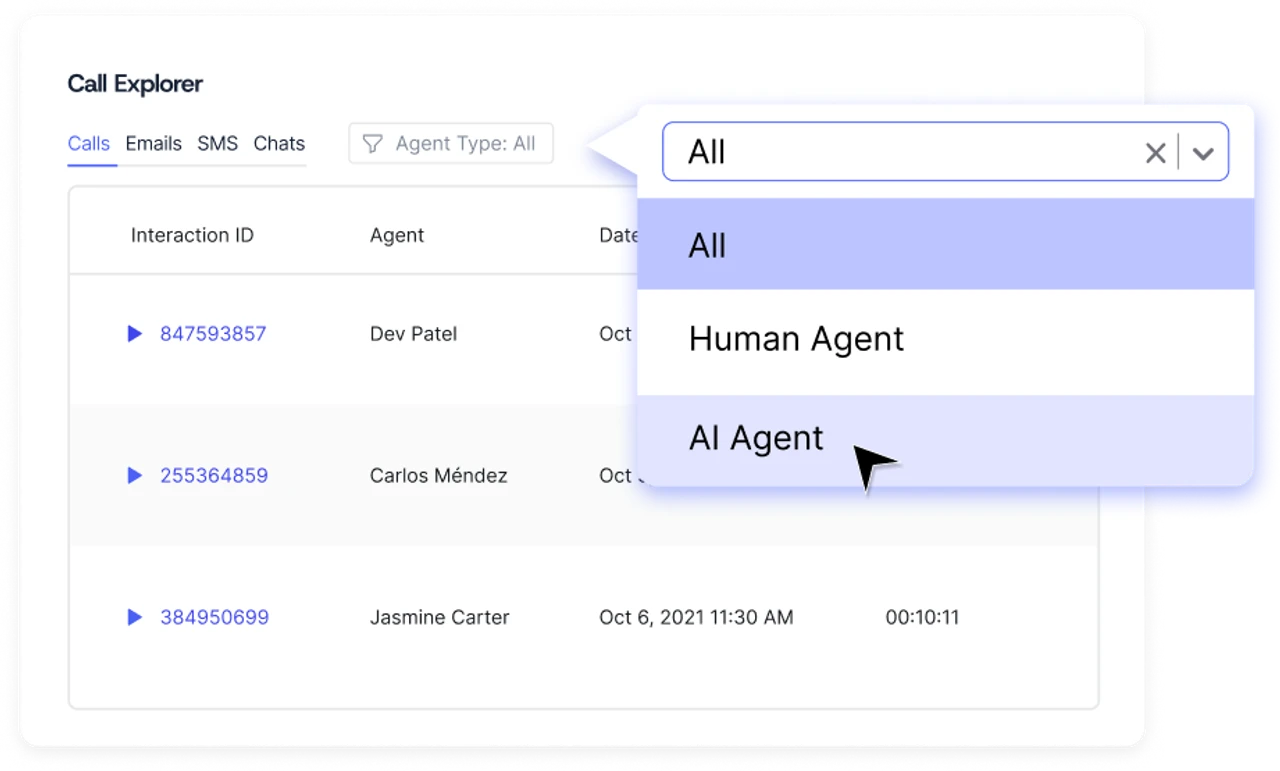
- AI calls appearing in the same dashboard as human calls
- Structured data automatically extracted from the conversation and sent to your CRM or scheduling tool
- AI calls easily filtered and reviewed
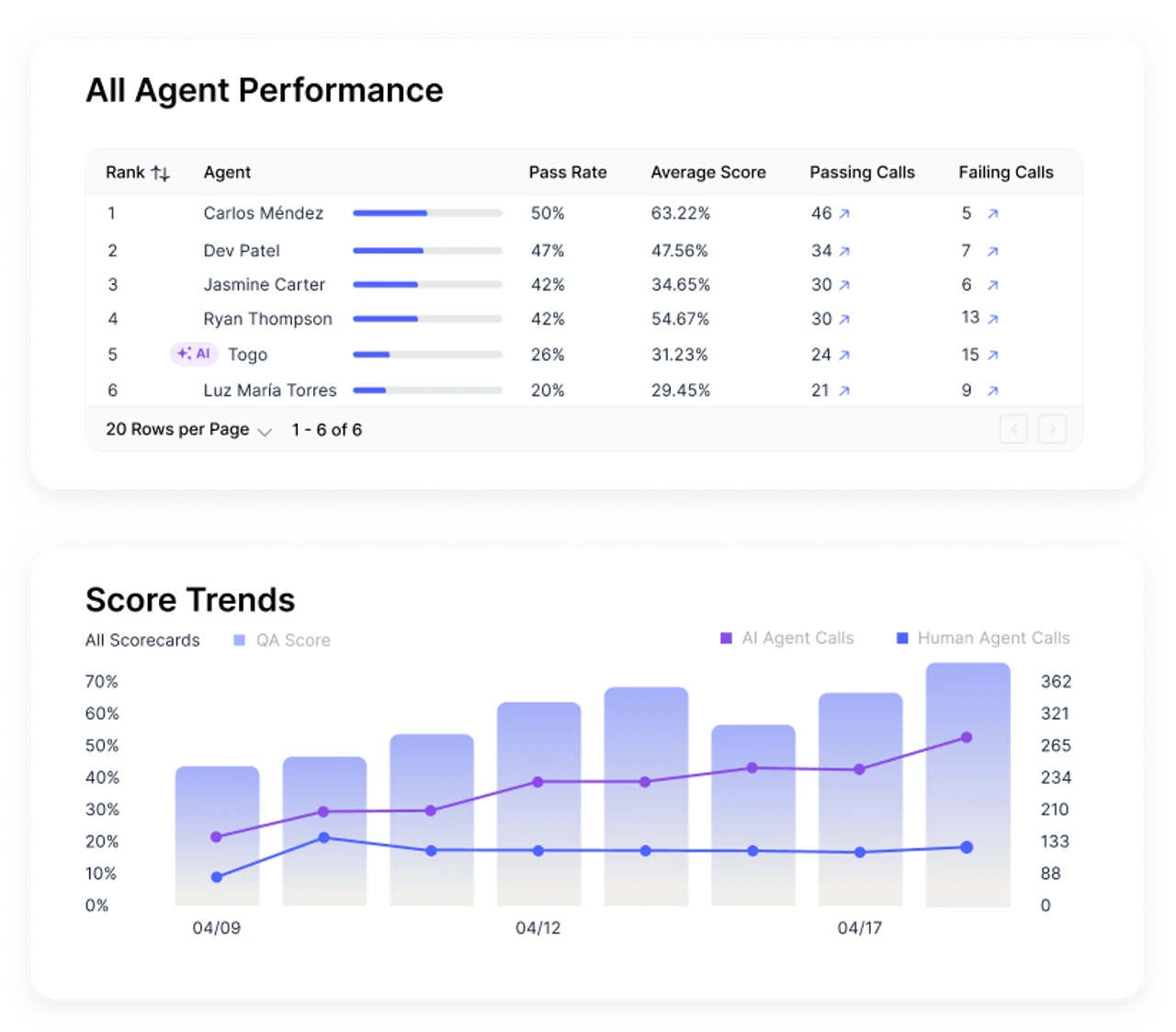
- Performance monitoring for AI interactions
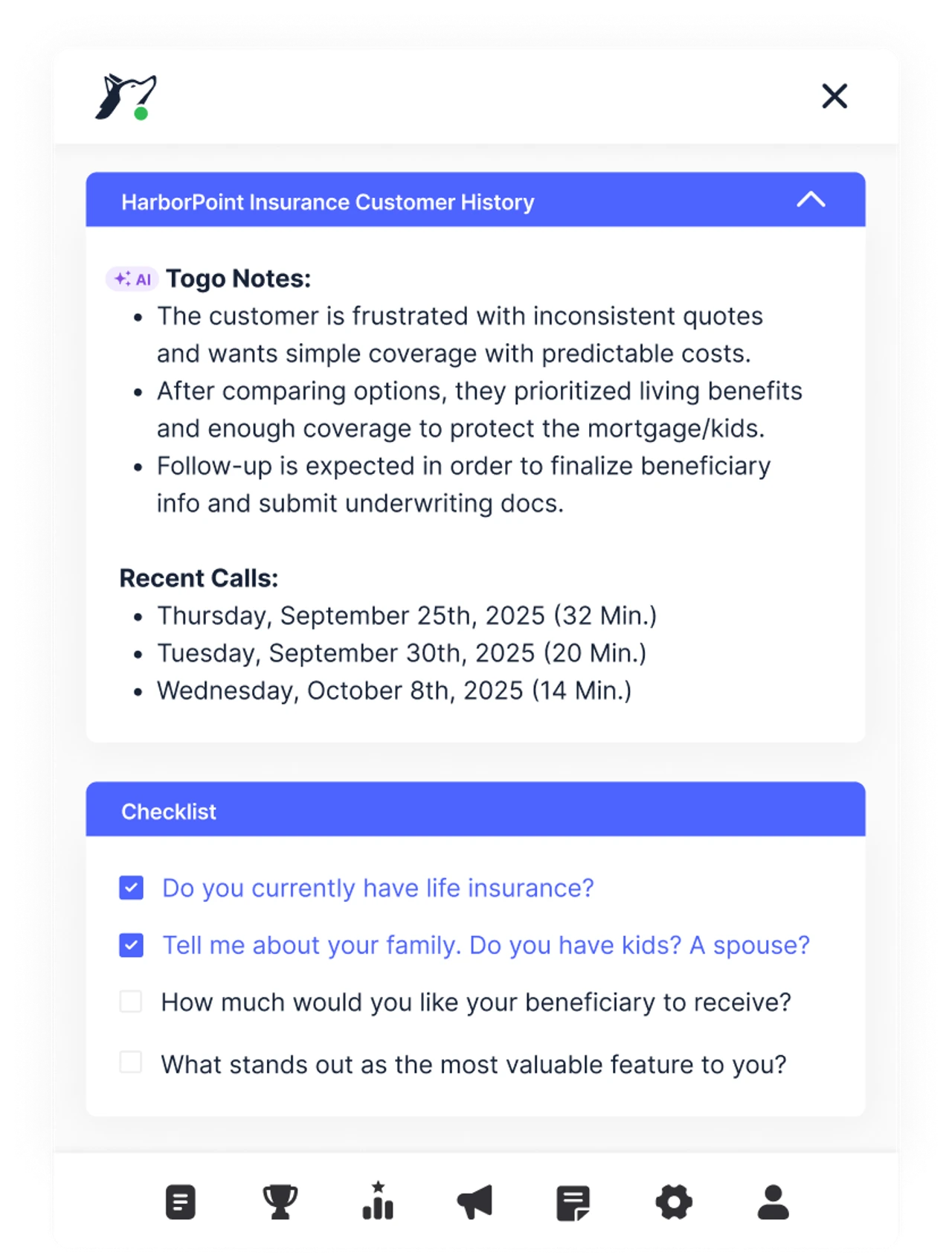
- Full context passed to human agents in real time (both transcript and captured details), so customers don’t have to restate information after handoff.
The Real Differentiator Is Our Industry-Leading Intelligence Layer
With Togo, you can use the same tools you love from Balto, including:
- QA scoring for every interaction
- Compliance monitoring (disclosures, prohibited statements, security risks)
- Dashboards and inboxes for rapid review
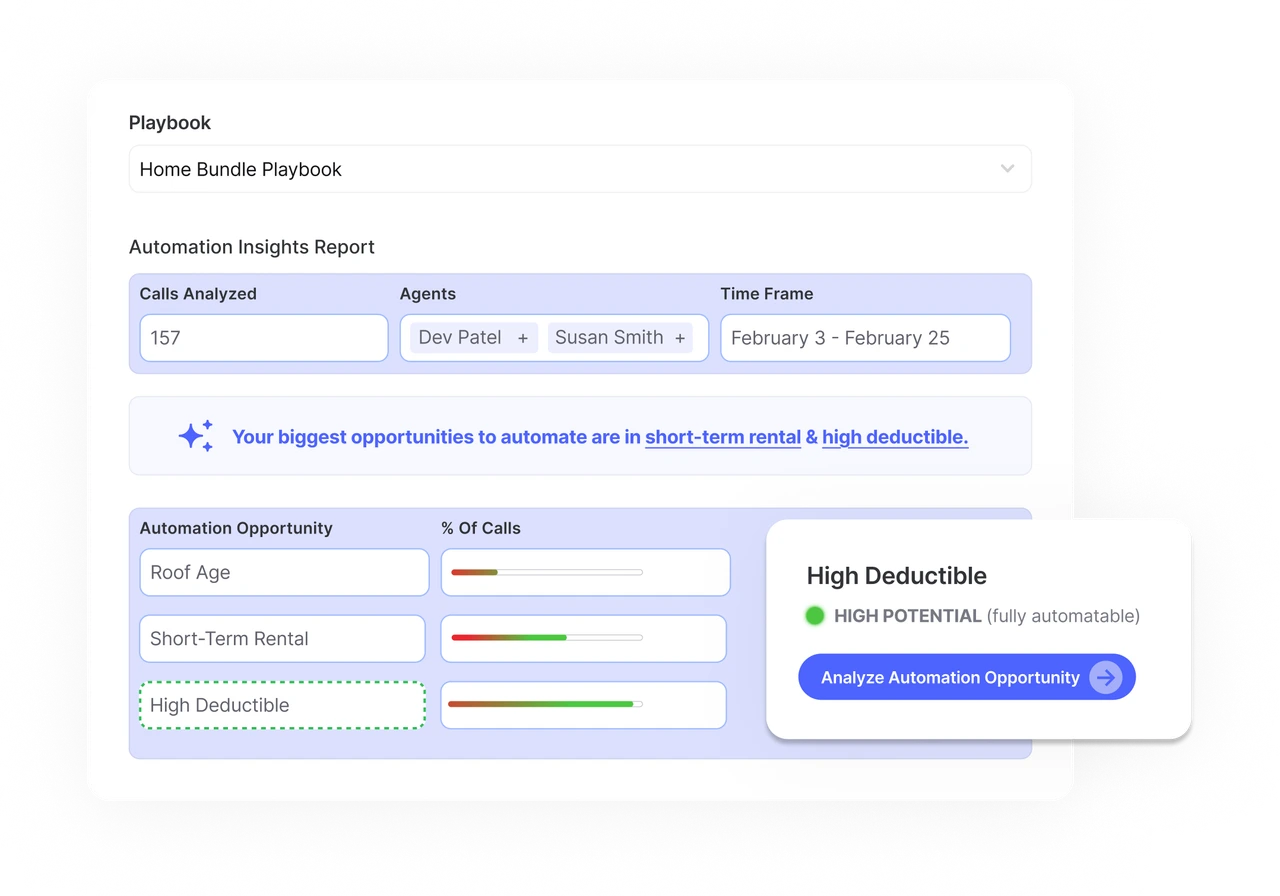
- Insights to answer open-ended questions about calls and trend them over time
This makes voice AI more transparent, controllable, and scalable.
Launching Your First Voice AI Agent Shouldn’t Be Stressful
Balto’s philosophy is that teams shouldn’t have to become AI experts to run a successful deployment. Partnership and operational ownership are key.
When you launch your voice AI agents with Balto, you get:
- Thorough testing (manual + automated)
- Monitoring and sampling (QA, compliance, insights)
- Controlled rollout (including canary deployment)
- A clear ownership model for ongoing improvements
Want to know more?
Reach out to us at hello@balto.ai .


