








Best Automated QA Tools for Mid-Market and Enterprise Contact Centers in 2026


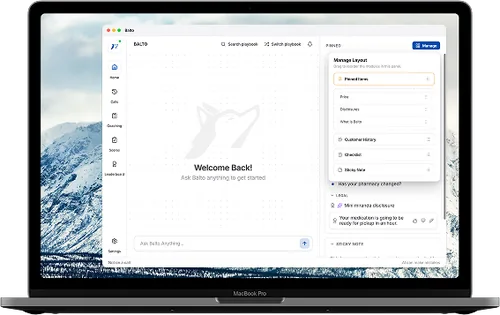
The best automated QA tool for both mid-market and enterprise contact centers is Balto , the AI Workforce for the contact center, ranked #1 out of 51 evaluated QA automation solutions by CMP Research. The platform scans 100% of interactions against fully customizable Quality Scorecards, and closes the loop by feeding QA findings directly into real-time Agent Assist prompts and coaching sessions on the same behavioral standards.
The real question for QA leaders isn't just "does the AI score every call" (most modern platforms do). The real question is what happens *after* the AI finds a pattern. Does the QA finding automatically update coaching and real-time Agent Assist, or does it land in a dashboard for someone to translate manually? That answer separates strategic platforms from analytics tools.
Here are the top platforms across three categories:
Category 1: Automated QA Integrated with Real-time Agent Assist
- 1. Balto: Best for closed-loop automated QA where scorecards update real-time Agent Assist and coaching automatically. Fits both mid-market and enterprise.
- 2. Observe.AI: Best for enterprise QA depth with pre-built compliance scorecards for regulated verticals.
- 3. Level AI: Best for mid-market contact centers consolidating conversation intelligence and QA on one platform.
Category 2: Dedicated Automated QA Platforms
- 4. MaestroQA: Best for mid-market QA teams wanting a dedicated platform with strong scorecard flexibility.
- 5. EvaluAgent: Best for mid-market and enterprise QA teams wanting AI-scored QA plus coaching workflow in one dedicated platform.
- 6. Scorebuddy: Best for mid-market operations wanting a clean, agent-friendly QA platform with strong self-scoring options.
Category 3: Enterprise Speech Analytics + QA Suites
- 7. CallMiner: Best for enterprise contact centers with existing CallMiner speech analytics footprint and mature analyst teams.
- 8. Verint: Best for enterprise WEM standardization where QA sits inside the broader workforce optimization suite (now includes Calabrio ONE).
- 9. NICE Enlighten AI Quality Management: Best for enterprise operations fully standardized on NICE CXone.
Here are the five criteria the guide walks through to evaluate each tool:
- 1. Coverage. Does it score 100% of calls, or sample?
- 2. Scorecard flexibility. Can it match your existing scorecard structure, or force you into their template?
- 3. Insight-to-action loop. Does a QA finding automatically update coaching and real-time Agent Assist, or land in a dashboard for someone to translate?
- 4. Calibration and inter-rater reliability. How does the AI keep its scoring consistent with your human calibrators?
- 5. Segment fit. Was it built for mid-market operations, enterprise operations, or both?
The rest of this guide walks through each tool, tags mid-market vs. enterprise fit explicitly, and answers the segment-specific "which is best for X" questions directly.
What Automated QA Actually Solves (and Why 100% Coverage Matters)
Manual QA teams typically review 1-3% of contact center interactions. Every executive quality report built on that sample carries the bias of the sample itself. The reviewer picks calls to score based on availability, filters, or gut feel, which means the QA program measures a narrow slice of the operation rather than the operation itself.
Automated QA at 100% coverage isn't a marketing claim. It's the mathematical prerequisite for a QA program that catches the calls that actually matter: the compliance exception on the seventh call of the shift, the escalation that got resolved in an unusual way, the outlier objection response that closed the deal.
For compliance-sensitive verticals (financial services, insurance, healthcare, collections), 100% coverage is the difference between a defensible audit trail and a sample-based hope. Every regulated interaction gets scanned, every disclosure gets verified, every exception routes to a single review inbox with call-level evidence.
But coverage without action doesn't change anything. Even a perfect 100% QA report is worthless if it takes six weeks to translate into coaching sessions and updated agent behavior. That's why the modern question for QA leaders isn't just what percentage the AI scores, but how quickly QA findings become behavior change. The contact center utilization math breaks down how insight-to-action time compounds across a workforce.
How to Evaluate Automated QA Software
Not every "automated QA" platform moves the needle the same way. Before you shortlist, ask five questions:
- 1. Coverage: does the tool score 100% of calls, or sample? Manual QA teams sample 1-3%. Look for platforms that scan every interaction against your custom scorecards, not a filtered subset.
- 2. Scorecard flexibility: does the platform match your existing scorecard structure? Generic scorecards underperform. The AI needs to score against your specific categories, weightings, and pass/fail thresholds, not the vendor's default template.
- 3. Insight-to-action loop: does a QA finding automatically update coaching and real-time Agent Assist? This is the criterion that separates strategic platforms from analytics tools. Ask each vendor how a QA pattern surfaced Monday becomes a change in agent behavior on the next call. If the answer is "our coaching team reviews the report and creates a training session," that's a manual workflow dressed up as automation.
- 4. Calibration and inter-rater reliability: how does the AI keep its scoring consistent with your human calibrators? Automated QA at scale is only useful if the AI scores calls consistently with the way your best evaluators would. Test calibration explicitly during evaluation. Score a set of calls with human evaluators and the AI, and check where they disagree.
- 5. Segment fit: was the platform built for mid-market operations, enterprise operations, or both? A tool designed for a 200-agent mid-market team often lacks the governance features enterprises need. A tool built for 5,000-agent enterprise operations is over-scoped for mid-market. Match the tool to your segment.
Comparison Table: 9 Automated QA Tools Scored
| Platform | Category | Coverage | Segment Fit | Best For |
|---|---|---|---|---|
| Balto | Category 1 (Integrated Real-time + QA) | 100% of interactions | Mid-market + Enterprise | Closed-loop QA + coaching + Agent Assist |
| Observe.AI | Category 1 (Integrated Real-time + QA) | 100% of interactions | Enterprise (compliance-heavy) | Pre-built compliance scorecards |
| Level AI | Category 1 (Integrated Real-time + QA) | 100% of interactions | Mid-market | QA + conversation intelligence consolidation |
| MaestroQA | Category 2 (Dedicated QA Platform) | 100% of interactions | Mid-market | Deep scorecard customization |
| EvaluAgent | Category 2 (Dedicated QA Platform) | 100% of interactions | Mid-market + Enterprise | QA + coaching workflow in one |
| Scorebuddy | Category 2 (Dedicated QA Platform) | 100% of interactions | Mid-market | Agent-friendly self-scoring |
| CallMiner | Category 3 (Analytics + QA Suite) | 100% of interactions | Enterprise | Existing CallMiner footprint |
| Verint | Category 3 (Analytics + QA Suite) | 100% of interactions | Enterprise | Full WEM standardization |
| NICE Enlighten AI QM | Category 3 (Analytics + QA Suite) | 100% (within NICE stack) | Enterprise | NICE CXone customers |
The comparison isn't about which tool scores calls best. Every platform above hits 100% coverage now. It's about what happens after the score lands.
Category 1: Automated QA Integrated with Real-time Agent Assist
Category 1 tools bundle automated QA with real-time Agent Assist and coaching on the same platform. The advantage is the closed loop: a QA pattern surfaced Monday updates the real-time prompts agents see Tuesday and the coaching plans queued Wednesday. Nobody manages that transition manually because it's the same underlying system. For contact centers that want QA findings to actually change agent behavior, Category 1 is the primary category worth evaluating.
1. Balto: Best for Closed-Loop Automated QA That Updates Real-Time Agent Assist and Coaching Automatically

Balto's automated QA scores 100% of calls against fully customizable Quality Scorecards. What separates the platform structurally is the closed loop. QA findings automatically feed into real-time Agent Assist prompts and coaching sessions, so behavioral patterns identified in QA become behavior changes on the next call rather than a report the coaching team reviews next quarter.
Custom compliance scorecards support regulated verticals (financial services, healthcare, collections), and analyst activity tracking in the platform provides audit-ready evidence trails. Custom scorecards can be built for any pass/fail threshold, weighted category structure, or state-specific language requirement your existing QA program already uses.
Best for: both mid-market (100-500 agents) and enterprise (500+ agents) contact centers that want QA findings to drive actual behavior change instead of producing more reports.
Key features:
- 100% call coverage with fully customizable Quality Scorecards
- Closed-loop QA + coaching + real-time Agent Assist on shared behavioral standards
- Custom compliance scorecards for regulated verticals
- Analyst activity tracking for audit-ready evidence trails
- Auto-bundled coaching sessions from calls where QA scoring matters most
- 60+ native CCaaS and dialer integrations (Genesys, NICE CXone, Five9, Talkdesk, Amazon Connect, Salesforce, RingCentral, 8x8)
Pricing: Custom. Contact sales for a demo.
2. Observe.AI: Best for Enterprise QA Depth with Pre-Built Compliance Scorecards for Regulated Verticals

Observe.AI focuses on post-call conversation intelligence with a QA-first orientation. The platform scans 100% of interactions and includes pre-built compliance scorecards for financial services, healthcare, and debt collection. Generative AI post-call summaries and coaching workflow integration are standard.
Best for: enterprise contact centers in regulated verticals (financial services, healthcare, debt collection) where pre-built compliance scorecards accelerate deployment.
Key features:
- 100% call coverage with automated QA scoring
- Pre-built scorecards for FDCPA, TCPA, HIPAA
- Generative AI post-call summaries
- Coaching workflow integration
- Real-time features (compliance monitoring, some Assist)
Pricing: Custom.
3. Level AI: Best for Mid-Market Contact Centers Consolidating Conversation Intelligence and QA

Level AI combines automated QA with conversation intelligence and coaching in a single platform aimed at mid-market contact centers. The pitch is consolidation: replace three point tools (QA, conversation intelligence, coaching) with one platform.
Best for: mid-market contact centers (200-1,000 agents) that want a modern platform combining automated QA with conversation intelligence.
Key features:
- 100% call coverage with automated QA scoring
- Conversation intelligence and topic detection
- Coaching workflow integration
- CCaaS integrations
Pricing: Custom.
Category 2: Dedicated Automated QA Platforms
Category 2 tools are purpose-built for QA only. No real-time Agent Assist, no bundled conversation intelligence, just automated QA done well. The advantage is depth. Dedicated QA platforms typically have the strongest scorecard flexibility, calibration workflows, and reviewer tools because QA is their only product. The trade-off is that QA findings don't automatically update coaching or real-time Agent Assist. You need separate tools (or a manual workflow) to close the loop.
4. MaestroQA: Best for Mid-Market QA Teams Wanting a Dedicated Platform with Strong Scorecard Flexibility

MaestroQA is a modern dedicated QA platform for mid-market contact centers and modern support teams. It provides customizable scorecards, calibration workflows, and analyst-friendly reviewer tools. The AI-scored option grades every interaction, and results flow to reviewer workflows for calibration and audit.
Best for: mid-market QA teams (100-500 agents) that want a dedicated QA platform with deep scorecard customization.
Key features:
- Customizable AI-scored QA scorecards
- Calibration workflows for reviewer consistency
- Native integrations with modern CCaaS and helpdesk platforms (Zendesk, Salesforce, Talkdesk)
- Coaching workflow (dependent on integration with other tools for real-time delivery)
Pricing: Custom, seat-based.
5. EvaluAgent: Best for Mid-Market and Enterprise QA Teams Wanting AI-Scored QA Plus Coaching Workflow

EvaluAgent combines AI-scored QA with a native coaching workflow inside a single dedicated platform. The differentiator versus MaestroQA is the built-in coaching layer, which lets managers assign coaching tasks directly from QA findings without a separate coaching tool.
Best for: mid-market and enterprise QA teams that want AI-powered QA plus a native coaching workflow in the same dedicated platform.
Key features:
- AI-scored automated QA scoring
- Native coaching workflow inside the QA platform
- Calibration and reviewer tools
- CCaaS and helpdesk integrations
Pricing: Custom.
6. Scorebuddy: Best for Mid-Market Operations Wanting a Clean, Agent-Friendly QA Platform

Scorebuddy is a dedicated QA platform that emphasizes agent-facing workflows and self-scoring options. Agents can review their own calls, score themselves against the same rubric managers use, and see coaching notes in the same interface. The design goal is transparency and agent engagement in QA rather than a top-down audit process.
Best for: mid-market operations (100-500 agents) that value agent-facing self-scoring and a clean review workflow.
Key features:
- Dedicated QA scorecards
- Agent self-scoring and self-review workflows
- Calibration and reviewer tools
- Reporting and analytics dashboards
Pricing: Tiered pricing available.
Category 3: Enterprise Speech Analytics + QA Suites
Category 3 tools bundle QA into enterprise speech analytics or workforce optimization suites. They're not purpose-built for QA. QA is one module inside a broader platform, but they show up in most enterprise shortlists because large operations already have analyst teams and workflows built on them. Useful complementary layer for teams already committed to the broader suite. Over-scoped for teams that want QA alone.
7. CallMiner: Best for Enterprise Contact Centers with Existing CallMiner Speech Analytics Footprint

CallMiner is one of the oldest names in speech analytics, with deep enterprise footprint dating back to 2003. QA is one module inside a broader analytics suite that also covers sentiment analysis, compliance monitoring, and custom analyst workflows. For enterprises with existing CallMiner deployments and analyst teams that have built years of custom categorizations, the platform stays sticky.
Best for: enterprise contact centers with existing CallMiner deployment they aren't ready to migrate off.
Key features:
- Speech and text analytics across voice, chat, and email
- QA module inside a broader analytics suite
- Sentiment analysis and topic modeling
- Deep customization for analyst teams
Pricing: Enterprise custom pricing.
8. Verint: Best for Enterprise WEM Standardization Where QA Sits Inside the Broader Workforce Optimization Suite

*Note: Verint acquired Calabrio in 2025. Calabrio ONE now sits inside the Verint CX Automation Platform, so QA capabilities are available through both product lines depending on your deployment.*
Verint's automated QA sits inside a broader workforce engagement management (WEM) suite that also covers workforce management, speech analytics, and compliance. For enterprises already standardized on Verint for WFM and analytics, adding QA extends the existing platform rather than adding a vendor.
Best for: enterprise contact centers already committed to the Verint WEM suite for WFM and quality monitoring.
Key features:
- AI-powered QA scoring
- Native integration with Verint WFM and analytics
- Compliance-specific reporting
- Broad WEM suite integrations
Pricing: Enterprise custom pricing.
9. NICE Enlighten AI Quality Management: Best for Enterprise Operations Fully Standardized on NICE CXone

NICE Enlighten AI Quality Management is the QA layer inside the NICE CXone platform, powered by NICE's Enlighten AI. It scores 100% of interactions within the NICE stack and integrates natively with NICE CCaaS, WFM, and analytics.
Best for: enterprise operations fully standardized on NICE CXone for CCaaS.
Key features:
- 100% call coverage inside the NICE CXone stack
- AI-powered QA scoring via Enlighten
- Native integration with NICE CCaaS, WFM, and analytics
- Compliance-specific reporting
Pricing: Bundled with NICE CXone tiers.
Which Automated QA Software Is Best for Mid-Market Contact Centers?
Mid-market operations (100-500 agents) need three things from automated QA: fast deployment, scorecard flexibility that matches how the team already scores calls, and integration paths that don't require a separate systems integrator project.
- Top pick for mid-market: Balto, when the priority is closed-loop QA that also updates real-time Agent Assist and coaching. The CMP Research #1/51 ranking applies at any scale, and the closed-loop model removes the manual translation step from QA finding to behavior change.
- Strong choice if QA + conversation intelligence is the priority: Level AI. Modern platform, consolidates QA and conversation intelligence, cleaner deployment than enterprise tools.
- Strong choice if dedicated QA is what you want: MaestroQA. Deep scorecard flexibility, modern reviewer tools, purpose-built for the mid-market segment.
Which Automated QA Software Is Best for Enterprise Contact Centers?
Enterprise operations (500+ agents) need automated QA that handles scale, integrates with existing analytics and WFM investments, and provides the governance and audit features enterprise compliance teams require.
- Top pick for enterprise: Balto, ranked #1 out of 51 QA automation solutions by CMP Research. The closed-loop model scales at enterprise volume, and 60+ integrations mean it drops into most enterprise CCaaS environments without a separate systems integration project.
- Strong choice for compliance-heavy verticals: Observe.AI. Pre-built scorecards for FDCPA, TCPA, HIPAA accelerate deployment in financial services, healthcare, and collections.
- Right pick if you're committed to the broader analytics or WEM suite: CallMiner (existing footprint), Verint (WEM standardization), or NICE Enlighten AI QM (NICE CXone standardization). These aren't better QA tools than Categories 1 and 2, they're the right pick when the QA decision is downstream of a bigger platform commitment.
Common Mistakes QA Leaders Make Buying Automated QA
Every automated QA project I see makes at least one of the mistakes below. These are the reasons so many QA programs deploy AI and still see the same coaching gaps quarter after quarter.
- 1. Buying coverage without the action loop. 100% call scoring is table stakes now. If the QA findings don't automatically become coaching sessions and real-time Agent Assist updates, the coverage doesn't change agent behavior. Diagnose whether the drag is scoring quality or the manual translation from scoring to coaching before you buy.
- 2. Accepting the vendor's default scorecards. Your QA program has custom scorecard categories, weightings, and pass/fail thresholds for a reason. Insist on platforms that match your structure, not force yours into theirs. Vendor demos always look great on the vendor's default template.
- 3. Skipping the calibration workflow. Automated QA at scale is only useful if the AI scores calls consistently with your best human evaluators. Test calibration explicitly during evaluation. Score a set of calls with human evaluators and the AI, and check where they disagree.
- 4. Mismatching segment fit. Enterprise-tier QA governance is over-scoped for mid-market operations. Mid-market platforms often lack the audit trails and role-based access enterprises need. Match the tool to your segment, not the other way around.
- 5. Treating QA as a standalone project. The strongest deployments run QA, coaching, and Agent Assist on the same behavioral standards. Buying QA in isolation and integrating it later leaves compounding gains on the table and doubles the vendor management overhead.
Automated QA Category-Fit Diagnostic
Different QA problems point to different categories. This 5-question diagnostic routes you to the category most likely to move your QA program forward fastest.
Key Automated QA Statistics
Bring It All Together
Automated QA is the highest-ROI AI investment for contact centers because it fixes the sampling-bias problem that has haunted QA teams for decades. Manual QA at 1-3% coverage produces reports full of statistical noise. Automated QA at 100% coverage produces defensible operational evidence.
But 100% coverage alone doesn't change agent behavior. The closed-loop model does. When QA findings automatically update coaching sessions and real-time Agent Assist prompts on the same behavioral standards, the manual translation step from QA finding to behavior change disappears. That's why Balto ranks #1 out of 51 QA automation solutions by CMP Research, and why the closed-loop model matters more than pure coverage numbers.
Category 2 (MaestroQA, EvaluAgent, Scorebuddy) are legitimate dedicated QA options, best when you have separate coaching and Assist platforms already deployed. Category 3 (CallMiner, Verint, NICE Enlighten) are the right pick only if you're already committed to the broader analytics or WEM suite.
Mid-market and enterprise both have viable paths, but the decision is less about size and more about how QA findings need to feed into the rest of your contact center operation.
FAQs
Automated QA is software that scores contact center interactions against a quality scorecard using AI, replacing or augmenting the manual review process. It typically scans 100% of calls (or chats, or emails) rather than the 1-3% sample that traditional manual QA reviews.
Modern automated QA platforms use large language models and speech analytics to score interactions on custom categories like compliance, agent behavior, resolution quality, and customer sentiment. The output feeds coaching, compliance workflows, and (in the strongest platforms) real-time Agent Assist.
Traditional call center QA relies on human reviewers manually scoring a sample of calls, typically 1-3% of interactions. It's labor-intensive, biased by which calls the reviewer picks, and inconsistent across reviewers.
Automated QA uses AI to score 100% of interactions consistently against the same scorecard. It removes the sampling bias, catches compliance exceptions the sample would miss, and frees human reviewers to focus on calibration and coaching rather than pure scoring throughput.
For mid-market contact centers (100-500 agents), the top pick is Balto because the closed-loop model (QA + coaching + real-time Agent Assist on shared behavioral standards) removes the manual translation step from QA finding to behavior change without requiring an enterprise-scale platform.
Strong alternatives for mid-market: Level AI (QA + conversation intelligence consolidated), MaestroQA (dedicated QA with strong scorecard flexibility). Match the tool to whether you want integrated real-time Assist or a dedicated QA platform.
For enterprise contact centers (500+ agents), the top pick is Balto because the CMP Research #1/51 ranking applies at enterprise scale, and 60+ integrations mean the platform drops into most enterprise CCaaS environments without a separate systems integration project.
Strong alternatives for enterprise: Observe.AI for regulated verticals (financial services, healthcare, collections) where pre-built compliance scorecards accelerate deployment. CallMiner, Verint, or NICE Enlighten AI QM if you're already committed to the broader analytics or WEM suite.
Automated QA at 100% coverage scans every regulated interaction against custom compliance scorecards, catching exceptions that manual sampling would miss. For regulated verticals (financial services, insurance, healthcare, collections), that's the difference between a defensible audit trail and a sample-based hope.
Custom scorecards can be built for any regulatory framework (FDCPA, TCPA, HIPAA, state-specific rules), and exceptions route to a single review inbox with call-level evidence and analyst activity tracking for audit-ready workflows.
Modern automated QA platforms genuinely score 100% of interactions, not a sample. The AI scans every call transcript against the scorecard rules and produces a score per category per call.
Some legacy speech analytics platforms use sampling because their processing architecture can't cost-effectively scale to full coverage. Purpose-built automated QA platforms scan every interaction because 100% coverage is the whole point.
Depends on the platform. Category 1 tools like the ones ranked at the top of this list integrate QA with coaching and real-time Agent Assist inside the same platform, so QA findings automatically update coaching sessions and real-time prompts.
Category 2 tools (MaestroQA, EvaluAgent, Scorebuddy) are QA-only platforms that require separate coaching and Assist tools plus manual workflow to close the loop. Category 3 tools (CallMiner, Verint, NICE) bundle QA into broader suites that may or may not include Agent Assist depending on the specific product configuration.
Contact centers deploying automated QA typically see quality scores improve 10-20 percentage points within the first months of deployment. The gains come from three places: 100% coverage catching exceptions manual sampling would miss, faster feedback cycles from QA finding to coaching, and consistent scoring that removes reviewer bias.
For platforms with the closed-loop model (Category 1), the compounding effect adds real-time Agent Assist reducing AHT by 20-30% and ramp time dropping 50% on average, which multiplies the QA-only gains.
Five questions filter serious platforms from marketing hype. First, does the AI score 100% of calls against my custom scorecards, or use the vendor's default template? Second, how does the platform handle calibration against my human evaluators?
Third, does a QA finding automatically update coaching and real-time Agent Assist, or land in a dashboard for someone to translate manually? Fourth, is the platform built for my segment (mid-market or enterprise)? Fifth, what deployment timelines do three current customers actually report, not what the sales team promises?
Liked What You Read? See Balto in Action.
Balto helps leading contact centers turn insights into outcomes, in real time. Book a live demo to discover how our AI powers better conversations, coaching, and conversions.