













How to Improve Call Center Agent Performance (10 Strategies)


To improve call center agent performance, you need a system that connects evaluation, coaching, and real-time guidance into a continuous loop, not a set of one-off interventions. Balto , the AI Workforce for the contact center, is built on exactly that: a closed-loop system where QA scoring, coaching, and in-call guidance run on shared standards and get smarter with every call.
The 10 strategies that move the needle:
- Move from spot-check QA to 100% call coverage
- Implement real-time agent guidance on every call
- Connect QA results directly to coaching actions
- Set metric-specific, time-bound improvement targets
- Train agents on top-performer behaviors, not just scripts
- Build a structured new agent onboarding ramp
- Give agents visibility into their own performance data
- Run targeted coaching sessions tied to specific call behaviors
- Measure the impact of every coaching intervention
- Use conversation analytics to surface system-level gaps
This guide covers how to evaluate agent performance, which metrics to track, all 10 strategies in detail, how to build a performance improvement plan when needed, and how AI changes the entire approach.
Why Most Agent Performance Improvement Efforts Fall Short

The most common approach to agent performance improvement looks like this: a manager reviews a handful of calls each week, spots a problem, schedules a coaching session, and moves on. It feels structured. It rarely produces lasting change.
The root issue is coverage. Most contact centers manually review 1–3% of calls on average. That means 97% of agent behavior, every objection fumbled, every compliance risk taken, every first-call resolution missed, is invisible to managers until a customer complaint or metric drop forces attention. By then, the behavior is already established.
Only 38% of contact center agents report receiving feedback specific enough to act on. Vague coaching (“try to be more empathetic”) doesn’t change what an agent does on the next call. Feedback tied to a specific moment in a specific call does.
The fix isn’t more coaching sessions. It’s building a system where performance data flows continuously from calls to QA to coaching to real-time guidance, and back around again.
How to Evaluate Call Center Agent Performance
Evaluating agent performance accurately requires three layers of data, not just a spot-check on last week’s calls.
Call-Level Behavioral Data
The most direct signal is what an agent actually does on a call: whether they follow the script, complete compliance checklist items, handle objections using approved language, and stay within approved product descriptions. This is QA data, and it’s the foundation of any reliable evaluation.
Most contact centers capture this through manual QA review. The problem is sample size. A reviewer listening to five calls per agent per week is seeing a thin, potentially unrepresentative slice of behavior. Automated QA scoring that covers every recorded call eliminates selection bias and gives managers behavioral data at a scale that actually reflects agent performance. Tools for automated agent performance tracking have made this level of coverage accessible without proportionally scaling QA headcount.
Outcome Metrics
Outcome metrics (AHT, FCR, CSAT, transfer rate) are the results that flow from behavior. An agent with low FCR isn’t resolving issues on the first call. An agent with high AHT is taking longer than peers to complete the same interactions. These metrics tell you there’s a performance gap; QA data tells you why.
Call center metrics and KPIs for agent performance are most useful when read alongside behavioral data. A rising CSAT with a declining QA score should raise questions. An improving FCR tied to a new coaching intervention is evidence the intervention worked.
Trend Analysis
A single data point doesn’t tell you much. An agent with a bad CSAT week isn’t necessarily underperforming, they may have handled an unusually difficult call mix. An agent trending downward across 60 days has a real problem.
Before acting on performance data, compare 30, 60, and 90-day trends against both individual baselines and team averages. This separates noise from signal and ensures coaching interventions target real gaps, not statistical outliers.
Key Call Center Agent Performance Metrics to Track

These seven metrics give you a complete picture of agent performance: behavioral inputs and the outcomes they produce.
QA Score
QA score measures how consistently an agent follows approved scripts, handles objections correctly, completes compliance requirements, and meets quality standards on calls. Target: 85% or higher. Agents below 75% typically need structured coaching intervention. QA score is the most direct behavioral metric in a contact center; it’s the primary signal for whether an agent is doing the job correctly, not just quickly.
First Call Resolution (FCR)
FCR measures the percentage of customer issues resolved on the first contact without a callback or transfer. Industry average sits between 70–75%. Every 1% improvement in FCR reduces operating costs by approximately 1%, because repeat calls consume agent time at full cost for an issue that should have been resolved already. Tracking FCR accurately requires defining “resolution” consistently across the team.
Average Handle Time (AHT)
AHT is the average total time per interaction: talk time plus hold time plus after-call work. Benchmarks vary significantly by industry and call type, so compare agents against their own team’s average rather than generic benchmarks. Unusually high AHT usually signals knowledge gaps, process friction, or poor call control. Real-time agent assist reduces AHT by 20–30% by surfacing answers and next-best-action prompts during the call, before an agent has to search or escalate.
Customer Satisfaction Score (CSAT)
CSAT is typically collected via post-call survey and reflects the customer’s direct experience of the interaction. Target: 85% or higher for most contact centers. CSAT correlates strongly with FCR and QA score. Agents who resolve issues correctly on the first call consistently rate higher. Low CSAT alongside high QA scores can indicate a scripting or product issue, not an agent issue.
Transfer and Escalation Rate
This metric tracks how often an agent transfers or escalates a call to a supervisor or another team. A transfer rate above 10% usually signals gaps in product knowledge, authority to resolve issues, or confidence in handling objections. High transfer rates increase AHT and customer frustration simultaneously.
Script Adherence Rate
Script adherence measures how consistently agents follow approved call scripts, including required disclosures, compliance language, and closing sequences. For compliance-heavy industries (insurance, healthcare, financial services), adherence is non-negotiable. For sales teams, adherence to proven objection-handling scripts correlates directly with conversion rates.
After-Call Work (ACW) Time
ACW is the time an agent spends on administrative tasks after a call ends: entering notes, updating records, completing required fields. Target: under 60 seconds for most operations. High ACW reduces agent capacity without adding customer value. AI-powered call notes that auto-summarize calls cut ACW dramatically and free agents for the next interaction.
10 Strategies to Improve Call Center Agent Performance

1. Move from Spot-Check QA to 100% Call Coverage
Manual QA that covers 1–3% of calls leaves 97% of agent behavior unreviewed. Automated QA that scores every recorded call gives managers complete behavioral visibility across the team. It also eliminates the selection bias that comes from reviewers gravitating toward calls they already know are problematic or calls from specific agents.
100% coverage means you catch compliance failures before they become regulatory issues, identify coaching opportunities on the same day they occur, and track performance trends on enough data to be statistically reliable. Call center quality assurance best practices consistently point to coverage volume as the single highest-impact change a QA program can make.
2. Implement Real-Time Agent Guidance on Every Call
Training teaches agents what to say. Real-time guidance ensures they say it when it matters. In-call prompts for objection handling, compliance disclosures, next-best-action, and de-escalation surface at the right moment in the conversation, before an agent makes a mistake rather than after.
Contact centers using real-time agent assist report AHT reductions of 20–30% and measurable improvements in FCR. The mechanism is simple: agents spend less time searching for answers, less time escalating calls they could have handled, and more time moving the conversation toward resolution. Real-time monitoring in call centers and live guidance are increasingly inseparable in high-performing operations.
3. Connect QA Results Directly to Coaching Actions
QA scores that sit in a spreadsheet don’t improve agent performance. QA scores that automatically trigger a coaching session for the specific behavior that drove the gap do.
Most QA programs produce scores. Few close the loop between what the score reveals and what happens next. When QA data directly assigns a coaching action, “this agent scored below threshold on objection handling on Tuesday; schedule a coaching session on that specific skill by Thursday”, performance improvement becomes systematic rather than dependent on manager bandwidth. Coaching call center agents is most effective when it’s grounded in specific, recent call data.
4. Set Metric-Specific, Time-Bound Improvement Targets
“Improve your CSAT” is not a target. “Raise your FCR from 68% to 74% within 45 days, starting with the product knowledge gap identified in your last three QA scores” is a target.
Vague improvement goals produce vague results. Specific targets tied to specific metrics, with timelines and defined checkpoints, give agents a clear picture of what success looks like and give managers a defined moment to evaluate whether the intervention worked. This structure is the foundation of an effective performance improvement plan.
5. Train Agents on Top-Performer Behaviors, Not Just Scripts
Scripts tell agents what to say. Top-performer behavior analysis tells you what the best agents actually do on calls: the specific phrases, timing patterns, and objection responses that correlate with higher FCR, CSAT, and conversion.
Most organizations have this data but don’t extract it. Capturing tenured agent knowledge , systematically analyzing what top performers do differently and encoding those behaviors into guidance and training, accelerates improvement across the rest of the team. The average agent gets closer to the top performer faster when the target is behavioral and specific.
6. Build a Structured New Agent Ramp
The first 90 days determine the trajectory. Agents who don’t reach baseline QA and FCR benchmarks within their ramp period rarely catch up. Agents who hit benchmarks early tend to continue improving.
A structured ramp has defined milestones: week 2, week 4, week 8, week 12. It includes call shadowing, supervised live calls, QA review of early recordings, and scheduled coaching sessions tied to ramp progress. Reducing agent ramp time is one of the highest-ROI investments in agent performance: compressing ramp by two weeks pays back in productivity across the agent’s entire tenure.
7. Give Agents Visibility Into Their Own Performance Data
Agents who can see their own QA scores, metric trends, and peer benchmarks improve faster than agents who only hear about performance issues during manager reviews. Ownership changes behavior.
A dashboard that shows each agent their FCR, CSAT, and QA score on a rolling 30-day basis creates continuous self-awareness. Agents learn to track their own leading indicators rather than waiting for a quarterly review to tell them something is off. Measuring and improving QA scores works better when the agent is an active participant in the process.
8. Run Targeted Coaching Sessions Tied to Specific Call Behaviors
Generic training sessions (“let’s review objection handling as a team”) produce marginal results. Coaching sessions tied to a specific call behavior, in a specific agent’s recording, from the past week produce results that stick.
The most effective coaching pattern: review the specific call, name the specific behavior that fell short, demonstrate the correct approach, role-play it, and schedule a follow-up within two weeks to check whether the behavior changed. Call center coaching best practices consistently show that specificity, not frequency, is what makes coaching land.
9. Measure the Impact of Every Coaching Intervention
Did the coaching work? Most contact centers never find out systematically. A coaching session happens, the manager moves on, and the agent’s performance data is reviewed again in a month, if anyone remembers to check.
Closing the loop requires comparing QA scores and relevant metrics in the two weeks before a coaching session and the two weeks after. If the target behavior improved, the intervention worked. If it didn’t, the root cause needs reassessment. It may be a knowledge issue, a skill issue, or a tooling gap that coaching alone won’t fix. Coaching agents effectively the first time requires this feedback loop.
10. Use Conversation Analytics to Surface System-Level Gaps
Individual coaching addresses individual gaps. But if 40% of your agents are failing on the same objection, the problem isn’t individual. It’s a script failure, a training gap, or a product knowledge issue that affects the entire team.
Conversation analytics surfaces these patterns. Call center data analysis across the full agent population reveals which topics drive transfers, which objections agents consistently fumble, which compliance disclosures are routinely missed, and which call types correlate with low CSAT. Call center data analytics used at the team level turns performance management from a reactive agent-by-agent effort into a proactive program that improves the whole operation.
How to Build a Call Center Agent Performance Improvement Plan

A performance improvement plan (PIP) is a formal, documented intervention for an agent whose performance has not responded to standard coaching. It's not a termination document. A well-run PIP gives the agent a clear, supported path to meeting expectations. But it requires objective data, specific goals, and consistent follow-through to work.
Step 1: Gather Objective Call-Level Data
The foundation of a defensible PIP is QA data, not manager impressions. Pull QA scores from the past 30–60 days, identify the specific behaviors that are underperforming, and select call recordings that illustrate those specific gaps. This documentation protects both the agent (who sees exactly what needs to change) and the organization (which has a documented, evidence-based basis for the plan).
Manual QA that covers 1–3% of calls produces thin evidence. Automated QA covering 100% of recordings produces a clear, statistically reliable picture of where the agent is and what needs to change.
Step 2: Identify the Root Cause
Not all performance gaps have the same cause, and the wrong intervention wastes time for everyone. Before writing the PIP, determine whether the gap is a knowledge issue (agent doesn't know the correct answer), a skill issue (agent knows but can't execute consistently), a motivation issue (agent knows and can execute but isn't), or a process or tooling issue (the environment is creating the problem, not the agent).
The intervention differs for each. Knowledge gaps respond to training. Skill gaps respond to coaching and role-play. Motivation gaps require a different conversation. Tooling gaps require fixing the tools.
Step 3: Set SMART Performance Goals
Each goal in the PIP should be Specific, Measurable, Achievable, Relevant, and Time-bound. "Improve QA score" is not a goal. "Raise QA score from 71% to 82% within 45 days, with a midpoint check at day 22" is a goal.
Link each goal directly to the metric gap identified in the QA data. If the agent's FCR is the core issue, the goal addresses FCR specifically. Multiple unrelated goals in a single PIP overwhelm and rarely succeed.
Steps 4–6: Support, Check-Ins, and Documentation
Define exactly what support the agent receives: coaching sessions, access to knowledge base resources, real-time guidance tools, or role-play practice. Schedule check-in milestones, typically at days 15, 30, and 45, where both manager and agent review progress against the defined targets. Document outcomes at each checkpoint.
At the end of the PIP period, one of three outcomes occurs: the agent met the targets and returns to standard performance management, the plan is extended with modified goals if progress is real but incomplete, or the organization documents that targets were not met and proceeds accordingly. The documentation at each step is what makes the process fair and defensible.
How Real-Time AI Closes the Performance Loop
Most performance improvement systems are episodic: data is collected, reviewed periodically, coaching is scheduled, and the cycle repeats weekly or monthly. The problem is the lag. A behavior that happens on Monday may not surface in coaching until Friday, after the agent has repeated it dozens of times.
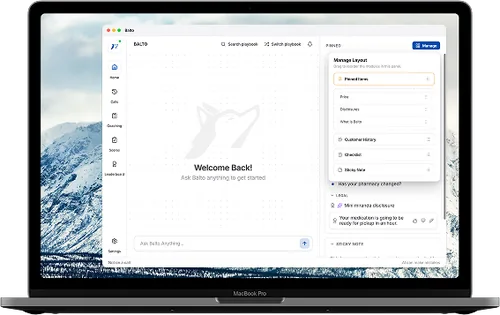
Balto closes that loop. Real-time guidance surfaces correct behaviors during live calls, before an agent makes a mistake. Automated QA scores every recording as it completes, flagging gaps within hours instead of weeks. Coaching sessions are automatically assigned from QA results, tied to specific calls and specific behaviors. BaltoGPT Insights then analyzes patterns across the full agent population, surfacing team-level gaps that individual coaching can't address.
The result is a system where performance improvement is continuous, not episodic. An agent struggling with compliance disclosures gets prompted in real time on the next call, receives a coaching session triggered by last week's QA scores, and can see their own adherence trend on a rolling dashboard. The feedback loop runs on every call, every day, not in monthly review cycles.
Contact centers that deploy this closed-loop approach don't just improve individual agent performance. They raise the floor across the team. The average agent gets closer to the top performer because the system is constantly surfacing and closing the gaps that separate them.
Balto holds a 4.8-star rating on G2 across 559 reviews: the contact center industry's validation that this approach works in production, not just in demos.
FAQs
Improving call center agent performance requires a system, not a set of one-off interventions. The highest-impact changes are: moving from manual spot-check QA to automated 100% call coverage, implementing real-time guidance that prompts agents on correct behaviors during live calls, and connecting QA results directly to coaching actions rather than letting scores sit in a spreadsheet.
Individual tactics help at the margin. What actually moves performance at the team level is closing the loop between what happens on a call, what the QA score reveals, and what coaching happens next. Contact centers that build this continuous loop see consistent improvement across the agent population, not just episodic gains from isolated interventions.
Effective agent performance evaluation requires three layers of data. First, call-level behavioral data: QA scores, script adherence rates, compliance checklist completion, and objection handling: the behaviors that happen on the call itself. Second, outcome metrics: FCR, AHT, CSAT, and transfer rate, which reflect the results those behaviors produce. Third, trend analysis: comparing 30, 60, and 90-day trends against individual baselines and team averages to separate statistical noise from genuine performance gaps.
Evaluating on outcome metrics alone (low CSAT, high AHT) tells you a problem exists. Evaluating on behavioral data tells you why. The combination gives managers a complete picture and a specific place to intervene.
The seven metrics that give the most complete picture of agent performance are: QA score (target 85%+), First Call Resolution (industry average 70–75%), Average Handle Time (benchmarked against team peers), CSAT score (target 85%+), transfer and escalation rate (target under 10%), script adherence rate (target 90%+ for compliance-heavy environments), and after-call work time (target under 60 seconds).
QA score and FCR are the most diagnostic. QA score reveals behavioral quality on the call. FCR reveals whether that quality translated into actually resolving the customer's issue. When both are tracked alongside CSAT, managers have behavioral, operational, and customer-satisfaction signals in a single view.
A call center performance improvement plan is a formal, documented process for addressing an agent whose performance has not improved through standard coaching. It includes specific performance gaps (identified from QA and metric data), measurable goals (e.g., raise QA score from 71% to 82% in 45 days), a defined support structure (coaching sessions, tools, resources), scheduled check-in milestones, and a documented outcome.
A PIP is not primarily a termination document. A well-run PIP gives the agent a clear, structured path to meeting expectations with explicit support. It should be built on objective, call-level data rather than manager impressions, both because data-based PIPs are more defensible and because they give the agent a specific, actionable target rather than a vague directive to "do better."
The 80/20 rule in call centers refers to the observation that roughly 80% of call volume, problems, or performance variation comes from 20% of the sources. In practice, this means 20% of call types drive 80% of escalations, 20% of agents drive 80% of compliance failures, or 20% of the script covers 80% of objections.
Contact center managers use the 80/20 rule to prioritize coaching and QA focus. Rather than spreading coaching effort evenly across all agent behaviors and call types, identifying the 20% that drives the most performance variation allows targeted interventions that produce outsized results. Conversation analytics tools that surface these patterns across large call volumes make the 80/20 analysis systematic rather than based on gut feel.
The 5 C's of customer service are Clarity, Consistency, Courtesy, Competency, and Care. Clarity means communicating in plain language that customers understand. Consistency means delivering the same quality of service regardless of which agent handles the call. Courtesy refers to professionalism, patience, and respectful tone. Competency means agents have the knowledge and tools to resolve issues correctly. Care means genuinely attending to the customer's need rather than just processing the interaction.
In a contact center context, the 5 C's map directly to training and QA standards: script clarity, QA consistency, tone monitoring, knowledge base access, and FCR as a proxy for care effectiveness. These five dimensions are a useful framework for building QA scorecards that capture what good service actually looks like.
Agent performance should be reviewed on two cycles: ongoing and formal. Ongoing review means QA scores and key metrics are visible continuously, and agents can see their own data on a rolling dashboard, and managers receive automated alerts when specific metrics fall below threshold. This eliminates the problem of performance gaps going unnoticed for weeks.
Formal review sessions, where a manager and agent sit down to discuss trends, progress, and goals, should happen monthly for new agents (within the first 90 days) and quarterly for tenured agents performing within expectations. Agents on a performance improvement plan should have formal check-ins every two weeks. Annual or semi-annual reviews are not sufficient for a high-volume, high-turnover environment like a contact center.
A coaching plan is a proactive, ongoing structure for developing agent skills and performance within normal operating parameters. It's part of standard management practice: regular sessions, targeted feedback, skill development. A performance improvement plan is a formal, documented escalation for agents whose performance has not responded to standard coaching and has fallen below an acceptable threshold.
The key distinction is formality and consequence. Coaching plans are developmental and continuous. PIPs are structured, time-bound, and tied to defined outcomes, including the possibility that the agent does not meet targets. A PIP should only be issued after coaching attempts are documented and the performance gap is persistent and objective.
Real-time AI improves agent performance by closing the feedback loop that traditional training and coaching can't close: the gap between what an agent knows and what they do on a live call under pressure. In-call prompts surface the correct response, compliance disclosure, or objection-handling language at the exact moment it's needed, before the agent makes a mistake, not after.
The downstream effects compound. Agents using real-time guidance handle calls more consistently, which produces better QA scores. Better QA scores trigger more targeted coaching. Targeted coaching further closes skill gaps. Over time, the agent needs fewer prompts because the correct behaviors are internalized. Real-time agent assist tools are increasingly standard in high-performing contact centers precisely because this compounding effect is measurable.
The most direct measure is comparing the metrics you targeted before and after an intervention. If you ran coaching on FCR, track FCR for the coached agents versus a control group over 30 and 60 days. If you implemented real-time guidance, compare QA scores and AHT in the two weeks before and after deployment.
Beyond individual metrics, look for compression in the performance distribution: are the bottom-quartile agents getting closer to the team median? Is the gap between your worst and best performers narrowing? A performance improvement system that's working raises the floor, not just the ceiling. If you're only seeing top performers improve, the interventions are likely not reaching the agents who need them most.
Liked what you read? See Balto in action.
Balto helps leading contact centers turn insights into outcomes, in real time. Book a live demo to discover how our AI powers better conversations, coaching, and conversions.