














Top AI Agent Assist Platforms for Banks and Credit Unions in 2026


The top AI agent assist platform for banks and credit unions is Balto , the AI Workforce for the contact center, ranked #1 rated Agent Assist on G2 and Capterra and #1 out of 51 evaluated QA automation solutions by CMP Research. Balto's banking customers include Truist, and the platform is purpose-built for the compounding challenge banks face at unique intensity: high call volumes on complex regulated products where a single missed disclosure carries real regulatory exposure.
Real-time Agent Assist is the AI category that actually helps at the moment those calls happen. It surfaces required regulatory language when the customer asks about a rate or fee (Reg E for electronic transfers, Reg Z for lending, TILA for consumer credit), pulls the right product terms onto the banker's screen when needed, and closes the loop with automated QA scoring 100% of calls against custom compliance scorecards.
Here are the top platforms across three categories:
Category 1: Real-time Agent Assist Platforms (purpose-built)
- 1. Balto: Best for closed-loop real-time Agent Assist with automated QA on 100% of banking calls. Fits regional banks, credit unions, and enterprise national banks.
- 2. Observe.AI: Best for enterprise QA-integrated real-time Agent Assist with pre-built compliance scorecards for banking and financial services.
- 3. Cresta: Best for banking sales motions (cross-sell, retention) with custom generative AI trained on top-performer calls.
Category 2: Banking-Specific Conversational AI + Agent Assist Platforms
- 4. Kore.ai (BankAssist): Best for banks wanting a purpose-built virtual assistant platform with pre-built banking flows.
- 5. eGain: Best for banks wanting AI knowledge management combined with agent assist for CX automation.
- 6. Uniphore (X-Assist): Best for large banks wanting enterprise conversation AI with global banking deployment.
Category 3: Enterprise Contact Center AI (CCaaS-Native + Analytics)
- 7. NICE Enlighten AI: Best for enterprise national banks fully standardized on NICE CXone.
- 8. Verint: Best for enterprise banks with existing Verint WFM/WEM footprint (now includes Calabrio ONE).
- 9. CallMiner: Best for enterprise banks with mature analyst teams built on CallMiner speech analytics.
Here are the five criteria the guide walks through to evaluate each tool:
- 1. Real-time delivery. Does the guidance land on the banker's screen during the live call, or only post-call?
- 2. Compliance scorecard fit. Can the platform score 100% of calls against your specific banking scorecards (Reg E, Reg Z, TILA, RESPA)?
- 3. Banking product depth. How well does it handle complex product terminology (loan products, deposit accounts, cards, wealth)?
- 4. Ramp time impact. Does it materially reduce ramp time for new bankers?
- 5. Segment fit. Was it built for community banks and credit unions, enterprise national banks, or both?
The rest of this guide walks through each tool, tags large-national-bank vs. community-bank/credit-union fit explicitly, and answers the segment-specific "which is best for X" questions directly.
Why Banks and Credit Unions Need Real-Time Agent Assist Specifically
Banking contact centers face a compounding challenge no other vertical faces at the same intensity. Every regulated call has required disclosures, prohibited practices, and product terms that shift by state, product tier, or customer segment. Miss a disclosure and the regulatory exposure is real. Miss a product detail and the customer experience breaks.
Three layers compound the difficulty:
The compliance layer. Banking is regulated across Reg B (equal credit opportunity), Reg CC (funds availability), Reg E (electronic transfers), Reg Z (Truth in Lending), TILA, RESPA, and evolving CFPB rules. Every regulated call has required language and prohibited practices. Real-time Agent Assist surfaces the right regulatory disclosure at the right moment in the conversation, not after the call ends. A banker handling a mortgage refi inquiry doesn't need to remember every disclosure timing requirement when the platform prompts it on the screen.
The product complexity layer. Banking products are dense. Loan terms, rate structures, fee schedules, disclosure timing, fraud response protocols, account variations by tier. No banker memorizes every variation. Real-time Agent Assist pulls the current product terms onto the screen when the customer asks, and the automated QA layer verifies the banker used the right language.
The ramp time cost. Banking contact centers have structurally long ramp times, typically 60-120 days, because of the regulatory training and product complexity. Real-time Agent Assist that carries compliance guardrails plus product terminology is essentially a live safety net during the ramp period. Contact centers deploying real-time Agent Assist see ramp time drop 50% on average.
The closed-loop advantage on top of these three layers is what makes real-time Agent Assist strategically valuable rather than just tactically useful. Automated QA scores 100% of calls against custom compliance scorecards. Findings feed coaching sessions and update the real-time Agent Assist prompts on the same behavioral standards. The compliance-QA-coaching loop that regulators want to see, automated in one platform.
How to Evaluate AI Agent Assist Platforms for Banking
Not every "AI agent assist" platform moves the needle for banking. Before you shortlist, ask five questions:
- 1. Real-time delivery: does the guidance land on the banker's screen during the live call? Not post-call review, not next-day dashboards. On the call, in the moment. Any platform that promises "AI agent assist" without live-call prompts is a coaching tool, not a real-time Agent Assist tool. Both categories have value, but they solve different problems.
- 2. Compliance scorecard fit: can the platform score 100% of calls against your specific banking scorecards? Generic scorecards underperform. The AI needs to score against your specific regulatory categories (Reg E, Reg Z, TILA, RESPA, state-specific rules), your custom compliance thresholds, and your bank's specific disclosure requirements. Vendor demos always look great on their default template.
- 3. Banking product depth: how well does it handle complex product terminology? Test with actual banking product calls: mortgage refi inquiries, HELOC applications, fraud disputes, fee reversal requests, wealth account transfers. Generic AI trained on retail or SaaS conversations will miss the context on regulated banking products.
- 4. Ramp time impact: does it materially reduce ramp time for new bankers? Banking has 60-120 day ramp cycles because of regulatory training and product complexity. Ask each vendor for specific banking customer data on ramp-time reduction, not generic contact center numbers.
- 5. Segment fit: was the platform built for community banks and credit unions, enterprise national banks, or both? A platform designed for national bank scale is over-scoped for a community bank. A platform built for community banks often lacks the governance and audit trails national banks need. Match the tool to your segment.
Comparison Table: 9 AI Agent Assist Platforms Scored
| Platform | Category | Real-Time Delivery | Segment Fit | Best For |
|---|---|---|---|---|
| Balto | Category 1 (Real-time Agent Assist) | Real-time on live calls | Community + Regional + Enterprise | Closed-loop real-time Agent Assist + QA + coaching |
| Observe.AI | Category 1 (Real-time Agent Assist) | Real-time + post-call | Enterprise (compliance-heavy) | Pre-built financial services scorecards |
| Cresta | Category 1 (Real-time Agent Assist) | Real-time on live calls | Enterprise (sales-motion) | Cross-sell and retention motions |
| Kore.ai (BankAssist) | Category 2 (Banking-Specific Conversational AI) | Varies by module | Mid-market + Enterprise | Pre-built banking flows |
| eGain | Category 2 (Banking-Specific Conversational AI) | Real-time + post-call | Mid-market + Enterprise | AI knowledge + agent assist for CX automation |
| Uniphore (X-Assist) | Category 2 (Banking-Specific Conversational AI) | Real-time + post-call | Global enterprise | Global banking deployment |
| NICE Enlighten AI | Category 3 (Enterprise CCaaS-Native) | Real-time + post-call | Enterprise (NICE CXone) | NICE CXone customers |
| Verint | Category 3 (Enterprise CCaaS-Native) | Post-call primary | Enterprise (WEM) | Existing Verint WEM footprint |
| CallMiner | Category 3 (Enterprise CCaaS-Native) | Post-call primary | Enterprise | Mature analyst teams on CallMiner |
The comparison isn't about which platform has the most features. It's about which one actually helps a banker on a live regulated call in the moment.
Category 1: Real-time Agent Assist Platforms (Purpose-Built)
Category 1 tools are purpose-built for real-time Agent Assist. During a live banking call, prompts surface the required regulatory disclosure at the right moment, the right product terms when the customer asks about a rate or fee, and the winning objection response when the customer pushes back. The closed-loop model (real-time Agent Assist + automated QA + coaching on shared behavioral standards) is what makes 100% coverage translate into behavior change on regulated calls.
1. Balto: Best for Closed-Loop Real-Time Agent Assist with Automated QA on 100% of Banking Calls

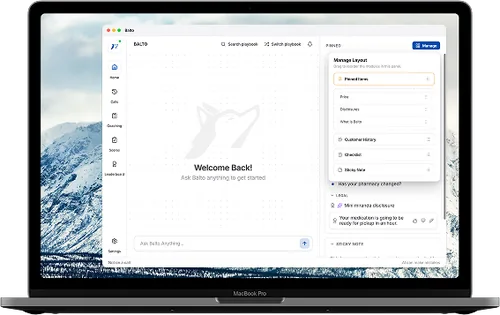
Balto is purpose-built for real-time Agent Assist . Dynamic prompts trigger on keywords in the live conversation. When a customer asks about a loan rate, current product terms and required regulatory language surface on the banker's screen immediately. AgentGPT handles ad-hoc questions during the call ("what's our HELOC minimum draw period?"). AI Notes automates post-call CRM updates so bankers move faster to the next call.
Custom compliance scorecards score 100% of calls against Reg E, Reg Z, TILA, RESPA, and any bank-specific disclosure framework. Closed-loop QA + coaching runs on the same behavioral standards as the real-time Agent Assist prompts, so a pattern surfaced in QA on Monday becomes a live prompt on Tuesday's calls. Analyst activity tracking provides audit-ready evidence trails for regulatory review.
Banking customers include Truist. Nine years of deployment across 300+ contact centers, with financial services as one of the platform's strongest verticals.
Best for: regional banks, community banks, credit unions, and enterprise national banks running compliance-heavy contact centers where real-time regulatory prompts and 100% QA coverage matter equally.
Key features:
- Real-time Agent Assist prompts triggered by keywords on live calls
- AgentGPT knowledge chat assistant for ad-hoc banker questions
- AI Notes automating post-call CRM updates
- Custom compliance scorecards for banking regulations (Reg E, Reg Z, TILA, RESPA)
- Closed-loop QA + coaching on shared behavioral standards
- Analyst activity tracking for audit-ready evidence
- 60+ native CCaaS and telephony integrations
Pricing: Custom. Contact sales for a demo.
2. Observe.AI: Best for Enterprise QA-Integrated Real-Time Agent Assist with Pre-Built Compliance Scorecards

Observe.AI combines real-time Agent Assist with automated QA and pre-built compliance scorecards for financial services. The platform scans 100% of calls, and the QA scorecards ship with pre-built categories for common banking compliance frameworks (Reg E, TILA, HIPAA for wealth). Real-time features are present but the platform's center of gravity is post-call QA depth.
Best for: enterprise banks in compliance-heavy segments (mortgage servicing, collections, fraud response) where pre-built financial services compliance scorecards accelerate deployment.
Key features:
- 100% call coverage with automated QA
- Pre-built compliance scorecards for financial services
- Real-time compliance monitoring
- Generative AI post-call summaries
- Coaching workflow integration
Pricing: Custom.
3. Cresta: Best for Banking Sales Motions Where AHT Reduction Ties to Cross-Sell Conversion

Cresta specializes in real-time behavioral coaching during live conversations, with custom generative AI trained on top-performer calls. For banking, the strongest fit is cross-sell motions (deposit customer to loan customer, checking to wealth) and retention calls where objection handling directly ties to conversion.
Best for: banks with strong outbound sales or cross-sell motions where custom generative AI trained on top-performer calls justifies enterprise investment.
Key features:
- Real-time behavioral coaching prompts during live calls
- Custom AI models trained on top-performer conversations
- Conversation intelligence and post-call analytics
- Native integrations with modern CCaaS platforms
Pricing: Custom, enterprise-tier.
Category 2: Banking-Specific Conversational AI + Agent Assist Platforms
Category 2 tools are purpose-built for banking use cases. Rather than a general contact center AI adapted to the vertical, they start from the banking operating model (deposit accounts, lending, cards, fraud, wealth) and build outward. They often include pre-built banking flows, integrations with core banking systems (Jack Henry, FIS, Fiserv), and terminology tuned to banking-specific language. For banks wanting a vertical-native platform, Category 2 is a real option worth evaluating alongside Category 1.
4. Kore.ai (BankAssist): Best for Banks Wanting a Purpose-Built Virtual Assistant Platform with Pre-Built Banking Flows

Kore.ai's BankAssist is a banking-specific conversational AI platform with pre-built flows for common banking use cases: account balance inquiries, transfers, card management, fraud reporting. It's more focused on customer-facing AI virtual assistants than agent-facing real-time Agent Assist, but includes some agent-facing capabilities as part of the broader platform.
Best for: enterprise and mid-market banks wanting a vertical-native platform with pre-built banking automation flows.
Key features:
- Pre-built banking flows for common use cases
- Banking-specific NLU and terminology
- Integrations with core banking systems
- Multi-channel (voice, chat, SMS) deployment
Pricing: Enterprise custom pricing.
5. eGain: Best for Banks Wanting AI Knowledge Management Combined with Agent Assist for CX Automation

eGain is an AI knowledge platform for CX automation that combines knowledge management, virtual assistants, and agent assist inside a single platform. For banks specifically, the differentiator is the depth of the knowledge management layer. When a banker gets a complex question about a specific product variant or state-specific disclosure, eGain surfaces the right knowledge article on the screen with governance controls that ensure the content is current and approved.
Best for: mid-market and enterprise banks that want AI-powered knowledge management combined with agent assist inside one platform.
Key features:
- AI Knowledge Hub with governance and version control
- Virtual assistant + agent assist inside one platform
- Compliance-oriented knowledge governance
- Native integrations with common banking CCaaS platforms
Pricing: Custom.
6. Uniphore (X-Assist): Best for Large Banks Wanting Enterprise Conversation AI with Global Banking Deployment

Uniphore's X-Assist provides real-time Agent Assist capabilities inside a broader enterprise conversation AI platform. Uniphore has particularly strong global deployment credentials, with banking customers across North America, Europe, and Asia-Pacific. The platform combines emotion AI, conversation intelligence, and agent-facing real-time features.
Best for: large national and multinational banks wanting enterprise conversation AI with strong global deployment credentials.
Key features:
- Real-time Agent Assist capabilities (X-Assist)
- Emotion AI and conversation intelligence
- Global enterprise banking deployment
- Broad language and locale support
Pricing: Enterprise custom pricing.
Category 3: Enterprise Contact Center AI (CCaaS-Native + Analytics)
Category 3 tools sit at the CCaaS or analytics layer inside broader enterprise platforms. They show up in most large bank shortlists because most enterprise banks have already committed to a CCaaS or analytics vendor, and the AI features come bundled inside that platform. Useful complementary layer when the broader platform commitment is already made. Over-scoped for community banks and credit unions without an existing enterprise CCaaS footprint.
7. NICE Enlighten AI: Best for Enterprise National Banks Fully Standardized on NICE CXone

NICE Enlighten AI is the AI layer inside the NICE CXone platform, powered by NICE's Enlighten models. It provides real-time agent assist capabilities, automated QA, and speech analytics natively integrated with NICE CCaaS and WFM. For enterprise banks fully standardized on NICE CXone, the value is native integration rather than purpose-built AI capabilities.
Best for: enterprise national banks fully standardized on NICE CXone for CCaaS.
Key features:
- Native integration with NICE CXone CCaaS, WFM, QA
- AI-powered real-time and post-call analytics
- Enlighten Copilot for conversational AI queries
- Compliance monitoring
Pricing: Bundled with NICE CXone tiers.
8. Verint: Best for Enterprise Banks with Existing Verint WFM/WEM Footprint

*Note: Verint acquired Calabrio in 2025. Calabrio ONE now sits inside the Verint CX Automation Platform.*
Verint's AI sits inside a broader workforce engagement management suite that covers WFM, speech analytics, quality management, and compliance. For enterprise banks already standardized on Verint for WFM and analytics, adding AI extends the existing platform rather than adding a vendor. The center of gravity is post-call speech analytics and QA, with real-time features present but not the core focus.
Best for: enterprise banks already committed to the Verint WEM suite for WFM and quality management.
Key features:
- Verint WEM suite integration (WFM, QM, analytics)
- Speech analytics with compliance categories
- AI-powered QA scoring
- Regulatory reporting capabilities
Pricing: Enterprise custom pricing.
9. CallMiner: Best for Enterprise Banks with Mature Analyst Teams Built on CallMiner Speech Analytics

CallMiner is one of the oldest names in speech analytics, with deep enterprise footprint dating back to 2003. For enterprise banks with existing CallMiner deployment and analyst teams that have built years of custom categorizations, the platform stays sticky. The center of gravity is post-call speech analytics; real-time capabilities exist but weren't the original product focus.
Best for: enterprise banks with existing CallMiner deployment they aren't ready to migrate off.
Key features:
- Speech and text analytics across voice, chat, email
- Compliance monitoring and regulatory reporting
- Sentiment analysis and topic modeling
- Deep customization for analyst teams
Pricing: Enterprise custom pricing.
Which AI Agent Assist Platform Is Best for Large National Banks?
Large national banks (JPMorgan Chase, Bank of America, Wells Fargo, Citi tier plus Tier 2-3 nationals) have specific needs: enterprise-scale deployment, deep governance and audit trails, existing platform commitments, and multi-vertical operations spanning consumer banking, wealth, and commercial.
- Top pick for large national banks: Balto for compliance-heavy regulated calls (mortgage servicing, collections, fraud response). The CMP Research #1/51 ranking and G2 #1 rated designation apply at enterprise scale, and 60+ CCaaS integrations mean the platform drops into most enterprise stacks without a heavy systems integration project. Truist as a banking customer proves the platform holds at enterprise national bank scale.
- Strong choice for pre-built compliance scorecards: Observe.AI when the priority is deploying against known financial services compliance frameworks quickly.
- Right pick if you're committed to the broader analytics or WEM suite: CallMiner (existing footprint), Verint (WEM standardization), or NICE Enlighten (NICE CXone standardization). Not better than Category 1 real-time Agent Assist on the AI dimension, but the right answer when the broader platform commitment is already made.
Which AI Agent Assist Platform Is Best for Community Banks and Credit Unions?
Community banks (under $10B in assets) and credit unions have different priorities: fast deployment, pricing that scales down, ramp-time reduction (turnover is a real cost at community scale), and platforms that don't require an enterprise systems integration project.
- Top pick for community banks and credit unions: Balto because deployment is 4-6 weeks vs. 6-12 months for enterprise suites; pricing scales down for community-institution scale; and the closed-loop model (real-time Agent Assist + automated QA + coaching on shared standards) delivers the ramp-time reduction credit unions especially need. New bankers get to full productivity 50% faster on average with real-time Agent Assist during onboarding.
- Watch out for: Category 2 vendors that are enterprise-scale (Kore.ai, eGain, Uniphore) are powerful but usually over-scoped for community banks and credit unions. Category 3 enterprise analytics tools (CallMiner, Verint, NICE) are also generally over-scoped for community-institution deployments. Both categories work for enterprise but are the wrong shape for community-scale operations.
- Realistic path forward for community institutions: Start with a Category 1 real-time Agent Assist platform (or Observe.AI if you have a specific compliance framework need), deploy in 4-6 weeks, and add layers only if the operation grows into enterprise scale.
Common Mistakes Banking Leaders Make Buying AI Agent Assist
Every banking AI project I see makes at least one of the mistakes below. These are the reasons so many deployments miss their compliance and coaching targets.
- 1. Buying conversation intelligence when the drag is real-time compliance. Gong-style post-call review platforms don't help the banker at the moment they need to give a Reg E disclosure on a live call. If the drag is real-time compliance risk, buy a Category 1 real-time Agent Assist tool.
- 2. Ignoring the ramp time payoff. Banking has 60-120 day ramp cycles because of regulatory training and product complexity. Real-time Agent Assist that carries compliance guardrails plus product terminology is the biggest ramp-time lever available. Contact centers running real-time Agent Assist see ramp time drop 50% on average.
- 3. Assuming enterprise = right for you. Community banks and credit unions don't need Verint or NICE-scale platforms. Enterprise deployments take 6-12 months and price accordingly. Diagnose your scale before shortlisting so you don't waste the RFP cycle.
- 4. Treating compliance scorecards as an afterthought. The QA/compliance scorecard is the whole point in a regulated banking context. If the platform doesn't let you fully customize scorecards for your specific regulatory framework (Reg E, Reg Z, TILA, RESPA, state rules), it's not the right platform.
- 5. Buying AI in isolation from coaching. The strongest banking deployments run real-time Agent Assist, automated QA, and coaching on the same behavioral standards. Point-tool sprawl doubles the vendor management overhead and leaves compounding gains on the table.
Banking AI Agent Assist Category-Fit Diagnostic
Different banking priorities point to different categories. This 5-question diagnostic routes you to the category most likely to move your banking contact center forward fastest.
Key Banking AI Statistics
Bring It All Together
Real-time Agent Assist is the direct-answer AI category for banking contact centers because it addresses the two compounding challenges banking faces at unique intensity: regulatory compliance and product complexity. Balto ranks #1 because it is publicly #1 rated Agent Assist on G2 and Capterra, #1 out of 51 QA automation solutions by CMP Research, and has proven banking deployment via Truist and other financial services customers.
Observe.AI is the strongest Category 1 alternative for compliance-first enterprise banks with pre-built financial services scorecards. Cresta is the right pick when banking sales motions (cross-sell, retention) are the priority.
Category 2 (Kore.ai, eGain, Uniphore) are legitimate vertical-native options for enterprise banks that want purpose-built banking flows and don't already have a real-time Agent Assist commitment. Category 3 (NICE, Verint, CallMiner) are the right pick only if you're already committed to the broader CCaaS or analytics suite.
Large national banks and community banks or credit unions both have viable paths, but the decision is less about size and more about how tightly you want real-time Agent Assist, automated QA, and coaching integrated on shared behavioral standards.
FAQs
Real-time Agent Assist is AI that surfaces guidance on the banker's screen during a live call. In a banking context, it means the required regulatory disclosure (Reg E for electronic transfers, Reg Z for lending, TILA for consumer credit) appears at the right moment in the conversation, and the current product terms surface when the customer asks about a rate or fee.
The value in banking specifically is that it removes the cognitive load of remembering every disclosure timing requirement and every product variation, which lets the banker focus on the conversation itself.
For large national banks (JPMorgan Chase, Bank of America, Wells Fargo, Citi tier plus Tier 2-3), the top pick is Balto. The CMP Research #1/51 ranking and G2 #1 rated designation apply at enterprise scale, and Truist proves the platform holds at national bank complexity.
Strong alternatives: Observe.AI for pre-built financial services compliance scorecards, or one of the Category 3 platforms (CallMiner, Verint, NICE Enlighten) if you're already committed to the broader analytics or CCaaS suite.
For community banks (under $10B) and credit unions, the top pick is Balto. Deployment is 4-6 weeks vs. 6-12 months for enterprise suites, pricing scales down, and the closed-loop model delivers the ramp-time reduction community institutions need most.
Enterprise Category 2 vendors (Kore.ai, eGain, Uniphore) and Category 3 platforms (CallMiner, Verint, NICE) are typically over-scoped for community-scale operations.
Real-time Agent Assist helps banking compliance in three ways. First, it prompts the banker to give required regulatory disclosures at the right moment in the conversation (Reg E, Reg Z, TILA, RESPA). Second, automated QA scores 100% of calls against custom compliance scorecards, so every regulated call is verified rather than a 1-3% sample.
Third, the closed loop means compliance findings feed coaching sessions and update real-time Agent Assist prompts on the same behavioral standards, so the compliance-QA-coaching workflow regulators want to see happens automatically.
Yes, materially. Banking has structurally long ramp cycles (60-120 days) because of regulatory training and product complexity. Real-time Agent Assist that carries the compliance guardrails plus product terminology acts as a live safety net during the ramp period.
Contact centers running real-time Agent Assist see ramp time drop 50% on average when new bankers get real-time Agent Assist during onboarding, because they can handle live regulated calls competently before they've fully internalized every compliance requirement.
Banking-specific AI (Category 2 tools) starts from the banking operating model (deposit accounts, lending, cards, fraud, wealth) and builds pre-built flows and integrations for those use cases. General-purpose agent assist platforms (Category 1) are horizontal contact center AI that gets configured to your bank's specific needs.
Banking-specific tools are faster to deploy on standard banking flows. General-purpose real-time Agent Assist platforms are more flexible on custom banking scorecards and behavioral standards.
AI virtual assistants are customer-facing. A customer asks a chatbot or IVR for their balance, and the AI responds directly without a human. AI agent assist is banker-facing. A customer calls a banker with a complex question, and the AI helps the banker respond by surfacing prompts, product terms, and required disclosures on the banker's screen.
Most banks need both. Virtual assistants handle routine inquiries (balance, transfer, card lock). Real-time Agent Assist handles complex regulated calls where a human banker is required.
Yes, when configured for each context. Retail banking calls tend to focus on individual customer accounts, product cross-sell, and fraud response. Commercial banking calls tend to involve larger transactions, cash management, treasury services, and more complex regulatory frameworks.
Custom scorecards and product terminology can be configured for each context. Banks running both retail and commercial contact centers typically deploy the same platform with different scorecard configurations for each segment.
Five questions filter serious vendors from marketing hype. First, does the platform score 100% of calls against my custom compliance scorecards (Reg E, Reg Z, TILA, RESPA), or use their default template? Second, does the AI prompt on the live call, or only score post-call?
Third, what specific banking customers do you have, and what banking deployment data can you show me? Fourth, how does the platform close the loop between QA findings and coaching sessions? Fifth, what's the actual deployment timeline three current customers report, not what the sales team promises?
Liked what you read? See Balto in action.
Balto helps leading contact centers turn insights into outcomes, in real time. Book a live demo to discover how our AI powers better conversations, coaching, and conversions.