











Best Call Center Software for Banking (2026 Guide)


The 10 best call center software solutions for banking in 2026 are organized across three layers: a phone system and routing layer (CCaaS), an AI Brain layer for real-time intelligence and compliance enforcement, and a CRM layer for customer context. Generic software lists don’t address what banking contact centers actually face: PCI DSS requirements on every call, FINRA supervision obligations, GLBA data privacy controls, active fraud risk, and high-stakes customer moments where a wrong word has regulatory consequences.
Consider the scale of the problem. Software fragmentation in financial services contact centers is well-documented, 77% of banking interactions now occur through digital channels, and the infrastructure to support that volume has to be built deliberately. Meanwhile, 46% of adults are open to switching banks or using multiple institutions, which means every contact moment is a retention moment, not just a service transaction.
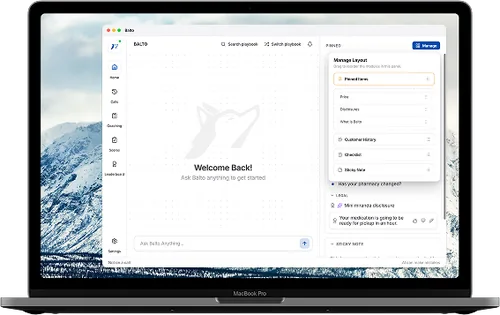
Balto , the AI Workforce for the contact center, anchors the AI Brain layer in this guide as the tool that closes the loop between real-time compliance guidance, automated QA, and coaching.
This guide covers:
- The three-layer framework for building a banking contact center stack
- All 10 tools reviewed in depth, organized by layer and function
- A comparison table across key features, pricing, and best fit
- A practical how-to-choose section for evaluating your current stack
- A quiz to identify which layer your organization needs to prioritize first
Each layer is reviewed in sequence: CCaaS first, then the AI Brain, then CRM. Read straight through or jump to the layer that matches your immediate gap.
Quick Summary: 10 Best Call Center Software Solutions for Banking
Here is a quick overview of all tools by layer:
Layer 1, Phone System & Routing (CCaaS):
- Genesys Cloud CX: Enterprise-grade omnichannel routing with predictive AI and PCI-compliant recording built for large financial institutions with complex call flow requirements
- NICE CXone: A combined CCaaS and workforce optimization platform with compliance recording, GDPR controls, and post-call speech analytics in a single environment
- Five9: Cloud-native contact center platform with a 99.99% uptime SLA and strong outbound dialing for collections, fraud alerts, and proactive account outreach
- Talkdesk: AI-native CCaaS with a dedicated Financial Services Experience Cloud, pre-built banking workflows, and PCI DSS Level 1 certification for faster deployment
Layer 2, The AI Brain:
- Balto: The AI Workforce for the contact center, a closed-loop system where real-time guidance, QA, coaching, and insights run on shared standards and get smarter with every call
- Observe.AI: AI workforce platform that analyzes 100% of banking calls for Auto QA, compliance scoring, PCI redaction, and FINRA/SOX omnichannel reporting
- Level AI: AI conversation intelligence with flexible, configurable QA evaluation rubrics built to match bank-specific compliance criteria and disclosure requirements
- Cresta: Real-time coaching for revenue-generating banking conversations, with top-performer replication and knowledge surfacing for cross-sell and upsell programs
Layer 3, CRM:
- Salesforce Financial Services Cloud: Purpose-built banking CRM with a financial data model covering accounts, households, and product relationships, plus Agentforce Voice for AI-assisted calls
- Microsoft Dynamics 365: Integrated CRM and contact center platform for Microsoft 365 environments, with Copilot AI for call summaries, next-step recommendations, and unified governance
Comparison Table
Comparison Table
| Tool | Layer | Best For | Standout Feature | Pricing |
|---|---|---|---|---|
| Genesys Cloud CX | CCaaS | Enterprise omnichannel routing | Predictive AI routing before call connects | Custom |
| NICE CXone | CCaaS | CCaaS + WFO in one platform | PCI recording + native speech analytics | Custom |
| Five9 | CCaaS | Outbound-heavy banking operations | 99.99% uptime SLA + predictive dialer | From ~$149/agent/mo |
| Talkdesk | CCaaS | Mid-market with banking pre-builds | Financial Services Experience Cloud | From $85/agent/mo |
| Balto | AI Brain | Real-time compliance enforcement | Closed-loop: guidance + QA + coaching | Custom |
| Observe.AI | AI Brain | 100% automated QA + PCI redaction | Automatic PCI/PII redaction on recordings | Custom |
| Level AI | AI Brain | Configurable QA rubrics for banking | Flexible evaluation frameworks | Custom |
| Cresta | AI Brain | Cross-sell and upsell programs | Top-performer replication at scale | Custom |
| Salesforce FSC | CRM | Banking CRM with financial data model | Agentforce Voice with compliance guardrails | From ~$225/user/mo |
| Microsoft Dynamics 365 | CRM | Microsoft 365 ecosystem banks | Copilot AI embedded in CRM interface | From ~$110/user/mo |
Layer 1: Phone System & Routing (CCaaS)
CCaaS is the foundation of the banking contact center stack. It routes and connects calls, manages omnichannel queues across voice, chat, email, and digital channels, and provides the infrastructure for PCI-compliant recording. Without a solid CCaaS layer, nothing else in the stack works at scale.
What separates CCaaS tools for banking from generic contact center platforms is compliance infrastructure: PCI-DSS compliant recording with pause-and-resume, secure IVR for collecting sensitive data without exposing it to agents, full audit trails that meet FINRA and SOX requirements, and role-based access controls on call recordings and data. CCaaS handles infrastructure reliably, but it doesn’t coach agents during live conversations or monitor compliance as it happens. That’s a different layer entirely.
Genesys Cloud CX: Best for Enterprise Banking Contact Centers

Genesys Cloud CX is an enterprise-grade AI-powered contact center platform used by major financial institutions globally. Its predictive routing, PCI-compliant recording infrastructure, and omnichannel orchestration make it one of the most complete CCaaS options for large banks running high-volume, multi-channel contact operations. Compliance tooling includes automatic call logging, granular access controls, and audit trails built to meet FINRA and SOX requirements.
Best for: Enterprise banks running high-volume omnichannel contact centers with complex routing requirements
Key features:
- Predictive routing using AI customer intent signals: matches callers to agents before the call connects
- PCI-DSS compliant call recording with pause-and-resume and automatic sensitive data redaction
- Omnichannel queue management across voice, chat, email, and social media in a unified interface
- Native workforce management with real-time and historical analytics dashboards
Pricing: Custom pricing, contact Genesys for banking enterprise rates
NICE CXone: Best for Unified CCaaS and Workforce Optimization
NICE CXone is a comprehensive contact center platform that combines CCaaS with built-in workforce optimization. NICE has a strong financial services customer base, and its compliance tooling, interaction recording with media lifecycle management, GDPR/PII tools, and audit-ready reporting, is purpose-built for regulated industries. For banks looking to consolidate CCaaS and WFO into one environment, NICE reduces the vendor sprawl that often complicates banking contact center operations.
Best for: Banks that want CCaaS and workforce optimization in one platform to reduce vendor complexity
Key features:
- PCI-compliant interaction recording with media lifecycle management, GDPR, and PII compliance controls
- Workforce optimization suite covering forecasting, scheduling, and performance management
- AI-powered omnichannel routing with intent detection across voice and digital channels
- Built-in speech analytics for post-call trend identification and compliance review
Pricing: Custom pricing, available in per-agent tiers; contact NICE for banking-specific plans

Five9: Best for Banking Outbound and Inbound Operations

Five9 is a cloud-native contact center platform built for high-volume environments. It’s well-suited for banking operations that run active outbound programs alongside inbound service, collections, fraud alerts, account notifications, without sacrificing inbound quality. Its 99.99% uptime SLA matters in an industry where downtime has direct regulatory and reputational consequences, and its PCI-DSS compliant recording meets the baseline infrastructure requirements for most banking contact centers.
Best for: Mid-market banks and credit unions with significant outbound programs alongside inbound service needs
Key features:
- Cloud-native architecture with 99.99% uptime SLA: critical for banking availability and compliance standards
- Intelligent Virtual Agent (IVA) for self-service across voice and digital channels
- PCI-DSS compliant with built-in call recording, encryption, and role-based access controls
- Predictive dialer for outbound campaigns including collections, fraud alerts, and renewal calls
Pricing: Core plans from approximately $149/agent/month, enterprise pricing available on request
Talkdesk: Best for Mid-Market Banks With AI-Native Workflows

Talkdesk is an AI-native contact center platform with a dedicated Financial Services Experience Cloud. The platform offers pre-built banking workflows, fraud detection integrations, and PCI DSS Level 1 certification, which reduces the compliance configuration burden for banks compared to general-purpose CCaaS platforms. For mid-market institutions that want faster deployment timelines than Genesys or NICE without sacrificing financial services specificity, Talkdesk is the strongest option in Layer 1.
Best for: Banks and credit unions that want pre-built banking workflows and faster deployment than enterprise-tier platforms
Key features:
- Talkdesk Financial Services Experience Cloud: pre-built banking workflows and core system integrations
- PCI DSS Level 1 certified with fraud detection integrations and secure IVR for sensitive data handling
- AI-powered virtual agents for account inquiries, balance checks, and loan status at scale
- Real-time agent assist with next-best-action suggestions embedded in the agent interface
Pricing: CX Cloud Essentials from $85/agent/month, Financial Services Cloud pricing available on request
Layer 2: AI Brain (AI Workforce & Intelligence)
This is the layer most banking contact centers are missing. CCaaS platforms route calls well, but they don’t coach agents during live conversations, monitor compliance as it happens, or automatically trigger a coaching session when a QA failure is identified. Banking compliance failures happen in the moment, during a call where an agent skips a required disclosure, mishandles sensitive data, or fails to follow the correct verification protocol.
The AI Brain layer closes that gap. Tools in this layer monitor 100% of interactions rather than a sampled subset, surface guidance in real time, and turn conversation data into actionable coaching outcomes. That’s what separates banks that catch compliance gaps after the fact from those that prevent them from occurring in the first place.
Banks investing in compliance training saw a 25% improvement in staff adherence to fraud detection protocols. But training alone isn’t enough: real-time enforcement during live calls is what locks in the behavior change. DBS Bank reported that AI-powered compliance systems delivered a 90% reduction in false positives, significantly reducing the volume of alerts requiring manual review.
Understanding call center compliance fundamentals is the starting point. The AI Brain layer is what operationalizes those requirements at the agent level, on every call, without relying on post-call review to catch failures.
Balto: Best for Real-Time Compliance and Closed-Loop AI

Balto is built on a closed-loop architecture that most AI Brain tools don’t replicate: real-time guidance, automated QA, and coaching automation all running on shared standards, connected to each other. For banking, that architecture directly addresses the compliance problem.
The real-time AI Checklist prompts agents to hit mandatory disclosures, verification steps, and compliance language as the call unfolds, not after it ends. When an agent misses a disclosure, Balto flags it in the moment, giving the agent the opportunity to correct before the call closes. Every call is scored automatically through Balto’s QA engine, 100% coverage, no sampling lag, no reviewer backlogs.
When a QA score reveals a compliance gap, Balto’s coaching automation triggers a targeted coaching session for that specific agent on that specific behavior. That closes the loop between the failure and the fix. BaltoGPT Insights gives leadership visibility into conversation trends, compliance risk patterns, and cross-sell signals, pulled from every call, not a 2-3% sample.
The results at Midwest Fidelity illustrate the impact directly: after implementing Balto, monthly compliance violations dropped from 30 to 1, while customer satisfaction scores increased 45%. Across Balto’s customer base, the platform has driven a 26% increase in conversion rates, a 25% increase in CSAT scores, and 75% faster ramp times for new agents.
Understanding what Balto prevents on live calls is clearest when viewed through the lens of PCI compliance requirements for call centers , the disclosure and data handling obligations that real-time guidance makes enforceable at every interaction.
Best for: Banking contact centers that need real-time compliance enforcement, automated QA, and coaching all running on shared standards
Key features:
- Real-time AI Checklist: prompts agents to hit mandatory disclosures, verification steps, and compliance language as the call happens
- Automated QA scoring on 100% of calls: no sampling, no manual reviewer backlogs
- Coaching automation that triggers targeted sessions from QA failures: closes the loop between compliance gaps and behavior change
- BaltoGPT Insights: surfaces conversation trends, compliance risk patterns, and cross-sell signals for leadership visibility
Pricing: Custom pricing, contact Balto for banking-specific plans
Observe.AI: Best for 100% Automated QA With PCI Redaction

Observe.AI automates quality assurance at 100% coverage, every call scored, no sampling. For banking, its automatic PCI and PII redaction on call recordings removes a significant manual compliance workload from QA teams. The platform monitors regulatory adherence across all interactions and generates audit-ready reporting for FINRA and SOX review cycles. For institutions whose primary gap is QA coverage and compliance documentation rather than real-time intervention, Observe.AI is a strong fit.
Best for: Banks that need 100% automated QA coverage with automatic PCI/PII redaction and compliance reporting
Key features:
- 100% automated QA scoring across voice and digital interactions: eliminates manual sampling entirely
- Automatic PCI and PII redaction on call recordings: critical for payment data handling compliance
- Real-time agent assist with live knowledge surfacing and next-best-action prompts during calls
- Omnichannel compliance reporting with detailed audit trails for FINRA and SOX review
Pricing: Custom pricing, contact Observe.AI for financial services plans
Level AI: Best for Configurable Banking QA Rubrics

Level AI delivers AI-driven conversation intelligence with automated QA scoring across 100% of interactions. Its evaluation rubrics are highly configurable, which matters for banks whose compliance requirements don’t map cleanly to generic QA templates. Supervisors can build banking-specific scorecards covering disclosure language, verification steps, and fraud protocols, then track adherence at the agent, team, and program level over time.
Best for: Banking contact centers that need flexible, configurable AI QA rubrics to match their specific compliance and service standards
Key features:
- AI-powered conversation intelligence with automated QA scoring on all interactions
- Configurable evaluation rubrics: adaptable to banking-specific compliance criteria and disclosure requirements
- Agent performance analytics with trend identification across teams, time periods, and call types
- Direct integration with major CCaaS platforms for automated data ingestion and workflow triggers
Pricing: Custom pricing, contact Level AI for enterprise plans
Cresta: Best for Banking Revenue and Cross-Sell Programs

Cresta focuses on real-time coaching for revenue-generating conversations. For banking contact centers running active cross-sell and upsell programs, loans, credit cards, savings products, Cresta surfaces next-best offers and coaching prompts as the conversation unfolds. It identifies top-performer behaviors and replicates them across the agent population, making it particularly effective for standardizing sales technique at scale.
Best for: Banking contact centers with active cross-sell and upsell programs where real-time coaching drives revenue
Key features:
- Real-time AI coaching during live calls: surfaces next-best offers and conversation guidance as opportunities arise
- Top-performer replication: identifies successful agent behaviors and embeds them as live prompts for the broader team
- Conversation intelligence with automated QA and call categorization for performance analysis
- AI knowledge base surfacing for complex product inquiries including loan terms and investment product details
Pricing: Custom pricing, contact Cresta for financial services plans
Layer 3: CRM & Customer Data
The CRM layer gives agents customer context before and during calls, account history, product relationships, open cases, and compliance flags. Without it, the CCaaS routes the call correctly and the AI Brain guides the conversation, but the agent starts from zero on every interaction. That’s a solvable problem, and CRM is how banking contact centers solve it.
Banking CRMs differ from generic CRMs in their data model. They’re built around households, financial product relationships, and account hierarchies, not just contact records and deal stages. That difference matters when customer experience in financial services depends on agents knowing the full relationship picture, not just the last open ticket. Research shows 80% of agents already report using four or more applications per customer interaction, a purpose-built banking CRM consolidates that context into one view.
Salesforce Financial Services Cloud: Best for Banking CRM With Full Relationship View

Salesforce Financial Services Cloud is a purpose-built banking CRM that gives contact center agents a 360-degree view of the customer, accounts, household relationships, financial goals, open cases, and recent transactions, before and during calls. Its Agentforce Voice capability lets banks deploy pre-built AI agent templates on voice channels with compliance guardrails built in, extending automation into the call itself without custom development work.
Best for: Banks and wealth management firms that want a purpose-built financial CRM with deep contact center integration
Key features:
- Financial data model built for banking: accounts, households, financial goals, and product relationships in one view
- Agentforce Voice: pre-built AI agent templates for voice channel deployment with compliance guardrails
- 360-degree customer view surfaced to agents during calls: account history, open cases, recent transactions
- Prebuilt banking APIs (BIAN standards) for core banking system integration without custom middleware
Pricing: Financial Services Cloud from approximately $225/user/month, enterprise pricing available
Microsoft Dynamics 365: Best for Microsoft 365 Ecosystem Banks

Microsoft Dynamics 365 Contact Center embeds contact center capabilities directly within the CRM, agents handle voice, chat, and digital channels without switching applications. For banks already operating in the Microsoft 365 and Teams ecosystem, the integration lift is minimal. Copilot AI capabilities, call summaries, next-step recommendations, case resolution suggestions, are immediately available within the same interface agents already use for customer records.
Best for: Banks and credit unions already in the Microsoft ecosystem that want an integrated CRM and contact center with Copilot AI
Key features:
- Dynamics 365 Contact Center embedded within CRM: voice, SMS, chat, and Teams in one agent interface
- Microsoft Copilot integration: AI-generated call summaries, next-step recommendations, and case resolution suggestions
- Omnichannel capabilities across all digital channels with unified customer history and interaction context
- Native integration with Microsoft 365, Teams, and Azure compliance tools for unified governance
Pricing: Dynamics 365 Contact Center from approximately $110/user/month, Copilot add-ons available separately
How to Choose the Right Banking Contact Center Stack
Most banking contact centers don’t need to build a stack from scratch. They need to identify which layer is missing and close the gap. These four criteria help focus that evaluation.
Start with compliance requirements. Map your specific regulatory obligations before evaluating any tool. PCI DSS applies if agents handle payment card data on calls. FINRA supervision requirements apply to brokerage and investment service teams. GLBA data privacy controls apply to all US banks handling consumer financial data. State-level privacy laws, CCPA, CPRA, and others, layer on top of federal requirements for banks operating in regulated states. The compliance obligations determine which features are non-negotiable in each layer and which tools meet the baseline without custom configuration.
Audit your current CCaaS before adding to it. Most banks already have a phone system. The question often isn’t which CCaaS to select, it’s whether the existing infrastructure supports the integrations the AI Brain and CRM layers require. Before evaluating new tools, confirm what your current platform exposes via API and what data it passes to downstream systems. An AI Brain tool that can’t receive call audio in real time is effectively a post-call tool, regardless of what the vendor calls it.
Evaluate the AI Brain layer first if you have active compliance gaps. Research shows that 60% of financial organizations have seen an increase in fraudulent activity over the last 12 months, and most compliance failures happen during live calls, not in post-call review. The AI Brain layer addresses the live conversation. Post-call QA catches failures; real-time guidance prevents them. This dynamic plays out the same way in other regulated industries, see our review of best call center software for insurance companies for a parallel example.
Want to see how Balto’s real-time compliance enforcement works in a banking environment? Watch a quick demo →
Pilot before committing. The integration complexity between layers, CCaaS to AI Brain to CRM, is where banking software deployments most often slow down. Run a pilot with a single team or queue before rolling out platform-wide. A 60-day pilot on one product line gives you real data on integration latency, agent adoption, and compliance impact before you’re committed to a full deployment.
The three-layer framework is the right mental model: CCaaS handles infrastructure, the AI Brain handles intelligence, and CRM provides context. Each layer functions independently, but the value compounds when data flows between them, when a compliance flag in the AI Brain layer surfaces in the CRM record, and when a QA failure triggers a coaching session that changes behavior before the next call.
The standouts by layer: Genesys Cloud CX and NICE CXone lead Layer 1 for enterprise institutions. Balto leads Layer 2 as the only tool that closes the loop between real-time guidance, QA, and coaching on shared standards. Salesforce Financial Services Cloud leads Layer 3 for banks that need a purpose-built financial data model.
Most banking contact centers are running with Layer 1 only. The competitive gap is Layer 2.
FAQs
The best call center software for banking depends on which layer of the stack you're evaluating. For CCaaS, Genesys Cloud CX and NICE CXone lead for enterprise institutions. For the AI Brain layer, real-time guidance, automated QA, and coaching, Balto is the strongest option for compliance-heavy banking environments.
No single tool covers all three layers. The most effective banking contact centers run a coordinated stack: a CCaaS for routing and recording, an AI Brain tool for live compliance enforcement and QA, and a banking CRM for customer context. The tools that work best together are those with clean API integrations between layers.
Banking call centers operate under several overlapping regulatory frameworks. PCI DSS governs how agents handle payment card data on calls, requiring pause-and-resume recording, secure IVR, and data redaction. FINRA requires financial services firms in brokerage and investment services to log, supervise, and retain all customer communications. GLBA mandates that US banks protect the privacy and security of consumer financial data.
SOX compliance applies to publicly traded financial institutions and requires audit trails and access controls on financial data systems. TCPA governs outbound calling, specifically consent requirements for automated and prerecorded calls. State laws including CCPA and CPRA layer additional data privacy requirements on top of federal obligations for banks operating in California and other regulated states.
The practical implication: compliance isn't a single checkbox. It's a set of concurrent requirements that the CCaaS, AI Brain, and CRM layers each need to support independently.
AI improves banking contact center performance across three distinct phases. In real-time guidance, AI prompts agents to follow correct disclosure language, verification protocols, and fraud identification steps as the call happens, reducing compliance failures and improving first-call accuracy. In automated QA, AI scores 100% of interactions rather than the 2-3% a manual QA team can realistically cover.
In coaching and analytics, AI converts QA data into targeted coaching moments, identifying which agents need training on which specific behaviors, and triggering those sessions automatically. At the leadership level, AI surfaces conversation trends and risk patterns from the full call volume, not a sample. DBS Bank reported a 90% reduction in false positives after implementing AI-powered compliance systems. Balto customers have seen a 26% increase in conversion rates and 25% higher CSAT scores across their agent populations.
PCI DSS, the Payment Card Industry Data Security Standard, sets requirements for any organization that handles credit or debit card data during customer interactions. For banking call centers, this includes pause-and-resume recording (stopping the recording when card numbers are spoken), secure IVR that collects sensitive data without exposing it to agents, and role-based access controls on call recordings containing financial data.
Non-compliance carries significant risk. PCI DSS violations can result in fines ranging from $5,000 to $100,000 per month depending on the severity and duration of the breach. More critically, a single data exposure event carries reputational consequences in an industry where customer trust is the core product.
The AI Brain layer is what makes PCI compliance operationally sustainable at scale. Real-time guidance tools prompt agents to activate pause-and-resume before card data is spoken, enforcing the protocol on every call rather than relying on agents to remember it independently.
Banking call center software should cover the requirements of all three layers. At the CCaaS layer: PCI-DSS compliant call recording with pause-and-resume, secure IVR for sensitive data collection, omnichannel routing across voice and digital channels, and full audit trails for FINRA and SOX compliance.
At the AI Brain layer: real-time agent guidance for compliance language and disclosure steps, 100% automated QA scoring rather than manual sampling, coaching automation that triggers from QA failures, and conversation analytics with compliance risk flagging. At the CRM layer: a financial data model that includes account hierarchies, household relationships, and product history, not just a generic contact record with open cases.
The features that matter most depend on where your current stack has gaps. Most banking contact centers have Layer 1 covered. The features they're missing are almost always in Layer 2.
Real-time agent guidance tools monitor the live conversation using speech recognition and surface prompts, checklists, and alerts directly to the agent's screen as the call progresses. In banking, the most common use cases are compliance disclosure prompts (ensuring agents deliver required language before ending a call), verification protocol enforcement (confirming agents complete identity verification steps in the correct sequence), and fraud risk flagging (alerting agents when call patterns match known fraud indicators).
The operational mechanism is straightforward: the guidance tool listens to the call, compares the conversation against a configured checklist or script, and prompts the agent when a required step hasn't been completed. The agent sees the prompt in real time and can complete the step before the call closes. Balto's AI Checklist operates this way across 100% of calls, not just calls that a supervisor happens to monitor. That coverage difference is what makes real-time guidance materially different from supervisor coaching alone.
CCaaS, Contact Center as a Service, is the telephony and routing layer. It connects calls, manages queues, routes interactions to the right agent or virtual assistant, records conversations, and provides the infrastructure for compliance-grade call logging. CCaaS is the foundation. Without it, calls don't connect.
AI agent assist tools operate at a different level. They listen to the conversation after the call connects and surface real-time guidance, compliance prompts, knowledge base answers, and next-best-action suggestions to the agent during the call. They also score calls for QA and generate coaching recommendations after the call ends. CCaaS doesn't do any of this natively, or does so in a limited way that doesn't meet the depth banking compliance requires.
The practical distinction: CCaaS ensures the call happens correctly. The AI Brain layer ensures the conversation happens correctly. Both are required for a compliant, high-performance banking contact center operation.
First call resolution in banking is driven by three factors: agent knowledge, customer data availability, and call routing accuracy. On the knowledge side, real-time AI guidance tools surface answers to complex product questions, loan terms, rate calculations, account eligibility criteria, as agents need them, without requiring agents to put callers on hold to look up information manually.
On the data side, a banking CRM that surfaces the customer's full account context at call start lets agents respond to the customer's actual situation rather than asking them to re-explain it. On routing, AI-powered intent detection in the CCaaS layer matches callers to the right agent before the call connects, reducing transfers and repeat contacts.
Banks tracking FCR improvement report that combining real-time guidance with complete customer context at call start yields the largest single FCR gains. Addressing routing accuracy alone has a smaller impact than addressing what happens once the call reaches the right agent.
Fraud detection in banking contact centers operates at two levels: the telephony layer and the AI Brain layer. At the telephony layer, CCaaS platforms with fraud detection integrations can flag known bad phone numbers, unusual call patterns such as repeated calls from different numbers asking the same account questions, and voice biometric mismatches if the bank uses voice authentication.
At the AI Brain layer, real-time conversation monitoring can flag calls where agents are being coached by a third party (scripted responses that don't match natural conversation patterns), social engineering attempts (callers providing information in an unusual sequence to avoid verification steps), and calls where an agent is skipping required verification steps that fraud protocols mandate.
The combination of telephony-level fraud signals and real-time conversation monitoring gives banking contact centers visibility into fraud attempts that either layer alone would miss. Banks investing in compliance training saw a 25% improvement in staff adherence to fraud detection protocols, and real-time AI enforcement is what makes that training durable beyond the initial training session.
Banking call center CRM integrations fall into three categories. Core banking system integrations connect the CRM to the bank's system of record, account balances, transaction history, product holdings, and relationship data, so agents see current information during calls rather than stale data from a nightly sync. Most banking CRMs support this via BIAN-standard APIs or pre-built connectors for major core banking platforms.
CCaaS integrations let the CRM surface customer records automatically when a call routes to an agent, screen pop with full account context at call start, no manual search required. AI Brain integrations let the QA and coaching layer write compliance scores and agent notes back into the CRM record, creating a complete audit trail that includes not just what the customer said but how the agent performed.
The integration that most banking contact centers underinvest in is the third one. Without it, compliance scores and coaching data live in a separate system that compliance teams have to cross-reference manually, which eliminates much of the operational value of having automated QA in the first place.
Liked what you read? See Balto in action.
Balto helps leading contact centers turn insights into outcomes, in real time. Book a live demo to discover how our AI powers better conversations, coaching, and conversions.