







Best Call Center Software for Home Improvement (2026)


The best call center software for home improvement companies isn’t a single tool, it’s a three-layer stack: a CCaaS platform to route and record calls, an AI Brain layer to guide agents and score every conversation, and a CRM to give agents full customer context the moment the phone rings.
Home improvement companies pour money into lead generation and lose those leads at the phone. Responding within 60 seconds increases lead conversions by 391%. Only 3% of home improvement companies achieve it, the average response time is 1 day, 5 hours, and 17 minutes. The problem isn’t effort. It’s infrastructure.
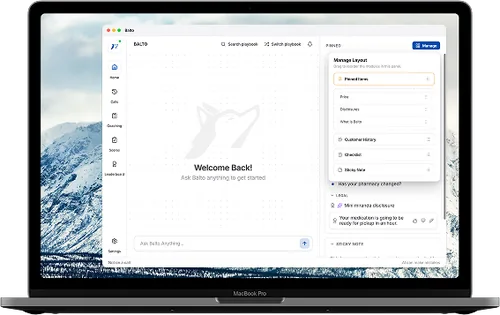
Balto , the AI Workforce for the contact center, anchors the AI Brain layer in this guide as the tool that closes the loop between real-time guidance, automated QA, and coaching for home improvement appointment-setting teams.
This guide covers:
- Why a three-layer stack is the right frame for home improvement contact center software
- Layer 1 (CCaaS): the four best platforms for routing, recording, and outbound dialing
- Layer 2 (AI Brain): the four best tools for real-time agent guidance, automated QA, and coaching
- Layer 3 (CRM): the two best platforms for managing the full customer and job lifecycle
- How to build the stack in the right sequence
- Key home improvement contact center statistics and benchmarks
- Answers to the most common questions about home improvement call center software
Quick Summary: 10 Best Call Center Software Solutions for Home Improvement Companies
Here is a quick overview of all 10 tools by layer:
Layer 1: Phone System and Routing (CCaaS)
- Five9: Cloud-native CCaaS with a best-in-class predictive dialer and TCPA safeguards, built for high-volume home improvement outbound campaigns and lead follow-up.
- Genesys Cloud CX: Enterprise-grade omnichannel platform with AI routing and workforce management, ideal for multi-location home improvement franchises and regional operators.
- Talkdesk: AI-native mid-market CCaaS with a built-in virtual agent for after-hours lead capture and automated call summaries, suited for companies that want AI embedded in the phone layer.
- Convoso: Outbound-first CCaaS purpose-built for home services lead qualification with TCPA-compliant dialing, DNC scrubbing, and consent management.
Layer 2: AI Brain
- Balto: The AI Workforce for the contact center, real-time guidance for qualification and appointment-setting, 100% automated QA, coaching automation, and BaltoGPT insights in a single closed-loop system.
- Observe.AI: AI workforce platform that analyzes 100% of home improvement calls for QA scoring, agent coaching, and conversation intelligence.
- Cresta: Real-time coaching platform focused on revenue performance, replicating top-rep behavior patterns across the entire agent team during live calls.
- Level AI: AI conversation intelligence platform with highly configurable QA rubrics, suited for companies with specific qualification processes they need to enforce consistently.
Layer 3: CRM
- ServiceTitan: Purpose-built home services CRM covering the full job lifecycle, from lead capture to dispatch to invoice, with homeowner history and CSR performance dashboards built for the contact center.
- HubSpot: General-purpose CRM with strong lead pipeline management, marketing automation, and digital campaign integration for home improvement companies running inbound lead programs.
How the Tools Compare
How the Tools Compare
| Tool | Layer | Best For | Standout Feature | Pricing |
|---|---|---|---|---|
| Five9 | CCaaS | High-volume outbound campaigns | Predictive dialer with TCPA safeguards | Custom (~$149/agent/mo) |
| Genesys Cloud CX | CCaaS | Enterprise multi-location operations | AI-powered predictive routing + WFM | Custom enterprise |
| Talkdesk | CCaaS | AI-native mid-market home services | Virtual agent for after-hours lead capture | From ~$85/agent/mo |
| Convoso | CCaaS | TCPA-compliant lead qualification | DNC scrubbing and consent tracking | Custom |
| Balto | AI Brain | Real-time lead qualification and appointment-setting | Closed-loop: guidance + QA + coaching + insights | Custom |
| Observe.AI | AI Brain | 100% automated QA at scale | Omnichannel conversation intelligence | Custom |
| Cresta | AI Brain | Sales coaching and revenue performance | Top-performer behavior replication | Custom |
| Level AI | AI Brain | Configurable QA rubrics | Flexible scoring criteria per process | Custom |
| ServiceTitan | CRM | Full-stack home services management | Lead-to-invoice lifecycle management | Custom enterprise |
| HubSpot | CRM | Sales pipeline and digital lead management | Marketing automation and lead scoring | Free tier; paid from $45/mo |
The three layers work best when they’re coordinated, CCaaS routes the call, the AI Brain ensures the conversation goes correctly, and the CRM gives the agent the customer context to close the appointment. A gap in any layer costs booked jobs.
Layer 1: Phone System and Routing (CCaaS)
The CCaaS layer is the foundation of the home improvement contact center stack. It connects inbound leads instantly, powers the outbound follow-up campaigns that turn digital form fills into live conversations, records every call for compliance and QA, and routes calls by skill, intent, or time of day.
Phone leads in home improvement convert at 46%, roughly six times higher than web form submissions. The phone is the revenue channel. Getting leads on the phone fast, routing them to the right agent, and following up persistently when they don’t answer is what the CCaaS layer is built to do.
For outbound campaigns, TCPA compliance is the risk frame. The Telephone Consumer Protection Act governs how home improvement companies can contact leads, mandatory DNC scrubbing, consent documentation, and calling time restrictions. TCPA violations carry penalties of up to $1,500 per contact. The platforms below all include compliance features built for this reality.
Five9: Best for High-Volume Home Improvement Outbound Campaigns
Five9 is a cloud-native CCaaS platform built around one of the strongest predictive dialers in the industry. For home improvement companies running large outbound lead follow-up programs, estimate reminder sequences, or seasonal campaign pushes, Five9’s dialer is the core differentiator. The platform connects agents to live prospects faster than manual or preview dialing, and its TCPA safeguards, including automated DNC scrubbing, answering machine detection, and call recording, reduce compliance exposure without slowing outbound velocity.
Beyond the dialer, Five9 handles the full inbound and outbound contact center stack: omnichannel routing across voice, SMS, email, and chat, AI-powered intent routing that matches callers to the right agent based on call topic, and real-time supervisor dashboards that show live call performance across the floor.
Best for: Home improvement companies running large outbound lead follow-up, appointment confirmation, and seasonal promotion campaigns where predictive dialing speed and TCPA compliance are both critical.
Key features:
- Predictive dialer with TCPA safeguards (DNC scrubbing, answering machine detection, pacing controls)
- AI-powered intent routing for inbound lead calls
- Omnichannel support: voice, SMS, email, and chat
- 99.99% uptime SLA with geo-redundant infrastructure
- Real-time and historical performance reporting
Pricing: Custom; typically starts around $149/agent/month for full-featured outbound configurations.

Genesys Cloud CX: Best for Enterprise Home Improvement Operations

Genesys Cloud CX is enterprise-grade omnichannel CCaaS used by large home improvement franchises and multi-location operators that need consistent call handling and performance visibility across 50 or more locations. The platform combines AI-powered predictive routing, workforce management and scheduling, and real-time supervisor dashboards in a single system, giving regional managers the data to run their contact centers the same way across geographies.
For home improvement companies that have grown beyond a single contact center and need centralized oversight, Genesys provides the infrastructure to standardize inbound call handling, outbound campaign management, and agent scheduling without building a different system at each location. Its open API layer integrates with the major home services CRMs and AI Brain tools covered in this guide.
Best for: Multi-location or enterprise home improvement companies that need centralized call management, workforce scheduling, and consistent performance standards across regional operations.
Key features:
- AI-powered predictive routing with customer intent detection
- Omnichannel: voice, chat, email, SMS, and digital channels in one queue
- Workforce management with scheduling, forecasting, and adherence tracking
- Real-time supervisor dashboards with live agent monitoring
- Open API for CRM and AI Brain integrations
Pricing: Custom enterprise pricing; contact Genesys for a quote.
Talkdesk: Best for AI-Native Mid-Market Home Services

Talkdesk is an AI-native CCaaS platform that packages AI features, virtual agent, real-time transcription, automated call summaries, directly into the contact center layer. For mid-market home improvement companies (roughly 50 to 250 agents) that want AI capability without the cost and complexity of layering a separate AI Brain tool onto their CCaaS, Talkdesk is a practical starting point.
The platform’s virtual agent handles after-hours lead capture, letting homeowners request estimates or ask questions outside business hours instead of hitting a voicemail. Given that 41% of home services appointments are booked after business hours, this feature directly addresses the gap most home improvement contact centers leave open every evening and weekend.
Best for: Mid-market home improvement companies that want AI embedded in the CCaaS layer without adding a separate AI Brain platform, especially those with meaningful after-hours lead volume.
Key features:
- AI virtual agent for after-hours lead capture and self-service
- Real-time transcription and call summarization
- Integration marketplace: ServiceTitan, Salesforce, HubSpot, and 30+ connectors
- Mobile app for field supervisors to monitor calls remotely
- Automated post-call workflows and CRM data sync
Pricing: Starting around $85/agent/month; enterprise plans available with full AI feature access.
Convoso: Best for TCPA-Compliant Home Improvement Lead Qualification

Convoso is an outbound-first CCaaS platform purpose-built for home services and home improvement lead qualification. Where Five9 and Genesys are general-purpose enterprise platforms, Convoso was designed specifically for the compliance, script, and dialing dynamics that define home improvement and solar outbound calling.
The platform’s TCPA compliance layer covers the full risk surface: real-time DNC scrubbing against federal and state lists, consent and opt-in documentation, calling time restrictions by state, and automatic recording of all outbound contacts. Its dynamic scripting engine lets managers update qualification scripts from the web interface and push changes to every agent immediately, without a system update.
Best for: Home improvement companies running large outbound lead qualification campaigns where TCPA compliance risk is a primary concern and dynamic script control is operationally important.
Key features:
- TCPA-compliant predictive dialer with real-time DNC scrubbing
- Consent and opt-in tracking with documentation for each contact
- Dynamic scripting engine with instant script updates across all agents
- Lead prioritization engine based on recency, source, and previous engagement
- State-by-state calling time restriction enforcement
Pricing: Custom; contact Convoso for home services pricing.
Layer 2: The AI Brain
The CCaaS layer connects the call. The AI Brain layer ensures the conversation goes correctly once it’s connected.
For home improvement contact centers, the AI Brain does three things that move revenue. Real-time guidance coaches agents on qualification questions, objection handling, and appointment commitment language as the call is happening, not after it ends. Automated QA scores 100% of calls against the best-rep standard, catching low-quality appointments and compliance gaps before they become no-shows or TCPA violations. Coaching automation triggers targeted practice sessions from QA failures, closing the loop between what went wrong and what the agent does differently next time.
The performance difference is measurable: AI-assisted home improvement contact centers meet the under-15-minute response standard on 62.5% of leads, compared to 39.1% for manual-only teams. Speed to lead is one of the most predictable conversion drivers in the industry, and the AI Brain layer is how the best operators systematically close the gap.
For a full breakdown of what to look for in real-time guidance tools, see the best real-time agent guidance tools for contact centers .

Balto: Best for Real-Time Lead Qualification and Appointment-Setting Guidance

Balto is the AI Workforce for the contact center, a closed-loop system where guidance, QA, coaching, and insights run on shared standards and get smarter with every call. For home improvement, Balto’s AI Checklist surfaces qualification questions in sequence, prompts objection-handling language when a homeowner hesitates, and flags appointment quality in real time so rehash teams can save at-risk bookings before the call disconnects.
The architecture is what separates Balto from point solutions. Auto QA scores 100% of calls automatically against the same standard used to coach agents. Coaching automation triggers targeted sessions from QA failures, not a generic training queue, but a specific conversation about the specific moment where the appointment was lost. BaltoGPT surfaces which qualification gaps are costing the most appointments across the team, so managers can update standards and guidance based on real conversion data.
Balto is purpose-built for home improvement, with a dedicated home improvement call center software page and existing customers across roofing, windows, solar, HVAC, and kitchen and bath remodeling. Balto holds a 4.8-star G2 rating across 559 reviews.
Best for: Home improvement contact centers that want to directly improve lead-to-appointment conversion rates, QA every call automatically, and run coaching that ties directly to what agents are guided to do in real time.
Key features:
- Real-Time AI Checklist for qualification steps and appointment commitment prompts
- AI Answers for instant objection-handling response suggestions during live calls
- AgentGPT for automated after-call summaries and notes
- 100% Auto QA against configurable best-rep standards
- Coaching automation triggered automatically from QA failures
- Supervisor live listen and real-time floor management
- BaltoGPT insights to identify which conversation patterns drive appointments
Pricing: Custom; contact Balto for home improvement contact center pricing.
Observe.AI: Best for 100% Automated QA Across Home Improvement Conversations
Observe.AI is an AI workforce platform that analyzes every home improvement call for QA scoring, agent coaching, and conversation intelligence. For home improvement contact centers that have scaled beyond what manual QA reviewers can cover, Observe.AI’s automated scoring engine applies consistent standards across 100% of calls without increasing the QA team headcount.
The platform covers voice and digital channels in a single analysis layer, making it a practical choice for omnichannel home improvement contact centers. Its post-call coaching workflows let managers assign targeted sessions based on specific QA findings, and its conversation intelligence dashboards surface trends across the agent population, which qualification gaps are most common, which objection types are handled worst, and where the most appointment opportunities are being lost.
Best for: Home improvement companies that need comprehensive QA coverage across a large agent population and want detailed post-call conversation intelligence to drive coaching priorities.
Key features:
- 100% automated QA scoring against configurable rubrics
- Omnichannel conversation analysis across voice and digital channels
- Agent coaching workflows triggered from QA outcomes
- Conversation intelligence with trend analysis across the team
- Performance dashboards for managers and team leads
Pricing: Custom; contact Observe.AI for pricing.

Cresta: Best for Sales Coaching and Revenue Performance Optimization

Cresta is a real-time AI coaching platform focused on revenue performance in sales and appointment-setting contact centers. Its core proposition: identify what top-performing home improvement agents do differently during calls, and replicate those behaviors across the entire team in real time. For home improvement companies where a gap in close rate between the top and bottom quartile of agents represents significant revenue leakage, Cresta’s approach directly addresses the problem.
The platform surfaces best-rep behavior patterns as prompts during live calls, coaches agents on the specific language and conversation moves that correlate with appointment commitments, and gives managers dashboards showing which behaviors drive the highest conversion rates across the team.
Best for: Home improvement contact centers where revenue performance and close rate improvement are the primary goals, and where systematically replicating top-rep behavior across a larger agent population is the identified lever.
Key features:
- Real-time agent coaching during live calls
- Top-performer behavior identification and replication framework
- AI-powered conversation insights and performance analytics
- Sales script optimization based on conversion outcome data
- Manager coaching dashboards with behavior-level performance breakdown
Pricing: Custom; contact Cresta for pricing.
Level AI: Best for Configurable Home Improvement QA Rubrics

Level AI is an AI conversation intelligence platform with a strong emphasis on configurable QA evaluation rubrics. For home improvement companies that have developed specific qualification processes, appointment commitment frameworks, or script compliance standards they need to enforce consistently at scale, Level AI gives QA managers full control over what gets scored and how.
The platform supports voice scoring against company-defined criteria, agent performance analytics, and coaching recommendations that surface from QA data. Its voice-of-customer layer also surfaces patterns from the homeowner side of conversations, giving managers insight into which homeowner objections and concerns are most common across the lead pool.
Best for: Home improvement companies with specific qualification processes, appointment commitment scripts, or compliance standards they need to enforce consistently and measure precisely across a large call volume.
Key features:
- Configurable QA evaluation rubrics defined by the operator
- AI conversation scoring against operator-defined criteria
- Agent performance analytics and coaching recommendations
- Voice-of-customer insights from homeowner conversation patterns
- Integration support for major CCaaS platforms
Pricing: Custom; contact Level AI for pricing.
Layer 3: CRM
The CRM layer gives agents the full customer context they need the moment a call connects. Without it, agents start every call blind, no job history, no previous estimate, no notes from the last interaction. In home improvement, where a homeowner may have requested a quote months ago, had a project completed two years back, or been in active follow-up for a second job, that context is the difference between a generic sales call and a relevant conversation.
Beyond agent context, the CRM manages the downstream funnel: from estimate sent to job scheduled to work completed to review requested. It gives marketing the data to run targeted outreach, re-engaging homeowners who received estimates but didn’t book, or following up with past customers before seasonal demand peaks.
For more on how to track and improve agent performance across the full customer lifecycle, see automated agent performance tracking for contact centers .
ServiceTitan: Best for Full-Stack Home Services Business Management

ServiceTitan is the dominant enterprise-grade platform for home services companies. Purpose-built for the home services and home improvement vertical, it covers the full job lifecycle in one system: lead capture, estimate, scheduling, dispatch, job management, invoicing, and post-job follow-up. For contact center agents, it means every inbound or outbound call connects to a complete homeowner profile, project history, prior estimates, service records, and communication preferences, without switching tools.
ServiceTitan’s CSR (customer service representative) performance dashboards give contact center managers visibility into booking rate by agent, revenue per call, and campaign performance. Its integration layer connects to the major CCaaS platforms in Layer 1, so call data flows into the homeowner record automatically.
Best for: Home improvement companies that want a single platform covering the full customer journey from lead to job completion, with contact center management and field operations tightly integrated.
Key features:
- Full job lifecycle management: lead to estimate to scheduled job to invoice
- Homeowner communication history and contact record management
- Technician scheduling and dispatch with capacity visibility
- Estimate tracking and automated follow-up sequences
- CSR performance dashboards with booking rate, revenue per call, and campaign metrics
Pricing: Custom enterprise pricing; contact ServiceTitan for a quote.
HubSpot: Best for Home Improvement Sales Pipeline and Lead Management

HubSpot is the general-purpose CRM of choice for home improvement companies that run digital marketing campaigns and need a centralized system to track leads from ad click to booked appointment. Where ServiceTitan manages the job lifecycle, HubSpot manages the lead and sales pipeline, making it the stronger fit for companies whose primary challenge is converting digital leads (Google Ads, Facebook, organic) into live conversations and booked estimates.
HubSpot’s contact sequences let teams automate multi-touch follow-up across email and SMS without manual effort. Its pipeline dashboards show where leads are dropping off in the qualification and booking funnel, and its integration layer connects to the CCaaS platforms in Layer 1 so call activity logs to the contact record automatically.
Best for: Home improvement companies that rely heavily on digital marketing for lead generation and need a CRM that manages the full lead nurturing cycle from initial contact through to appointment booked.
Key features:
- Contact and deal pipeline management with stage-by-stage tracking
- Lead scoring based on engagement and fit criteria
- Email and SMS sequences for automated multi-touch follow-up
- Reporting and pipeline analytics with conversion rate visibility
- Integration with major CCaaS platforms and advertising channels
Pricing: Free tier available for basic CRM use; paid plans from $45/month, with marketing and sales hub features scaling with team size.
How to Build Your Home Improvement Contact Center Stack
Building the stack in the right sequence matters. Most home improvement contact centers have something in Layer 1 already. The question is whether it’s cloud-based and compliant, and what’s missing in Layers 2 and 3.

Step 1: Audit your current CCaaS for cloud readiness and TCPA compliance. Is your phone system cloud-based, or is it on-premise? Can it run a predictive outbound dialer with TCPA safeguards? Does it record every call? If the answer to any of these is no, upgrading the CCaaS layer is the first move.
Step 2: Add the AI Brain layer without replacing your phone system. AI Brain tools like Balto plug into existing telephony infrastructure, no rip-and-replace required. Real-time guidance starts working on day one after integration. The AI Brain layer is the highest-leverage addition for companies that already have a functional CCaaS layer but are seeing inconsistent qualification quality and low appointment set rates. For context on how to implement real-time monitoring alongside agent guidance, see real-time monitoring in call centers .
Step 3: Connect your CRM for full customer context at every call. Agents should see the homeowner record the moment a call connects, previous estimates, job history, communication history, and notes from prior contacts. If agents are working without this context, they’re starting every conversation at a disadvantage.
Step 4: Align QA rubrics so coaching and AI guidance run on shared standards. The stack creates compounding value when the AI Brain’s real-time prompts, the QA scoring rubric, and the coaching content all reflect the same definition of a quality appointment-setting call. When they’re misaligned, agents get contradictory signals and performance stalls.
Step 5: Measure by lead-to-appointment conversion rate, not call volume. Call volume is an output metric, it tells you how many calls happened, not how many turned into booked appointments. The stack should be evaluated on lead-to-appointment conversion rate, appointment sit rate, and first-call close rate. If the stack is working, these numbers go up even as call volume stays flat or decreases.
Key Home Improvement Contact Center Statistics
For a deeper look at how voice AI is changing the home improvement contact center, see top voice AI agent use cases for contact centers .
Which Layer of Your Home Improvement Contact Center Stack Needs Attention?
Conclusion
Home improvement contact centers that invest in all three layers see the biggest, most durable gains in lead-to-appointment conversion. The CCaaS layer ensures every lead gets answered fast and every outbound campaign runs compliantly. The AI Brain layer ensures the conversation is handled correctly once the call connects. The CRM layer ensures agents have the context to close and the team has the data to improve.
No single layer solves the problem alone. A fast phone system with untrained agents loses appointments on the call. A skilled agent team without CRM context starts every conversation blind. An AI Brain tool disconnected from QA and coaching produces guidance that never gets reinforced. The stack creates compounding returns because the layers inform each other.
Balto anchors the AI Brain layer for home improvement companies that want real-time guidance, 100% automated QA, and coaching automation on shared standards, without replacing the CCaaS or CRM they’ve already built.
FAQs
Most home improvement contact centers use a combination of tools across three layers: a CCaaS platform (such as Five9, Talkdesk, or Convoso) for call routing and outbound dialing, an AI Brain tool for real-time agent guidance and automated QA, and a CRM (most commonly ServiceTitan for home services companies) for customer and job management.
The most common gap is in the AI Brain layer. Many home improvement contact centers have a CCaaS and a CRM, but no real-time guidance system guiding agents during qualification and appointment-setting calls. That gap is where most lead-to-appointment conversion losses occur.
The companies performing at the top of the industry typically have all three layers connected, and measure performance at the intersection of speed to lead (CCaaS), qualification quality (AI Brain), and customer context (CRM).
ServiceTitan is the leading purpose-built CRM for home services businesses. It covers the full job lifecycle from lead capture through dispatch, job completion, and invoice, with homeowner communication history and CSR booking dashboards built for the contact center.
HubSpot is the stronger choice for home improvement companies that rely heavily on digital marketing and need a CRM that manages the lead pipeline from ad click to booked appointment, rather than managing field operations. Its free tier makes it accessible for growing companies not yet ready for enterprise CRM pricing.
For home improvement companies that have both an inside sales team driving appointments and field teams completing jobs, ServiceTitan’s integrated field operations management typically delivers more value than a general-purpose CRM like HubSpot.
Real-time agent guidance tools work by surfacing the right prompts at the right moment during a live call, not after it ends. When a homeowner hesitates, the agent sees the right objection-handling language immediately. When a qualification step gets skipped, the AI flags it before the call ends. When it’s time to ask for the appointment commitment, the agent gets prompted with the specific language that drives the highest conversion rate for that call type.
The compounding effect matters: 37% of home improvement leads convert during the first call when handled correctly. Real-time guidance is what makes “handling it correctly” consistent across every agent, every call, every shift, instead of being dependent on individual agent skill or experience.
Tools like Balto’s real-time agent assist show that the performance gap between guided and unguided agents is largest during the first 90 days, and that gap persists indefinitely without systematic guidance.
The Telephone Consumer Protection Act (TCPA) governs how companies can contact consumers by phone. For home improvement outbound calling, the primary requirements are: obtaining prior express written consent before calling leads from digital sources, maintaining and scrubbing against Do Not Call (DNC) lists before every campaign, respecting calling time restrictions (no calls before 8 a.m. or after 9 p.m. in the contact’s local time zone), and documenting consent for every contact.
TCPA violations carry fines of up to $1,500 per contact, and class action exposure means a compliance gap in a large outbound campaign can result in significant financial liability.
CCaaS platforms like Convoso and Five9 have TCPA compliance features built into the dialer: automated DNC scrubbing, consent tracking, calling time enforcement, and call recording for documentation. These features reduce compliance risk by removing manual steps that are easy to miss at scale.
CCaaS (Contact Center as a Service) is the phone infrastructure layer: it connects the call, routes it to the right agent, records the conversation, powers outbound dialing, and provides supervisor monitoring. It handles the logistics of the phone call itself.
An AI agent assist tool (the AI Brain layer) works inside the call once it’s connected. It analyzes the conversation in real time, surfaces guidance to the agent, qualification prompts, objection-handling language, appointment commitment steps, and scores every call against quality standards. It doesn’t replace the phone system; it works on top of it.
The simplest way to think about the difference: CCaaS makes sure the call happens. The AI Brain makes sure the call goes correctly. Home improvement contact centers need both layers operating together, because a well-connected call that’s handled poorly still loses the appointment.
The highest-impact change for improving inbound lead qualification is implementing a real-time checklist that guides agents through the qualification sequence on every call. Without it, individual agents improvise, and the result is inconsistent qualification across the team, with some agents qualifying deeply and others booking unqualified appointments that become no-shows.
A structured real-time checklist ensures every inbound call covers the same qualification criteria: project scope, timing, homeowner decision-making authority, and appointment commitment. When agents follow the checklist consistently, the contact center can measure which qualification criteria most predict appointment sit rate and first-call close rate, and refine the checklist based on that data.
For a deeper look at QA monitoring in home improvement contact centers, best call center quality monitoring tools covers the full evaluation framework for call monitoring and quality assurance programs.
41% of home services appointments are booked after normal business hours, evenings and weekends when most contact center teams aren’t fully staffed. Three approaches cover this gap.
The first is an AI virtual agent (available on platforms like Talkdesk) that handles inbound calls and web chats after hours, captures lead information, and queues those leads for the first available agent the next morning with a warm handoff. The second is a structured callback system that captures the homeowner’s information and priority, and routes the lead to the first available agent at the start of the next business day, ideally with an automated text confirmation sent immediately.
The third, and most conversion-effective, is to staff a smaller after-hours team specifically for new lead contacts. Leads contacted within 5 minutes of inquiry are 21 times more likely to qualify than leads contacted at the 30-minute mark, a gap that grows even larger when “not contacted until tomorrow morning” is the alternative.
The metrics that most directly predict revenue from a home improvement contact center are: lead-to-appointment conversion rate (the percentage of new leads that become booked estimate appointments), speed to lead (time from lead inquiry to first live contact), appointment sit rate (the percentage of booked appointments where the homeowner is present), and first-call close rate.
Secondary metrics that support those primary KPIs include QA score per agent (whether agents are following the qualification process), call handle time (how efficiently agents move through qualification without rushing), and TCPA compliance rate on outbound (reducing legal exposure from outbound campaigns).
For a comprehensive breakdown of how to build performance tracking systems around these metrics, see best tools for tracking agent performance .
Appointment cancellations and no-shows are most commonly a qualification problem, not a scheduling problem. Appointments booked with homeowners who weren’t fully qualified, didn’t confirm decision-making authority, weren’t clear on the project scope, or didn’t commit strongly to the appointment, cancel at significantly higher rates than well-qualified appointments.
The primary intervention is improving in-call qualification quality using real-time guidance and automated QA. When the AI Brain layer scores 100% of calls and flags low-quality appointments, rehash teams can intervene before the appointment date to re-confirm the homeowner’s commitment or re-qualify the lead entirely.
Post-booking confirmation sequences, a text and email confirmation immediately after booking, a reminder 24 hours before, and a call confirmation the morning of the appointment, also reduce no-show rates meaningfully for appointments that were well-qualified to begin with.
Most contact centers use a combination of a cloud CCaaS platform for call routing and management, an AI platform for conversation analysis and agent performance, and a CRM for customer context and data management. The specific tools vary by industry and company size, but this three-layer pattern is consistent across high-performing contact centers.
In home improvement specifically, the dominant CRM is ServiceTitan for companies managing the full field operations lifecycle. HubSpot is common for companies with a stronger digital marketing and inside sales orientation. For CCaaS, Five9 and Genesys dominate the enterprise tier; Talkdesk and Convoso are strong mid-market and outbound-specialist choices respectively. In the AI Brain layer, Balto is the leading real-time guidance and closed-loop AI platform purpose-built for home improvement.
The most important shift in the category over the past three years is the consolidation of AI features into dedicated AI Brain tools, rather than point solutions. Home improvement companies that treat AI guidance, QA, and coaching as separate tools with separate data tend to underperform compared to teams running them on a shared platform with shared standards.
Liked what you read? See Balto in action.
Balto helps leading contact centers turn insights into outcomes, in real time. Book a live demo to discover how our AI powers better conversations, coaching, and conversions.